
Translated material
Battle for the living room
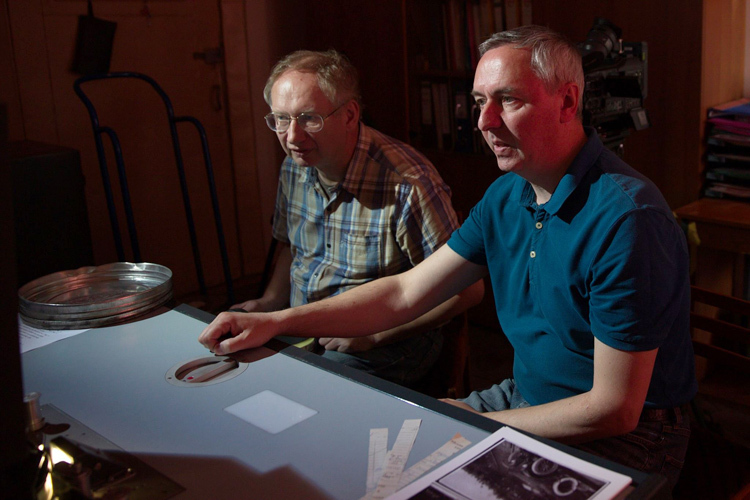
In early August, the Ministry of Culture of the Ministry of Culture proposed the Research Institute of Cinema of VGIK to leave the Zimin mansion occupied by the institute (where to move - it has not yet been decided). Kinoved Nikolay Povolov, the head of the historical and theoretical department of the Niik, told Maxim Semenov what Russian film science is engaged in and what is happening in the historical building in Degtyar in particular.
- In general, this is a stupid question, of course, but you can explain why society needs filming research?
- Probably, then, why and any historical research. The word "film" in our time begins to lose meaning. For some time now I even stopped calling myself a cinema. Now, especially if you climb the Internet, you can see that any person who has written one review of some short film already calls himself a cinema. And who am I? Therefore, I prefer to call myself a cinema historian. And I think this is more understandable, because the question of why study history somehow does not arise.
- There is Russian filming - these are several people who watch old films, discuss them, try to analyze professionally. But now many are watching old films ...
- Now yes. Now it has become an industry - the old cinema, before it was not so. Until digital carriers appeared, the old cinema was forgotten, and there was an opinion that old cinema is when black and white men frantically twitch, it is so cute, funny and archaic. But as soon as people were able to work with this material, review, compare with what is happening now, it turned out that this movie is worthy of attention, that it has amazing things, sometimes more interesting than what was done in modern times. There were festivals, shows with live music. Films began to be released on the DVD , the industry arose of their restoration. This began to give income. This is normal, it has become part of the culture.
- But still, the same old cinema is available to the wide masses not in full. Harold Lloyd is still known, and Lorel and Hardy are already something exotic. The same with the French. Probably, many watched Epstein or heard about Abel Gans, but Marseille L'Erbier, who had previously seemed an indisputable classic, now outside France is an unknown figure. With the exception of certain circles.
- Here you are talking about circles. Indeed, in our cinema circles L'Erbier is a famous figure. Even in the second year of VGIK, we all watched the “late Matia Pascal” with Ivan Mozhukhin. And we liked it, it seemed to us that it was great and interesting. This is the film adaptation of Pirandello. And in the circles of lovers of cinema from some kind of physical education, what people who are close in spirit are recommended, and not at all that we were forced to watch according to the curriculum. We are forced to watch not only what we like, but also what we do not like. This is the difference between an amateur and a professional.
- It always seemed to me that with the professional approach of this word “I did not like” there is no ...
- A professional always distinguishes his own emotional sensation and technological things - the complexity and skill that he can analyze, describe and systematize. Say, if I write about films, relatively speaking, Fritz Lang, this does not mean that I like them all. But to me, as a historian, these films may seem important, stage, influential for me, this is the fact of a common story, a common culture. I cannot ignore them, even if I don't like them. And vice versa: the films that I like, perhaps, did not have any influence on the evolution of cinematic aesthetics. But you like it, that's all, at least kill. They are emotionally close to me. And I try to find something in them that sticks them to the general history of the cinema, to its evolution. This is fine. And we do not know how it will go further. And there are such phenomena that live in potency for a long time, and then suitable conditions are created - and suddenly shoots something that has been in a depressed state for a long time.
- For example?
- Well, for example, the film "New Moscow" by Medvedkin. He seemed to disappear at one time. He was finished, accepted, it seems that even some review of him came out, it seems that even he flashed in cinemas. And then he suddenly disappeared. Moreover, not so dull that even the source materials were not preserved, and copies of it contain one part, where the phonogram is damaged. And suddenly, for some reason, in the era of perestroika, several films became insanely popular among the Western Slavists. “Strict young man” by Abram Royom, “New Moscow” by Medvedkin and several more. Why? Medvedkin did not consider this film the best, but for some reason now absolutely all Western Slavists write about this film as if it were a symbol or emblem of the 30s in general. How to explain this? I don't understand. Are we to blame for this that we began to show him to our friends? Or somehow the social situation unfolded? Or was it shown at some festival? But now completely all Western people are studying him.
- It seems to me that this is quite explainable. Medvedkin, on the other hand, very clearly shows the Stalinist alteration of the world. At home they drive away, the old world is collapsing, and something new is being created.
- There were quite a lot of films on this subject. Furious old life, new life ... But for some reason, it was Medvedkin who became the emblem of this time. Or a "strict young man." When I was a student, we specifically asked our teachers to show us this film, because it was not even in the movie history program. We then had Rostislav Nikolaevich Yurenev. He curved: "Why do you need to watch it?" But at our request, he was brought from the State Film Fund, we watched. It was a rather strange sight for us, students. Curious, unexpected, atypical for Soviet cinema. But now this spectacle is also a strange spectacle for the Soviet era. Not the “great citizen” of Ermler, not the “Ivan the Terrible” Eisenstein, not the “private life of Peter Vinogradov”, but for some reason the “strict young man”. How to explain this?
-You said that some lines that were oppressed for a long time, suddenly shoot, become trunk. But it seems to me that in this process, film experts and cinema historians play an important role.
- I do not think that they are important in this sense. They are not public personalities. Critics - yes, they evaluate modern films, are printed in newspapers, sit in the jury of festivals, express their opinion, and appear in public. And we are historians, how can we influence the process? Here you will leave, and again I will plunge into the cinema of 1914. How can I influence his representation in society?
- Tell me, what is the difference between a whale from a film amateur or a member of a mug at a physical education?
- From the opinion that the professional expresses depends on whether he will receive money. And nothing depends on the opinion that the lover expresses.
- Now there is an unpleasant atmosphere around the NIIK. And you need to understand why the NIIC is necessary - but it is really necessary.
- Yes, you are, of course, right. But reality shows that institutions like ours are actually practically not to find such institutions as ours. All over the world people studying cinema, Film Studies or Cinema Studies are usually grouped around special faculties of universities or at film schools. And such a research institute that specially trained people would work and engage in such special historical and theoretical studies, would write some books, reference books or collections, in the world, probably, besides us, there are no more. And it seems that world filming can live without these institutions. I am now saying, maybe seditious things, because I’m just a patriot of our institute and I think that it is needed, but Western reality shows that you can do without it. But in fact, this is not so. We, as Evgeny Yakovlevich Margolit says, we work as an “oil well”.
For example, in June, Western people from the academic environment begin vacation, they come to Kinotavr, and then stay here until the end of the Moscow Film Festival. We come to us, and we endlessly tell them something about films, about people, about books, familiarize themselves with each other, give some recommendations, we say where to go ... Often Vladimir Padunov and his wife Nancy Kondi from the University of Pittsburgh, Birgit Boymers from Wales, their graduate students are mainly Slavists. This year, Jeremy Hicks from Queen Mary's College came to London, many Slavs from Cambridge, Oxford. During the MMKF, they go to Russian programs to the cinema house, then they meet in NIIK, and we act as Shinkari, treat them, accept them at home. If our institute was not there, these people would have lost some kind of magnetic center where they come for guaranteed quality information. And, it seems to me, this is the task of cultural foci. If there is no hearth, in this place there will be an empty even space. The hearth is a place where people are warming up, where they come into contact to exchange ideas, thoughts, arise new plans, embody, in the end. In this sense, research institutions are no less important than educational. Than VGIK, or there is Moscow University, or RSUSU, or Fizteh.
- The death of the Research Institute can lead to the death of a scientific school ...
- It is difficult to say ... In order to make sure of this, it is necessary that the institute be died, and we will try to prevent this. No, the institution, of course, is difficult to close. But now, if you are interested in the current situation of our institute, some solutions are ripening in the bowels of the Ministry of Culture, aimed not to maintain a scientific school or to nourish the focus of cinema thought, but to transfer this focus to the balance of the Ministry of Cultation of the property and then to enter at its discretion. Since the decision is clearly unseemly, it is not advertised. And people from the Ministry of Culture do not require us to leave. They write letters at VGIK, to which we are attached, where they elegantly recommend “considering the possibility of refusing property rights” to our building. Well, it is clear that if the Minister of Culture “recommends” the rector, the rector is most likely obliged to submit. Behind it is a huge institution, thousands of students and teachers, buildings, a curriculum, a training studio. He cannot just take it and enter into confrontation with the authorities.
-All according to Saltykov-Shchedrin. Burn the gymnasium and abolish science.
-Therefore, Saltykov-Shchedrin and the great man that he, periodically popping up, prescribed this matrix very cool. But in general, everything is sad. I sometimes teach at VGIK and observe the guys who come after high school. The overall level of education is catastrophically falling. Every year, worse, worse and worse. People who came in the early 90s seem to be lights. But both of them went through high school, passed exams, came and arrived. But what we observe is some kind of disaster. People do not know Russian literature, history, some main dates and events, do not have the ability to logically combine things. At the same time, they are very friendly, relaxed, they have no complexes, they are interested in everyone, but they don’t know anything. Maybe we will get used to these conditions. Or we will become like Americans whose secondary education is bad, but very good higher specialized.
- It seems to me that you are a little demonized by young people.
- Why? This is completely like that. So I can be considered a good teacher. I have high attendance - about 40%, which is unusual. But even the students who come to me and work carefully, know something there in the end ... All the same, a step aside is a disaster. What I eventually told them, they remembered-I can answer for this, but a little bit, a little in another sphere-that's it. They are no longer oriented. Once, for the sake of jokes, I asked my 4th year students: in what year did the October Revolution take place? Of the 13 people, not one guessed. And these are 4-year-Kinov students, the intellectual elite of VGIK.
- Wait. They looked there Eisenstein, Pudovkin ...
- Yes. They looked. And it did not help them. They passed films on the history of cinema, have already passed by this moment. And still they did not know. What are senior students! At the entrance exam at VGIK, one day a girl who had just graduated from high school and passed an exam on history, they asked a slightly provocative question: tell me, please, what king was in Russia when the October Revolution occurred? It is clear that the king was gone, but she thought and said: it seems, Peter I. And it was with me. It was in the 90s, but since then it has gone better. We recently had a rector of our educational institution, to which we were attached, VGIK, Vladimir Sergeyevich Malyshev, and he said that there are not even requests from the Ministry of Education, but the requirements to reduce the passing score for the exam to 28, otherwise there is no one to act. It used to be 40, now - 28. This is a disaster. It's just absurd.
- But the history of the cinema teaches us that the people who have entered the cinema are infected. He said to Eisenstein that only two types of directors are interesting: those who know everyone and are absolutely non -trained.
“But Eisenstein said this when the director’s profession was exotic and unique.” And now you know how many unemployed directors, recent graduates of film schools, wandering around Moscow? Thousands. How many people with a distorted fate. They think they can do something, and try to earn money with their profession. But they do not know how, they are not adapted to this matter. Of course, there are people who simply out of curiosity come to all these marginal educational institutions. They come to spend time, get to know someone, chat, watch films. There are many of them too. And I like this audience even more than those with claims.
- I don’t know, on my course everyone who wanted to engage in cinema began to engage in cinema. And the rest successfully married.
- We also had it. I remember that our professor Rostislav Nikolaevich Yurenev in the first year entered the audience, looked at us and said: “Yes, as always, there are a lot of girls.” Experience shows that cinema experts are not obtained, but intelligent wives are obtained.
- In any case, it is wrong to talk about thousands of crippled fates. It seems to me so. A large number of lovers can prepare us for the emergence of really large directors. Yes, and a new "new wave" should appear.
“But we don’t know if there will be a movie after some time.” Maybe one video on YouTube will remain. And what is a movie? Is this when people go to cinemas? Or are they sitting by the TV? Or look at the disk on the computer? What is a movie? Or maybe it has already died, only we did not notice this. We study old films, watch them constantly, and it seems to us that they are alive. But we go to Egypt, look at the pyramids and think: after all, the architecture is still alive.
-It seems to me, a movie ... This is a certain process, when people gather somewhere and watching something together.
-You know, the deceased Seryozha Dobrothelsky told me when I arrived in Leningrad (or St. Petersburg, I don’t remember anymore: you know, Kolya, here local film critics have a strange property-they love to get together and watch Sokurov’s film. I don’t remember now what this observation (or joke?) Was connected with. I do not want to say that getting together and watching films is strange. But is it possible to call the process only watching old films or only watching Sokurov's films?
- Now a large number of books are published in the West. For example, Oxford History of Cinema, others. And thanks to the Internet, we can read them ...
- (Looking through Oxford history) I did not hold this book in my hands before. And now I look, and the first thing I learned from it is that the Kuleshov group, it turns out, was organized in 1919 because of the desire for collective authorship in Soviet cinema. I will not read further. And I can’t recommend it to others.
You know, in Soviet times there was an artist "Art". He had a film editorial. And no matter how you relate to him, there were generally knowledgeable and professional people. And there were a lot of literature - both domestic and translated. Of course, I would like to come out more, but how much it came out. Then the publishing house "Art" has drew in a bose, and no one else has released dog handouts. Moreover, the idea that a special publishing house is needed, which would release the translated and domestic new and old literature about cinema, historical, reference books - it hits the air. And I was told by colleagues from “film notes” that the literature about cinema in all book markets is in high demand, this niche is not busy. But a person who apparently organizes such a publishing house should come. And, I think, it would be better if it was state, and not private, because any state structure in a sense is more serious, it is a little more conservative, academic, condo, but it is more reliable. And the facts there are better checked. This niche is not busy. Since the publishing house "Art" has died, so many interesting books have appeared and so many Western books have not been translated. So I am very sorry that we have not been translated the first Western book about Eisenstein Mary Siton, published in the 52nd year. She is fat, many of ours be reproaching her, but no one read her, because she is in English. А ведь это очень интересно, потому что все западные люди изучают Эйзенштейна по этой книжке. И для того, чтобы нам понять, почему они все так о нем думают, хорошо бы эту книжку прочитать. Но у нас она никогда не переводилась. Многие англосаксонские книжки, по которым они изучают историю кино, нам тоже хорошо бы знать, чтобы понимать, на каком языке с ними разговаривать.
— Но все-таки вы верно заметили, что интерес к истории кино пробуждается. Недавно в Москву привозили немые фильмы Хичкока, тоже совсем недавно закончился показ авангардных советских фильмов в «Музеоне», организованный Музеем кино.
— Я работал в Музее кино довольно долго, был заместителем директора по науке. Но я ушел оттуда году в 97-м. Или в 98-м. Перешел во ВГИК, а потом сюда. Тогда это было еще в Киноцентре, поэтому показы были более регулярными. Публика собиралась...
— Музей кино и сейчас организовывает регулярные показы. Например (надеюсь, они туда вернутся), у них были показы в кинотеатре Моссовета.
— Далеко это, на Преображенке.
— Да, на Преображенке. Но там все равно сформировалась своя публика, которая туда ездила постоянно. И были очень интересные ретроспективы.
— В Киноцентре тоже было не самое удачное здание, то есть оно было очень странное по планировке, но там одновременно были и показы, и выставки, и библиотека, и конференции, и ежедневная тусовка, и люди, которые приходили и приносили какие-то вещи для музейных фондов. То есть было такое… всё вместе, понимаете? Когда показы в одном месте, выставок нет, библиотека недоступна, фонды ото всех отрезаны, сам музей находится в месте, где действует пропускная система… это, конечно, печальное зрелище.
— Но все равно большая заслуга Клеймана в том, что музей не погиб без здания и продолжает функционировать.
— Это правда, но, вы знаете, Наум в свое время совершенно правильно поступил, что сделал музей государственным. Он же возник как подразделение при Союзе кинематографистов, а это общественная структура. Общественные структуры, знаете ли, могут быть эфемерными. А государственную структуру, которая внесена в реестр каких-то заведений, очень сложно закрыть. Ее можно гонять, притеснять, лишать финансирования, но закрыть просто так — это очень сложно. Решение было, конечно, очень верным. И благодаря Наумову решению музей сохранился, но он сохраняется в довольно плачевном виде. У музея должно быть отдельное здание.
— Я рассказывал одному своему приятелю про ситуацию с НИИКом, и он мне сказал: знаешь, я никогда про НИИК не слышал, но я в 90-е видел достаточно НИИ технических. И они все прозябали, ничем не занимались, были оторваны от реальной жизни, и в принципе туда им всем и дорога. Но это же абсолютно несправедливо.
— Трудно сказать, есть ли здесь место справедливости. Вообще НИИ были довольно странной структурой при советской власти. И я уверен, что в оборонной промышленности они важны, у них наверняка отличное финансирование, лаборатории и они что-то такое изобретают, что становится известно лет через 50. А другие НИИ… какой-нибудь текстильной промышленности… я не знаю, нужны они были или нет. Скорее они были нужны для престижа, нежели для неуклонного развития. НИИ киноискусства тоже был создан как такой отраслевой НИИ при Комитете по кинематографии. Очевидно, нужно было для престижа промышленности создать отраслевой НИИ, вот его и создали. Сделал это Владимир Евтихианович Баскаков, и институт долгое время называли баскаковским. Баскаков был знаменитым заместителем председателя Государственного комитета по кинематографии, и, понимая, что скоро выйдет на пенсию, он основал институт как бы под себя. Там собралось много интересных людей. Тут сразу заиграла какая-то жизнь, тут работали и Ирина Шилова, и Майя Туровская, Ханютин, Фомин, Михаил Ямпольский, Юрий Цивьян сюда приходил… кого здесь только не было! Леонид Константинович Козлов, Соколов — замечательный теоретик, да полным-полно было интересных людей. Трошин, придумавший «Киноведческие записки», Шумаков, который сейчас «Культуру» возглавляет, здесь тоже когда-то трудился в отделе теории. И мне это напоминает Институт философии, куда люди вообще не ходили, потому что были философами, но институт был важен как центр притяжения философской мысли. Они могли встречаться друг с другом, или перезванивались по телефону, или встречались в пивной, но то, что был институт, — это было важно, это был центр, ядро этого всего. То же самое — НИИ киноискусства. Сюда мечтали прийти работать выпускники киноведческого факультета, сюда приходят заграничные коллеги, здесь есть кинозал, где регулярно смотрели какие-то фильмы, которые нам привозили из Госфильмофонда. Теперь не возят. Люди сюда приходили, встречались, болтались в коридорах, сидели и даже если просто играли в шахматы — все равно обменивались мнениями. Какая-то жизнь происходила. Нужно, чтобы в этом месте переплетались человеческие отношения. В этом смысле институт, конечно, нужен. И то, что он организовался как казус, и то, что его можно сравнивать с другими казусами советского времени, которые умерли, не означает, что вот этот культурный очаг должен погаснуть.
— Вы все больше говорите в прошедшем времени. Это же все продолжается и сейчас в каком-то смысле?
— Ну, в последнее время было трудновато. Были сокращения после объединения со ВГИКом, приходят какие-то новые требования отчетности из министерства, слишком много стало бюрократии, но дух НИИКа живет. Люди к этому привыкают, приспосабливаются к приметам внешнего давления. Это все не катастрофично. Никогда не бывает идеальных условий. Я очень люблю слушать, когда говорят: вот, в наше трудное время… А, простите, когда было легко? Всегда было трудно. А иногда — и покровавее, чем сейчас. Но это не является основанием, чтобы ничего не делать. Да, всегда было непросто. И начальники всегда были очень экзотические. Помните, Эйзенштейн писал, что зубрами всегда управляет самый лохматый зубр, обезьянами — самая сильная обезьяна, но не попугай! А кто руководит нами? Всегда киношными начальниками были какие-то странные люди. И до сих пор они странные. Но это не является основанием для депрессии. Скорее, к этому можно отнестись с юмором, как относились наши предшественники.
— Да, жизнь продолжается. Издаются специализированные журналы, например, «Киноведческие записки».
— Да, журналы — это очень важный центр. Надо у Наума Клеймана поинтересоваться, как там у них редакционная жизнь кипит, но я думаю, что не очень кипит.
— Есть же еще «Искусство кино», есть «Сеанс».
— Вот и все.
— Но три специализированных журнала — это уже очень много.
— Ну, наверное, мне трудно сказать. «Искусство кино» как-то маргинализировалось, там узкий круг авторов, и проблематика, над которой они работают, тоже узкокружковая. «Сеанс» старается быть более раскованным, но они далеко и редко доходят до нас в бумажной форме. «Записки» тоже как-то… Но выходят, слава богу! По крайней мере, молодые авторы могут туда приходить, приносить тексты. Другое дело, что редакционной жизни, конечно, не хватает. В этом смысле наш институт — это такое место, куда люди приходят и как-то заражаются друг от друга. Как тараканы в ловушке. Попал и заразил других. Мы вот тоже заражаем — какими-то идеями, мыслями, предположениями, связями, азартом. Это все очень важно. Какая-то энергетика должна быть. И в этом, я считаю, и есть функция нашего института.