
Translated material
National Palimpsest

There are quite a few beautiful books that are written because the authors were forced to write them. The “player” exists insofar as Dostoevsky urgently needed to hand over the manuscript of a nonexistent novel - or lose their rights to his previous texts, the “resurrection” was written for the help of the Molokans, overdoing himself, as the first part of a large novel - the continuation of which, in essence, did not begin to write. What can we say about most of the literary products of Dickens, which was issued for the deadline as a column in a modern magazine: in fact, almost the entire “big novel” of the XIX century and came out of these frames - journal or newspaper, with different “breathing”, but equally belonging to “fishing literature”. Each professional writer is easy to choose a collection of reflections that are sprinkled only with a tone, about how he would write this or this otherwise, not at all in this form - but the terms, readers' habits, the requirements of the editor, the expired accounts and plans for the summer ...
In the scientific humanitarian literature, in general, everything is about the same-and almost so, if the author expects not only experts to read his book: a colleague will read regardless of the style and skill, but a wide audience (now calculated by several hundred, with a grand success-thousands of readers) should be carried away. And for this, it is necessary to comply with her expectations and deceive them: to correspond - so that the text is identified as a “possible interest”; deceive - in order to differ from others; Actually, the “expectations” are expectations of such “differences”, tolar . What will be the most Special is a question for the author: topic, material, method of presentation, paradoxical judgments, not turning into a habit (which requires from time to time to agree with a common one where disagreement is waiting).
“The History of the Rus” is a political text that pronounces political through history: in this sense, he attracted the first readers and, especially importantly, retained and even expanded the audience after the falsification was established.
The author of this book, one of the most famous and respected modern Ukrainian historians, professor at the Department of History named after Mikhail Grushevsky and the director of the Ukrainian Scientific Institute of Harvard University, Sergei Paroky, said at a presentation at the Higher School of Economics, he was actually interested in a textological study of the History of Rus, to which he was returned for most of his scientific career. But what good publisher will agree to publish work on textology - and even if he agrees, who will read it? As a result, a beautiful text has grown around textological studies, introducing both the XXI -century Ukrainian intellectual history in the vicissitudes of Ukrainian intellectual history, and into the processes of nation -playing, and how the center controlled the imperial outskirts, how it ceased to be an outskirts, turning into one of the “ordinary” parts of the empire, how local privileged groups, etc. Actually, the resulting book can serve as the best introduction to the history of the Ukrainian national movement - not the history itself, of course, but the ideal “first step”, neatly, fascinatingly and accurately introducing interests, intellectual influences, local disputes, Russian and European contexts. It is ideal as an introduction also because from the very first step weanes from any simple answers, with the help of not only large -scale copyright knowledge, but also filigree literary technology, creating a multi -level description - when the macro -chip does not displace a local situation from the field of view, and the latter does not replace the individual positions of specific people. As for the latter, it is here that the author’s talent is manifested - there is not enough text so “inhabited”: the matter is not among the personalities (there are much more named index of many works), but in individualization of the characters. Participants told by the poor story (more precisely, stories that are in a complex and perfectly thoughtful way are intertwined in the text, eventually creating a holistic, voluminous picture) are each in its place and time: this is not a “revival” of the material, but the ideal way to work with it is when the absence of a particular information about the acting person is an equally important circumstance, since it also speaks of time, place of action - about the conditions of action - about the conditions of action - about the conditions of action - about the conditions What was preserved and how and what disappeared or initially did not fix. Spaces, gaps remaining in the material are no less reality of the past than any “memory” about it, since they testify to the unnecessaryness of this past, its otherness in relation to us - denoting the border, the border of the certificate, the border of knowledge.
The History of the Rus, whose author is indicated by Archbishop George (Konis), has become known since the 1820s. And he quickly gains wide popularity - her episodes inspired Ryleyev and Pushkin, they were reflected in Taras Bulba, the most famous version of the history of the hetman of the hetman, etc. Soon, already by the mid-1840s, this text first caused the doubts of historians in its accuracy and reliability, and then it was established that it was falsification. In the latter there is nothing special: the era of romanticism with the forming national movements, the desire to “rejoice” its story, find “great monuments of the past” is pushed into the absence or poverty of such traditions - and when they are, these sources and traditions are far from always saying what their readers are ready to hear. The absence or insufficiency of such sources gives rise to a willingness to accept falsification: the most famous case is, of course, the history of Ossian’s poems, but the list of such works is very great - you can recall the work of Ganka, the work of Sreznevsky, etc. By the way, by the way, as the bad notes, that falsification is more often exposed not to the group that is closer to the falsified material and knows better - since successful falsification corresponds to its expectations and it tends to close her eyes, not to notice the fake of the errors: so, the reasoned doubts about the discovery of Ossian poems were expressed by the non -experts of the Scottish old man. In Edinburgh and Glasgow, and the British. Similarly, the errors in the “History of the Rus” attracted attention publicly when this text fell into the hands of Russian historians - and only then the fact of fake was recognized as Ukrainian lovers of antiquity.
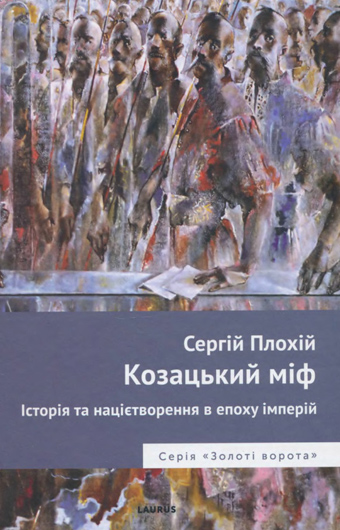 © Laurus
However, if we were talking about one more, albeit very interesting, falsification of the romantic era, then this case would not have special importance for a wide audience - especially since the “history of the Rus” involves the lecture of the text in comparison with the real time of writing a little more than half a century: falsification here acts as a way to hide real authorship and give the text a greater authority, attributing it to a very revered in the very revered in Empire to the Archbishop of the Mogilev George (Konissky). Historical inaccuracies, direct mistakes and free fantasies about the circumstances of the past attracted attention very soon - and if it was a historical source, the subsequent research on the origin of this text and its sense would have mainly have academic interest. In this case, however, this is rather a “historical pamphlet”, a political text that pronounces political through history: in this sense, he attracted the first readers and, especially importantly, preserved and even expanded the audience after the falsification was established.
Of great importance attached to this text in the history of the Ukrainian national movement (which is true in many ways and in relation to the present), allows not only to consider the interpretations of the “History of the Rus” for almost two hundred years, but also through the interpretation of the history of the Ukrainian national movement itself-starting with the “captivity” of the “Kozatsky myth” of the Kirillo-Mephodian partnerships and up to the events of the events and down to the events recent years. This story is naturally intertwined with the history of searches of the alleged author of the text.
“The History of the Rus” is not just a well-known text, but for someone it is almost a Bible, but in the opinion of N. Ustryalov, the “Koran” of Ukrainian nationalists (the assessment is similar, the difference is only in the sign)-as the bad, quite a little corresponds to such interpretations that speak more about the time and position of their authors than about the text to which they relate. Carefully reconstructing the origin of this text, establishing the environment in which it arose, the bad states of the authorship of the “History of the Rus”, which has been advanced for more than one and a half centuries by generations of historians and naziyers (after all, in the late modern, the historian is one of the main nation -winners - those who deconstructs opposing schemes and elevate their own).
Nevertheless, not even this “long history” of interpretations and searches of the author is of the greatest interest, but the reconstruction of the circle of people and ideas that gave rise to this text. Since, despite the subsequent fate of the “History of the Rus”, which has become one of the main tests of Ukrainian nationalism, the “History” itself is generated by high -quality views. Its author/authors were representatives of the opinions and beliefs of the Starodubsky Cossack foreman - the group that was difficult to lose the loss of previous privileges, the abolition of the hetman and the gradual elimination of the Cossack regiments. They were loyal to the empire - and sought to preserve (and at that time more rather to restore) their previous, special position: privileges and simultaneous inclusion in the imperial elite. Hence the specific duality of the text: the representation of Bogdan Khmelnitsky with an ideal hero and the creation of a “Gdyach” myth, when an agreement signed in1658 by the successor of Khmelnitsky with Poland (actually canceled the agreement reached after the Pereyaslavsky Rada), is evaluated as the achievement of the “ideal” state (including by direct distortion of the terms of the agreement reached in Gdyac); Or another example - condemned by copyright remarks in the text of Mazepa through the speech invested in his mouth is clearly described positively: it is in the case of Mazepa that the text is “double”, reaching again unity in the image of a hetman of a half -piece. The last plot, in detail analyzed by the badness, best expresses the position of the creator/creators of “History”: a half -worker, a defender of the rights of the hetmanate, who takes the petition with a protest against the liquidation of the hetman’s post and the leaded Little Russian College, where the mosquito was planted, heroically defends the rights of his “nation” against despotism, finding herself right to the trial of history in his clash with Peter, whom the text forces shortly before the death of a half -batch to recognize his moral triumph; Here, the author says the language of romantic nationalism, only the “nation” in question is a double phenomenon: the “nation” in the sense of political representation (“Kozatskaya Nation”, which does not include the same peasants) and “nation”, expanding to the whole “people”. The text that defends the elders of the hetman, appeals to the rights as “Russians” and included in the common imperial whole, which have privileges that have precisely as such (and protect them from what they evaluate as a violation, using the language of violation of rights, destroyed by justice), at the same time uses the system of new concepts and symbols already related to modern nationalism. This feature will provide the text with a uniquely long ideological life-allowing you to read it as a pathos presentation of the history of the “Ukrainian people/nation”, identifying the “Ukrainian nation” with the “goats”, on behalf of which “history” tells, as a political and legal community. ”
In this, it seems, the main value of the “Kozatsky myth” outside the narrow circle of specialists is in the consistent and multifaceted tracing of a historical myth: that which becomes a national myth, is by no means created with the process of nation -playing - on the contrary, myths, images, symbols that exist, already existing are used in the latter. They are reinterpreted and rewritten, but not “invented”. Due to this, the new (national) content is both old, familiar: a new community is prepared from the existing, in turn, at each of the stages, being “not final”, for which the branching genealogy of its myths “holds” the multiplicity of the options for the future.
Sergius bad. Kozatsky MIF. Istoria that National is in the era Imperer / authoriz. per. Eng. M. Klimchuk. - K.: Laurus, 2013. 440 p. (Seria "Golden Gate", VIP. 5). The circulation is 1000 copies.
The presentation of the English publication took place in December 2012: SERHII PLOKHY. The Cossack Myth. History and Nationhood in the Age of Empires. - Cambridge University Press (CUP), 2012. For August 2014, the publishing house announced the release of this work in a “soft” format.