
Translated material
Rosneft was asked to substantiate a request for a lord in the amount of 1.5 trillion rubles
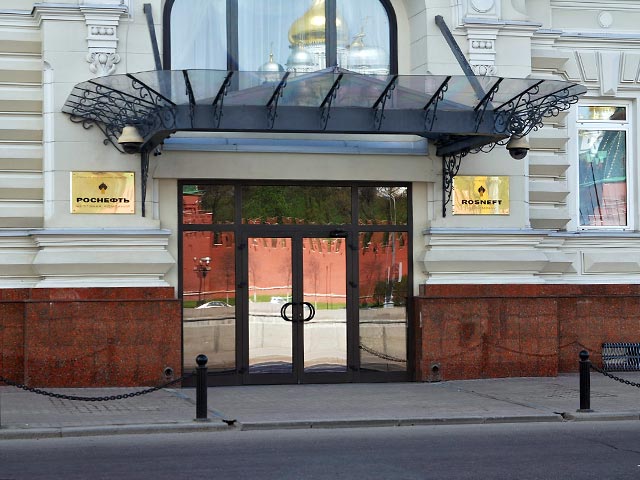
The government asked Rosneft, which requested unprecedented financial assistance in the amount of 1.5 trillion rubles, to justify its needs for money, RBC reports.
The appeal to support Rosneft, the head of the state -owned company Igor Sechin sent Dmitry Medvedev a few weeks ago, was told by the agency by an official familiar with the discussion of this problem in the government. The prime minister agreed to consider this issue after the company, together with the government, prepares a complete decision.
The Deputy Prime Minister Arkady Dvorkovich, who oversees the fuel and energy complex, was entrusted to this. As several sources in the government told reporters, on Wednesday evening he held a meeting on the proposals of Rosneft. Press Secretary Medvedeva Natalya Timakova did not answer the request of RBC.
During this meeting, all interested departments were instructed to work out the proposals submitted by the company, and Rosneft itself - to provide additional calculations on its proposals, told RBC the representative of Dvorkovich.
Among these proposals there was a request for the allocation of 1.5 trillion rubles, a source close to one of the participants in the meeting said. Sichin is proposed to additionally justify the idea to support the company with liquidity, confirms another interlocutor of RBC, who was present at the meeting with the Deputy Prime Minister. The agency failed to find out about the deadlines for preparing such calculations.
Recall, on August 14, the Vedomosti newspaper said that Igor Sechin asked the government about financial assistance for Rosneft. This became known from the letter of the Deputy Minister of Economic Development Oleg Fomichev in the Ministry of Energy, where he, on behalf of the Prime Minister Dmitry Medvedev, analyzes Sechin's proposals.
The President of Rosneft, according to the newspaper, proposed five ways to support the company, the most expensive of which is a ransom at the expense of the National Welfare Fund for new Rosneft bonds for 1.5 trillion rubles. Meanwhile, as some experts believe , Rosneft, seeing that the state was favorable to companies that are considered victims of sanctions, decided to recall that it also suffered and reached the runs.
The need to help from the state of Sechin in a letter explains the US sanctions introduced against the company. On July 19, the US Ministry of Finance banned American companies, banks and citizens, as well as to everyone who conducts operations through the United States to provide Rosneft, Novateka, Gazprombank and Vnesheconombank loans and loans for more than 90 days, as well as joint -stock funding.
Although the sanctions that limit the attracting of long-term financing were introduced only by the United States, European banks and investors de facto joined them because many of them work in the American market and do not want problems with the US authorities.
The company's financial reserve in the middle of the year was 684 billion rubles - this is almost $ 20 billion. This amount covers two -thirds of the company's needs for refinancing for the next one and a half years. According to the company's reports for the second quarter of 2014 in IFRS, at the end of the first half of its total, its total debt was 2.179 trillion rubles. For the next one and a half years, the peaks for the company will be: until the end of this year, Rosneft should return 440 billion rubles to creditors, in 2015 - another 626 billion. In the first half of 2014, the company paid 350 billion rubles to Russian and foreign creditors.
Thus, the state -owned company, which asks for unprecedented financial assistance in the amount of 1.5 trillion rubles from the FNB funds, had accumulated more than $ 20 billion on its accounts by the middle of this year.
Most of this amount is in dollar accounts. According to them, the company receives interest income (rates vary from 0.45 to 4% per annum). In addition to deposits, the company places money in shares, state and corporate bonds, etc.
The main source of replenishment of financial reserves is the prepayment for future oil supplies. Last year, the company signed an agreement with the Chinese oil and gas giant CNPC for the supply of 365 million tons of oil for 25 years. Under this contract, the company can receive a total of $ 70 billion as an prepayment.
The company is actively using this opportunity. According to reports, in the first half of the year it received 431 billion rubles of prepayment. CNPC is not the only counterparty who pays forward. There are similar agreements with the British BP. In July 2014, Rosneft received 1.9 billion dollars (66 billion rubles) from its partner as an advance payment for oil.