
Translated material
Sonata with variations
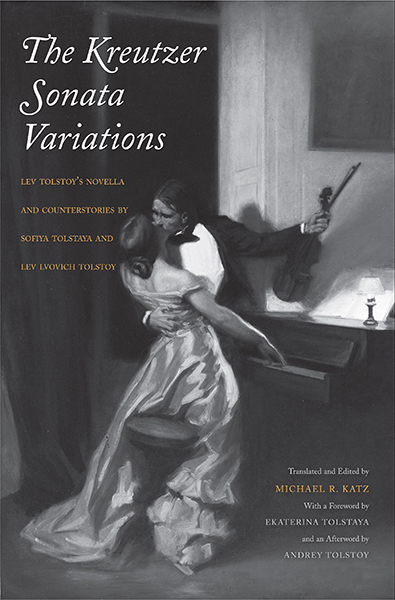
A literary novelty appeared in the USA, which caused a keen interest. This book is called " Variations for" Crecery Sonata . "The publishing house of Yale University has published a book, and Michael Katz compiled and transferred from Russian to English to English.
It is clear that the very name "Kreitserov Sonata" refers to Leo Tolstoy, to his sensational, one might say, scandalized story of 1891. As everyone remembers, this story is the story of a certain Pozdnyshev about how his marriage was unsuccessful. It all ended that Pozdnyshev killed his wife allegedly for marital treason. Outwardly, the plot appears quite familiar: how many literary works of all centuries and peoples, telling about the torment of jealousy and burning love passions? But Tolstoy, of course, was not satisfied with such a plot, but built a story on a paradoxical philosophy that denies a marriage proving the unnecessary and destructiveness of this centuries -old human institution. Actually, even the marriage is not denied, but the sex love itself, which presented in the story of Tolstoy a sinful and criminal delusion.
It is clear that this made a sensation. Tolstoy’s story was prohibited for publication in Russia, but, of course, everyone read it. The wife of Tolstoy Sofya Andreevna, who acts as the main character of “variations to the“ cruiser sonata ”, specially asked for an audience with the sovereign Alexander III, so that it was allowed to publish a story - not a separate publication, but in the collected works of Tolstoy. Such permission was given to her. But, we repeated, the story was read by all who was interested and the interest of Kreitser Sonata” Caused a huge one.
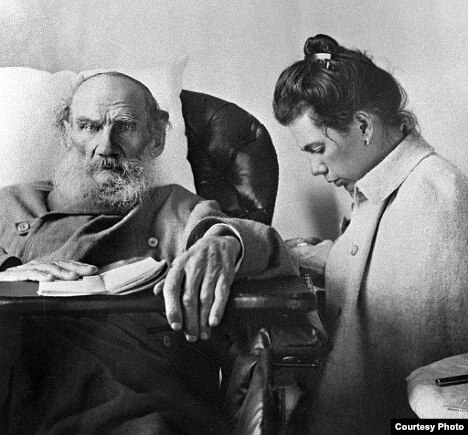
Tolstoy was not limited to the literary text, but wrote an extensive afterword to the story, in which he dotted all points over "i". The main idea of this afterword was the call to the rejection of sexual activity - not only from marriage as a social institution, but from the gender itself. Only Tolstoy could afford such an escapad, not afraid to seem funny. The main question for the author was: how can humanity remain if it refuses the floor? Tolstoy made it clear that he did not consider it a big loss.
Let us return, however, from the story of a story to today's American book novelty. Professor Katz not only re -translated Kreutserov Sonata for this publication, but also included two texts written in the publication, written by Sofia Andreevna, as it were, in response to Kreutserov Sonata. This is a kind of artistic works, one is called "whose wine?", The second "Song without words." Sofya Andreevna, although she was busy about her husband’s story, was at the same time worried that readers could simply see the image of the family life of Tolstoy in the “cruiser sonata”. And in her writings, she was most worried about dispelled the idea of the unclean passions of a woman in marriage, claiming that a man, husband brought into a marriage. Quite a Victorian performance. "Wine" for misfortune in marriage - entirely on the side of the man.
In the second story, called "Song without Words", Sofya Andreevna unfolded that part of the plot of the "Kreutzer Sonata", where the storyteller is telling about the fascination of the narrator’s wife. Sofya Andreevna recognizes such a plot in her life, her hobby is known - it was Sergey Taneyev, however, women were fundamentally not interested in women. It must also be added that in the collection of “Variations for the Kreutserovaya Sonata” Professor Katz also included the composition of Leo Tolstoy-Sin, in the Pandan to Tolstoy, the named “Chopin Prelude”. The newspapers laughed at the works of Lvovich, and the evil-speaking Burenin nicknamed him “Tiger Tiger Tigrovich Soskin-Midnets”.
In general, the book came out curious, but valuable as an indicator of universal interest in the great Russian writer. By the way, two years ago the same collection was released in France. It is also interesting that both of these stories by Tolstoy were published in the Russian journal "October" back in 1994, but then in Russia this excited not anyone. And indeed, of course, these are documents for scientific publications, and not for a wide reader mass.
And in conclusion - two words about the philosophy of the "cruiser sonata", about the hyperbolized asceticism of Leo Tolstoy. Now few people remember what kind of influence Tolstoy experienced, composing "Kreutzer Sonata", and not only her. His famous novel "Anna Karenina" is written in the same philosophical vein, under the same powerful influence. This is the philosophy of Schopenhauer, which Tolstoy literally raved at one time. This is a powerful and suggestive philosophy, whose main idea is about a blind life will not be interested in any individual existence; Man is just an impersonal and blind will. The sage, who knew this truth, will act completely sensibly if he refuses to be such a blind instrument of blind impersonal power. And this power is the floor, much more often and stronger a tormenting person than bringing him - illusory, however - happiness. It is better to abandon this illusion than to become her victim, as Anna Karenina became. So "Kreitserov Sonata" is not a curiosity of a capricious genius, but a serious and responsible work of a strongly feeling and deeply thinking person.