
Translated material
What to download this week?
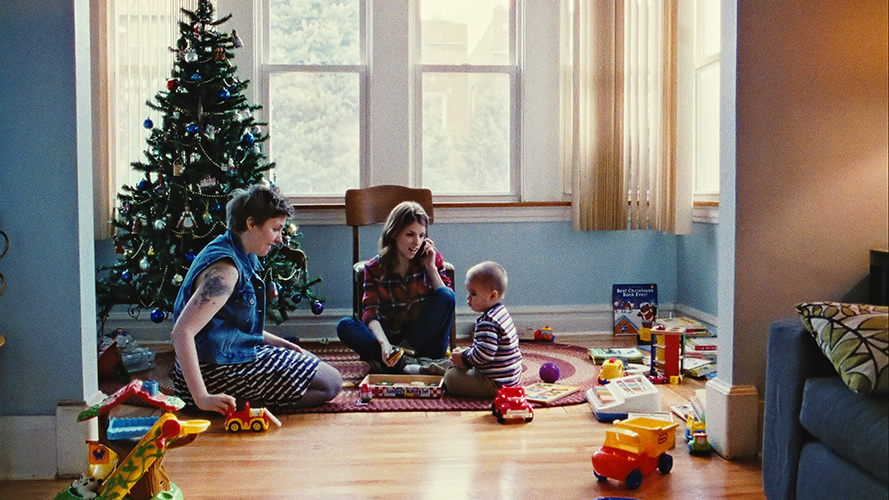
"Happy Christmas" ("Happy Christmas")
Director Joe Swinberg
The release of the new conversational drama of Joe Swinberg at the height of the summer holidays (the American release of the film-July 2014) could be considered an example of a hipster gouging distributors-if something in this movie really reminded of the New Year's mood. But no. The life of the heroes of Swinberg, as always, is terribly far from external circumstances and is closed on everyday life, at times - but quite shortly - swelling to the size of existence. Formally, all this resembles a “theorem” distorted by the influence of Cannabis: a husband’s sister comes into the house of a young family, a simple -haired, slightly confused quietness, which nevertheless rendered to a catalyst for dramatic (on a kitchen scale) changes both in a good and in the catastrophic side. The guest living in the basement, stylized under the Gawaii bar, gets drunk to loss of consciousness, nervously smokes grass, burns a frying pan - and in breaks between the attacks of alcohol, it encourages the owners, pushing them out of the usual contour of worries, classes and reactions. It seems that this petty motility is about to give a powerful jerk of the plot, push it into a new orbit of life-related-but no. Each time, approaching the dangerous edge of the existential choice, the Junberg retreats and laughs. However, that, but he knows how to joke: he turns the tedious and predictable episode of an unsuccessful date into a worthy imitation of Monti Piets-just introducing the Black Terrier scene by the Mr. Pants, which performs the same urgent function as cats running into the frame in an amateur porn.
"Similar to love" ("It Felt Like Love")
Director Eliza Hittman
 Frame from the movie "Similar to Love" ("It Felt Like Love")
Typical - but very sweet in its typicality - “Sandensa” drama of growing up the ugly girl Lyla. Removeed on close-ups-so that the wind in the hair is better visible, at the distance of exhalation from the heroes, this story formally talks about attempts to “ugly girlfriend”, an annoying tail of a cute sex bum, make up its sexual resume-or at least fake it. In spirit, this is one and a half o'clock in the spirit of awkwardness, embarrassment and crisis of identity, typical diseases of transitional age. The ridiculous and touching attempts of the baby Lyla to become someone else were removed by the Debutant Hittman with nursing warmth, in the final turning out non-certificate ambiguity in the spirit of a famous scene with a boar, Bergman and a searchlight from Casablanca. We will never know whether the Lyle was lost as a result of virginity or not, but it is already clear that Gina Parsanti playing her becomes new Helen Page (in any case, she continues to work in the role of an endless teenager and has already starred in a new film about girls with problems - and pregnancy).
"Palo alto" ("Palo alto")
Director Jia Coppola
 Frame from the movie "Palo Alto")
Director's debut of the granddaughters of Francis Ford Coppola, a multi -component romantic drama about the love of American high school students: Summer, California, Marijuana, the first Blow Job , the idiotic songs of another from the Coppola clan - Robert Schwartzman and other charms of the age when the most terrible thing is that you want to become? " A little reminiscent of his childhood innocence (heroes are basically deprived of a sense of shame), the Soviet cinema director Solovyov, the film was shot based on the collection of stories by James Franco - so it is not surprising that the schoolgirl, which Franco himself plays the central plot here. If for young actors like Jack Kilmer “Palo Alto” it was an obvious breakthrough, then for James’s uncle-an hour and a half exercise to create the sweetest smile. However, here the incorrigible features of the physiognomy of the stars turn into a conscious directorial technique: already at the very beginning of the film, schoolgirls ridiculously mimic this crafty Lenin squint.
"Boyhood")
Director Richard Linklater
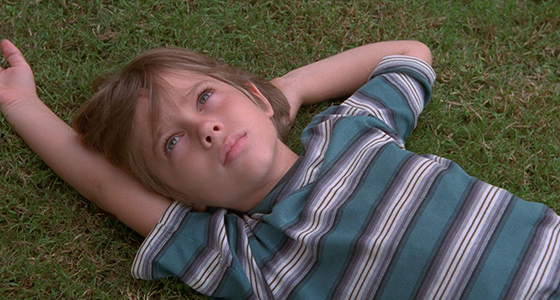 Frame from the movie "Boyhood")
Myson: From 6 to 18. The remaining person, somewhere in infancy, is the divorce of parents (the heartbreaking patricia Arquette and Ethan Hawk, who subtly playing the caricature-what else does his father appear in the eyes of his son every three months?). Video games, many video games. The first stepfather, a couple of his children. A glass of whiskey, miraculously not flying to the head. Moving-to grandmother to Houston, then to a tiny San Markos. Second stepfather. Grass, beer, first kiss. Obsession with photography. The tunnel in the ear, nails painted with purple. Not changing over the years of the mockery of the older sister. School graduation. Momo loneliness. The first day is in college.
The “adolescence” of Richard Linklater, which was filmed for 12 years, is formally, of course, an exercise in observing banality. The usual, due to adult mistakes, childhood under the most hackneyed songs of every passing summer (in 2002, Coldplay plays behind the scenes, in 2007- Soulja Boy ). Everything is like everyone else, nothing new under the moon - which, as it is convincingly proves for three hours, the linclayer, rather happiness than the curse. The playing Mason Ellar Coltrain (and with him all the others) changes in front of the viewer - and no matter how banal the plots are in which external circumstances at first captivate him, and then the first independent attempts to gain motivation, there is nothing mediocre, gray, boring in these changes. The banality of the linqulater turns into versatility, a mounting glue, this tool of death at work - into a symbol of life, a pencil mark on the wall, three hours of timing - in a memory flashed in a second. Everyone is the same - and will be equally to fight the tears of recognition for the final credits.
"Lenny Cooke")
Directors Josh and Benny Safdi
 Frame from the movie "Lenny Cook" ("Lenny Cooke")
In 2001, eighteen-year-old Lenny Cook was considered a more promising basketball player than future millionaires and superstars of NBA Lebron James and Carmelo Anthony. In 2013, James won his second championship title, Anthony earned more than $ 20 million-and Cook, a stomach, tired, never played a single match in the NBA, worked as a cook in McDonald's.
“Lenny Cook” is far from as simple as his lord-hero-this is a strange, destabilizing film. The Safdi brothers, the most bizarre directors of the conditional mamble-wave, and the way out of the inevitable muplycor-hide (inability to transmit the truth of life in the absence of frank dramatization, exaggeration, clever narrative lies) found the most bizarre. If Swinberg, Duplasses, Aaron Katz smoothed their cinema, slightly caricatured, bringing out of the existential microdrama to existential microcomedia, then Safdi, without changing the method, left the plausible fixed document, from the non -coolees of the mercenary to the non -coherent of the living. “Lenny Cook” for the most part is glued from scraps of a television film that was filmed in 2001 in 2001-after which the sad modern code follows. The film is not trying to understand what happened (this is clear from the first frames: Lenny was ruined laziness, nearby and greedy advisers-non-aoros), and does not judge never grown, judging by the last personnel, Cook-everything is already clear with him. Safdi turned out to be a decade, although a “instant” portrait that refuses to be a chronicle - if only because his hero is not able to live a linear time, he returns to the moment of his collapse over and over again.