
Translated material
Empty, empty. Cold, cold
In the country of unlearned lessons
Culture defeat is a bitter taste of recent times
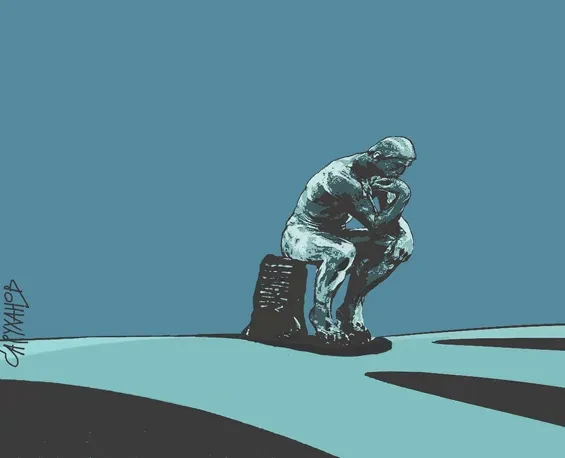
The defeat of culture is a bitter taste of recent times. And not because in the country there is no writer, philosopher, poet, scientist, whose voice in the situation of the schism would be listened to everyone, not one who would force power to hear themselves. And not because people of culture finally separated from the people; The people - the one that amounted to 82 notorious interest - does not need them anymore. Not even because of the current reality - at least television, at least Facebook, even a military - you will not find traces of either Tolstoy or Dostoevsky; But all of them passed at school. In the rough vocabulary of hatred that flooded the environment, there are no signs of at least some kind of textbook-suicide mental literacy. Russian classics went to dust.
Before our eyes, the myth of the Russian intelligentsia, people who are able to feel more sharply than their own, are lamented. People from whom it would be possible to wait for public statements motivated by the only burning “I can’t be silent,” they were able and silent. The surrender and death of the best Russian class occurred rapidly. It is divided into two parts with a solid seal of history. Malaya - disagreed, in a second recorded in traitors. And large - enthusiastic, defeated and captured by the strongest energy of accession to strength. “... We want the community of our peoples and our cultures to have a strong future. That is why we firmly declare the support of the position of the President of the Russian Federation in Ukraine and Crimea. ”
And on whom the blood of a seven -year -old girl who torn his leg in Donetsk on Friday? ..
Not so long ago, one of the most respected St. Petersburg historians, an exemplary, one might say, an intellectual, in response to a request to comment on a certain fragment of life honestly said: “Understand me, the matter ...” and I completely understood: his choice.
"The thing is for me!" - This suspension of complex motives dissolves any needles of conscience. Here is the main argument of reconciliation with oneself, the justification of the silence of the cultural “lambs”; Theater, museum, orchestra depend on its leader; I did not put a signature where necessary - they will scub the oxygen mask, take the future. The "business" will suffer. This is not a private plot - a pandemic; It is ridiculous to fix that the direct dependence of personal behavior on the state budget turns the Russian educated layer into servants of the regime. And this is also a defeat of culture. It is everywhere, both in large and in detail. That week, the “dialogue” of Limonov and Makarevich, a border of the writer-donor and a musician who fell into the vulgarity, not even even the participants themselves personally, but in general, the subjects of creativity.
For what is the unchommitable reason on Russian soil the most important thing for the life of the nation remains not perceived? Who will explain why sly power and gullible to illness people become unanimous in the face of a great bloodshed?
And there are no answers to draw, if, say, to throw a look a century ago, in the summer of 1914. Then many people, including writers, poets, thinkers of Europe and Russia, welcomed the First World War. Quite, very few elevated a voice against her.
No matter how amazingly, even large people of the beginning of the twentieth century, it seemed that the war would cleanse the atmosphere. Gumilev is recorded as a volunteer, Rozanov writes the book “The War of 1914. Russian Renaissance "; Sologub bursts out with virs, excitedly patriotic. Blok says Gippius: "War is fun."
On the other hand, the same thing: Maugham goes to the army, Freud states that he feels like a Austrian; Even the clever Robert Musil welcomes the first world. But then, in the summer of 1914, the essay of the Symbol, the poet, playwright Hugo von Hoffmannstal “Letter of the Lord Chendos”, in which he speaks of key changes within his time, came out.
Perhaps the main thing in this text is the fixation of the “state of all -encompassing relativity, which from the frontier of centuries has become perceived as a decisive quality of life.” Hoffmanstal writes about the impossibility of explaining to even the child what the truth is; about the loss of simple concepts “good”, “bad”; About the "unbearable emptyness of such words as" ideal "and" soul ", about the collapse of meaning.
Everything named is a hundred -strata over the eyelids of the aggravated neuroses of our state.
Surge comes immediately, even during the First World War. Everyone who included in the summer of the fourteenth year with illusions is sobered cruelly. And suddenly, a hundred years later, the situation is repeated. Not mirror - monstrous. Because between August 1914 and August 2014 lies the most tragic space for world history-the total destruction of man and humanism. Between the question of the symbolist genius, poet, nobleman of the bloc in a letter written by his wife on the eve of the October events: "What is the right to be afraid of our great, smart and kind people?" -and the roar of the press of the writer-Frontovik Astafyev: "Bitch people!" - Three quarters of a century, covered, according to Mandelstam, "heaven of large wholesale deaths." How did we get out of this sky?
Forgetting: War is the last evil. A terrible price was paid for joining it a hundred years ago. Ready to pay more?
Other times, other names, but there is no hope that everything will return to their own circles: the lost, voluntarily responsibility of the people of culture is the same. “Empty, empty. It is cold, cold. "