
Translated material
Long -liver and knight of science
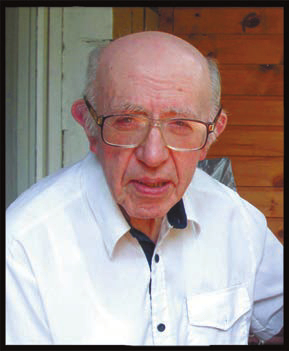 An outstanding neurophysiologist and teacher, the identity of the rarest qualities, Boris Izrailevich Khodorov ( January 17, 1922 - July 5 , 2014) passed away . We publish a story about him, sent to the editors of Peter Dmitrievich Breeshtovsky, director of research by the Institute of Brain Dynamics ( University of Ex- Marseille, France).
The official obituary usually begins to enlist the academic degrees, titles and awards of a different researcher who has gone into the world. Boris Israilevich had a lot of them: Honored Scientist of the Russian Federation, laureate of the State Prize, Doctor of Medical Sciences, Professor, one of the creators of the Patriotic School of Studies on Biophysics of Members and Neurophysiology ... It is also worth noting that he was a veteran of the Great Patriotic War, was finished twice, awarded the orders of the Red Star and the Patriotic War and the Patriotic War and the medals for the medals for the medals for the medal The liberation of Warsaw ”,“ For the capture of Berlin ”,“ For the victory over Germany ”.
But I would like to write about this passionate and cheerful king of science unofficially. Despite the fact that Boris Israilevich was given almost a century to realize his tasks on our planet, his departure is very sad: the era has gone, the rare representative of the knights and long -livers of science left, in which the passion of the unknown, creative talent of the experimenter and the ideologist, the ability to solve the most difficult tasks, expose knowledge in articles, reviews and books, was connected.
Several generations of biophysicists, physiologists and neurobiologists studied according to his monographs and textbooks. His experimental and overview work received international recognition, entered the world treasury of knowledge. For example, in the book of Bertil Hill, Ion channels of biological membranes, which is the most fundamental presentation of problems in this area, B.I. Khodorov is one of the most cited authors and the most cited of Russian scientists.
Boris Izrailevich was not my leader (although he has many students who scattered in the light of the light), nor a co-author (although he, according to my estimates, is more than 150 co-authors). He was a deeply respected, highly appreciated and sincerely loved person for me. Over the years, these feelings have increased more and more. Arriving in Moscow, I almost every time I broke my time to go to his apartment on the fourth floor. In recent years, he hardly moved, clutching behind the arcs specially fixed throughout all rooms. It seemed to me that a fragile, weakening body serves him in order to hold a rich, creative, non -universal soul on this earth.
Biography B.I. Khodorov is the story of a person who has passed the war, whom fate did not indulge in peacetime. He was born in 1922 in Crimea, in the city of Kerch. The boy received the name in honor of his grandfather, Boris Piasto, a famous musician (apparently, hence his great love and a subtle understanding of music). Boris's mother, a known surgeon known in Crimea, was constantly loaded with work, so grandmother, Maria Yakovlevna, was engaged in the first years. She was the older child in a large family of Crimeans - that was the name then the indigenous inhabitants of the Crimea who professed Judaism. Grandmother walked with little Borey in the city parks, drove around museums, concerts, talked about many historical events. At home, she hung pictures of different countries, and they together, moving from picture to picture, traveled throughout the globe. Borya grew up with a mischievous, super -free thinking boy, interested in all unknown and fascinated chess.
In 1934, the family moved to Sevastopol. Thanks to the galaxy of wonderful school teachers, this period of children's education was especially intense and fascinating. Khodorov’s warm memories of this time are intertwined with fun stories from school life. “ Matem Tiku us Teach Margarita Mikhailovna Menshilova . She I tracked down Strict expression faces and big exactingness . We are her The name of Margosha was . On One from Less to Kov Mathematics happened Funny story . IN this day I was duty By class . WITH mine Comrade , Seryozha Dzhanjanyan , we Side Lee V the first row , but far from to ski , on which Margosha colored crayons set out Theorem . We the same With Seryozha were Passionate chess mi , played blindly , without chessboard , transmitting Friend friend moves On the leaf Papers . Margosha I noticed that We busy something far From her trigonometric Theorems , and Loud voice CALL me To the board . Hearing " Khodorov , to board ! " And remembering that I duty By class , me Swiftly I ran up To board And wet a rag erased All ! Class I did ... but here I heard Savior Call - Change ! "
In the school years, especially after moving to Sevastopol, Boris was passionately fond of chess. He was engaged in the theory of the chess game, solved chess problems, and also played the parties of the great chess players, especially the brilliant parties of Alyokhin from his book “My 100 Best parties”. As a result, in one of the tournaments, he became the champion of Sevastopol. A smart boy loved to play in the Sevastopol Park, where he beat many “adult uncles” in the simultaneous game sessions on 20-30 boards. The passion for chess remained for life. He said that in the "Pigging of his chess achievements" there is a draw with the world champion in chess Mikhail Tale.
In the school period, Boris also studied foreign languages: French, on which his mother, as well as German, spoke freely, as he wanted to read Goethe and Heine in the original. But the greatest influence was influenced by a physics teacher, thanks to which the young man showed interest in electrical processes in the cells of biological organisms. Boris recalled: “One fine day, the teacher came to the lesson and invited us to write an essay on physics on one of the independent topics - for example, about Faraday, Volta or Galvani, who discovered the animal electricity ... I began to read the reading of various articles on the problem of“ animal electricity ”, and even wrote a multi -page outline dedicated to the history of the main discoveries in this area, calculated for such a reader as a reader as a reader as a reader as a reader. Summer schoolboy. This essay determined the main direction of my further research in the field of physiology of the nerve cell. ”
Having graduated in 1939 with honors from high school, Boris Khodorov entered the Kharkov Medical Institute, where from the first year he began to engage in experiments at the department of normal physiology. When the war began, their course was evacuated to Central Asia, where Boris continued his studies and physiology at the Tashkent Medical Institute. Here he led the Tashkent Diary, in which he set forth in the form of small articles of thought, observation, hypotheses. This diary was preserved, and Khodorov showed it to us. The quality and severity of the presentation of the thoughts of a young student is striking: there are very few corrections and blots, as if poems or phrases learned by heart were recorded. These early records became the foundation of his future experimental studies, articles, reviews and books.
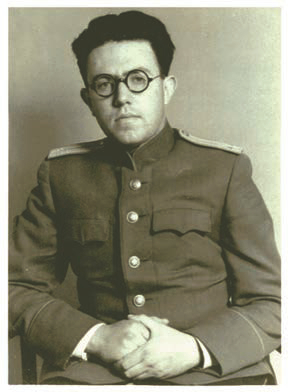
In August 1944, Khodorov graduated with honors from the medical institute and was mobilized in the ranks of the Red Army as a senior doctor in a howitzer artillery regiment of the 1st Belorussian Front. Care for a thousand soldiers and officers who needed to provide health and well -being fell on the shoulders of an inexperienced Aesculapius. As part of this regiment, the young military doctor went to the Elbe, where he met Victory Day.
After the war ended, the regiment in which B.I. served Khodorov, was left in Germany for another year. Only in 1946 he was transferred to Moscow. However, the dreams of a young military doctor that he was demobilized and he will receive the long -awaited opportunity to continue the scientific work begun in his student years: by this time throughout the army, an order was issued that general demobilization was completed.
According to Khodorov’s memoirs, the liberation came in a completely unexpected way: “ In That Time ... to me allowed use Hall Mi foreign literature , where I enjoyed opportunity browse The latest International magazines . IN One from magazines I Nat is banged on The article is the main one the author of which was professor E. B. Babsky . IN this article to me something Not I liked it , and Very I wanted to express to him their objections . But Where is it search ?
AND here suddenly I I learned that In the neighboring one With ours hostel The house is located Institute , c which is a professor Babsky Heads big physiological laboratory . On next the same day I He went to search specified Laboratory ... me kindly Conducted V cabinet Professor ... he asked what could be to me Useful . I He said that read his article And I would like to tell To him why Not agree CO made there The main You are a vod ( speech Walked O Roles Acetylcholine in mechanism nervous conducting ). He is scary I was surprised to what only What Returned With War young man Could join With him V dispute , and also more I was surprised when I found out that I Studied Fundamentals physiology , Chi Tai his Textbook " Physiology man " and management Hoton , which , how It turned out to serve Basic To create this Russian textbook " .
As a result, the young military doctor was so interested in E.B. Babsky that he wrote to the Minister of Higher Education a petition for the liberation of Khodorov from military service. The petition was satisfied. Having become an employee of the laboratory E.B. Babsky, Khodorov began the experiments that the chief offered him. Studies led to an unexpected result: Khodorov received data refuting the concept of the chef. After many hours of discussion, Babsky was convinced of the correctness of experimental data and ultimately invited a rebellious researcher to work without his direct leadership. As a result, Khodorov independently completed this cycle of research and brilliantly defended his thesis in 1949.
However, the post -war life that had begun to take shape did not indulge a talented researcher and presented him with unexpected surprises. In 1953, in many scientific institutions of the country, a “reorganization of personnel” related to the “doctors' affair” was suddenly performed. As a result, in the company of two dozen other scientists of Jewish nationality, B. Khodorov was dismissed and for a long time in Moscow to get a job in a specialty. Only in 1957 he was elected to the post of senior researcher at the Research Institute of Surgery named after A.V. Vishnevsky Academy of Medical Sciences of the USSR.
This institute was jokingly called the "Institute of Surgery named after the Father, Son and Novokain", since the institute founded A.V. Vishnevsky (1874–1948), and the director at that time was his son A.A. Vishnevsky (1906–1975), which developed the doctrine of the therapeutic effect of novocaine with a number of pathological processes. In those years, novocaine with great enthusiasm was replaced not only with small local, but also with abdominal operations and even heart operations.
Vishnevsky-San (San Sanych) was distinguished by extraordinary courage (despite the “case of doctors”, hired several Jews-scientists and doctors) and amazing for the surgeon a benevolent attitude to new undertakings and fundamental science. Thanks to his support, Khodorov got the opportunity to organize a laboratory of biophysical research, the pioneer direction of that era.
The laboratory has become a forge of knowledge and talented researchers. Together with students and colleagues, Khodorov created electrophysiological installations to register electrical signals in the interceptions of the Ranvier of isolated nerve fibers. At this facility, the influence of various anesthetics and other substances on the generation of action potentials was studied. A number of discoveries were made to decipher the mechanisms of the action of neurotoxins and local anesthetics for membrane excitability. These works were important bricks of knowledge about the mechanisms of the functioning of ion channels. They included in textbooks, books and guidelines for biophysics and physiology of the nervous system.
Many ideas and results of research were far ahead of the era. For example, back in 1969, when the ideas about the amino acid and structural organization of ion channels were unknown, Khodorov and co -authors proposed the molecular mechanism of action of local anastenics on sodium channels, the correctness of which was directly confirmed by American scientists fifty years later, after receiving the crystalline structure of the sodium channel in 2011.
In the era, when the ideas about the organization of ion channels were hypothetical, in the monograph “The problem of excitability” (1969), Khodorov not only raised important questions about how ion selectivity in the channels is carried out and how the potential activates the channel, but also suggested answers requiring experimental checks. This book had a great resonance in the Soviet Union, stimulated many scientists on researching the Hodgkin-Haxli model and problems associated with generating the potentials of operation and transmitting electric signals in the nervous system.
However, after thirty years of successful work in the Research Institute of Surgery. A.V. The Vishnevsky Academy of Medical Sciences of the USSR Khodorov was waiting for a new test. In the midst of perestroika, in 1988, a new leadership came, which successfully ruined fundamental science. It was decided to close the laboratory of biophysical research, as not corresponding to the profile of the work of the institute. Khodorov’s contribution to fundamental science was forgotten (or, most likely, not even realized). Most employees were transferred to other departments, some of the equipment was taken.
Khodorov with several closest students and the residue of the equipment went to the Research Institute of General Pathology and Pathophysiology of the RAMS. A very difficult stage of scientific activity began, when at the already solid (pension) age it was necessary to begin the organization of a new laboratory almost from scratch. The time was very difficult for the whole country, and especially for science. Sergei Revenko, one of the most talented students of Khodorov, recalls: “In my memory there is such an episode. Around 1992, we, together with BI (Boris Izrailevich), went to the Moscow Institute in the winter in the winter of Moscow. There was disgusting weather with wet snow and wind. Bi poorly tolerated the cold, he was dressed in a heavy winter coat. He was physically difficult to go. We were silent. The wind blew in the face, my mood was gloomy - I was tormented by the problem of how to wear and feed my children. And at that moment my thought flashed - this is a man who, at the age of 70, is ready from scratch and, in conditions of devastation, start a new direction in science. This task is harder than the organization of his biophysics laboratory in the 60s, but it takes it! Where does such a power of spirit come from? It dawned on me-this is a front-line soldier, he has a different scale of understanding of problems and difficulties. ”
To work at the new institute, it was necessary to radically change experimental models and research tasks. Khodorov had an interest in the problem of the death of neurons. Finally, the idea of the new direction-the pathophysiology of neurons of the brain-was formed during a trip to the United States with G.N. Kryzhanovsky. And in 2001, the new director of the institute academician A.A. Kubatiev created the laboratory of "Pathology of ion transport and intracellular alarm".
As a result, Khodorov with employees created a new direction for the study of molecular cells of neurotoxicity for science in Russia. Pioneer work on the study of impaired calcium homeostasis of brain neurons during hypermostation of glutamate receptors, as well as to clarify the role of mitochondria in brain cells, have received wide international recognition.
Thanks to the rare talent of communication and the ability to attract interesting, creative people, Khodorov formed a galaxy of scientists who are fruitfully working with him, as well as in the leading scientific centers of Russia and different countries of the world. He is the author of four monographs, as well as the co -author of the textbook “Physiology of man”. In addition, dozens of reviews and hundreds of articles have been published. The last chapter in the book “Horizons in Neuroscience Research” was written at the end of 2013, at the 92nd year of life. The work is striking in the clarity of the presentation, the abundance of the experimental material under discussion and the clarity of conclusions.
It is impossible to ignore another bright quality B.I. Khodorov is his vision of the world and events through the prism of humor. He told incredibly interesting stories, jokes, bikes. Many sharp epigrams on colleagues and acquaintances are known. Unexpected cheerful impromptu, he often “blew up” the scientific audience, for which he received the nickname “Bob-Dinamit”. His passionate talent for draws, the ability to create comic situations caused laughter in some, others - confusion, and others - sincere anger and indignation.
The story with Efim Lieberman, a wonderful membrane scientist, is known, for example. Lieberman was also the owner of a battered car, which was a huge rarity. In the early 1960s, a scientific conference was to be held in Moscow. There were rumors that foreign scientists would take part in it. This incredibly excited the minds and feelings of Soviet scientists who only read the articles of foreign colleagues, but had no opportunity to communicate with them.
On the eve of the conference, Khodorov called Lieberman and said that Alan Khozhkin and Andrew Haxli, newly made Nobel laureates (1963), who deciphered the mechanism of generating a nervous impulse should fly to Moscow. “I don’t know what kind of flight, but since you have a car, you, Efim, must meet them,” Kodorov said. Poor Lieberman went to the airport in the early morning, rolled there for many hours and only by midnight he had a suspicion that he had been played out ...
The sad news of the death of Boris Israilevich excited the international scientific community. Many condolences from the leading scientists of the world were received. Их чувства наиболее точно отражены в словах чл.-корр. РАН Л.Г. Магазаника: «Уход from life All смертных пре допределен , но losses друзей воспринимаются especially остро . Boris Израилевич прожил Not только долгую , но And creatively наполненную , а That's why счастливую life . Даже в The latter трудные For him physically years He восхищал All нас силой духа And негаснущим разумом . We разделяем sorrow большого чис ла people who were his долго летними друзьями , благодарными учениками , ценителями his неисся каемого юмора … »
Мы скорбим, и еще многие годы в памяти будут хранимы идеи, открытия и веселые истории Б.И. Ходорова.