
Translated material
Good, scary, but not for long
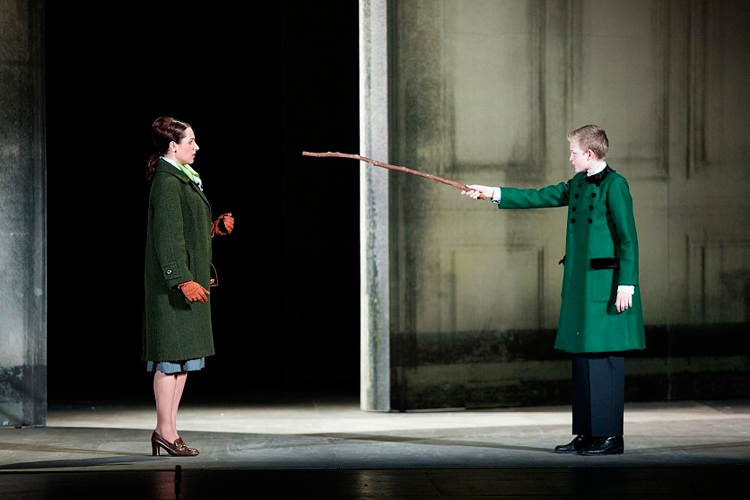
The Moscow Opera season began to premiere the premiere of the “screw turn” Benjamin Britten in New Opera. Upon closer examination, however, it turned out that this is not quite the Moscow season and not quite a premiere. The performance was postponed from the Opera Theater of North Ireland (Belfast), along with the performers of the parties of the governess (Soprano Suzanne Harrell) and her young pupil of Miles (Discant Tom Tom). It was delivered two years ago by the promising youth (director Oliver Mirs, artist Annamari Woods), despite her modest-budget form, received a benevolent press of the press and fell for this in the Cross-Year Culture Program of Russia and the UK (at the press conference, it was nervously emphasized that Northern Ireland is part of the UK).
The “New Opera”, headed by his chief conductor, Yan Latam-König, in turn, carried out serious work to spit imported goods with a local troupe and getting involved in a fragile Britten style. The remaining four parties of this very little -bitten opera are singing local soloists (Peter Kuint - Yaroslav Abaimov, Grouz’s housekeeper - Irina Romishevskaya, Flora - Victoria Shevtsova, Miss Jessel - Valeria Pfister), not at all detecting her alienness. Another set of insurance singers is yearning for curtains-they still do not have to sing in front of the public, since, under the terms of the contract, the performance is shown only twice (today is the last day). Both the Stevers-Stevers and the audience that blinked these two shows is very sorry, because we have no other “turn of the screw” in Moscow, but this one turned out to be very cute-of course, if it is appropriate to talk about the most hopeless and terrible opera Britten.
 © D. Kochetkov / "New Opera"
Now this psychological thriller, whose premiere happened in Venice in 1954, is already standing on a shelf of unconditional masterpieces of the 20th century. The plot is taken from the novels of Henry James, and also, quite obviously, from the life of Britten, in those strict years painfully dealing with his own intimate life. The opera consists of underheldations and signs of the question, and although the composer endowed two dead characters with vocal parties, it is still incomprehensible whether it is about real ghosts or the inflamed imagination of a young, lonely, strictly well -educated and impressive governess, which longs for love, recognition, exploits and does not know what else. Children's aggression, adolescent sexuality, estate restrictions, social norms, suppressed emotions and desires, the games of the sick consciousness - all these topics pop up in the opera in different proportions, depending on the director’s intentions.
 © D. Kochetkov / "New Opera"
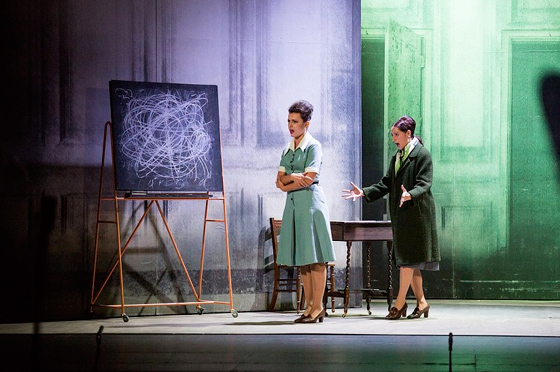
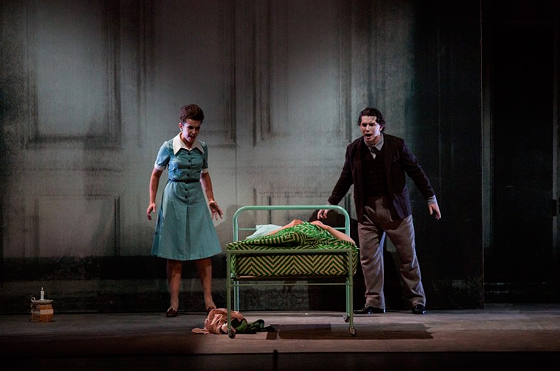
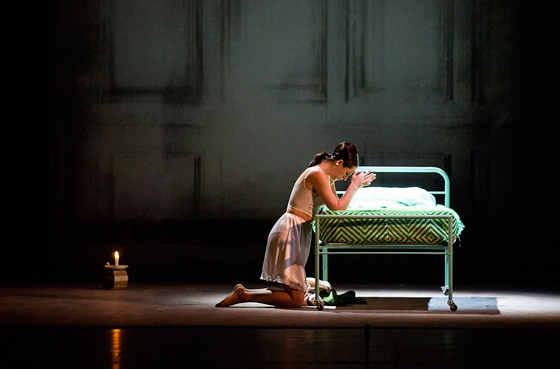
In this case, no sharp copyright comments and final answers are not given, although the self -confident footman of Kuint and the former governess of Miss Jessele, which appeared from the other world, dispense with no science fantasy, so that they are more likely from girlish fantasies than from Gothic novels. All characters in the performance are completely ordinary people fastened to all buttons from the 50-60s of the last century. The maximum laconic situation of the troubled, changeable and airless space, in which they are locked, like in a laboratory flask, does not interfere with looking at their naked fears and complexes.
 © D. Kochetkov / "New Opera"
The orchestra adds bright colors to them, more precisely - the chamber ensemble of only 13 instrumentalists, which are all like under a magnifying glass and are actually thirteen characters of this opera. As we know from the sensational local “Tristan” (“Golden Mask” last season), maestro-Kenig, when he is in love with music, works miracles-and this is just that case. Perhaps the most expressive hero of his ensemble should be recognized as a drummer - his liths were responsible for the frost on the skin. But I also wanted to listen to the rest, standing up from the chair and looking into the orchestra hole. Because it was they who for a couple of days reminded that the “rotation of the screw” is not only the most terrible, but also the most beautiful opera of Britten, and maybe the whole twentieth century.