
Translated material
The EU summit was opened in Brussels, discuss sanctions against Russia
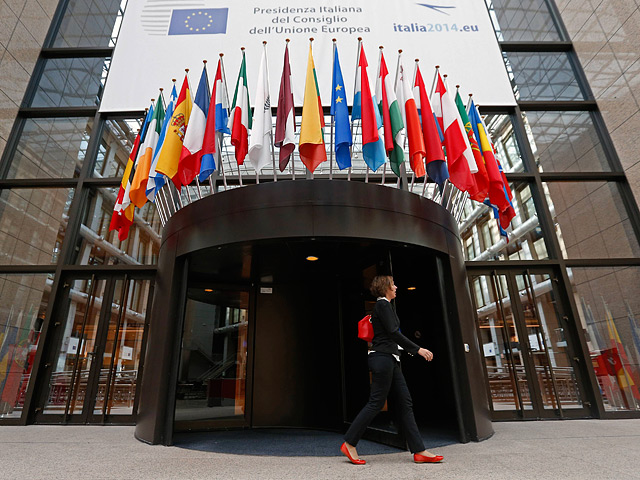
The summit of the heads of state and governments of 28 countries of the European Union opened in Brussels. The focus of attention of an extraordinary meeting is the situation in Ukraine and the appointment of key posts in the EU leadership. According to Reuters , the countries failed to develop a single approach regarding sanctions, and in the draft of the resolution there is an order to “urgently” to develop the next package of sanctions against Russia. The meeting should be the President of Ukraine Petro Poroshenko.
The summit was preceded by the morning negotiations of the heads of the European Council Herman Van Rompey and the European Commission Jose Manuel Barrosa with the President of Ukraine Peter Poroshenko, who was invited to Brussels "for a Ukrainian view of the causes of the current situation in eastern Ukraine." So, according to the results of a bilateral meeting, Barrozu and Poroshenko said that "they believe in the speedy political settlement of the conflict in Ukraine" and that his "military decision does not exist", ITAR-TASS indicates. Rompei said that the EU would give an “adequate assessment” of Russia's actions.
Barrosa emphasized that "the EU is not interested in confrontation with Russia," but at the same time ready to impose new sanctions against it in the event of a further escalation of the situation in eastern Ukraine.
The most sharp statements before the summit was made by Lithuanian President Dalya Gribauskaite. She stated that Russia was “waging a war” with Ukraine, which means “and with Europe”.
It is assumed that at the Summit that opened the EU does not intend to make specific decisions on the introduction of new sanctions against Russia, perhaps only their discussion, the leaders of individual countries of the European Union told the meeting. So, according to France President Francois Hollande, participants in the summit can instruct the European Commission to start work to increase the level of sanctions.
On the other hand, Finland Prime Minister Alexander Stubb told ITAR-TASS that the EU could expand the package of existing sanctions against Russia. "This means that they will be in relation to the financial services sector, weapons industry, dual -use products and some technologies in the energy sector," he said. Stubb indicated that without Russia it is impossible to resolve the situation in Ukraine: "The EU summit signal should be clear: if there is no ceasefire, the implementation of a peaceful plan and ensure full control of the border, new sanctions will follow."
The second part of the meeting will be devoted to the appointments to key posts in the leadership of the European Union. At the moment, it has been decided only on the successor of Barroz as the head of the European Commission of 2014-2019-it will be headed by the ex-Prime Minister of Luxembourg Jean-Claude Junker. To the post of chairman of the European Council, the main candidate is Poland Prime Minister Donald Tusk, and the head of the EU diplomacy Katherine Ashton can be replaced by the head of the Foreign Ministry of Italy Federica Mogherini.
The order of work
The work of the summit began with a traditional exchange of views between the chairman of the European Parliament Martin Schulz and EU leaders. This time, the exchange of views of the meeting participants will also take place with the elected chairman of the European Commission Jean-Claude Junker.
Further at the meeting, President of Ukraine Petro Poroshenko will perform with a message about the situation in the country.
Then the work session as such will begin, at which the heads of state and governments of the EU countries intend to choose the future chairman of the European Council and appoint the EU Supreme EU and Security Policy, Interfax reports.