
Translated material
Autotization-2
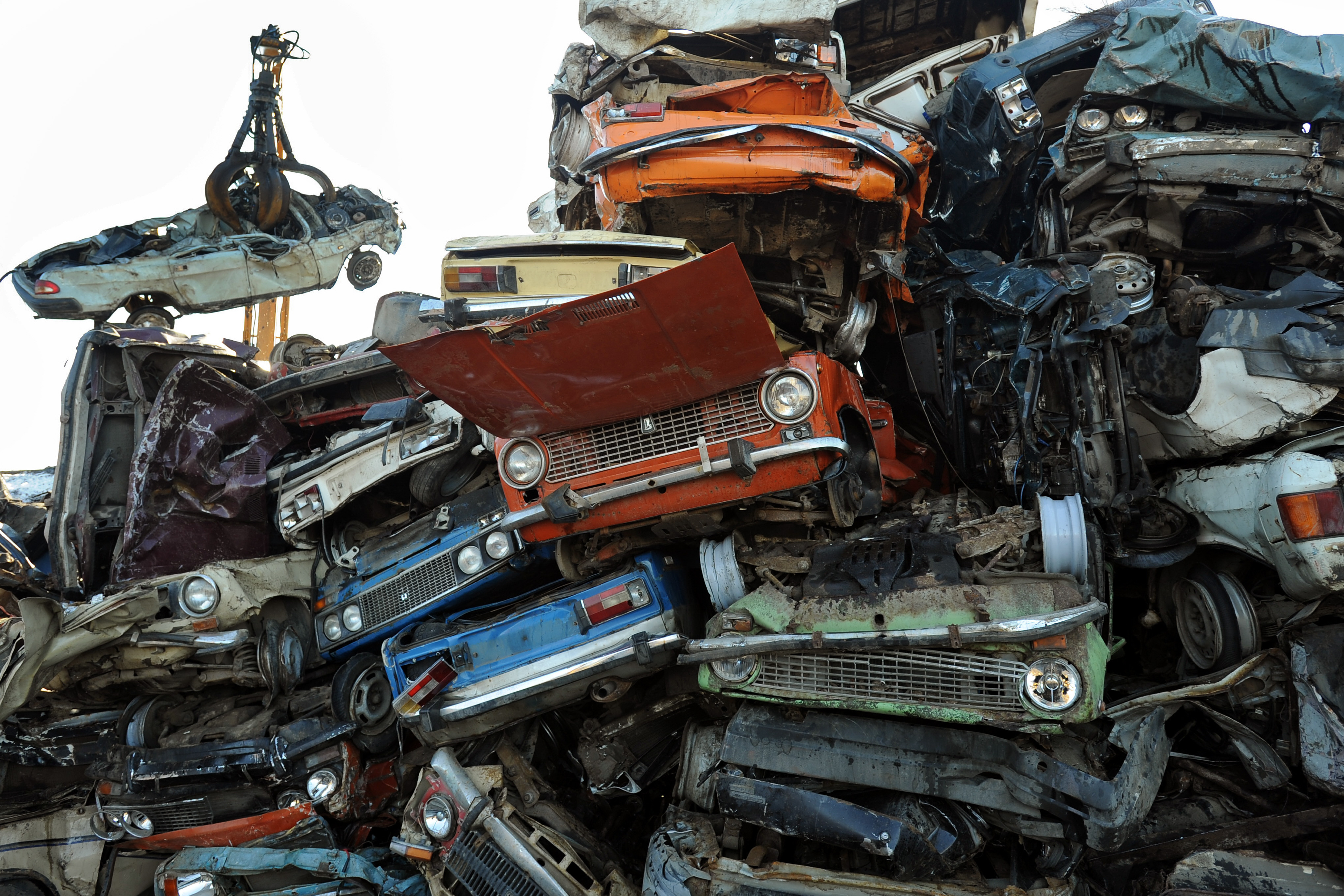
In Russia, the state program of the preferential exchange of old cars for new
On September 1, a new program of preferential exchange of old cars for new or recycling program begins in Russia. A previous such program - the anti -crisis support of the national auto industry - operated in the country in 2010 and 2011. Then, cars and light commercial vehicles with the life of more than 10 years fell under it, and the compensation of the state to their owners amounted to 50 thousand rubles. The new program will already cover all categories of cars. Compensation for a passenger - 40 thousand rubles, that is, less than 1,100 dollars at the current rate, and the minimum service life is reduced to 6 years. Compensation can reach 350 thousand rubles for trucks.
The next decline in sales on the Russian automobile market began last spring and this year only accelerated: from January to July, it amounted to almost 10% of the first seven months of last year. Moreover, in July, the reduction amounted to almost 23%, and in general, for the year, as different automakers predict, sales of cars and light commercial cars in the country can be reduced by 12-20%.
Against this background, a decision is made to resume the recycling program, which is able to revive the Russian automobile market somewhat, says Andrei Rozhkov, a machine -building analyst from the investment company Metropol. This time, compensation is proposed not only for the utilized old car, but also for the one that the car owner rents out to the store, buying a new one according to the Trade-in option, if he is older than six years. “In general, taking into account these options, buyers will be able to get a discount from the price of a new car at about 5-8%,” Rozhkov believes.
The state clearly does not have enough funds to resume both the automotive industry and the disposal of old cars and the preferential lending to the purchase of new funds, and the choice was eventually made in favor of the first. It is still more oriented towards the budget segment of the market, while the second program is on its middle and lower segments.
The same feature of the new program - according to plans, it will last until the end of 2014 - notes Alexander Serov , an analyst with the investment company Renaissance Capital. Nevertheless, the total funding of the program will be smaller than the last time, and it will spread to all segments of the automobile market. “Therefore, the influence of the program on the segment of cars and light commercial cars, according to our estimates, will be smaller than three years ago,” serova continues. “So far, we assume that sales here fall by 10-12% in the whole year, but the recycling program can reduce this decline by 1-2 percentage points.”
A decrease in compensation, in comparison with a program for the disposal of three years ago, is caused by a shortage of funds from the state, while a decrease in the minimum service life from 10 to 6 years is designed to expand the park of cars that fall under this program, the analyst of the BCS financial group Igor Kraevsky notes. Nevertheless, he believes that for owners of cars with operating life from 6 to 10 years, compensation of 40 thousand rubles is not so significant that they are massively interested in the new program.
“Most likely, it is more designed for the segment of light commercial cars, for which compensation can be many times larger,” Kraevsky believes. “And, in my opinion, it is in this segment that the program will be most in demand.”
Current rates on car loans can be from different models from 15% to 22-25% per annum. Some automakers are trying to organize their own lending support programs, realizing that this is a significant sales factor.
Programs for the disposal of old cars-to support the national auto industry in the context of a sharp decline in sales due to financial crisis-have been used in recent years by many countries. Somewhere they lasted only one month-as in the United States in the summer of 2009. Somewhere-several months, as in Germany, from February to September 2009. Somewhere-exactly a year, as in the UK-from April 2009 to April 2010. And, for example, in Spain this year, a fifth similar program has been operating only over the past two and a half years.
In Russia, the current program is the second in less than five years. The effect of the first manifested itself quickly. After a sharp fall in the Russian car market in the post -crisis in 2009 - immediately by 50% - the next year it grew by 30%. The increase in sales in 2011 was even larger - 39%. However, the solvent demand for cars in the country gradually returned to the pre-crisis levels , and already in 2012 the total sales grew by only 11%, and in 2013 it was completely reduced by 5%.
The influence of the program on the segment of cars and light commercial cars, according to our estimates, will be smaller than three years ago.
The new program, like all similar ones, will have the greatest effect in the segment of budget models, since it is here, given the compensation of the state, the discount from the price of the new machine is the most significant, says Andrei Rozhkov, believing, nevertheless, that the program is unlikely to significantly improve the current sales in this segment. “The current 20%fall in sales is too much, and the effect of the program, according to my estimates, will be 5-6%. Thus, in the budget segment in the whole year, sales can be reduced by 12-15%.”
Having renewed the preferential exchange of old cars for new ones, the government, nevertheless, does not return to another component of the previous anti -crisis support program of the auto industry - preferential lending to the purchase of new cars . She assumed that the state covers the private buyer with part of the bank loan interest payments for such a purchase, and was completed last fall.
This time, compensation is proposed not only for the utilized old car, but also for the one that the car owner rents out to the store, buying a new one according to the Trade-in option, if he is older than six years. In general, taking into account these options, buyers will be able to get a discount of the new car, about 5-8%.
In 2013, almost every second new car in Russia was bought on credit. This year, against the background of the continuing rise in consumer loans in general and car in particular, this share for many models has reduced to 30-20% and even more, which has become one of the main factors in the general decline in sales of new cars in the country.
The average rates on car loans have grown from the beginning of the year by more than two percentage points and even higher, Alexander Serov notes, and continue to grow. “Current rates on car loans can be from different models from 15% to 22-25% per annum. We also see that some automakers are trying to organize their own lending support programs, realizing that this is a significant sales factor.”
The state clearly does not have enough funds to resume both the automotive industry and the disposal of old cars and the preferential lending to the purchase of new funds, and the choice was eventually made in favor of the first. It is still more oriented towards the budget segment of the market, while the second program is on its middle and lower segments, Andrei Rozhkov believes. The greatest decline in sales is experienced by such factories as AvtoVAZ, UAZ or GAZ that produces light commercial cars, the analyst continues: “The choice in favor of the disposal program, in my opinion, was due to the provision of support for these plants.”