
Translated material
Soldiers of the unnecessary war
Moscow continues to deny its involvement in the conflict in eastern Ukraine, but prisoners and killed Russian military personnel prove the opposite
“We cope with the Russian terrorists, not with the Russian regular army,” said Arseniy Yatsenyuk, Ukrainian Prime Minister Arseny Yatsenyuk, at a bewilderment on August 28 at a meeting of the Cabinet of Ministers
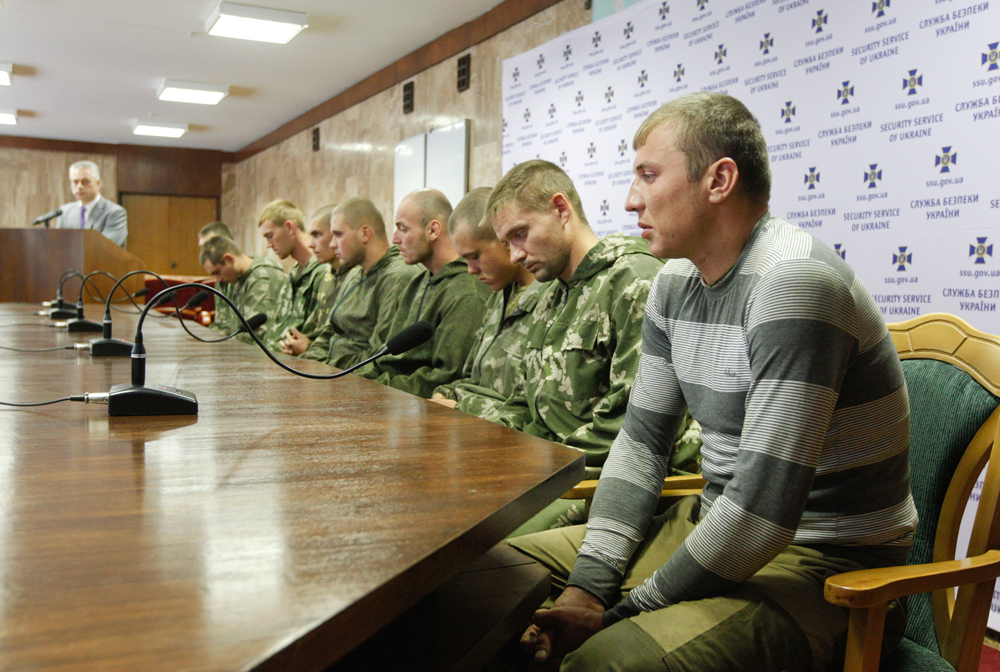
Russian paratroopers detained in Ukraine during a press conference in Kyiv, 08/28/2014 /Photo: Valentin Ogirenko /Reuters
  |
On August 25, at the cemetery in the Baby, which was 15 km from Pskov, the funeral of two military personnel of the 76th Guards Airborne Kiturm Chernihiv Division-29-year-old Leonid Kichkin and 20-year-old Alexander Osipov took place. Moreover, someone, who introduced himself as Leonid Kichatkin, talked on the phone with reporters the day before the funeral, refuting information about his own death. On August 27, there were reports on the Internet that signs with names were removed from the graves, and the cemetery was put under guard: on August 28, unknown shave -headed guys did not let Reuters a correspondent, and the deputy of the regional assembly Lev Schlosberg, who was engaged in the topic of the funeral, was beaten in Pskov. On August 26, it became known that in the same setting of secrecy near Voronezh, Anton Korolenko, the commander of the landing and healing platoon of the same 76th division, was buried under Voronezh. Messages about the suddenly died or wounded under unknown circumstances of the military began to come from Dagestan, St. Petersburg, Stavropol. On August 27, a resident of Bashkiria Venus Araptanova told Rain that on August 22 she buried her son Marseille, who died on the 12th under unknown circumstances at the training ground in the Rostov region near the border with Ukraine. Marseille was buried according to Muslim customs, taking out the body from the coffin, and he had to identify his son by scars and moles: he had no head.
Relatives of the dead refuse to communicate with reporters. According to Valentina Melnikova, the responsible secretary of the Union of Committee of the soldiers' mothers of Russia, not a single statement received from them. But from all over the country, statements from the parents of soldiers sent to the Rostov Region and, possibly, to Ukraine: Dagestan, Chechnya, Astrakhan, St. Petersburg, Stavropol Territory ... with many contractors and mattresses have not been a week have not been communicated. The military enlistment offices assure relatives that they are all right with their sons and brothers, but they do not believe in the state.
Missing children
   |
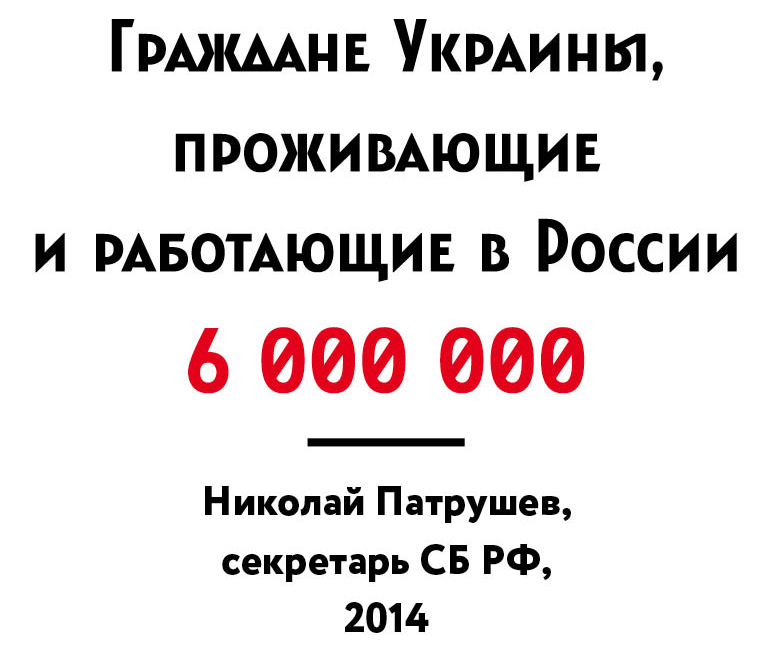
So, if the tragic fate, at least three buried in Voronezh and Pskov fighters of the Chernihiv division, is known, the fate of their 14 fellow soldiers remains in question. On August 21, the Security Service of Ukraine (SBU) posted a photograph of documents found after a fight near the village of Georgievka, Donetsk region: passports, driver’s licenses, military tickets and credit cards. Moscow immediately announced a fake, because the funeral in the ravines and tried to hide from the public. “In general, the passport should be stored with the commander of the unit, especially if the fighter goes on a combat mission,” Military Expert Alexander Golts told The New Times. “All this indicates the mess in which the operation is performed.” VKontakte pages of the missing soldiers quickly dispersed over the network, it became known that some of them received medals “for the return of Crimea” (and the 76th division itself was awarded the Order of Suvorov: as the Minister of Defense Sergei Shoigu explained for many “hot spots”, including for Crimea).
The mother of one of the soldiers, a biology teacher from a military town near Saratova, Lyubov Maksimova, did not believe her eyes when she saw the driver’s license and bank cards of her son Ilya among the documents laid out. “The last time on August 16, his sister spoke with him, he said that he was going to exercises to the Rostov region, and the next day he sent an SMS:“ Everything is fine, charging is sitting, there is no electricity in the camp, ”said love to the New Times. “There was no more connection with him.” At the local military registration and enlistment office, the woman was told that there was no reason for concern, however, after waiting a couple of days, she turned to the Saratov Committee of Soldiers' Mothers. After the hype raised in the press, Ilya suddenly called his father, said that he was all right, he was in Rostov, and he did not know how his documents hit Ukraine. The mysterious detail: 21, and then on August 26, after the press conference, the local district police officer, who was interested in their son, came to Maksimov. “I asked him why he came to me with such a question, he replied that he was given an instruction from the FSB,” Ilya’s mother told the magazine. The secretary of the Saratov Committee of Soldiers' Mother Lidia Sviridova could not comment on the visits of the district police officer. Again a Russian mess?
   |
Suddenly, I saw on the Internet the documents of his younger brother Ivan Barnaulets Dmitry Tkachenko. Ivan also serves in the 76th division, but he is a soldier. “The last time I spoke with him on August 16, there was no talk of any teachings or a trip to Ukraine,” Dmitry said on the phone with a muffled voice. “Then his phone was turned off all the time.” Dmitry also at first rushed to the military enlistment office, where they tried to calm him down, and then to the Committee of Soldiers' Mothers: at the time of passing the number of information about the missing conscript Ivan Tkachenko, he did not appear.
According to the law, military service soldiers can go to “hot spots” after 4 months of service - the corresponding decree was signed by Vladimir Putin on February 11, 2013 (Ivan Tkachenko was drafted into the army last year). But it seems that even the rule of 4 months is not always observed: Valentina Melnikova told The New Times about the violent departure of conscripts to Ukraine. According to her, one of the military personnel from the Ryazan landing division, called up in the spring of 2014, sent SMS to the mother from the landfill in the Gukovo of the Rostov region that they were forced to sign the contract: “Colonel Medinsky gathered and said:“ Sign the contract, we will send you to Lugansk. Do not sign it - I’ll sign it myself, ”Melnikov quotes the fighter. However, according to the human rights activist, no one applied to her with an official statement about this story. As Alexander Golts notes, if the fact of sending conscripts to Ukraine is confirmed, this will mean that Russia simply does not have resources for conducting a full -scale operation: “We are told that the number of contractors by January 1, 2015 should be 250 thousand people, including the contract, the Airborne Forces should be completely transferred, marine infantry and special forces. The use of conscripts imposes gigantic restrictions: the level of discipline, motivation, combat training is completely different, in addition, conscripts must be changed every six months - no occupation in this situation is impossible. ”
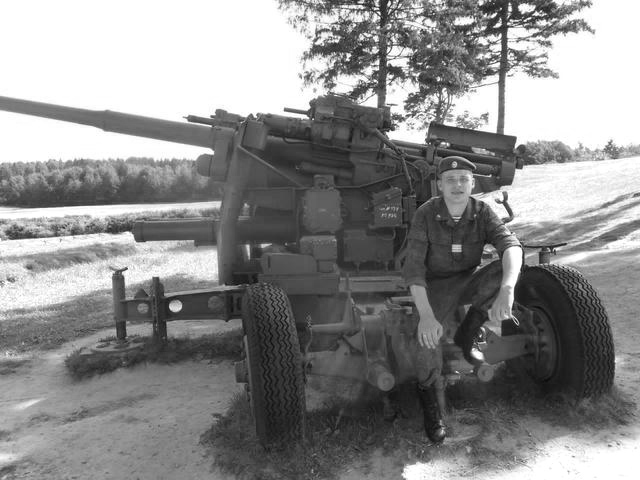
Paratrooper Leonid Kichkin - relatives did not find out where and how he died /photo: from the site www.vk.com
Russians are surrendering
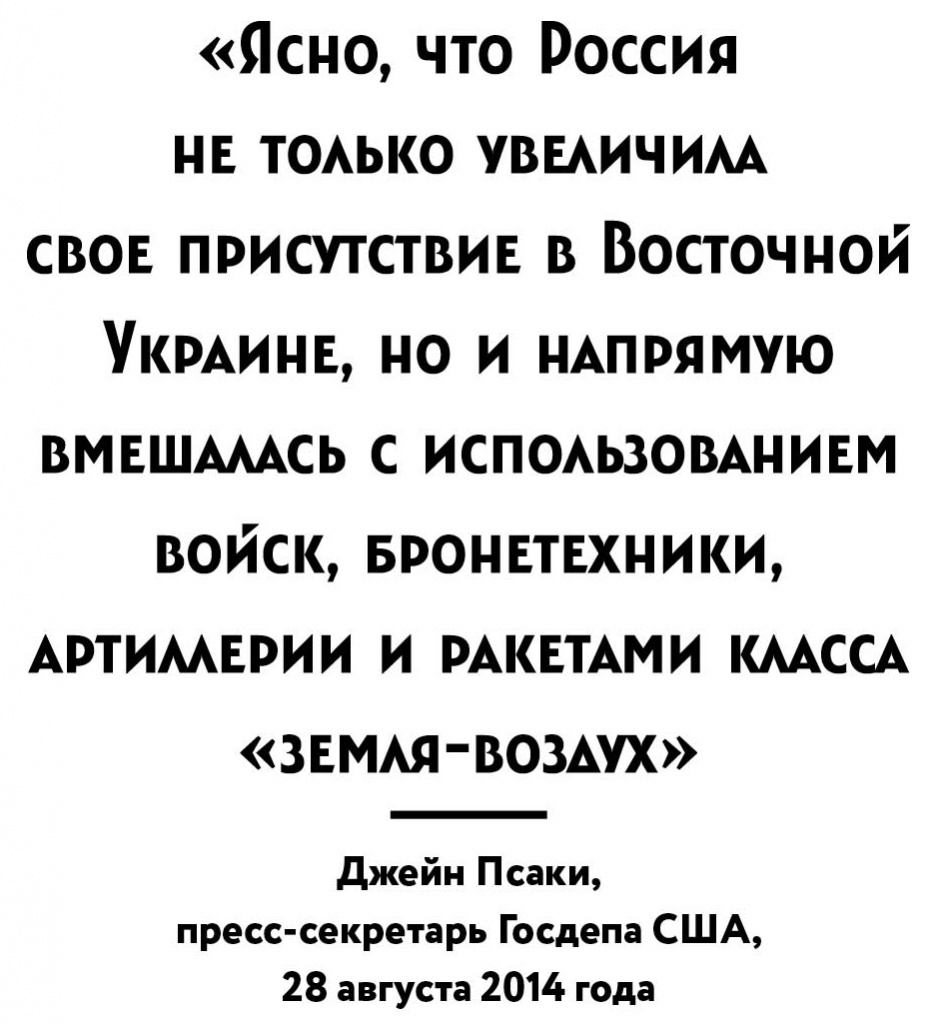 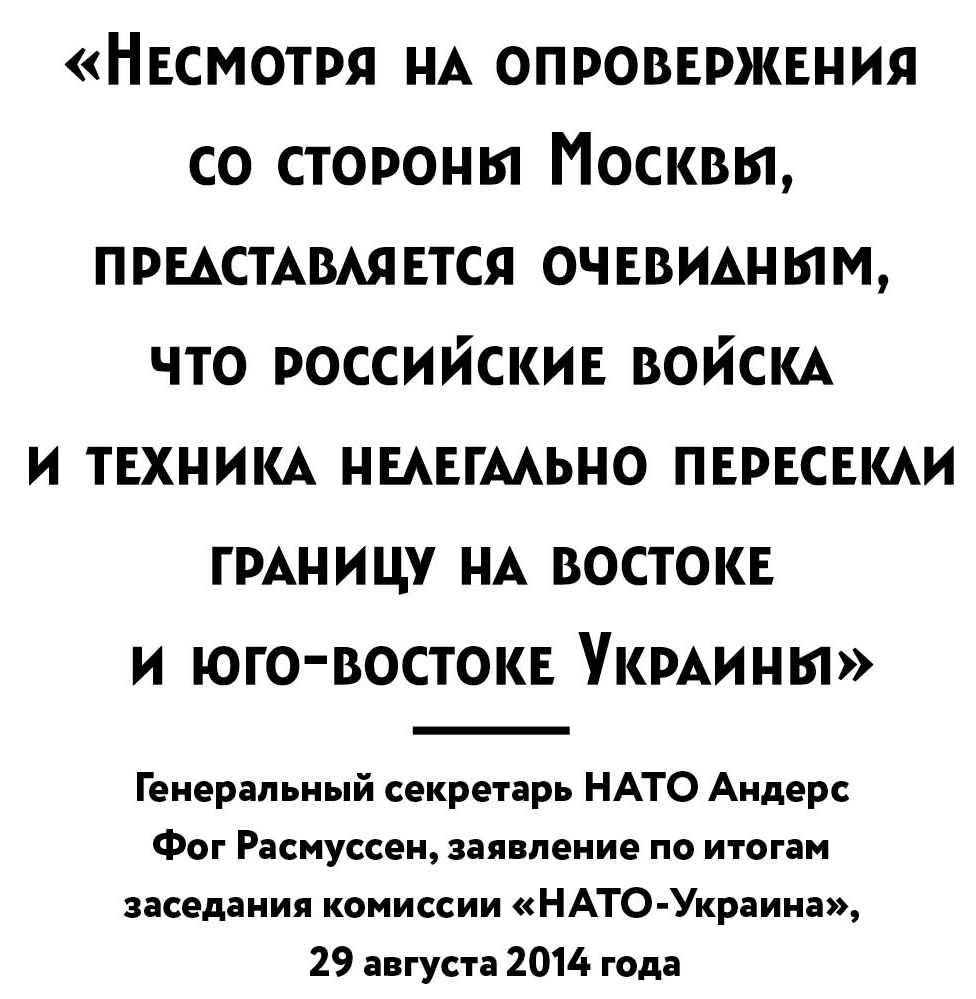 |
Around the same days, the Russian-Ukrainian border was crossed by a column of 331 regiment of the 98th Guards Svir Airborne Division (the division itself is located in Ivanovo, 331 regiment is deployed in Kostroma). On August 25, 10 fighters who fought off the column were detained by the village of Mirror Donetsk Region. This time there were no documents with them, but there were license plates, which are issued when reaching a combat mission - to make it easier to identify the bodies in case of death. On August 28, it became known about the detention of two more fighters from the Ulyanovsk 31st Separate Guards Airborne Brigade.
On the video posted on the Internet, captured soldiers talk about the fact that they were sent to the exercises, did not know that they crossed the border of Ukraine, and they understood this only when they began to shoot at them. The paratroopers from Kostroma said that on August 16 a fee was announced in their units, they were announced that they were going on a business trip to the Rostov region. As the head of the Kostroma Committee of Soldiers' Mothers Lyudmila Khokhlova said The New Times, it was on the 16-17th day that relatives spoke with them for the last time. The next day, they plunged into echelons along with military equipment and after 4 days arrived in the Rostov region. A tent camp was defeated there, experts examined the equipment, and the numbers were covered in cars, and white circles were drawn in their place - supposedly, so that during bilateral exercises it was possible to recognize the alleged enemy. Having made another march of 500 km, on the night of August 24, the battalion crossed the border with Ukraine in the south of the Donetsk region.
The Russian Ministry of Defense, and then President Putin was recognized in the detained Russian troops, saying that they were lost during the patrol of the border. This version, however, is in doubt: the soldiers themselves on their pages Vkontakte boasted that they were going to Ukraine: “They send me to Rostov again. For war. Maidan to wet, ”wrote Corporal Ivan Milchakov on his VKrattak page. “They just had such a workpiece - what to say in case of captivity,” a source in the Ukrainian army, familiar with the details of the detention, told The New Times. - Otherwise, why would they put the flags of the DPR on their cars? " It seems strange that the border suddenly began to patrol the fighters of the Airborne Forces: "We have a border service for this, with what on earth did they suddenly instruct the paratroopers?" - Alexander Golts asks the question.
To battle on vacation
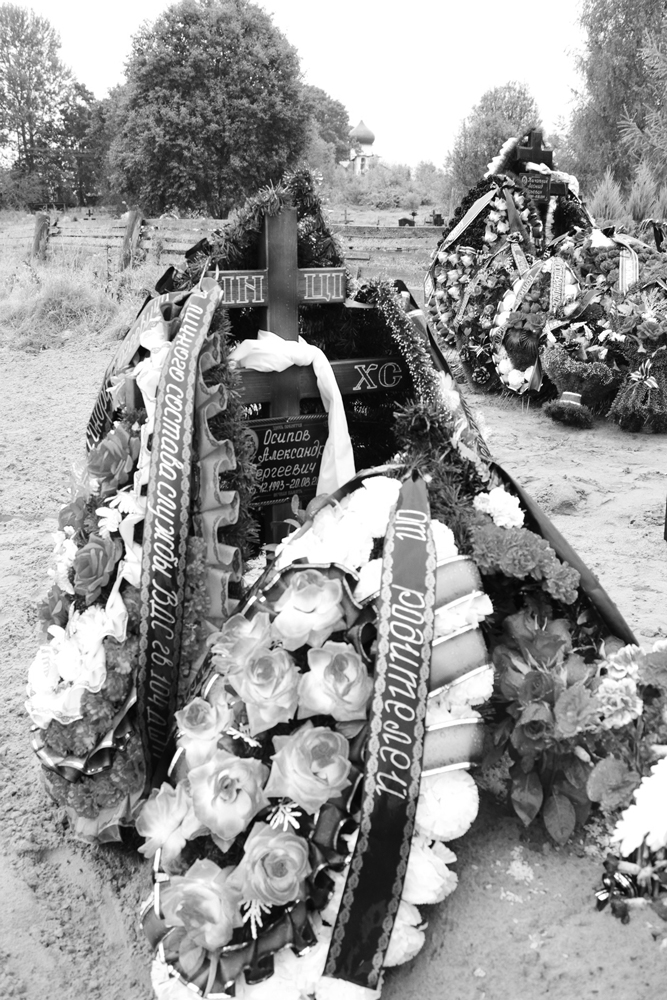 |
| Two days after the funeral, the signs from the celebrations of the paratroopers were shot /Photo: From the site www.gubernia.pskovregion.org |
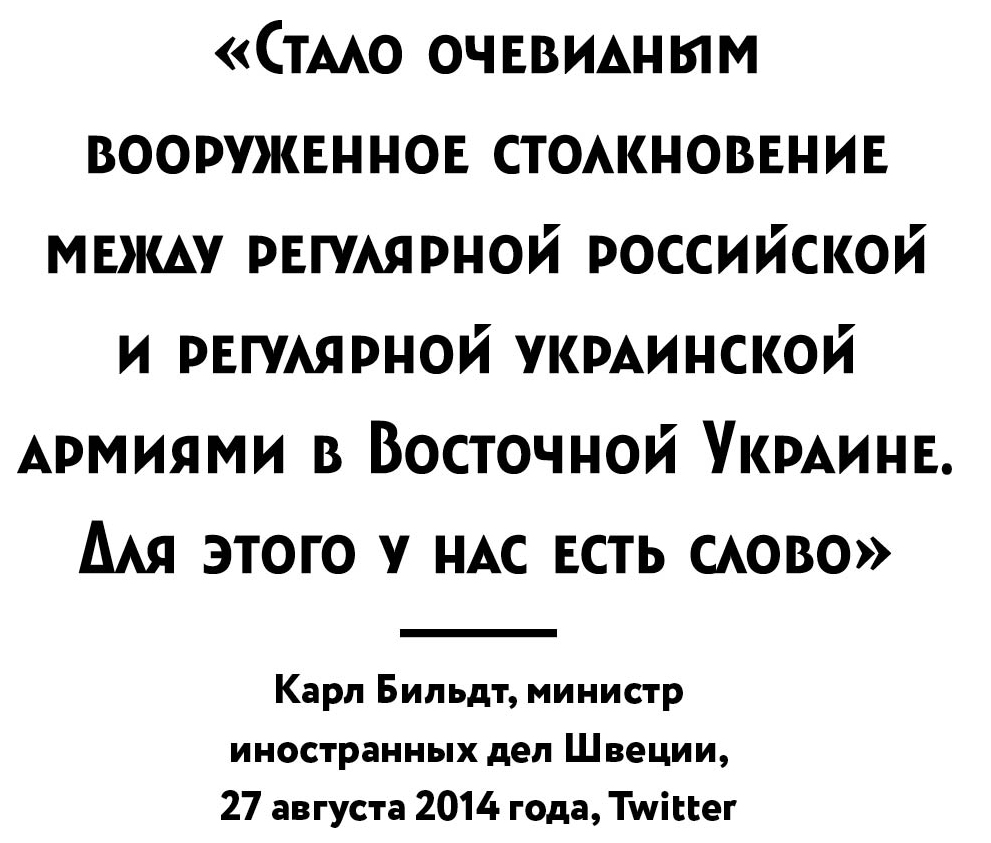
As in February-March of this year in Crimea, there are officially no Russian troops in the Donbass, although numerous evidence contradicts this. At first, it was believed that in the Crimea the Ukrainian military units blocked only the GRU special forces, but the rewarding of the Order of Suvorov of the 76th Airborne Division testifies to the opposite. “It may well be a general army operation that performs the tasks set by the country's leadership using regular troops,” says Alexander Golts, “GRU officers cannot plan and carry out combined arms operations, they are more sharpened for some short spot sabotage.” However, the war still remains undeclared, and the permission to use troops abroad issued by Vladimir Putin by the Federation Council on the eve of the Crimean campaign was withdrawn on June 25. “No one told us on what basis these military operations are ongoing, no one saw any order,” Valentina Melnikova is indignant. -And if this is some kind of secret operation, then why are ordinary paratroopers participate in it? This is a special forces! " However, as the historian of the special services explained to the magazine, in the past - the GRU special forces officer Boris Volodarsky, GRU or the FSB may well use the usual parts of the Airborne Forces to perform their tasks: “When I served in special forces, we trained at the bases of the Airborne Forces,” he says. “In the USSR, ordinary military often went on special business trips to Egypt, Angola, Vietnam,” Alexander Golts confirms Volodarsky. “Moreover, any Soviet military dreamed of being on such a business trip, because they paid good per diem there.” The assumption that fighters to Ukraine also drove financial interest is confirmed by the deputy commander of the platoon of the 95th brigade of Ukrainian Armed Forces Igor Skochko: according to him, during interrogation the paratroopers admitted that their rate is $ 100 per day.
"
“They send me to Rostov again. For war. Maidan to wet, ”wrote Corporal Ivan Milchakov on his VKREAST page
"
According to experts, in the USSR, GRU and KGB could be engaged in such tasks, and in today's Russia active operations, or, in the jargon of scouts, “active”, belong to the field of activity of the same GRU and the SVR who left the KGB (is responsible for the far abroad) and the FSB (CIS and Russia countries). “They can act in parallel, coordinating their work, although a operational group in eastern Ukraine has already been created, which has a curator in the presidential administration,” Boris Volodarsky suggests, recalling that in the 1920-1930s the group X, which was engaged in the Civil War in Spain, was created in the Spanish, and the Z Z, which was responsible for the war in China. “There is no doubt that all decisions are made in the Kremlin,” says Boris Volodarsky. In the event of an operation, the first person of the state gives a top secret instruction to the GRU chief, he, in turn, signs the order to the deputy for the relevant unit, who lowers his head of the desired department. The head of the operational department selects military units that will be sent on a task, approving their proposals with the leadership.
A separate question is how to explain to relatives the death of military personnel, because officially there are no military operations. It failed to contact the relatives of the dead paratroopers in order to clarify this. “If a soldier died in exercises, as reported by many of the dead from Dagestan, the military prosecutor is obliged to start a criminal case,” explains Valentina Melnikova. - Not a single case has been started yet. If he died during the performance, we would like to know what kind of order it was, who signed it, when completing a task, a person died. There can be no combat missions on the territory of Russia, we allegedly do not wage war abroad. ” However, if we are talking about a special operation, the information may not be disclosed: “It’s enough to write“ died “he died in the execution of a combat mission”, not explaining where and under what circumstances, ”says Alexander Golts,“ while the family of the deceased will receive the same benefits and payments, as if it were about a regular war. ” Valentina Melnikova with Golts does not agree: “We have information that the paratroopers poisoned by Ukraine wrote reports about the dismissal, in this case, in this case, to relatives, so we will still hear about them when they understand it.” Her words were indirectly confirmed by the Prime Minister of the self-proclaimed Donetsk People’s Republic, Alexander Zakharchenko, who said in an interview with Russia-24, that Russian military personnel who took vacation fighting for this fight in the ranks of the DPR army. One thing is unknown - how long the fighters of the RF Armed Forces will return from vacation in zinc and when they recognize the facts that have become obvious to the world in Moscow.