
Translated material
September 1, 75 years ago
On September 1, 1939, at 4.45 in the morning, German troops launched an offensive along the entire length of the German-Polish border
Thus began the Second World War - the most bloody, cruel and destructive in the history of mankind
| Published with abbreviations. The text is fully published in the journal "Military-Industrial Courier" No. 31 and 32 |
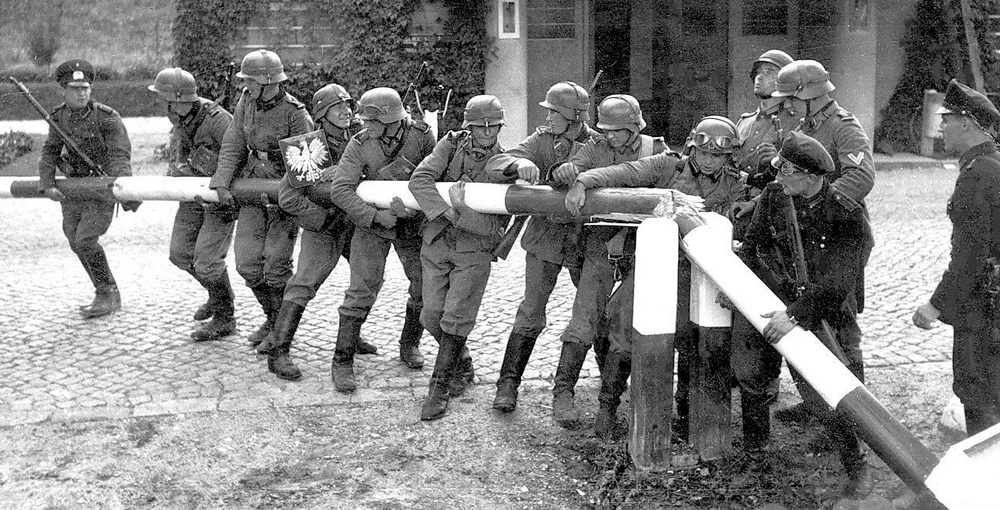
German soldiers break a border post. Poland, 1939 /Photo: From the site www.theatlatlandic.com
The Second World War lasted six years, and during this time tens of millions of people were killed and crippled, tens of millions lost their family, property and hopes for the future, and precious monuments of material culture, which were created by the labor of many generations, were destroyed.
The question inevitably arises: who is to blame? Initially, there were two suspects. One of them has long lost the status of a “suspect”, turning into a criminal cursed by the whole world. In some countries, a publicly expressed doubt about Hitler’s guilt and his minions may become the basis for administrative or even criminal punishment, but even where the laws are not so harsh, everyone who risks praising Hitler turns into an outcast, thrown out of a society of decent people. A publicly asked question - does the current Germany consider himself the heir to the Hitler "Reich"? - Inevitably lead to a loud international scandal.
The second suspect is now "lively all the living." Nobody ever judged him, his actions at the time of the unleashing of the Second World War did not become the subject of a criminal or at least parliamentary investigation. Mountains of books are published, the authors of which are arguing: whether Stalin was the greatest of geniuses or just an effective manager. His remains are buried in the heart of Russia, near the Kremlin wall, and every year to the Bust of Stalin, deputies of the State Duma of the Russian Federation lay flowers. The current Russian state stubbornly stores Stalin's secrets from disclosure and study. Prominent Russian politicians declare the collapse of the Stalinist Empire the greatest catastrophe of the 20th century ...
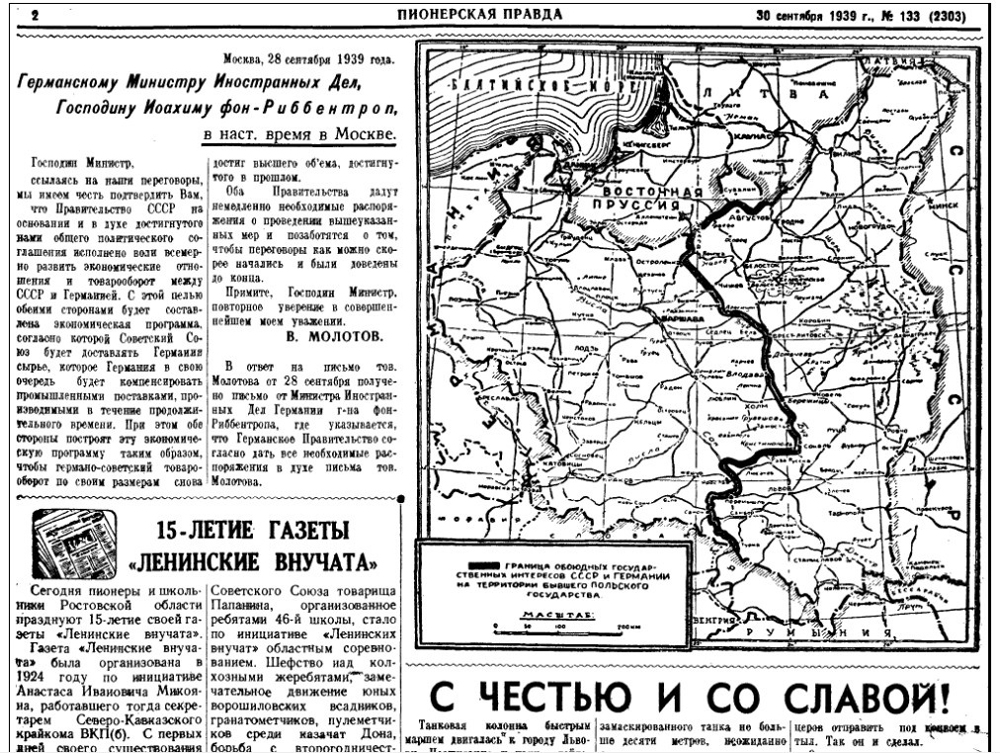
The Poland section map - in accordance with the “Friendship and Border Agency” agreement, signed on September 27, 1939 - published in all Soviet newspapers
The day before
On March 15, 1939 , in violation of the agreements signed in Munich, Germany destroyed Czechoslovakia (the Czech Republic was occupied and turned into the “protectorate of Bohemia and Moravia”, and a puppet fascist regime was brought to power).
On April 17, the Soviet government publicly appeals to England and France with a proposal to create a “triple union” (USSR, England, France) to counteract aggression in Europe. And on the same day, April 17, the Soviet ambassador (envoy) in Berlin Comrade. Merikalov meets with the state secretary of the German Foreign Ministry. Vaitsyker writes in his report: “The Russian ambassador is the first time since he received his post here (that is, from June 5, 1938) - he visited me for a conversation ... The ambassador declared approximately the following: Russia's policy is always straightforward. Ideological discrepancies are unlikely to affect Russian-Italian relations, and they should also not become a stumbling block against Germany. Soviet Russia did not use against us the friction between Germany and the Western friction powers and does not intend to use them. From the point of view of Russia, there is no reason that can prevent normal relations with us. And starting with normal, relationships can become better and better ... "
On May 3, Maxim Litvinov was replaced by Vyacheslav Molotov as the People’s Commissar of Foreign Affairs. The signal was transparent-Yasen: Litvinov, the “speaking head” of the Soviet foreign policy of the “collective security” era, became inconvenient for the upcoming cool turn.
On July 23, Molotov makes an unexpected proposal: without waiting for the completion of political negotiations, to begin negotiations on the military union of three powers. The idea is amazing: the generals should engage in the coordination of operational plans, while revealing the top secret information about the composition, weapons, the terms of the mobilization readiness of their armies, not even confident that in a future war they will have to be allies, not enemies! The very next day, July 24, in London and Paris, they publicly announced their readiness to start negotiations in order to conclude a military convention.
On July 26, a high -ranking German Foreign Ministry official Karl Schnurre invites the Soviet attorney in Astakhov’s affairs and the Babarin Torgol for lunch. Judging by the report, lunch dragged on until one and the first night. During the conversation, the German representative said: “Despite all the differences in the worldview, there is one general element in the ideology of Germany, Italy and the Soviet Union - the confrontation of capitalist democracies. Neither we nor Italy have nothing to do with the capitalist West. Therefore, it seems to us quite unnatural for the socialist state to take the side of Western democracies ... What can England offer Russia? Most - participation in the European War, enmity with Germany, but not a single goal arranging Russia ... "
On August 3, Astakhov was already adopted by the German Foreign Minister Ribbentrop, who said: “If Moscow refuses a policy directed against Germany’s life interests, then there will be no problems from the Baltic to the Black Sea, which we will not be able to solve together.”
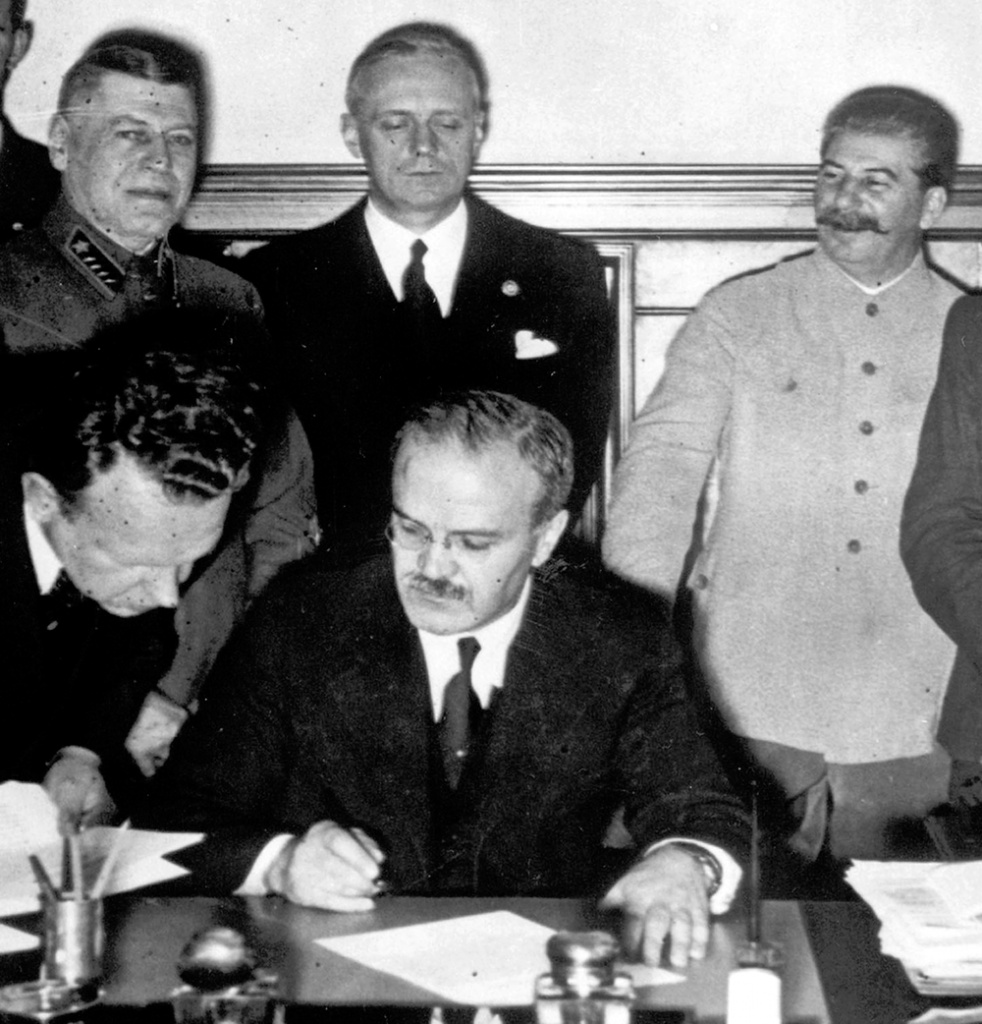
The People's Commissar of Foreign Affairs (and, at the same time, the head of government) Vyacheslav Molotov (sits) signs a non -aggression pact in the presence of Comrade Stalin Minister with Reich Joachim von Ribbentrop (stands behind Marshal Boris Shaposhnikov). Moscow, August 23, 1939
Like a cat with a mouse
On August 12, the first meeting of representatives of the military command of England, France and the USSR was held in Moscow, and on August 14, the People’s Commissar of Voroshilov dumbfounded his partners with the following statement: “The preliminary condition of our negotiations and a joint agreement between the three states is the passing of our troops to the Polish territory through the Vilnius Corridor and Galicia and through Romanian territory. If this does not happen, if this issue does not receive a positive solution, then I doubt the advisability of our negotiations at all. ” The fact that the Polish leadership would not agree to the appearance of the Red Army on its territory was absolutely clear to everyone. Moreover, from April 17 to August 14, this issue has never been voiced by the Soviet side during political negotiations. Now he, and in an ultimatum form, was put before the military delegations, which, with all his desire, could not make a decision for the Polish government.
The transcripts of negotiations have long been published. This is a sad but instructive reading. Representatives of the oldest democracies in Europe turned out to be helpless children in the face of cynical scammers. In the first minutes, the “useful idiots” did not understand anything and rushed to convince their partners that no one was waiting for the direct participation of the ground forces from the Soviet Union (proposals contained in the instructions of the English military mission, suggested the supply of Soviet weapons and the transit of the weapons of the allies through the territory of the USSR to Poland, and the military industry by Soviet raw materials, the joint actions of the fleets in the Baltic states), but Voroshilov was unshakable. No half -dead! The Soviet Union is ready to fight for the freedom of Poland with the whole power of its army - you only need to put this army into Polish territory!
Fascinated by such determination, the Anglo-French did not understand that the issue has already been resolved, and the Kremlin needs conversations about negotiations for only one single goal-to finally “squeeze” Hitler. And it was of what to get scared of. In the middle of the summer of 1939, Germany had 46 infantry divisions (including motorized) against 120 rifle and 16 cavalry in the Red Army. In terms of the number of tanks, superiority was six times; If, by the word “tank”, you understand an armored caterpillar machine, armed at least a small-caliber 37/45-mm gun, then the newborn Wehrmacht was inferior to the Red Army 20 times (700 versus 14 thousand).
The armed forces of Poland, France and Great Britain were significantly smaller than the Soviet, but in conjunction they increased the military power of Germany’s potential opponents by another 1.5-2 times. The war in the twentieth century was the war of the engines. On the eve of World War II, the United States produced 160 million tons of oil, the Soviet Union-30 million tons, Britain imported 10-12 million tons from its colonies and semi-colonies, Romania (at that time still ally of the Western Bloc) mined 5-6 million tons. Germany (even taking into account the created capacities for the production of synthetic gasoline) had 2.5 million tons of liquid fuel per year. Absolute was the dependence of the German economy on imports in positions such as bauxites (raw materials for the production of aluminum), copper, nickel, rubber.
With such resources, even Blitzkrieg against Poland represented a 1939 model for Germany, a difficult and rather risky task. The war against the combined coalition of three world powers (USSR, France, Great Britain) meant guaranteed suicide. But Hitler could no longer abandon the war - and not only because he shouted so often and so loudly about the "monstrous oppression of the German minority in Poland." The economic miracle of the “National Socialist Revolution” had its own price: in Germany there was no longer enough food. From September 1939 to February 1940, grain reserves were measured in numbers about 60 kg per person (according to modern norms of the Oon organizations, normal consumption is 1000 kg per person per year). Germany was on the threshold of hunger, and on this threshold it stood with a gold margin of 17 tons - 600 times less than the United States then.
Plus, gigantic state debt (60 billion marks) is more than 100 times higher than the total gold and veil reserves of the country. “The economic catastrophe became completely inevitable. The situation was created from which only a “jump into the war” could be considered the only salvation, ”wrote the Major General of the German,“ Ground Army of Germany, 1933-1945 ”Mueller-Gillebrand, later.
The tone and syllable of telegrams that poured from Berlin to the German embassy in Moscow became more and more hysterical:
August 14 Telegram No. 175
“Very urgent. Personally the ambassador.
I ask you to personally contact Mr. Molotov and give him the following ... Today, German-Soviet relations came to the rotary point of their history. The decisions that will be adopted in the near future in Berlin and Moscow on the issue of these relations will be crucial during generations for the German and Soviet peoples ... A crisis in German-Polish relations, provoked by the policy of England, as well as British military propaganda and related attempts to create a [anti-German] bloc make the speedy clarification of German-Russian relations. Otherwise, regardless of Germany’s actions, cases can accept such a turn that both governments will lose the opportunity to restore German-Soviet friendship and jointly resolve territorial issues related to Eastern Europe ... Imperial Foreign Minister von Ribbentrop is ready to arrive in Moscow with a short-term visit, so that Führer Mr. Stalin on behalf of the Fuhrer ... ”
August 16 Telegram No. 179
"Urgently. Personally, to the master of the ambassador. The Fuhrer believes that, taking into account the real situation and the everyday possibility of serious incidents (in this place, please explain to Mr. Molotov that Germany is determined not to endure infinitely Polish provocations), it is desirable and rapid clarification of German-Russian relations and mutual settlement of relevant issues. For these reasons, the Minister of Foreign Affairs states that, starting on Friday August 18, he is ready to arrive at any time by plane in Moscow, having the authority from the Fuhrer to solve the entire complex of German-Russian issues ... "
18 August Telegram No. 185
"Urgently. Personally, to the master of the ambassador
Please immediately condition about a new conversation with Mr. Molotov and do everything that is possible for this conversation to take place without delay ... We ask for an immediate response to an additional instruction, about my immediate departure to Moscow. Please add in connection with this that I will arrive with the full powers from the Fuhrer for the full and final settlement of the general complex of issues ... I am endowed with the authority to discuss the details in oral discussions in Moscow and, if possible, fulfill the wishes of the Russians. I also have the right to sign a special protocol that regulates the interests of both parties in certain issues of foreign policy, for example, in the coordination of the areas of interest in the Baltic, the problems of the Baltic states, etc. ... Insist that in the spirit of previous statements, on the quick implementation of my trip and appropriately opposed any possible Soviet objections ... ”
This telegram was received and deciphered at the German Embassy at 5 hours 45 minutes on August 19 . At two in the afternoon, the Ambassador Shulenburg was adopted by Molotov. The further course of events was described in a telegram sent to Berlin:
“In my first conversation with Molotov, I re -tried to convince Molotov that the visit of the Imperial Minister of Foreign Affairs to Moscow is the only way to achieve the success that is urgently required by the political situation. Molotov recognized the undoubted importance of the alleged trip, emphasizing that the Soviet government understands and respects the idea that underlies this, but insists that it is currently impossible to even approximately determine the time of the trip, since it requires thorough preparations ... Molotov obviously did not touch my objections, and the first conversation ended with the statement of the Soviet government and could not be more than nothing more Add them. Almost half an hour after the end of the conversation, Molotov gave me that he was asking me to find him again in the Kremlin at 16.30. He apologized that he put me in a difficult situation, and explained that he made a report to the Soviet government (the head of which and at the same time the People's Commissar of Foreign Affairs was Molotov himself. - M.S.) and is authorized to give me a draft non -aggression pact. As for the trip of the Imperial Minister of Foreign Affairs, the Soviet government, according to Mr. Ribbentrop, the arrival of Mr. Ribbentrop about a week after the publication of the signed economic agreement ... My attempt to convince Molotov to agree to an earlier date, unfortunately, was unsuccessful. ”
There are no boundaries for friendship
August 20 , Sunday. Before the planned day of invasion of Poland, one week remained. Plans, of course, could be changed, but even the Fuhrer himself could not cancel the onset of autumn, prolonged rains and fogs could not. It remained only to turn to Mr. Stalin with a personal message: “Mr. Stalin, Moscow.
I sincerely welcome the signing of a new German-Soviet trade agreement as the first stage of the restructuring of German-Soviet relations ... I am accepting the Pact of Nonfall, which is your foreign minister Mr. Molotov, and I consider it extremely necessary as possible to clarify the related issues ... In my opinion, it is desirable, due to the intentions of both countries, without wasting time to enter into a new phase of relations With each other. Therefore, I once again propose to accept my Foreign Minister on Tuesday, August 22, on the latest on Wednesday, August 23. The Imperial Minister of Foreign Affairs has the full powers to draw up and sign both a non -aggression pact and the protocol ... I will be glad to get your fast answer. Adolf Hitler. "
Much later, in 1948, after the publication of the US State Department, the collection of trophy documents of the German Foreign Ministry, the Ribbentrop’s memorandum (dated June 24, 1940) was known, in which he reminds Hitler about the circumstances of the Moscow negotiations of August 1939: “The Fuhrer authorized me to declare German disgrace Constantinople and Straits, if necessary. The latter, however, was not discussed. ” Until Constantinople and Strait! Cings of Moscow could only dream of this ...
August 21 Telegram No. 197
“Out of turn. Berlin. Secret. Urgently.
Extremely emphasizing the extraordinary importance and exceptional need for haste, I presented at 15 o’clock Mr. Molotov Message to the Fuhrer to Stalin and translation ... I tried all the ways that were at my disposal, to make Mr. Molotov clearly understand that the immediate visit of the Imperial Minister of Foreign Affairs is necessary in the interests of both countries. I finished a request that, under any circumstances, the answer was given to me today.
I just found out that Molotov again wants to see me at 17 o’clock.
At 17 o’clock, Molotov handed me the answer of Stalin to the message of the Fuhrer, set forth in a very conciliatory form. Stalin reports that the Soviet government, according to the arrival of the Imperial Minister of Foreign Affairs on August 23. ”
Now it remained only to effectively complete the operation, in particular, to expel the Anglo-French delegation out of Moscow. Negotiations on the military convention successfully fulfilled their role, and it was time to explain to the “allies” in what capacity they were used. There is an apocryphal story about how the head of the Soviet delegation, the People's Commissar of Defense Voroshilov, right in the meeting room they handed a note from the owner: “Klim! Stop the booth. Koba ". No one has ever seen this notes (most likely, it was not), but this legend quite adequately reflects the enthusiasm that then reigned in the Kremlin. “The Soviet government is not going to engage in any connections with such flamping states as England, America and France. Chamberlain is a boob, and Daladier is an even larger boob. ” Here in such, by no means diplomatic, expressions a month later (in the evening of September 28, 1939), Comrade Stalin responded to his former and future allies ...
On August 22, the newspaper Pravda placed a tiny, just a few lines, a message: Germany and the USSR decided to eliminate the threat of war and conclude a non -aggression pact; "The other day" is expected to arrive Mr. von Ribbentrop for appropriate negotiations. The audience around the world, which, holding her breath, was waiting for news from Moscow about the signing of the military convention of the countries of the anti -Hitler coalition, it was quietly stunned. The European Communists did not understand anything, but even more strongly imbued with faith in a brighter future: “This decision is a well -aimed impact against the conspiracies of the international reaction, is a decision that should show the whole world that the Soviet Union has always been ready at any moment with others to oppose fascist aggressors ... Calmly wait for the Izvestia from the Soviet Union. However, be completely sure that the USSR, as always, reliably protects the interests of the international working class, all peoples and states, of all mankind ... ”(from the leaflet of the underground Central Committee of the Communist Party of Czechoslovakia).
On August 22, Chamberlain sent Hitler a personal letter in which he honestly and frankly warned: “Whatever the Soviet-German treaty could essentially change, he cannot change the UK's obligation in relation to Poland, which the government of His Majesty has repeatedly and clearly stated and which it intends to fulfill ... if there is a necessity, the government of His Majesty and is ready to apply all its existing ones without delay in him. the disposal of power, and it is impossible to anticipate the consequences of hostilities if they are started ... "
On August 23, Ribbentrop and the numerous accompanying persons flew to Moscow by plane. Negotiations began in the Kremlin’s office of Molotov at 15.30 and lasted until 18.30, then from 22.00 to midnight. The beginning was severe. Seven years later, in his last word before the international tribunal in Nuremberg, Ribbentrop said: “When I arrived in Moscow in 1939 to Marshal Stalin, he made it clear that if he did not receive half of Poland and the Baltic countries (then without Lithuania), with the port of Libava (now Liepaia), then I can immediately fly back.” It was not necessary to fly out, the parties quickly came to an agreement on the conditions of the division of Eastern Europe, and during a modest dinner with champagne, the situation was completely warmed up: “Foreign Reichsinter said that England has always tried and is still trying to undermine the development of good relations between Germany and the USSR. England is weak and wants others to support its arrogant claims to world domination. Mr. Stalin vividly agreed with this and noticed the following: the British army is weak, the British fleet no longer deserves its previous reputation. The English air fleet, you can be sure, increases, but there are not enough pilots. If, despite all this, England is still dominated by the world, this happens only thanks to the stupidity of other countries that always allowed themselves to deceive ... During the conversation, Mr. Stalin unexpectedly offered a toast for the Fuhrer: “I know how much the German people love their leader, and therefore I want to drink for his health!”
As a result, a non -aggression pact containing standard general phrases was signed, and a secret additional protocol, according to which Stalin had to go more than half of Poland. The Baltic countries were divided into three to one, while Lithuania, geographically adjacent to East Prussia, was decided to give to Hitler.
On August 25, the British signed an agreement on mutual assistance with Poland, Article 1 of which read: “If one of the contracting parties is involved in military operations with the European power as a result of the aggression of the latter against this Contracting Party, then the other agreing side will immediately provide a contracting party involved in military operations, which is in its power.”
August 31 , the day before the start of the war, comrade Molotov made a great speech at an extraordinary session of the Supreme Soviet of the USSR. Slightly complained that "and in our country there were some short -sighted people who, carried away by simplified anti -fascist agitation, forgot about the provocative work of our enemies." Fortunately, there was someone to direct the lost to the true path: “Comrade Stalin beat to the very point, exposing the machinations of Western European politicians who strive to push Germany and the Soviet Union with his foreheads ... The conclusion of the Soviet-German agreement on non-aggression testifies that the historical foresight of Comrade. Stalin was brilliantly justified! " (Stormy ovation in honor of Comrade Stalin.)
At the end of the performance Comrade Molotov allowed himself to be soured to joke: “The Soviet-German treaty was subjected to numerous attacks in the Anglo-French and American press ... These people demand that the USSR be drawn into the war on the side of England against Germany. Wouldn't these presumed arsonists of war crawl crazy? (laughter) If these gentlemen have such an uncontrollable desire to fight, let them fight themselves, without the Soviet Union. (laughter, applause) We would look at what kind of warriors! ” (laughter, applause)
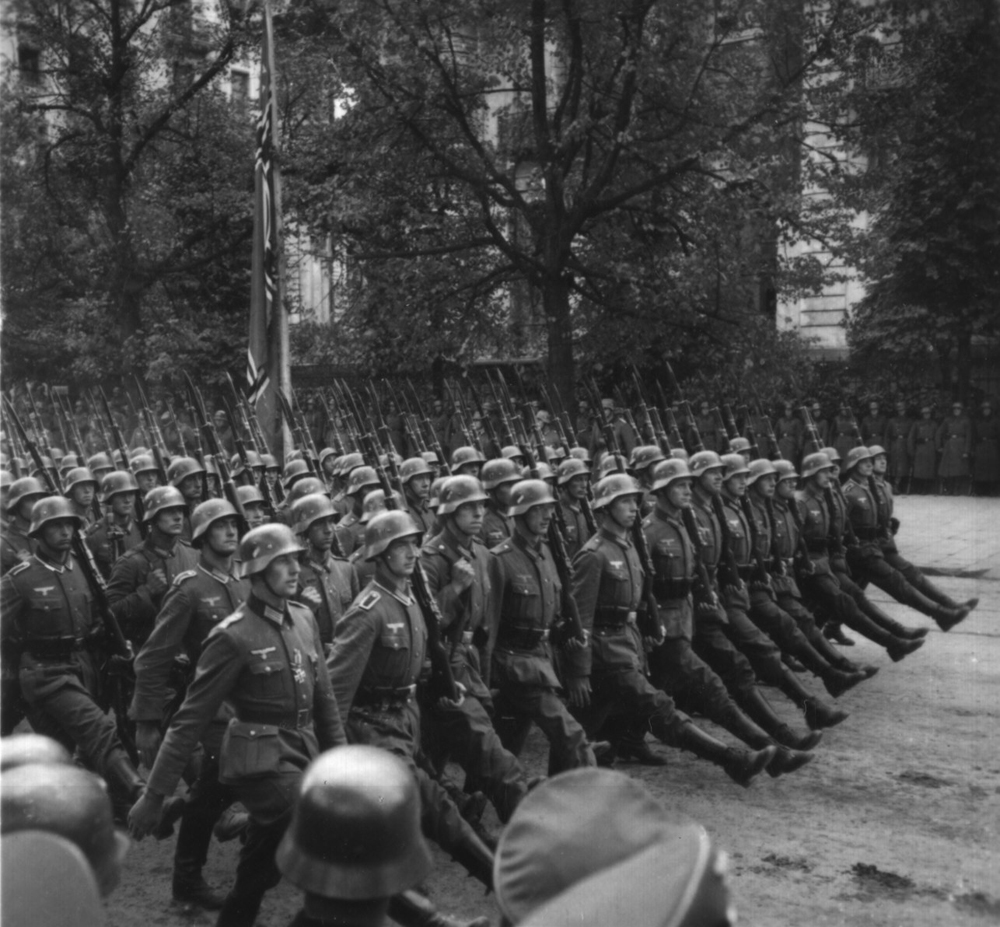
The parade of German troops in Warsaw after the invasion. September 1939
Invasion
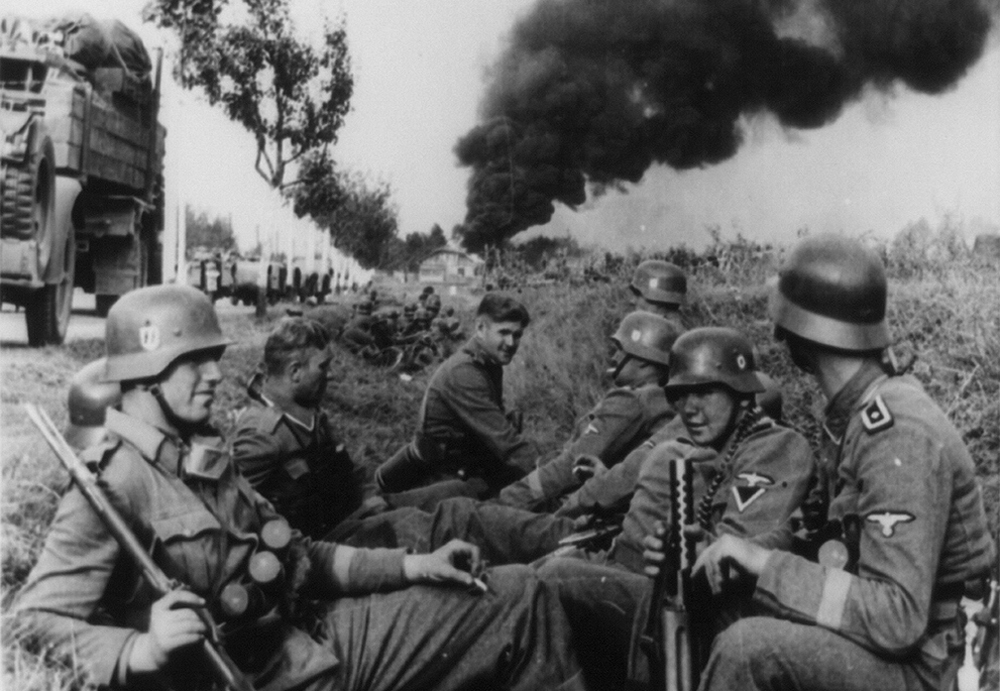
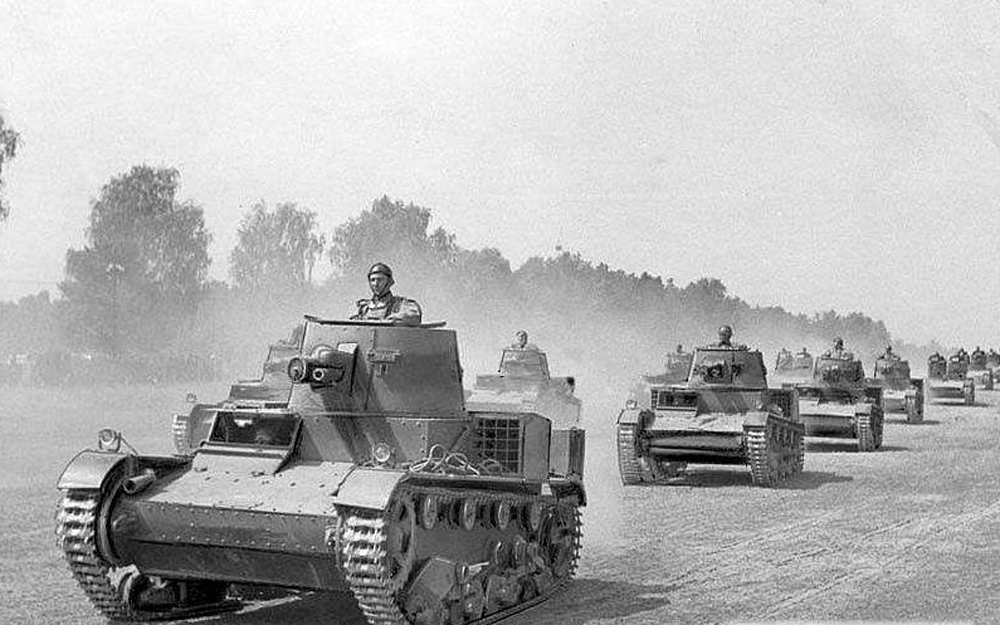
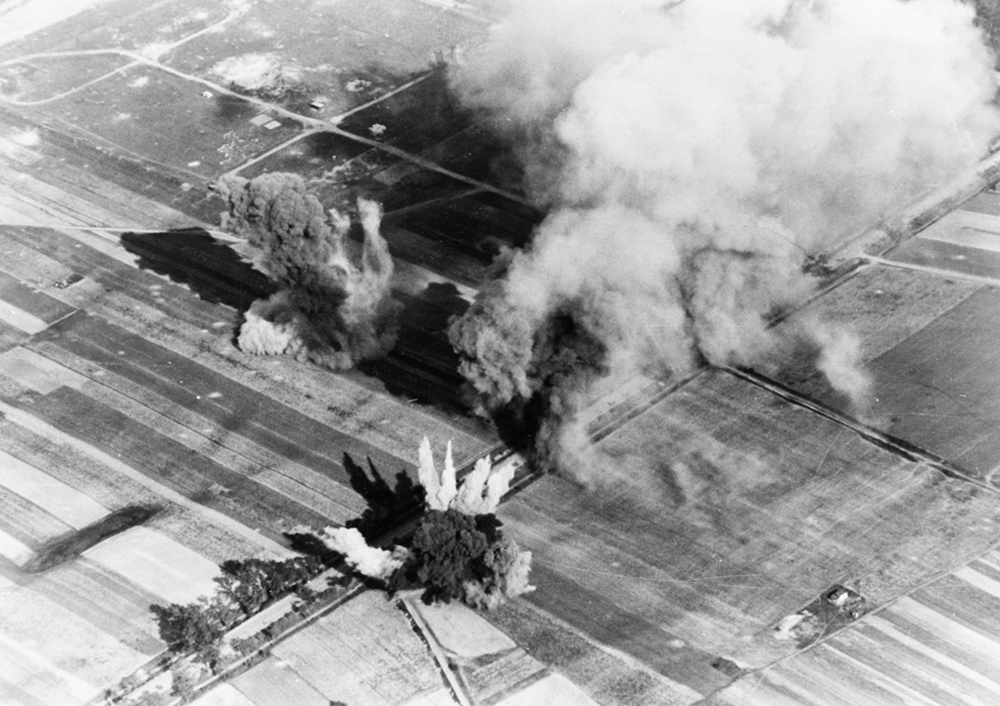
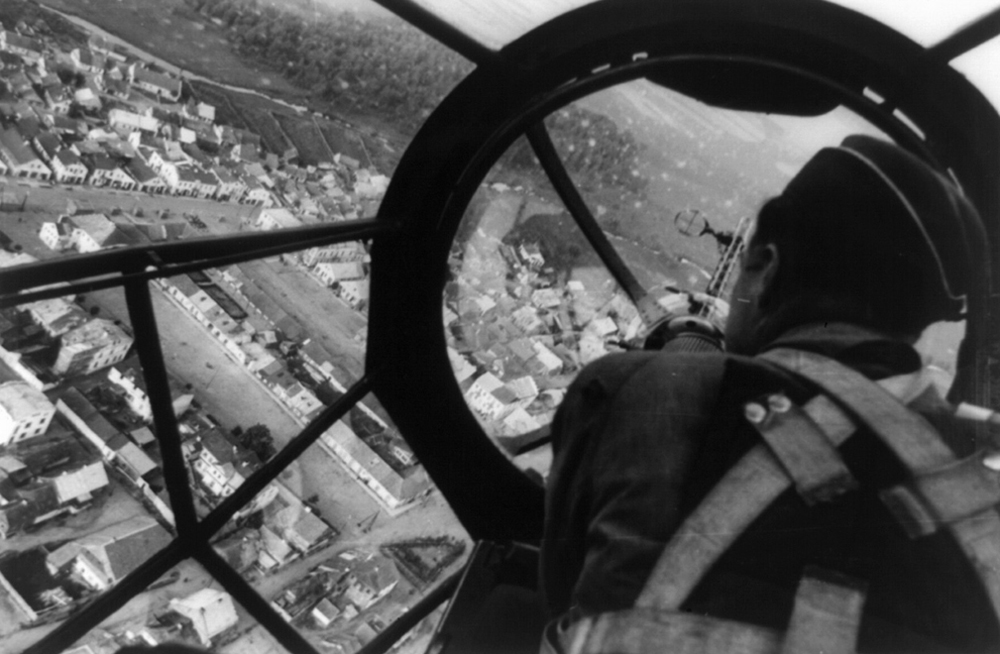
On September 1, 1939, at 04.45 in the morning, according to the Weiss plan, German troops without declaring war began an offensive along the entire Polish border, as well as from the territory of Moravia and Slovakia. The front line was about 1600 km.
On September 17 , in the morning, the Red Army (16 tank and 2 motorized brigades, more than 4.5 thousand tanks) crossed the Soviet-Polish border along its entire length from Polotsk to Kamenetz-Podolsk. On the same day Comrade Molotov spoke on the radio with the appeal to the “citizens and citizens of our great country”, which, in particular, said: “The population of Poland was thrown by his unlucky leaders to their fate. The Polish state and its government actually ceased to exist. By virtue of this provision, the contracts concluded between the Soviet Union and Poland ceased their effect. ” So, simply and unpretentiously the Soviet Union exempted itself from obligations under a non -aggression agreement with Poland (concluded in 1932 and prolonged in 1937.)
On September 23, Pravda posted a huge, on the whole strip, the Poland card with a section of the section on the rivers, Narev, and San - in the exact accordance with the secret protocol to the non -aggression pact.
On September 27, Ribbentrop flew to Moscow again. The negotiations lasted two days and ended with the signing of the "Friendship and Border Agency." The strip of Polish territory between the Bug and the Village departed to the Germans, in exchange for this, Stalin received Lithuania. All Soviet newspapers immediately printed a new card, including Pioneer Truth (and this is not a joke).
On October 6, he surrendered the last center of Polish resistance. By this time, the president, the government and commander in chief of Poland have been in London for more than two weeks.
Two years later, the Germans stood near Moscow.
Photo: from the site www.pbsthisDayinhistory.tumblr.com, from the site www.theatlantic.com, ap.