
Translated material
Living meat for politics
Soviet and Russian soldiers and had previously died on unnecessary wars. The New Times asked eyewitnesses to such armed conflicts to remind how it was
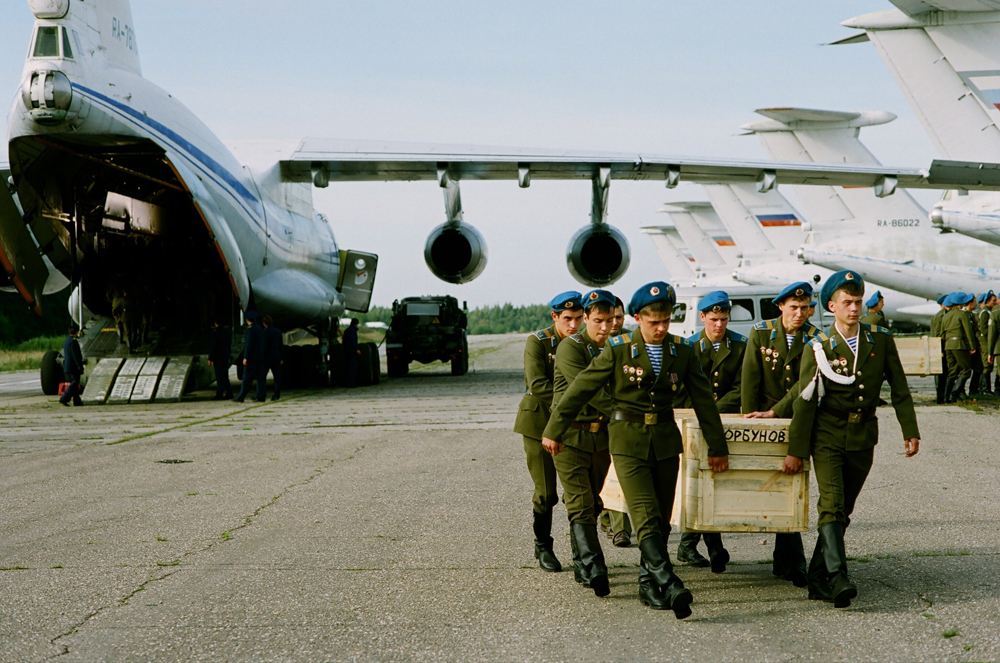
Frame from the film by Alexei Balabanov “Cargo 200”. 2007 /Photo: ITAR-TASS
Evgeny Kiselev, journalist
, 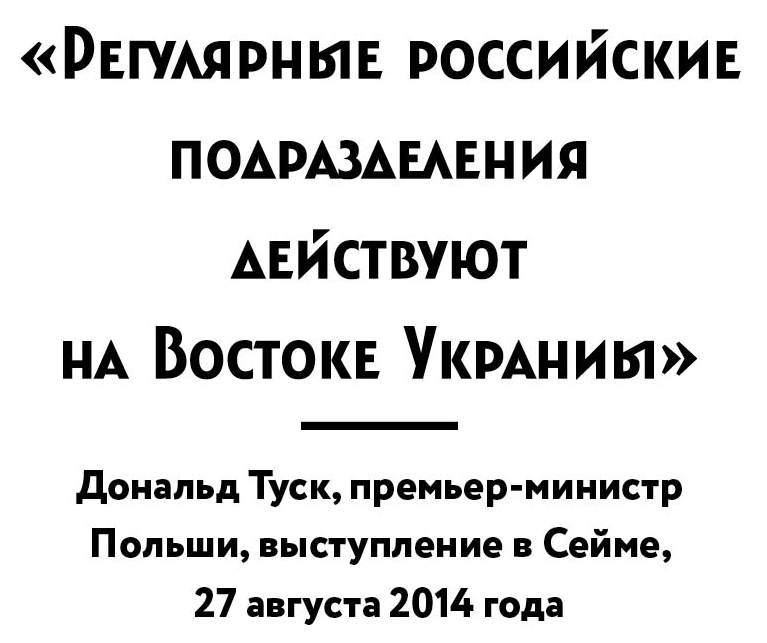 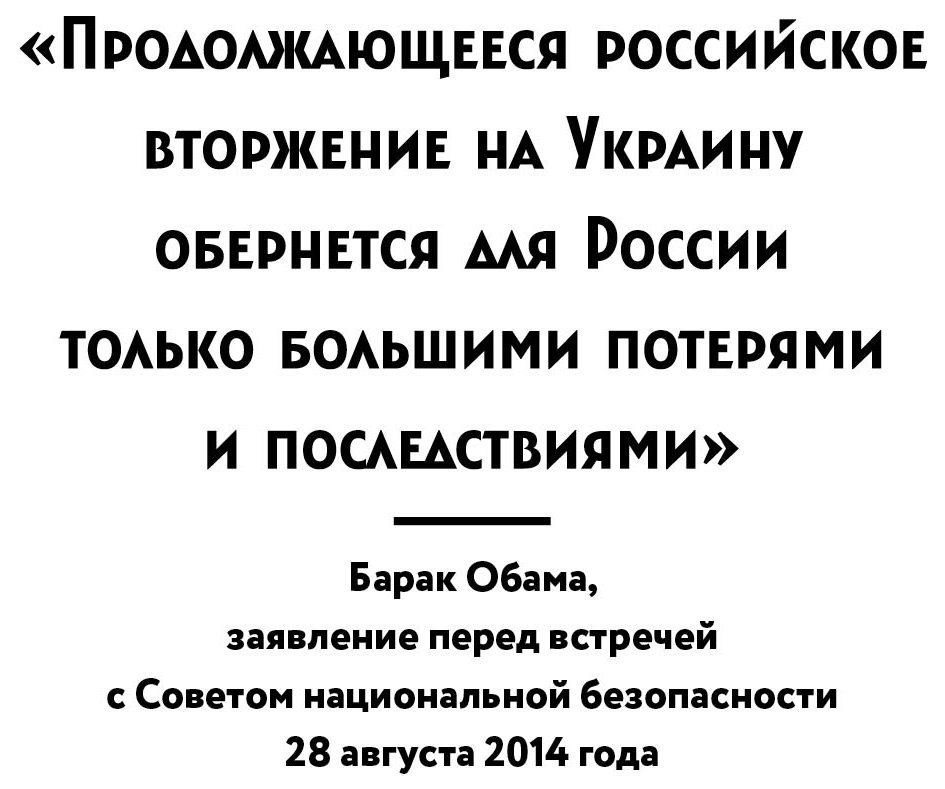 |
I got to Afghanistan before the forces of the troops, in 1979, served as a military translator in a group of military advisers, among whom were losses. But the score at that time was a maximum of dozens. Then there was no expression “cargo-200”, it appeared much later-simply sent a zinc coffin to their homeland. There were unspoken rules what can be done and what is impossible. For example, relatives were not officially reported where and why a person died. It was only reported that he died in the performance of military duty or official duties, if it was a civilian specialist. The fact that people die, of course, became known very quickly, including in our environment - young military translators. In Afghanistan, several people died, whom I knew personally, from among the graduates of the Institute of Asian and Africa.
Losses
After the entry of troops, already in 1980, the account of the dead went hundreds and thousands. True, the official statistics are with a degree of healthy skepticism - the authorities lied and hid. Those who died in hospitals did not fall into statistics, those who died as a result of accidents.
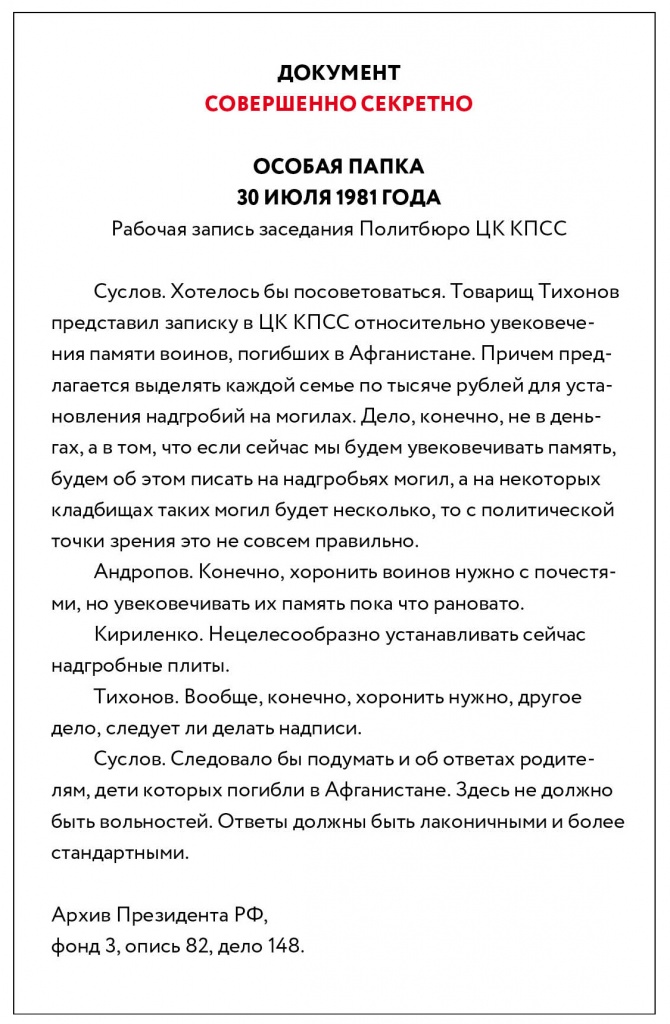
There is a well -known work recording of the meeting of the Politburo of the CPSU Central Committee of July 30, 1980, where the Secretary of the Central Committee Mikhail Suslov says that from a political point of view it is incorrect to write on the graves of the military that they died in Afghanistan. Yuri Andropov, chairman of the KGB, also agrees with him.
The Kremlin elders perfectly understood that it was insanely dangerous to talk about the scale of losses. Each year, several thousand fed up, most in 1982 - more than three and a half thousand people*. Naturally, in the absence of official information, word of mouth was included. The first official figure about losses in Afghanistan appeared only on August 17, 1989 in the newspaper Pravda - 13,835 people **
| *Runov V.A. Afghan war. Combat operations. - Yauza, Eksmo, 2008. ** Now on the website of the Ministry of Defense published the figure of losses in Afghanistan - 14,453 people. |
Already in the mid-80s, it was allowed to report losses on the central television. But it was necessary to say that they became the result of terrorist attacks and sabotage. Allegedly, these attacks occur only when our servicemen provides assistance to civilians or guard civilian facilities. And there was a kind of quota - no more than one case per month and only among ordinary and sergeants. In no case do not report the dead officers and generals - and we lost four generals in Afghanistan. During perestroika in exceptional cases, by permission of the main military censorship, it was possible to report some incident, as a result of which "peaceful tractors had to answer the shelling of all available calibers." A serious conversation about losses in the undeclared wars began only after 1991.
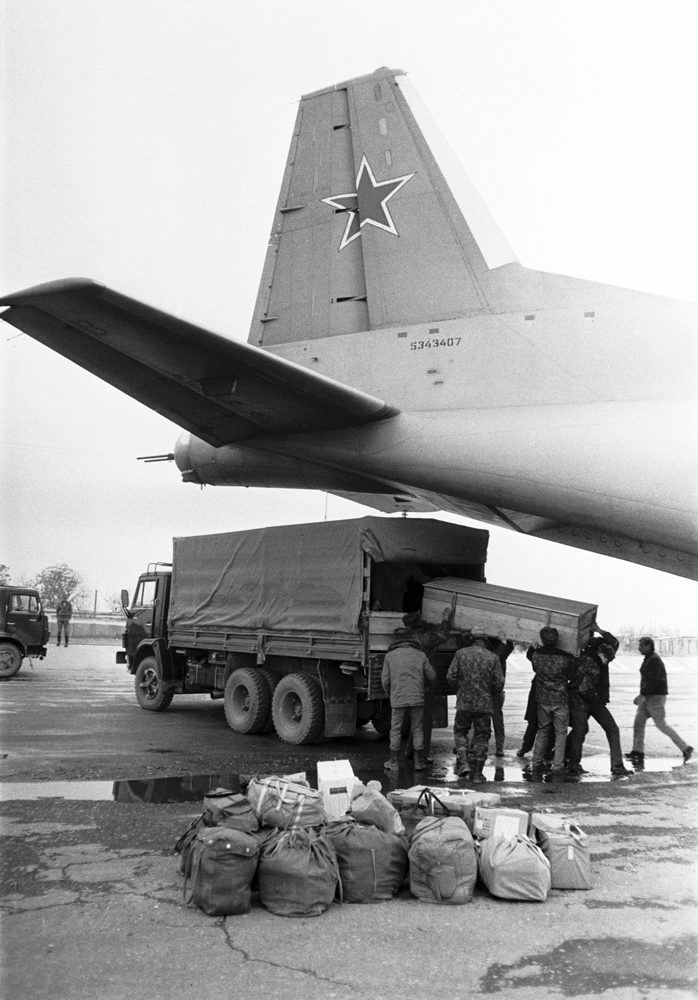
The withdrawal of Soviet troops from Afghanistan. Termez, Uzbek SSR, 1989 /Photo: Anvar Galeev /ITAR-TASS
Unnecessary wars
     |
The topic of not only losses, but also the fate of those who passed Afghanistan and suffered from the so -called "Afghan syndrome" in the USSR was completely prohibited. Like the topic of losses in other conflicts outside the USSR. In total, 2373 people died in other unnecessary wars after the 45th year*.
| *Krivosheev G.F. Russia and the USSR in the wars of the twentieth century. M., 2001. |
On February 23, 1990, in the main version of the Central Television information, where I then worked, on my proposal they decided to make a plot about other unnecessary wars, because, in addition to Afghanistan, there were Korea, Vietnam, the Middle East, Africa and so on. We made a story about our officers who helped the Egyptians fight against Israel. Now the late General Grigory Dolnikov, who served as the head of the secret group of Soviet fighter pilots in Egypt, said that the dead were also in his group. It was the period of the war for exhaustion, 1970. This plot did not reach the air, the authorities said: "No, guys, let's see us, we do not need all these revelations, as our people died away from our homeland." This is in 1990, when the peak of perestroika was already behind!
"
"We do not need all these revelations, as our people died away from our homeland."
"
Alexander Cherkasov, human rights activist, co -author of the book "Russia - Chechnya: a chain of errors and crimes"
Back in 1992, at the dawn of the new Russian democracy, Russia somehow participated in five armed conflicts in the territory of the former USSR. In Transnistria and South Ossetia, peacekeeping operations were carried out, and in other cases it was an unofficial participation.
In Tajikistan, the military personnel of the 15th Brigade of the GRU special forces under the command of Colonel Vladimir Kvachkov participated in the creation of the armed groups of the so-called "legal entities", that is, supporters of the legally legal government.
The paratroopers from the 328th Airborne Forces regiment from Ganja participated in the conflict in Nagorno Karabakh, they helped to break the Armenian defense. According to the results of the operation, some fighters were even awarded. Then, the Azerbaijani headquarters saw Vladimir Shamanov (since 2009 - the commander of the Airborne Forces - The New Times).
And the most famous episode is Abkhazia. Russian participation in the Abkhazo-Georgian conflict was veiled, this, first of all, was the supply of weapons and the training of militants. The shock force that took Sukhumi became the detachments of the confederation of the peoples of the Caucasus under the command of Shamil Basayev. These people were trained by specialists from the 45th separate regiment of special forces of the Airborne Forces.
In 1994, in Chechnya, the so -called “opposition” was initially helped with money and weapons, but it became clear that this was not enough. On November 26, columns of armored vehicles entered Grozny, tanks were controlled by crews recruited by the Federal counterintelligence service in garrisons near Moscow. Many tankers died, dozens were captured. It turned out that all of them are Russian military. Participation in the operations of the military and special services, which became the property of publicity, prompted the political leadership of Russia to an attempt to make amends for the shame of defeat with the help of a “small victorious war”.