
Translated material
September 1, 75 years ago
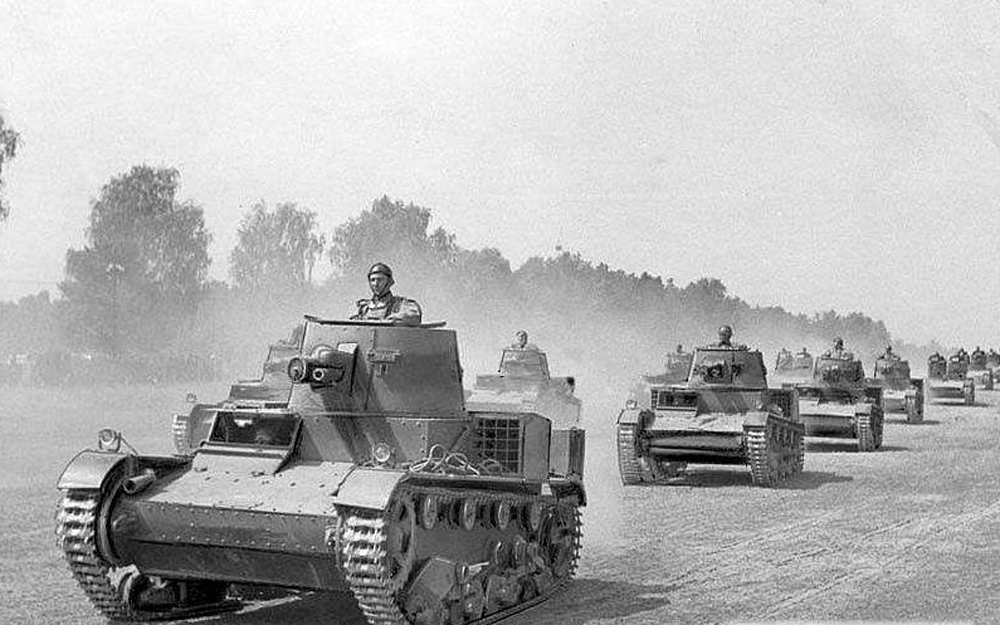
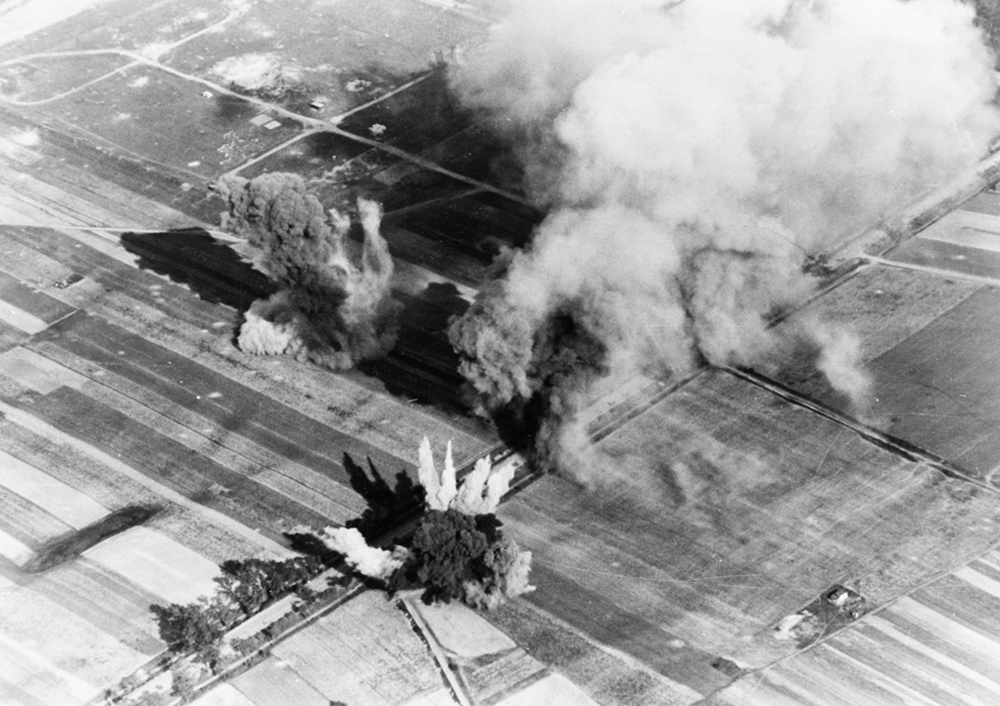
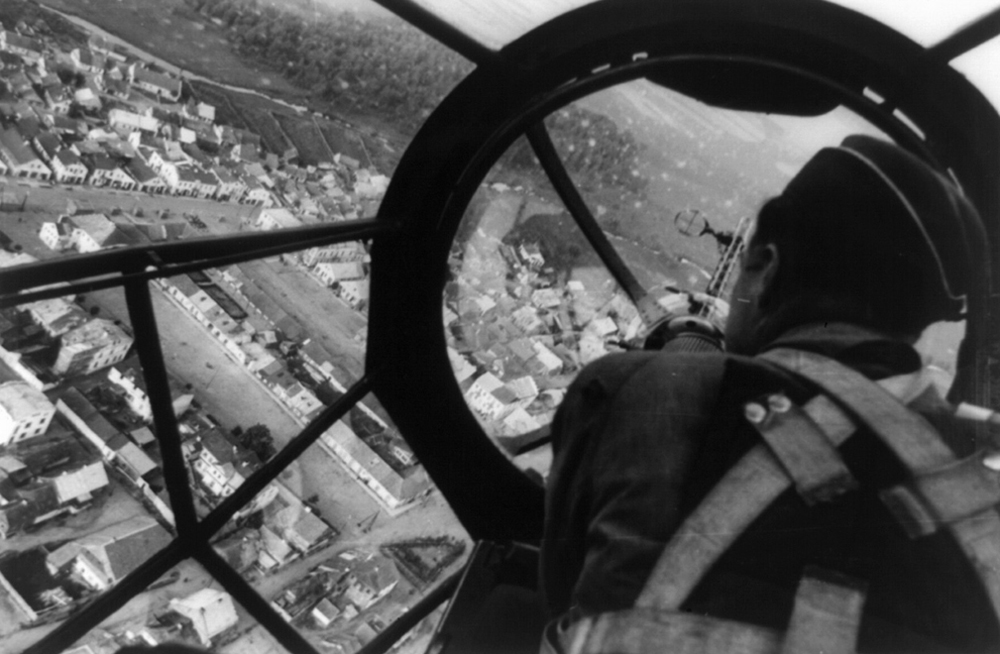
On September 1, 1939, at 4.45 in the morning, German troops launched an offensive along the entire Polish border. Thus began the Second World War - the most bloody, cruel and destructive in the history of mankind
| Published with abbreviations. The text is fully published in the journal "Military-Industrial Courier" No. 31 and 32 |
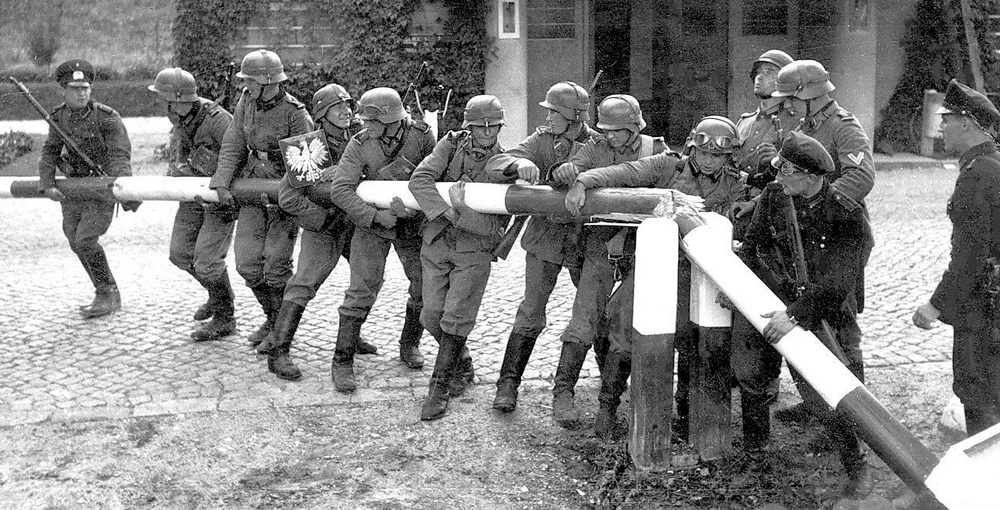
German soldiers break a border post. Poland, 1939 /Photo: From the site www.theatlatlandic.com
The Second World War lasted six years, and during this time tens of millions of people were killed and crippled, tens of millions lost their family, property and hopes for the future, and precious monuments of material culture, which were created by the labor of many generations, were destroyed.
The question inevitably arises: who is to blame? Initially, there were two suspects. One of them has long lost the status of a “suspect”, turning into a criminal cursed by the whole world. In some countries, a publicly expressed doubt about Hitler’s guilt and his minions may become the basis for administrative or even criminal punishment, but even where the laws are not so harsh, everyone who risks praising Hitler turns into an outcast, thrown out of a society of decent people. A publicly asked question - does the current Germany consider himself the heir to the Hitler "Reich"? - Inevitably lead to a loud international scandal.
The second suspect is now "lively all the living." Nobody ever judged him, his actions at the time of the unleashing of the Second World War did not become the subject of a criminal or at least parliamentary investigation. Mountains of books are published, the authors of which are arguing: whether Stalin was the greatest of geniuses or just an effective manager. His remains are buried in the heart of Russia, near the Kremlin wall, and every year to the Bust of Stalin, deputies of the State Duma of the Russian Federation lay flowers. The current Russian state stubbornly stores Stalin's secrets from disclosure and study. Prominent Russian politicians declare the collapse of the Stalinist Empire the greatest catastrophe of the 20th century ...
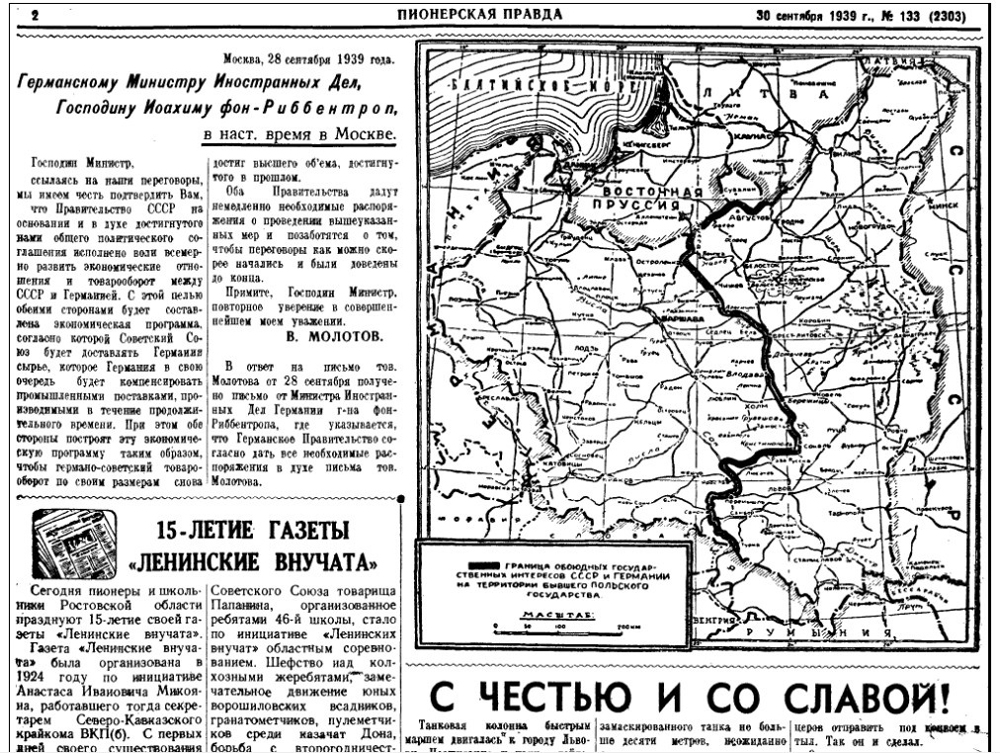
The Poland section map - in accordance with the “Friendship and Border Agency” agreement, signed on September 27, 1939 - published in all Soviet newspapers
The day before
On March 15, 1939 , in violation of the agreements signed in Munich, Germany destroyed Czechoslovakia (the Czech Republic was occupied and turned into the “protectorate of Bohemia and Moravia”, and a puppet fascist regime was brought to power).
On April 17, the Soviet government publicly appeals to England and France with a proposal to create a “triple union” (USSR, England, France) to counteract aggression in Europe. And on the same day, April 17, the Soviet ambassador (envoy) in Berlin Comrade. Merikalov meets with the state secretary of the German Foreign Ministry. Vaitsyker writes in his report: “The Russian ambassador is the first time since he received his post here (that is, from June 5, 1938) - he visited me for a conversation ... The ambassador declared approximately the following: Russia's policy is always straightforward. Ideological discrepancies are unlikely to affect Russian-Italian relations, and they should also not become a stumbling block against Germany. Soviet Russia did not use against us the friction between Germany and the Western friction powers and does not intend to use them. From the point of view of Russia, there is no reason that can prevent normal relations with us. And starting with normal, relationships can become better and better ... "
On May 3, Maxim Litvinov was replaced by Vyacheslav Molotov as the People’s Commissar of Foreign Affairs. The signal was transparent-Yasen: Litvinov, the “speaking head” of the Soviet foreign policy of the “collective security” era, became inconvenient for the upcoming cool turn.
On July 23, Molotov makes an unexpected proposal: without waiting for the completion of political negotiations, to begin negotiations on the military union of three powers. The idea is amazing: the generals should engage in the coordination of operational plans, while revealing the top secret information about the composition, weapons, the terms of the mobilization readiness of their armies, not even confident that in a future war they will have to be allies, not enemies! The very next day, July 24, in London and Paris, they publicly announced their readiness to start negotiations in order to conclude a military convention.
On July 26, a high -ranking German Foreign Ministry official Karl Schnurre invites the Soviet attorney in Astakhov’s affairs and the Babarin Torgol for lunch. Judging by the report, lunch dragged on until one and the first night. During the conversation, the German representative said: “Despite all the differences in the worldview, there is one general element in the ideology of Germany, Italy and the Soviet Union - the confrontation of capitalist democracies. Neither we nor Italy have nothing to do with the capitalist West. Therefore, it seems to us quite unnatural for the socialist state to take the side of Western democracies ... What can England offer Russia? Most - participation in the European War, enmity with Germany, but not a single goal arranging Russia ... "
On August 3, Astakhov was already adopted by the German Foreign Minister Ribbentrop, who said: “If Moscow refuses a policy directed against Germany’s life interests, then there will be no problems from the Baltic to the Black Sea, which we will not be able to solve together.”
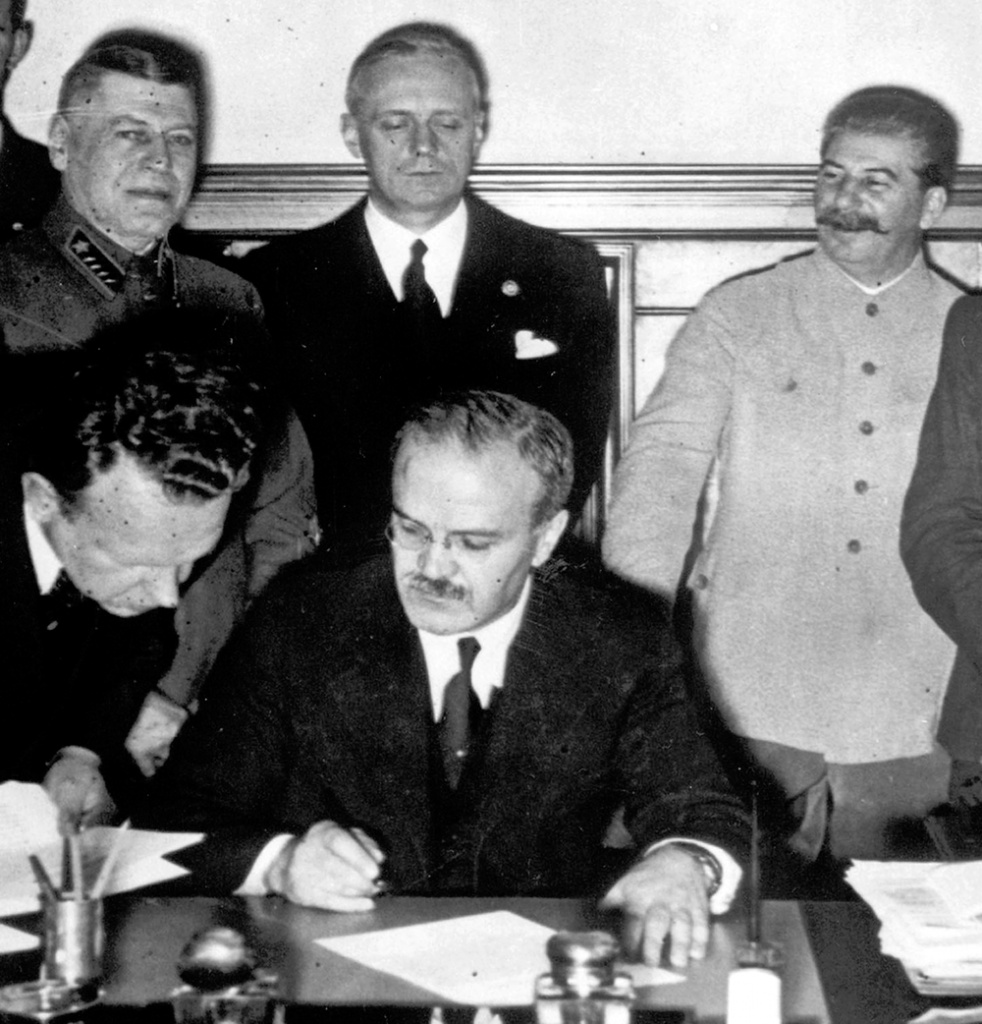
The People's Commissar of Foreign Affairs (and, at the same time, the head of government) Vyacheslav Molotov (sits) signs a non -aggression pact in the presence of Comrade Stalin Minister with Reich Joachim von Ribbentrop (stands behind Marshal Boris Shaposhnikov). Moscow, August 23, 1939
Like a cat with a mouse
On August 12, the first meeting of representatives of the military command of England, France and the USSR was held in Moscow, and on August 14, the People’s Commissar of Voroshilov dumbfounded his partners with the following statement: “The preliminary condition of our negotiations and a joint agreement between the three states is the passing of our troops to the Polish territory through the Vilnius Corridor and Galicia and through Romanian territory. If this does not happen, if this issue does not receive a positive solution, then I doubt the advisability of our negotiations at all. ” The fact that the Polish leadership would not agree to the appearance of the Red Army on its territory was absolutely clear to everyone. Moreover, from April 17 to August 14, this issue has never been voiced by the Soviet side during political negotiations. Now he, and in an ultimatum form, was put before the military delegations, which, with all his desire, could not make a decision for the Polish government.
The transcripts of negotiations have long been published. This is a sad but instructive reading. Representatives of the oldest democracies in Europe turned out to be helpless children in the face of cynical scammers. In the first minutes, the “useful idiots” did not understand anything and rushed to convince their partners that no one was waiting for the direct participation of the ground forces from the Soviet Union (proposals contained in the instructions of the English military mission, suggested the supply of Soviet weapons and the transit of the weapons of the allies through the territory of the USSR to Poland, and the military industry by Soviet raw materials, the joint actions of the fleets in the Baltic states), but Voroshilov was unshakable. No half -dead! The Soviet Union is ready to fight for the freedom of Poland with the whole power of its army - you only need to put this army into Polish territory!
Fascinated by such determination, the Anglo-French did not understand that the issue has already been resolved, and the Kremlin needs conversations about negotiations for only one single goal-to finally “squeeze” Hitler. And it was of what to get scared of. In the middle of the summer of 1939, Germany had 46 infantry divisions (including motorized) against 120 rifle and 16 cavalry in the Red Army. In terms of the number of tanks, superiority was six times; If, by the word “tank”, you understand an armored caterpillar machine, armed at least a small-caliber 37/45-mm gun, then the newborn Wehrmacht was inferior to the Red Army 20 times (700 versus 14 thousand).
The armed forces of Poland, France and Great Britain were significantly smaller than the Soviet, but in conjunction they increased the military power of Germany’s potential opponents by another 1.5-2 times. The war in the twentieth century was the war of the engines. On the eve of World War II, the United States produced 160 million tons of oil, the Soviet Union-30 million tons, Britain imported 10-12 million tons from its colonies and semi-colonies, Romania (at that time still ally of the Western Bloc) mined 5-6 million tons. Germany (even taking into account the created capacities for the production of synthetic gasoline) had 2.5 million tons of liquid fuel per year. Absolute was the dependence of the German economy on imports in positions such as bauxites (raw materials for the production of aluminum), copper, nickel, rubber.
With such resources, even Blitzkrieg against Poland represented a 1939 model for Germany, a difficult and rather risky task. The war against the combined coalition of three world powers (USSR, France, Great Britain) meant guaranteed suicide. But Hitler could no longer abandon the war - and not only because he shouted so often and so loudly about the "monstrous oppression of the German minority in Poland." The economic miracle of the “National Socialist Revolution” had its own price: in Germany there was no longer enough food. From September 1939 to February 1940, grain reserves were measured in numbers about 60 kg per person (according to modern norms of the Oon organizations, normal consumption is 1000 kg per person per year). Germany was on the threshold of hunger, and on this threshold it stood with a gold margin of 17 tons - 600 times less than the United States then.
Plus, gigantic state debt (60 billion marks) is more than 100 times higher than the total gold and veil reserves of the country. “The economic catastrophe became completely inevitable. The situation was created from which only a “jump into the war” could be considered the only salvation, ”wrote the Major General of the German,“ Ground Army of Germany, 1933-1945 ”Mueller-Gillebrand, later.
The tone and syllable of telegrams that poured from Berlin to the German embassy in Moscow became more and more hysterical:
August 14 Telegram No. 175
“Very urgent. Personally the ambassador.
I ask you to personally contact Mr. Molotov and give him the following ... Today, German-Soviet relations came to the rotary point of their history. The decisions that will be adopted in the near future in Berlin and Moscow on the issue of these relations will be crucial during generations for the German and Soviet peoples ... A crisis in German-Polish relations, provoked by the policy of England, as well as British military propaganda and related attempts to create a [anti-German] bloc make the speedy clarification of German-Russian relations. Otherwise, regardless of Germany’s actions, cases can accept such a turn that both governments will lose the opportunity to restore German-Soviet friendship and jointly resolve territorial issues related to Eastern Europe ... Imperial Foreign Minister von Ribbentrop is ready to arrive in Moscow with a short-term visit, so that Führer Mr. Stalin on behalf of the Fuhrer ... ”
August 16 Telegram No. 179
"Urgently. Personally, to the master of the ambassador. The Fuhrer believes that, taking into account the real situation and the everyday possibility of serious incidents (in this place, please explain to Mr. Molotov that Germany is determined not to endure infinitely Polish provocations), it is desirable and rapid clarification of German-Russian relations and mutual settlement of relevant issues. For these reasons, the Minister of Foreign Affairs states that, starting on Friday August 18, he is ready to arrive at any time by plane in Moscow, having the authority from the Fuhrer to solve the entire complex of German-Russian issues ... "
18 August Telegram No. 185
"Urgently. Personally, to the master of the ambassador
Please immediately condition about a new conversation with Mr. Molotov and do everything that is possible for this conversation to take place without delay ... We ask for an immediate response to an additional instruction, about my immediate departure to Moscow. Please add in connection with this that I will arrive with the full powers from the Fuhrer for the full and final settlement of the general complex of issues ... I am endowed with the authority to discuss the details in oral discussions in Moscow and, if possible, fulfill the wishes of the Russians. I also have the right to sign a special protocol that regulates the interests of both parties in certain issues of foreign policy, for example, in the coordination of the areas of interest in the Baltic, the problems of the Baltic states, etc. ... Insist that in the spirit of previous statements, on the quick implementation of my trip and appropriately opposed any possible Soviet objections ... ”
This telegram was received and deciphered at the German Embassy at 5 hours 45 minutes on August 19 . At two in the afternoon, the Ambassador Shulenburg was adopted by Molotov. The further course of events was described in a telegram sent to Berlin:
“In my first conversation with Molotov, I re -tried to convince Molotov that the visit of the Imperial Minister of Foreign Affairs to Moscow is the only way to achieve the success that is urgently required by the political situation. Molotov recognized the undoubted importance of the alleged trip, emphasizing that the Soviet government understands and respects the idea that underlies this, but insists that it is currently impossible to even approximately determine the time of the trip, since it requires thorough preparations ... Molotov obviously did not touch my objections, and the first conversation ended with the statement of the Soviet government and could not be more than nothing more Add them. Almost half an hour after the end of the conversation, Molotov gave me that he was asking me to find him again in the Kremlin at 16.30. He apologized that he put me in a difficult situation, and explained that he made a report to the Soviet government (the head of which and at the same time the People's Commissar of Foreign Affairs was Molotov himself. - M.S.) and is authorized to give me a draft non -aggression pact. As for the trip of the Imperial Minister of Foreign Affairs, the Soviet government, according to Mr. Ribbentrop, the arrival of Mr. Ribbentrop about a week after the publication of the signed economic agreement ... My attempt to convince Molotov to agree to an earlier date, unfortunately, was unsuccessful. ”
There are no boundaries for friendship
August 20 , Sunday. Before the planned day of invasion of Poland, one week remained. Plans, of course, could be changed, but even the Fuhrer himself could not cancel the onset of autumn, prolonged rains and fogs could not. It remained only to turn to Mr. Stalin with a personal message: “Mr. Stalin, Moscow.
I sincerely welcome the signing of a new German-Soviet trade agreement as the first stage of the restructuring of German-Soviet relations ... I am accepting the Pact of Nonfall, which is your foreign minister Mr. Molotov, and I consider it extremely necessary as possible to clarify the related issues ... In my opinion, it is desirable, due to the intentions of both countries, without wasting time to enter into a new phase of relations With each other. Therefore, I once again propose to accept my Foreign Minister on Tuesday, August 22, on the latest on Wednesday, August 23. The Imperial Minister of Foreign Affairs has the full powers to draw up and sign both a non -aggression pact and the protocol ... I will be glad to get your fast answer. Adolf Hitler. "
Much later, in 1948, after the publication of the US State Department, the collection of trophy documents of the German Foreign Ministry, the Ribbentrop’s memorandum (dated June 24, 1940) was known, in which he reminds Hitler about the circumstances of the Moscow negotiations of August 1939: “The Fuhrer authorized me to declare German disgrace Constantinople and Straits, if necessary. The latter, however, was not discussed. ” Until Constantinople and Strait! Cings of Moscow could only dream of this ...
August 21 Telegram No. 197
“Out of turn. Berlin. Secret. Urgently.
Extremely emphasizing the extraordinary importance and exceptional need for haste, I presented at 15 o’clock Mr. Molotov Message to the Fuhrer to Stalin and translation ... I tried all the ways that were at my disposal, to make Mr. Molotov clearly understand that the immediate visit of the Imperial Minister of Foreign Affairs is necessary in the interests of both countries. I finished a request that, under any circumstances, the answer was given to me today.
I just found out that Molotov again wants to see me at 17 o’clock.
В 17 часов Молотов вручил мне ответ Сталина на послание фюрера, изложенный в очень примирительной форме. Сталин сообщает, что советское правительство согласно на приезд в Москву имперского министра иностранных дел 23 августа».
Теперь оставалось лишь эффектно завершить операцию, в частности — выгнать вон из Москвы англо-французскую делегацию. Переговоры о военной конвенции успешно выполнили свою роль, и настала пора объяснить «союзникам», в каком качестве их использовали. Существует апокрифический рассказ о том, как главе советской делегации, наркому обороны Ворошилову, прямо в зале заседания вручили записку от Хозяина: «Клим! Кончай балаган. Коба». Записки этой никто никогда не видел (скорее всего, ее и не было), но легенда эта вполне адекватно отражает воодушевление, царившее тогда в Кремле. «Советское правительство не собирается вступать в какие-нибудь связи с такими зажравшимися государствами, как Англия, Америка и Франция. Чемберлен — болван, а Даладье — еще больший болван». Вот в таких, отнюдь не дипломатических, выражениях месяц спустя (вечером 28 сентября 1939 года) товарищ Сталин отозвался о своих бывших и будущих союзниках…
22 августа газета «Правда» поместила крохотное, всего в несколько строк, сообщение: Германия и СССР решили устранить угрозу войны и заключить пакт о ненападении; «на днях» ожидается приезд г-на фон Риббентропа для соответствующих переговоров. Публика по всему миру, которая, затаив дыхание, ждала новостей из Москвы о подписании военной конвенции стран антигитлеровской коалиции, тихо ошалела. Европейские коммунисты ничего не поняли, но еще крепче прониклись верой в светлое будущее: «Это решение является хорошо нацеленным ударом против заговоров международной реакции, является решением, которое должно показать всему миру, что Советский Союз всегда был готов в любой момент совместно с другими выступить против фашистских агрессоров… Спокойно дождитесь известий из Советского Союза. Однако будьте полностью уверены в том, что СССР, как всегда, надежно защищает интересы международного рабочего класса, всех народов и государств, всего человечества…» (из листовки подпольного ЦК компартии Чехословакии).
22 августа Чемберлен прислал Гитлеру личное письмо, в котором честно и откровенно предупредил: «Каким бы ни оказался по существу советско-германский договор, он не может изменить обязательство Великобритании по отношению к Польше, о котором правительство Его Величества неоднократно и ясно заявляло и которое оно намерено выполнять… Если возникнет необходимость, правительство Его Величества полно решимости и готово применить без промедления все имеющиеся в его распоряжении силы, и невозможно предвидеть последствия военных действий, если они будут начаты…»
23 августа Риббентроп и многочисленные сопровождающие его лица самолетом прилетели в Москву. Переговоры начались в кремлевском кабинете Молотова в 15.30 и продолжались до 18.30, затем с 22.00 и до полуночи. Начало было суровым. Семь лет спустя, в своем последнем слове перед Международным трибуналом в Нюрнберге, Риббентроп сказал: «Когда я приехал в Москву в 1939 году к маршалу Сталину, он дал понять, что если не получит половины Польши и прибалтийские страны (тогда еще без Литвы), с портом Либава (ныне Лиепая), то я могу сразу же вылетать назад». Вылетать не пришлось, стороны стремительно пришли к согласию об условиях раздела Восточной Европы, а в ходе скромного ужина с шампанским обстановка и вовсе потеплела: «Рейхсминистр иностранных дел заявил, что Англия всегда пыталась и до сих пор пытается подорвать развитие хороших отношений между Германией и СССР. England is weak and wants others to support its arrogant claims to world domination. Г-н Сталин живо согласился с этим и заметил следующее: британская армия слаба, британский флот больше не заслуживает своей прежней репутации. Английский воздушный флот, можно быть уверенным, увеличивается, но не хватает пилотов. Если, несмотря на все это, Англия еще господствует в мире, то это происходит лишь благодаря глупости других стран, которые всегда давали себя обманывать… В ходе беседы г-н Сталин неожиданно предложил тост за фюрера: «Я знаю, как сильно германский народ любит своего вождя, и поэтому мне хочется выпить за его здоровье!»
В итоге был подписан пакт о ненападении, содержащий стандартные общие фразы, и секретный дополнительный протокол, по которому Сталину должно было достаться больше половины территории Польши. Прибалтийские страны поделили на три к одному, при этом Литву, географически примыкающую к Восточной Пруссии, решено было отдать Гитлеру.
25 августа англичане подписали договор о взаимопомощи с Польшей, статья 1 которого гласила: «Если одна из Договаривающихся Сторон окажется вовлеченной в военные действия с европейской державой в результате агрессии последней против этой Договаривающейся Стороны, то другая Договаривающаяся Сторона немедленно окажет Договаривающейся Стороне, вовлеченной в военные действия, всю поддержку и помощь, которая в ее силах».
31 августа , за день до начала войны, тов. Молотов выступил с большой речью на внеочередной сессии Верховного Совета СССР. Слегка посетовал на то, что «и в нашей стране были некоторые близорукие люди, которые, увлекшись упрощенной антифашистской агитацией, забывали о провокаторской работе наших врагов». К счастью, было кому направить заблудших на путь истинный: «Товарищ Сталин бил в самую точку, разоблачая происки западно-европейских политиков, стремящихся столкнуть лбами Германию и Советский Союз… Заключение советско-германского договора о ненападении свидетельствует о том, что историческое предвидение тов. Сталина блестяще оправдалось!» (бурная овация в честь тов. Сталина.)
Под конец выступления тов. Молотов позволил себе душевно пошутить: «Советско-германский договор подвергся многочисленным нападкам в англо-французской и американской прессе… Эти люди требуют, чтобы СССР обязательно втянулся в войну на стороне Англии против Германии. Уж не с ума ли сошли эти зарвавшиеся поджигатели войны? (смех) Если у этих господ имеется уж такое неудержимое желание воевать, пусть воюют сами, без Советского Союза. (смех, аплодисменты) Мы бы посмотрели, что это за вояки!» (смех, аплодисменты)
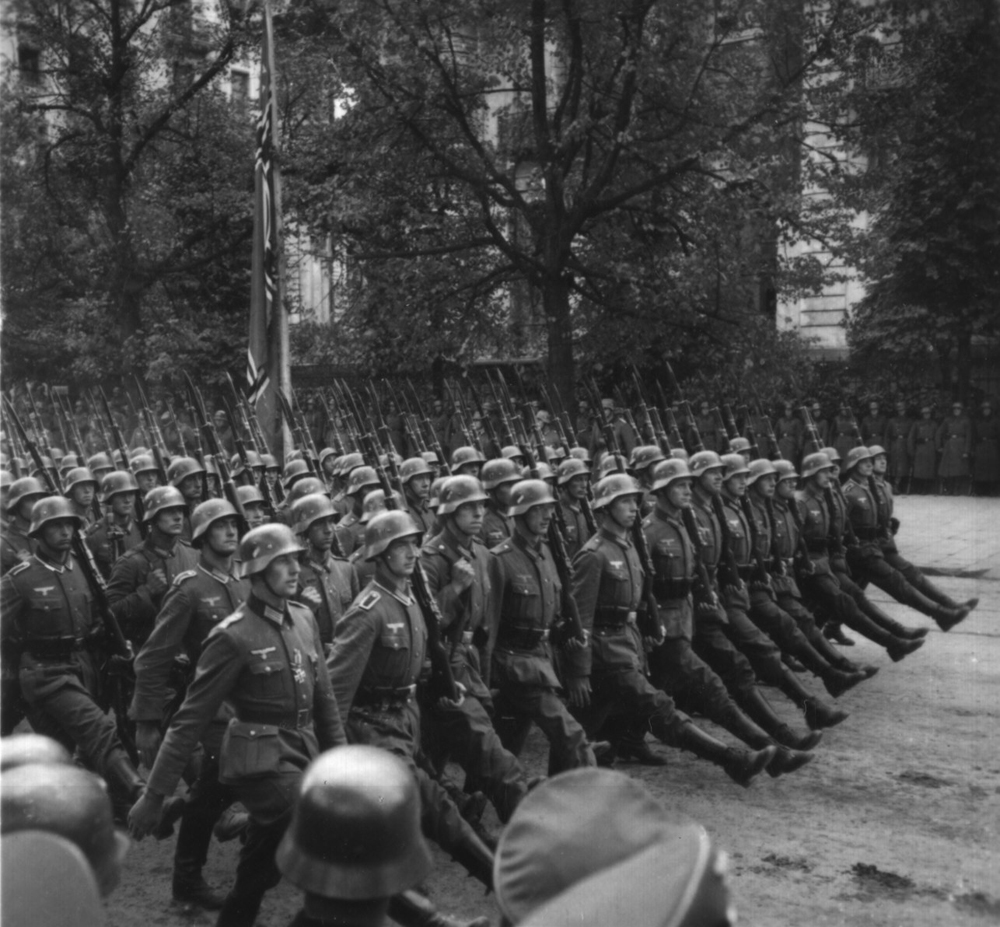
Парад германских войск в Варшаве после вторжения. Сентябрь 1939 г.
Invasion
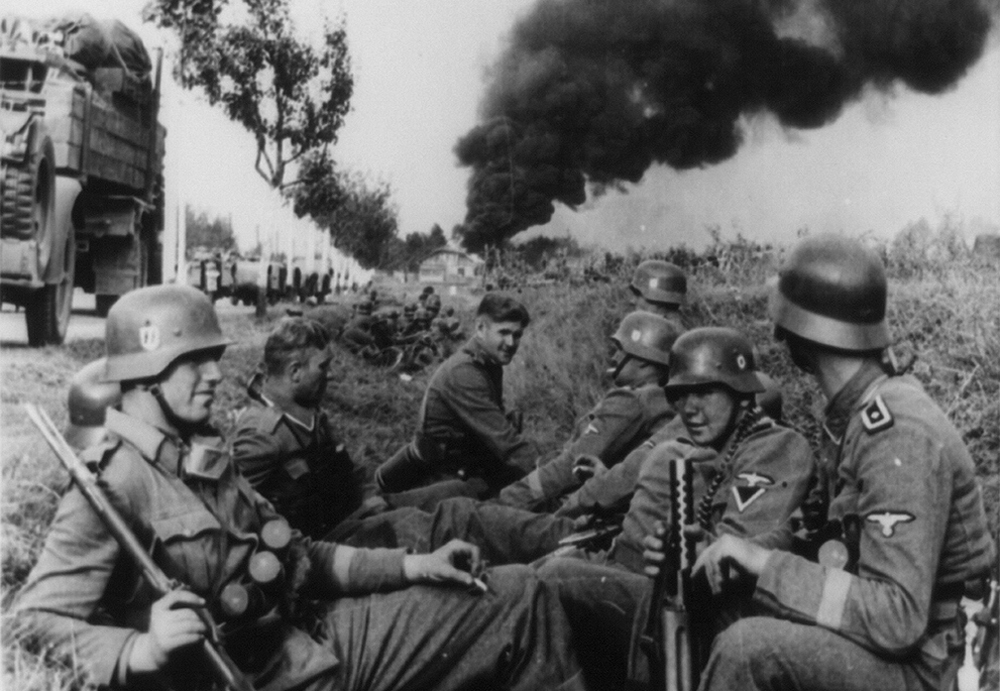
1 сентября 1939 года в 04.45 утра, согласно плану «Вайс», немецкие войска без объявления войны начали наступление на всем протяжении германо-польской границы, а также с территории Моравии и Словакии. Линия фронта составила около 1600 км.
17 сентября , утром, Красная Армия (16 танковых и 2 моторизованные бригады, всего более 4,5 тыс. танков) пересекла советско-польскую границу на всем ее протяжении от Полоцка до Каменец-Подольска. В тот же день тов. Молотов выступил по радио с обращением к «гражданам и гражданкам нашей великой страны», в котором в частности было сказано: «Население Польши брошено его незадачливыми руководителями на произвол судьбы. Польское государство и его правительство фактически перестали существовать. В силу такого положения заключенные между Советским Союзом и Польшей договора прекратили свое действие». Вот так, просто и незатейливо Советский Союз освободил себя от обязательств по договору о ненападении с Польшей (заключен в 1932 году и пролонгирован в 1937 году.)
23 сентября «Правда» разместила огромную, на всю полосу карту Польши с нанесенной на ней линией раздела по рекам Писа, Нарев, Висла, Сан — в точном соответствии с секретным протоколом к пакту о ненападении.
27 сентября в Москву снова прилетел Риббентроп. Переговоры продолжались два дня и завершились подписанием «Договора о дружбе и границе». Полоса польской территории между Бугом и Вислой отошла немцам, в обмен на это Сталин получил Литву. Новую карту немедленно напечатали все советские газеты, включая «Пионерскую правду» (и это не шутка).
6 октября капитулировал последний очаг польского сопротивления. К этому времени президент, правительство и главнокомандующий Польши уже больше двух недель находились в Лондоне.
Через два года немцы стояли под Москвой.
фото: с сайта www.pbsthisdayinhistory.tumblr.com, с сайта www.theatlantic.com, AP