
Translated material
The most humane garden in the world
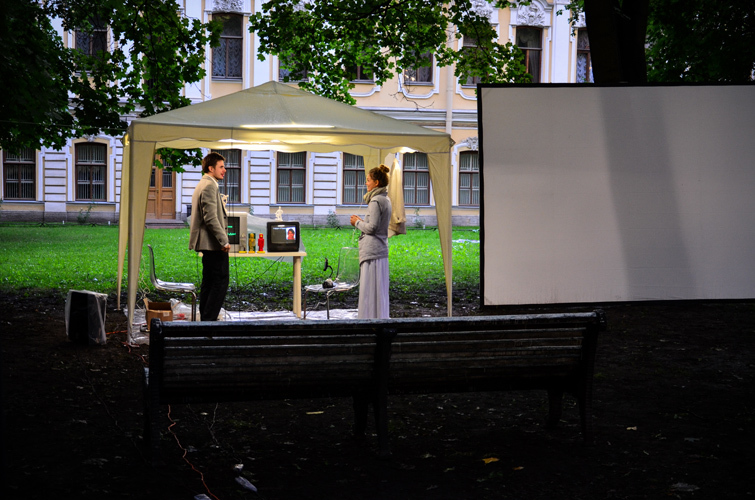
On two screens - two indecent open sunset, and then Petersburg from a bird's eye view. Spectators lurk in the foliage - in tents placed in a circle, which creates the sudden effect of the Grushinsky festival. A tears run into an experimental theater eye-uninvited, all the more so since this is the new performance of Dmitry “I-Lyub-Jona-Kage” by Paul “I-no-no-narrativ” Perezhko. So that mechanistic, similar to uninterruptedly swaying back and forth, table mobiles of Volkostrelovsky productions caused emotions-such cases can be counted on the fingers. The first, perhaps, was a two-year-old solo project in the house of the stage veterans ordered by the Festival "Territory" and shown once a single time.
Then Volkostroelov, I remember, ordered to make a performance with the inhabitants of the house, and they threw the director with condescending issues: what do we, young man, will put you with you? Classic? Or this of yours, how is it there, a document? And why did you come here at all? All this, having put on the headphones, the director confusedly and voiced from the stage. It was a powerful metaphor: children can agree with the fathers, only thoughtlessly copying their manners, their speech - but in such a copyist there will be no more sense than in the re -sound of the voiced. A frightened by the genius of the Volkrodvas in a snow -white shirt was combined with the footage of the touching life of the theater boarding house behind him completely puppy.
 © Julia Lyustarnova \ "Poste Theater"
For the second time, the wolf -wolfers, which was not prone to the effects of the wolf, was deliberately decided on the effect, to knock out emotions from the audience with the help of contemptuous frontal techniques from the Massquults tool last spring. The performance "1968. The New World ” was married to the final credits - such that the main blow to the audience nerves has traditionally accounted for the main song from the soundtrack to the viewer, as it were, it is proposed to digest a powerful ending, surviving Catharsis. The performance of the genuine dustiness of revolutionary seemingly sixties summed up the truly revolutionary for her time the music of the great pop composer Georgio Moreoder-and this was not only semantic, but, of course, emotional emphasis, at the level of the simplest atavistic trimming under the shaman tambourine. Sorry for the expression, enlightenment, I did not experience a long time in the theater - so it was, what, I thought, our main adherent of the head theater.
This wise guy is going to be sensitive.
Poosted in the St. Petersburg Pos theater and played in the open air, in the garden of a fountain house, only five times - as promised on the eve of the premiere, at the end of the last show of the premiere series, the performance forever ceased to exist - “Parks and Gardens” finally claim two things. First: this wise guy is going to be sensitive. It seems that he himself understood this and will now turn out at full power-so much so that not a single sentimentalist-gang from the repertoire theater will not seem a little (whether a joke: on New Year's Eve, wolferships promises to release a performance in Russian romance in the theater). The second: he has the greatest thrill, the main buzz of Russian theater academism, causes the relationship of fathers and children, stories about the possibility or impossibility of dialogue of generations. Instead of being offended by the elders, as they themselves are offended by the cries of the young, or worship them, like the sixties, the ideals of humanism, Volkrostils with all the power of their unhealthy diets endlessly analyzes this problem, solves this equation: is the world possible between children and fathers? And if so - on what conditions?
 © Julia Lyustarnova \ "Poste Theater"
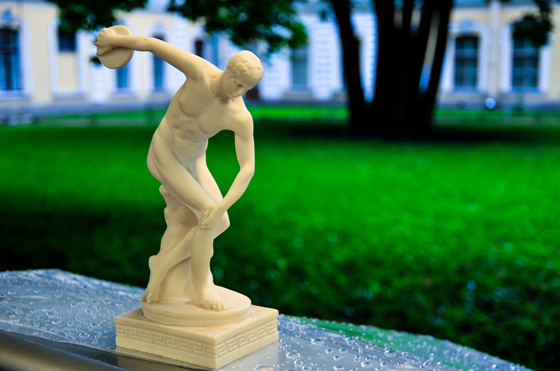
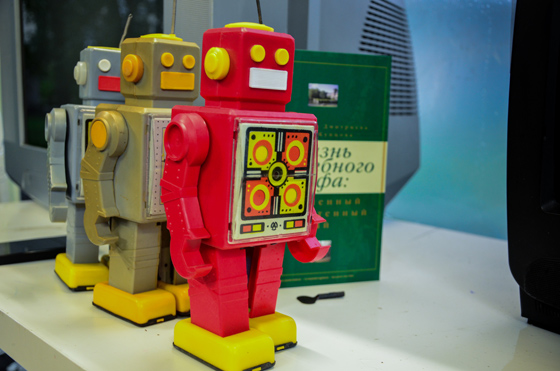
“Parks and Gardens” is the perfect material for such a study: a play about “Call parents” in the scenery of a conditional future. The son creates a digital copy of his father, cyborg, but, it seems, only in order to snap endlessly on her. "You have no idea how much I spent so that you live forever!" -At some point, he exclaims, and in this replica-an extremely accurate mixture of love and irritation, so typical for the suicide son. What infuriates the hero Titan dad? The fact that, being dead, he persistently explores his relationship with organic, with the living, now and then escaping the park and performing meaningless actions there - communicating with the alabast pioneer, helping the regular robots to weave milk, setting to his head in the nest. How vividly alive and the dead - dead? A thoroughly wrecked, sober garden with octahedral bushes - is this nature or no more? Who is more humane - an elderly cyborg with the manners of a stubborn insanity or his son, roboto -like gathers to work in the morning, and a garden worker, who reacting to the next scolding of a metal pensioner? This topic-about the dialogue of a radical and conservative, conditionally alive and conditionally dead-is also very important for the main of Pavel Pryazhko, the owner of his own garden, who did not come to his premiere in Russian today, most likely because he is now collecting a crop.