
Translated material
It's OK
Literature
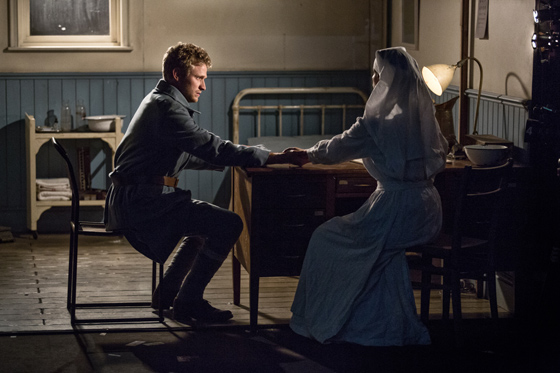
At first it seems-this is something terribly feminist. Among the authors of the texts used by the playwright Duncan McMillan for the composition “ The Forbidden Zone,” Virginia Wulf, Simon de Bovoire, Emma Goldman and Mary Borden. The last, popular writer and sister of mercy, opened the first world hospital. She did not have a medical education, but her hospital became one of the best - mortality in it was quite low. The writer on this occasion experienced conflicting feelings that reflected in autobiographical notes that gave the name of the performance by Katie Mitchell - the “Forbidden Zone”. Bordrin stanzas about male bodies, which for that is only poking in order to send to the front again, sound from the screen, where three stories from the life of three women are broadcast. One of them is a nurse, a fictional character whose remote prototype is Borden itself.
 © Stephen cummiskey
Bordrin's texts are so beautiful that they scare: how can one feel poetic inspiration about the torn limbs and bleeding holes with a human fist? They are unnatural as a product of the psyche, who copes with something terrible. They froze a psychic trauma and how Borden cope with her artistic means. Something similar is produced by Katie Mitchell in his project with the stories of two other outstanding women - the wife and granddaughter of the creator of chemical weapons and the Nobel laureate Fritz Gaber. The wife of the scientist, Clara, shot himself at Villa Gaberov in Berlin after the news of the victims of the first gas attack. The granddaughter, a clerk, who worked on the antidote of chemical weapons after the war, was poisoned in a public toilet in Chicago Chicago - after I found out that financing the laboratory was suspended: the money was now required on an atomic bomb. These tragic family chronicles (there was also the son of Gaber, who also committed suicide, so in this family three suicides in three generations) Mitchell turns into a cold -blooded, as a scientific research, and a stylish, like Hollywood cinema, stage installation.
Movie
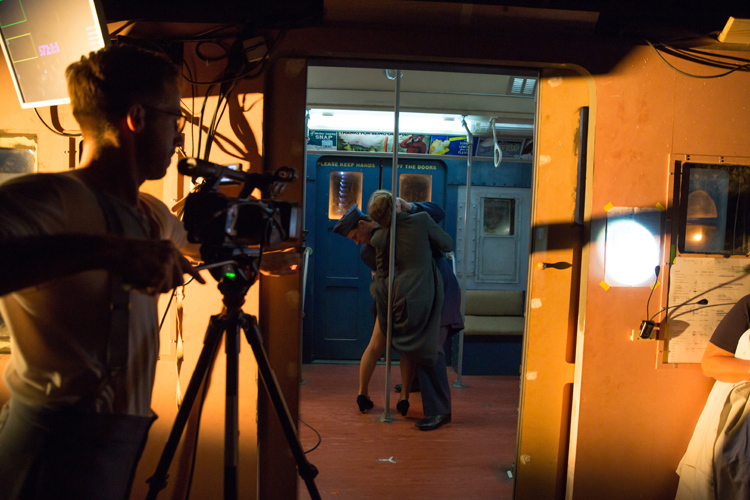
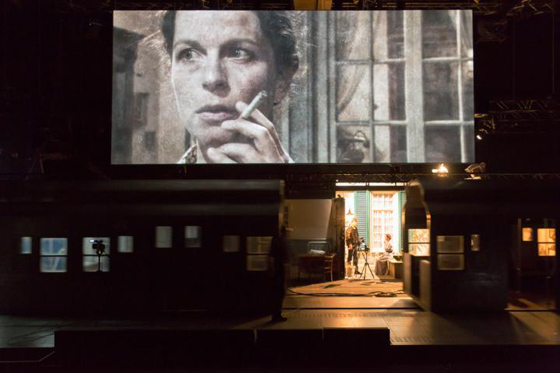
Visually, this is the “Waterloo bridge”-or something like that. Sorokov’s cinema, when the camera looked into the character in the eyes and this “mirror of the soul” reflected both emotions and bouts of beautiful or terrible “surging” memories. Katie Mitchell has so many such close -ups on the cinema screen on the scene that the viewer quickly takes place to watch down, where the movie is shot in four pavilions. In the foreground is the metro train, followed by a laboratory in Chicago, the courtyard and room of Villa Gaberov in Berlin, the ward of a military hospital. Actresses and actors have to play large and old -fashioned so that the camera is happy with them. The snub -nosed nose, huge eyes and stubbornly squeezed mouth Jenny Koenig - Claire Gaber make her similar to small Hollywood Cinderers like Judy Garland, romantic and uncompromising. Anxious, with verified fragile movements, the blonde-aristocrat Katlen Gavlich as a colleague of Claire and the former nurse seemed to flutter from Hitchcock's films. She so shyly pulls her neck, so opens her eyes and heats her face, recalling her lover who died from the gas attack, which seems to be about to lose her feelings. Ruth Marie Kreger - Clara Gaber looks into the camera as if he enters the silent duel not only with her husband, but with all the world evil - in Fritz Lang films, such led by crowds to the barricades. Felix Remer - Fritz Gaber, finally plays a genius who is forced to defend his terrible creation, but you can see the face - also not averse to shoot himself.
 © Gianmarco Bressadola
On the stage, the actors run almost invisible, busy only to find themselves in the right pavilion and not confuse which camera to look into. On the screen - become huge, large -scale personalities. Twisted actors below are portrayed by the “pitching” in the train. And on the screen at the same moment they move freely in time - barely glancing at the photo or touching the grandmother's medallion. On the screen, the gross reality is edited, the attraction of the scene is overcome, and even foam on the lips of Caliy, clever from cyanide potassium, you will admire: the most terrible thing that can remind is a toothpaste.
Theater
It would be quite a movie on stage if Mitchell created an illusion. But she rather destroys it - exposes it, presenting the viewer with the means creating a “deception”: the camcorders that operators run around the stage, not paying attention to how aesthetically they run, the work is such. The actors who are not busy in a particular scene sometimes help them to shoot them. In the pavilions, before shooting, they carefully put things in order - they put an ashtray with an uninhabited cigarette on the edge of the pool, for example, either put, and then quickly remove the mattress, which Clara Gaber firing in itself falls. Preparation for such episodes sometimes lasts longer than the episode itself - only the make -up artists are not enough to correct the makeup in pauses, but the actors cope with this themselves. Claire smears a lipstick in the train car, and her grandmother is a self-like man, before falling dead into the pool, is busy with buttons on the dress for a long time-it is necessary to fasten so that a wet dress in the water on a dead body is realistic.
 © Gianmarco Bressadola
Interiors and objects comprehend a similar fate. Already after Claire’s dead body, the camera has been stolen from it, the camera looks for a long time - it fixes and perpetuates. Now it is not just a toilet in the Chicago public toilet-from now on it is a museum, historical and art object. The same as the hospital’s room in the memoirs of the nurse - all in the fog, romantically blurred, with slowly flirting lovers, she was shot in the spirit of the silent ribbons of the First World War, which we represent almost so much. Any attempt to approach the “forbidden zone” - a war that traumated the subconscious of several generations and is not yet a fact that the ending - Mitchell's production classifies as a potential fake. The more attempts, the more fakes like shadows on the screen or mediator between the past and future, reality and fiction of images like those photographs of dead people that the characters are in their hands endlessly.