
Translated material
Belousov at large
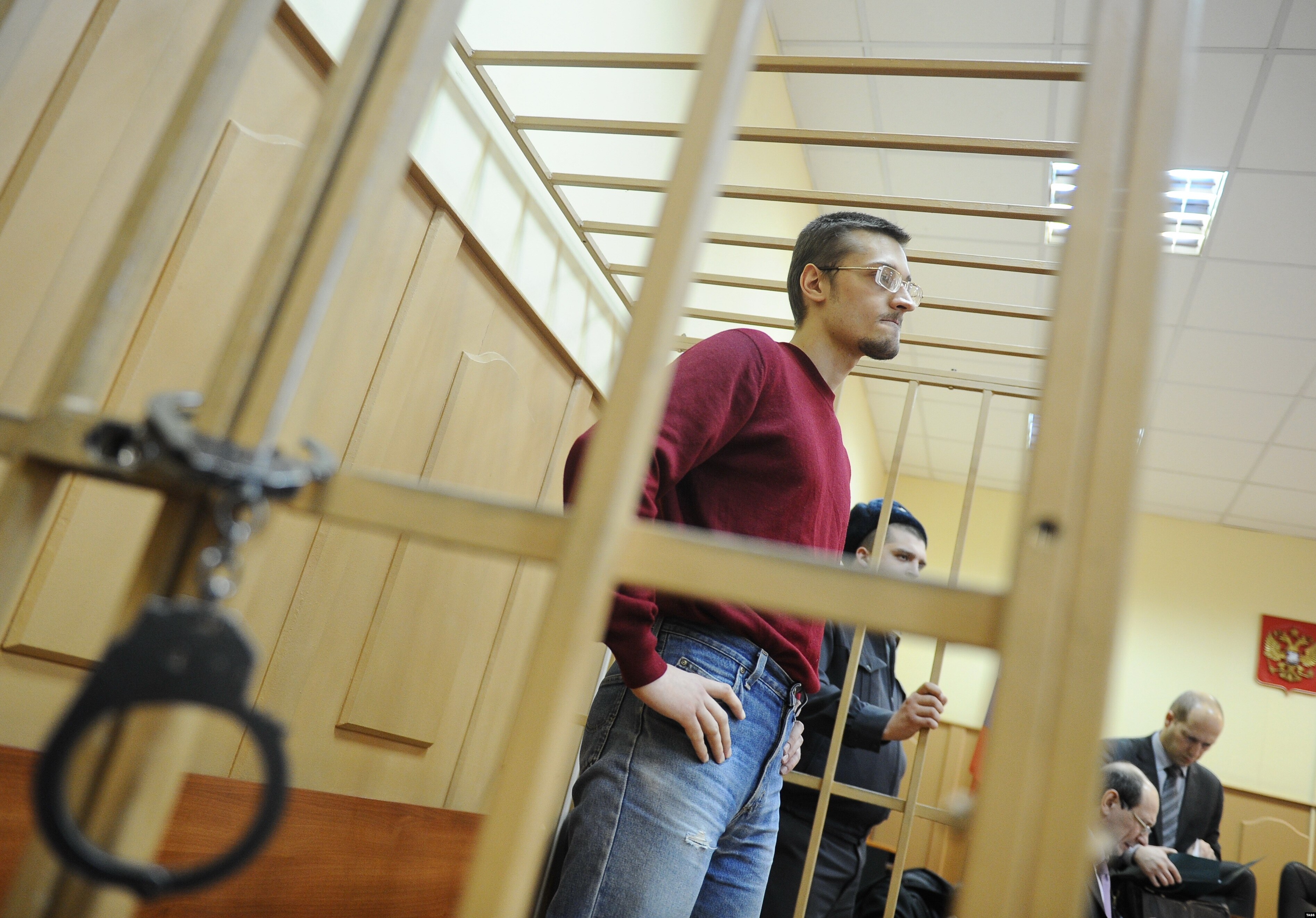
The first of the convicts in the "Swamp case" of Yaroslav Belousov ended the term of the sentence appointed to him, he is at large
On Monday, September 8, the first of the convicted persons involved in the “Swamp case” - Yaroslav Belousov, was released, he ended the sentence of the appointed punishment. In February of this year, a 23-year-old student of Moscow State University was sentenced to 2.5 years in a colony for participating in the riots and the use of force in relation to police officers during the events of May 6, 2012 on Bolotnaya Square in Moscow. Belousov denies the guilt. In June, after considering the appeal against the sentence, the deadline was reduced by three months.
On August 5, the convicted person was transferred from the Moscow Investigative Sailor Silence, where he spent more than two years, in the colony in the Stavropol Territory, but the Belousov did not have time to get to the correctional institution. At the time of the release, he was in the investigative isolator of Pyatigorsk No. 2 "White Swan", from where he was released. On August 22, the Preobrazhensky court refused to consider the petition for his parole, redirecting the case materials at the place of serving the sentence in the Stavropol Territory. The defense of Belousov then stated that in this way his constitutional rights were violated. Human rights activists and relatives of Yaroslav Belousov were also concerned about his health: he complained about pressure problems, also in recent months his vision has worsened.
In Pyatigorsk, during the liberation of Yaroslav Belousov, parents met. According to Alexandra Likhanova , the mother of the wife of Yaroslav Belousov and his public defender in the trial, he is now unimportant, so he will spend a few more days in the Stavropol Territory to undergo a medical examination. Then he must return to Moscow, but with this, according to Alexandra Likhanova, difficulties may arise, since during the release he was not given a passport:
- This happiness is great, Yaroslav was released. But the last month he was hardly given to him, sending throughout the country, in the south of Russia, in the heat and incredible stuffiness, the difficult conditions of shipping chambers. But in general, it must be understood that two years of such isolation are not even a colony, but a prison where the premises are a meter per meter. In one of the last rooms where he was, he had to sleep almost in a bent form. There is no, of course, no walks in fresh air, nor nature, nothing ... This is really the isolation is very severe and complex. He is well done that he was able to withstand it. I could not! This is not even a colony where people lead a more or less familiar way of life, it is a prison where you spend four walls, where you spend 23 hours a day, with the exception of an hour for a walk, which also does not always happen.
- How was the situation in Pyatigorsk in general? How does he feel that he says? Have you really lost his passport?
- Yes, he went out without a passport, so we do not yet know how he will get to Moscow. He feels himself not very well yet, he now, of course, needs rehabilitation for several days. Parents will conduct an examination, find out the state of his health. Let's see what with the eyes, let's hope that nothing else appeared. And there it will be seen further, ”said Alexandra Likhanov .
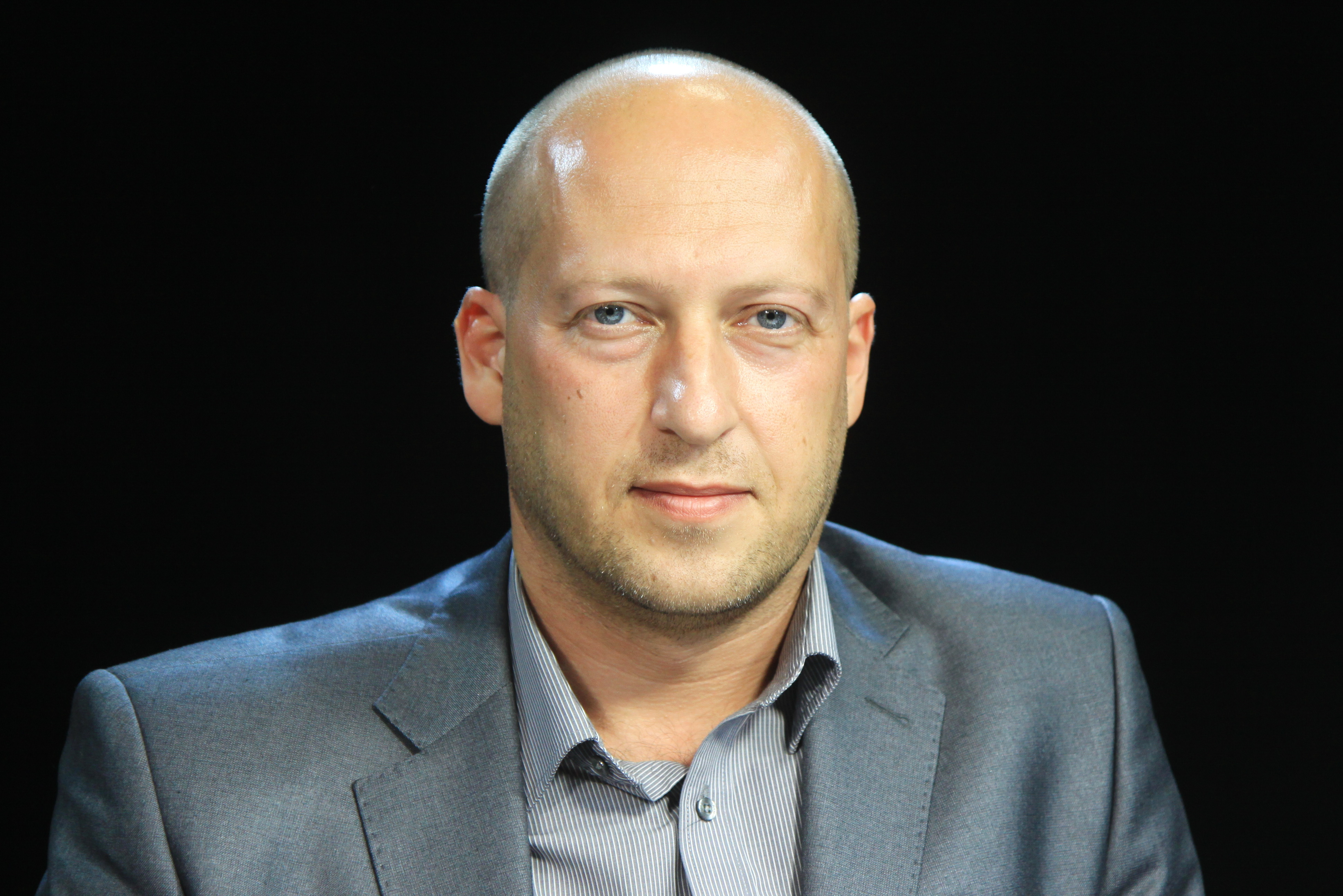
Yaroslav Belousov’s lawyer Dmitry Agranovsky earlier in an interview with Radio Liberty spoke about the procedure for the release of his client to freedom:
- It was clear that they would not have time to transfer him to the colony. Liberation, in accordance with Article 173 of the Criminal Executive Code of the Russian Federation, occurs in the first half of the day. A person is returned to things, documents, funds that he has in the account and exempt. As far as I know, relatives intend to meet him. And this is right, because then it will need to be returned to Moscow. I am sorry that we were actually disrupted by parole . We did everything on time - we filed our application on June 27, but as a result of the actions of some people who seemed to help us, Belousov left where he left. At least I am pleased that he should not miss the new academic year.
- What information do you have about the state of health of Belousov? How much could it deteriorate as a result of thisth?
- Of course, I can’t say to reliably, but I hope that it did not affect his health in principle. He already has enough problems. In any case, the first thing his family will do now is to drive him to doctors intensively. It seems to me that he needs to undergo a comprehensive examination, and not just about the eyes. Of course, two years in the pre -trial detention center do not help health, especially if you understand that you are sitting for nothing. But I am still convinced of both Belousov’s innocence, and in the innocence of other “swamps”. I hope they will not sit this completely monstrous term, 3.5 years each. Yes, I always emphasize this: everything could be much worse, the deadlines could be more. But taking into account the fact that people are not to blame, their public danger is not only striving for zero, it is equal to zero, they all must be freed. I am glad that Yaroslav will come out first, but, of course, I would like the other guys who went with him on the case so that they would be at large as soon as possible.
- Will you seek an excuse of Belousov or a revision of the case?
- I am only a tool in this case. I will consult with Yaroslav, and see what to do next. Why not? We have such an opportunity, we have not missed the deadlines.
I am glad that Yaroslav will come out first, but, of course, I would like other guys who went with him on the case so that they would be free as soon as possible
Yaroslav Belousov is one of more than 30 defendants in the "swamp business". Together with him in February 2014, seven more people were convicted , six of them are already in the colony. Alexei Polikhovich, convicted of 3.5 years, was sent to a correctional institution in the Ryazan region, Andrei Barabanov, who received 3 years and 7 months, and Artem Savelov, who was sentenced to 2 years and 7 months in prison. Denis Lutskievich and Stepan Zimin, convicted of 3.5 years, are serving a sentence in the Tula region. The protection of Zimin this week appealed the verdict in the Supreme Court of Russia. Sergei Krivova - who received the most severe period - 4 years in the colony and decreased after an appeal of up to 3 years and 9 months - as it became known in early September, is in a colony in the Bryansk region. And only Alexander Dukhanin, the only one of this wave of defendants, received a conditional term.

The next one from the convicts in the first "swamp case", the so -called "case of eight", is to be released by Artem Savelov - its term ends in early January 2015. Savelov could have come out earlier-almost all convicts of the first wave have already received the right to submit a petition for parole,-however, as his lawyer Farit Murtazin previously stated, Savelov decided to serve the deadline and not ask for UDO for fundamental reasons. The rest of the defendants in the case are also in no hurry to submit petitions for parole. Their lawyers explained that while their clients need to get used to the colonies, they will prepare petitions about parole in a few months.
On August 18, the Zamoskvoretsky court sentenced the so -called “second wave” in the “swamp case”. Four more people were found guilty of participating in the riots and the use of force in relation to police officers. Alexey Gaskarov and Alexander Margolin received 3.5 years in colony, which partially pleaded guilty to Ilya Gushchin - 2.5 years. The fully repentant Elena Kokhtareva was condemned conditionally.
For organizing riots on May 6 in Bolotnaya Square and preparing for the organization of riots in other cities at the end of July 2014 , the activists of the "Left Front" Sergey Udaltsov and Leonid Debvoszhaev were convicted . The court appointed them 4.5 years in colony. Oppositionists deny guilt, like most of the defendants in the "swamp business".
On May 6, 2012, the opposition action agreed with the Moscow authorities ended with clashes of demonstrators with the police. The authorities considered these events the mass riots and initiated a criminal case, the investigation of which is still ongoing. Human rights activists and observers consider this case politically motivated and claim that the authorities themselves provoked clashes of police officers with demonstrators. The Human Rights Center "Memorial" recognized the majority of the defendants in the "swamp case" by political prisoners.