
Translated material
People of war
What is happening in Mariupol
At the end of last week, President Petro Poroshenko ordered the ceasefire, and representatives of Kyiv and the DPR-LNR agreed on the negotiations in Minsk. A little earlier, Poroshenko and Putin, according to the press service of the President of Ukraine, in a telephone conversation agreed on the ceasefire, and the optimists-in Ukraine and Russia-spoke about the de-escalation and even the approaching interchange of the crisis. But other signals were in parallel: the European Union agreed on new sanctions against Russia, and the forces of the Donetsk People’s Republic (DPR) began an attack on Mariupol, a strategically important city port on the Sea of Azov
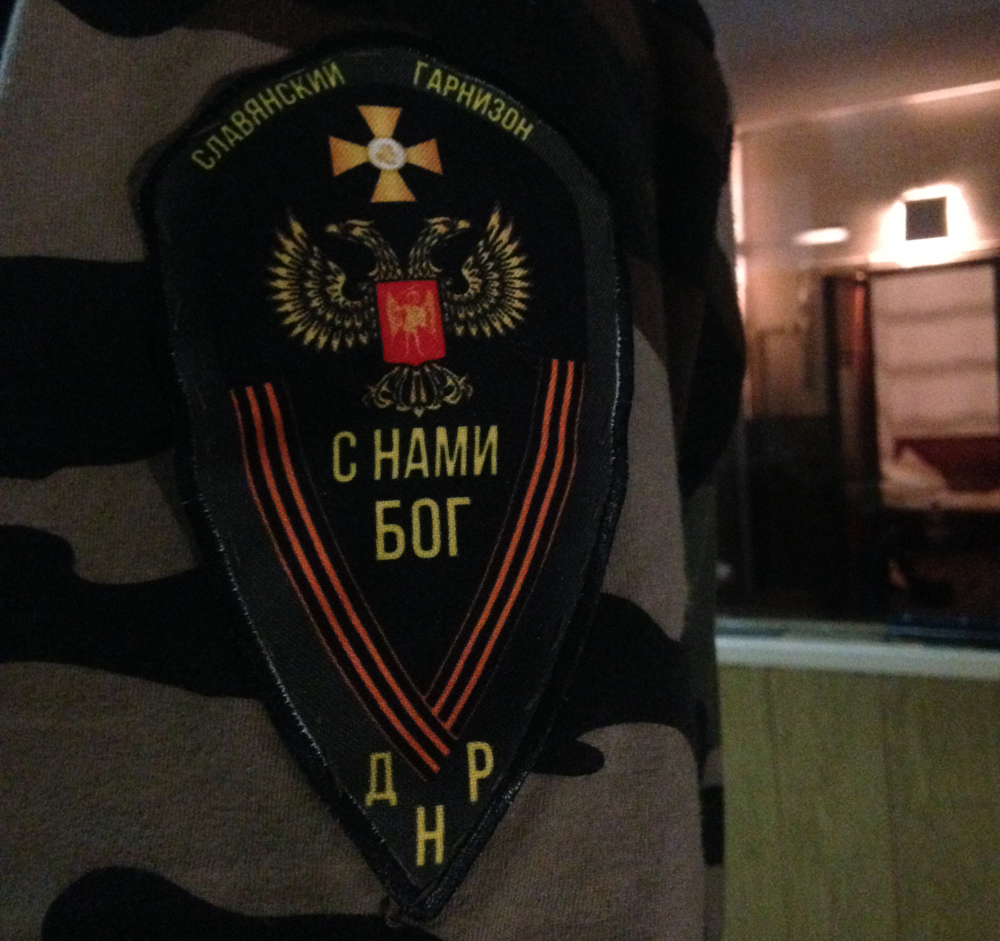
Fighters from Slavyansk today are fighting in the south of the Donetsk region. Starobeshevo, September 2, 2014 /Photo: Sergey Khazov-Cassia
“Yes, these are all plans and a truce, how many times have agreed,” exclaims Marina’s trading in the Central Mariupol market. - I do not believe Putin. He is lying, there is no your army in Ukraine, and we have a “brother at the gate”! Everyone knows, sho is a Russian occupation, Sho Putin needs a land path to the Crimea! ”
The fact that “coordination of the armistice regime” was announced only for the removal of the eyes, the student of the Azov State Technical University (PGTU) Oksana also agrees. However, she has her vision of what roles play in this political theater of the President of Ukraine and Russia: “I do not believe Poroshenko for a second, he never fulfills what he promises. Putin is a real politician. "
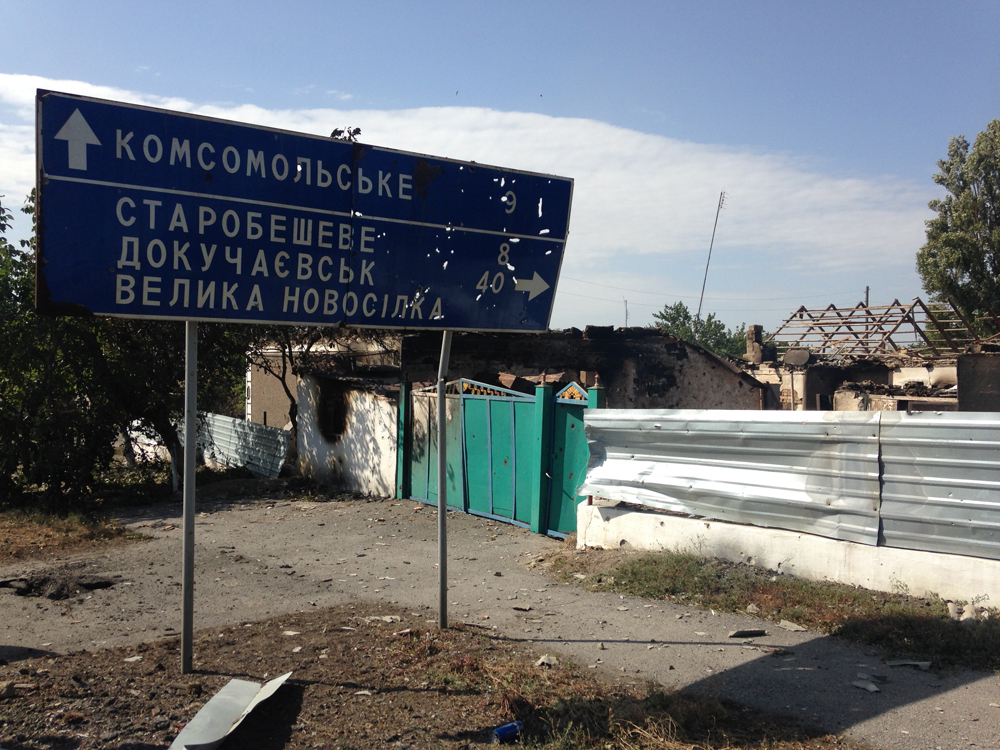
The village of Novokaterinovka was in the epicenter of battles. September 3, 2014 /Photo: Sergey Khazov-Cassia
Different world
Mariupol - a small green Primorsky city, with a busy center and deserted seaside boulevard, behind which stretches a strip of a sandy beach cut off the city with a branch of the railway - was already in the hands of the DPR from April to June. Then the separatists knocked out of here the forces of the ATO, and the city became the main base of the Ukrainian volunteer battalion "Azov". A deep -sea port, grain reserves, the possibility of transporting products and weapons by sea, as well as the export of goods to the side of, say, Crimea, the path to Zaporozhye - all this makes Mariupol a city without which the DPR would exist extremely difficult. So his assault was only a matter of time.
On the left bank of the Kalmius River, he smokes the pipes of the Azovstal domain furnaces - one of the main factories in the city. The first thing you pay attention to is the absence of Ukrainian flags on private cars: for many drivers in Kyiv or even in the east, in Dnepropetrovsk, a yellow-blue flag peering out of the car window is a way to indicate with whom the name and against whom.
To the question about the current situation, both old and young answer the same way: if only there was no war. The Mariupol residents heard the city of refugees from under Donetsk and Lugansk, who lost their relatives. But when you begin to ask in which country peaceful Mariupol residents want to live, opinions differ.
For example, sellers in the market condemn Russia for interfering in Ukrainian affairs, do not want to divide the country and do not want to see Russian tanks on their land. Here in one of the ranks they discuss the unsuccessful mobilization announced by Peter Poroshenko on July 24: “How can you - such a moment when you need to protect your homeland, and you hide behind the mother’s skirt?! To put them all in prison for this, like him, desertion! ” - the elderly woman screams, waving her arms. Two men nod in response silently.
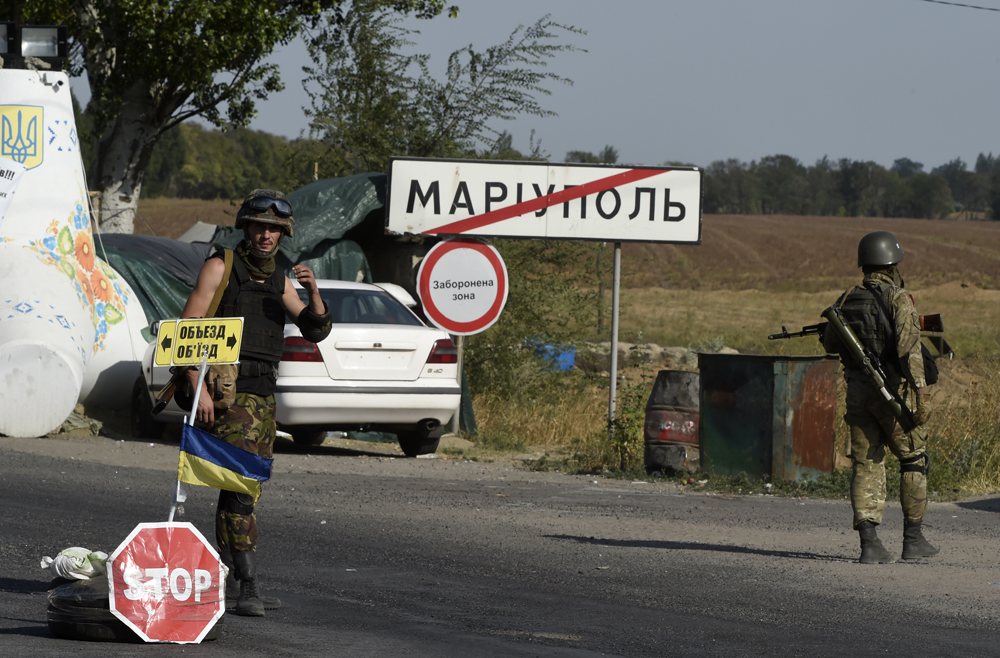
The fighters of the Azov battalion became the main defenders of the city. Mariupol, September 4, 2014 /Photo: Philippe Desmazes /AFP
The saleswoman in the next row, Larisa, also for Ukraine, even helped the Ukrainian militia - handed over sheets, socks, underwear for the fighters: "Our army is a beggar, and these battalions are also." At the same time, Larisa says that she used to love Putin, but stopped believing him after Beslan: “How can this be done with her people? She asks. “Yes, and now: our grandfathers would have turned over in the coffin if they knew that the Germans would impress Russians and Ukrainians.”
But the students of PSTU, although against the war, want to live in an independent DPR: "There is no trust in the Kyiv government that shoots into its people." True, none of the five girls who managed to talk with, went to the referendum for independence on May 11: in Mariupol, for the department from Kyiv, according to the DPR CEC, then voted 92.7 %.
"
"Our grandfathers would have turned over in the coffin if they knew that the Germans would impress Russians and Ukrainians"
"
One of the students (not wanted to call) talks about the "atrocities" of the Ukrainian army, which, after capturing by the DPR forces of the border Novoazovsk, "forced" young people to dig trenches around the city. The girl could not give the contacts of people who were driven out to dig trenches, but the driver Alexei confirmed this information. According to him, the workers of Azovstali (“I know at least seven”) who went on a night shift, the fighters of the Azov battalion were delayed right on the street and sent trenches to digging. But workers do not want to talk about this.
Alexey himself, a 23-year-old guy from the village near Mariupol, supports the DPR and even took an active part in the capture of the City Council in April, but did not take the machine in his hands: “It is necessary to work for someone and work in the rear.” When you begin to ask why he does not like living in Ukraine, he replies: “I also worked for Azovstali before. We have all products to Russia and Kazakhstan. Now there is no more Russian market, so we stop the blast furnaces. Do you think for whom all these will be (Alexey shows with his hand towards the blast furnaces) workers? ”
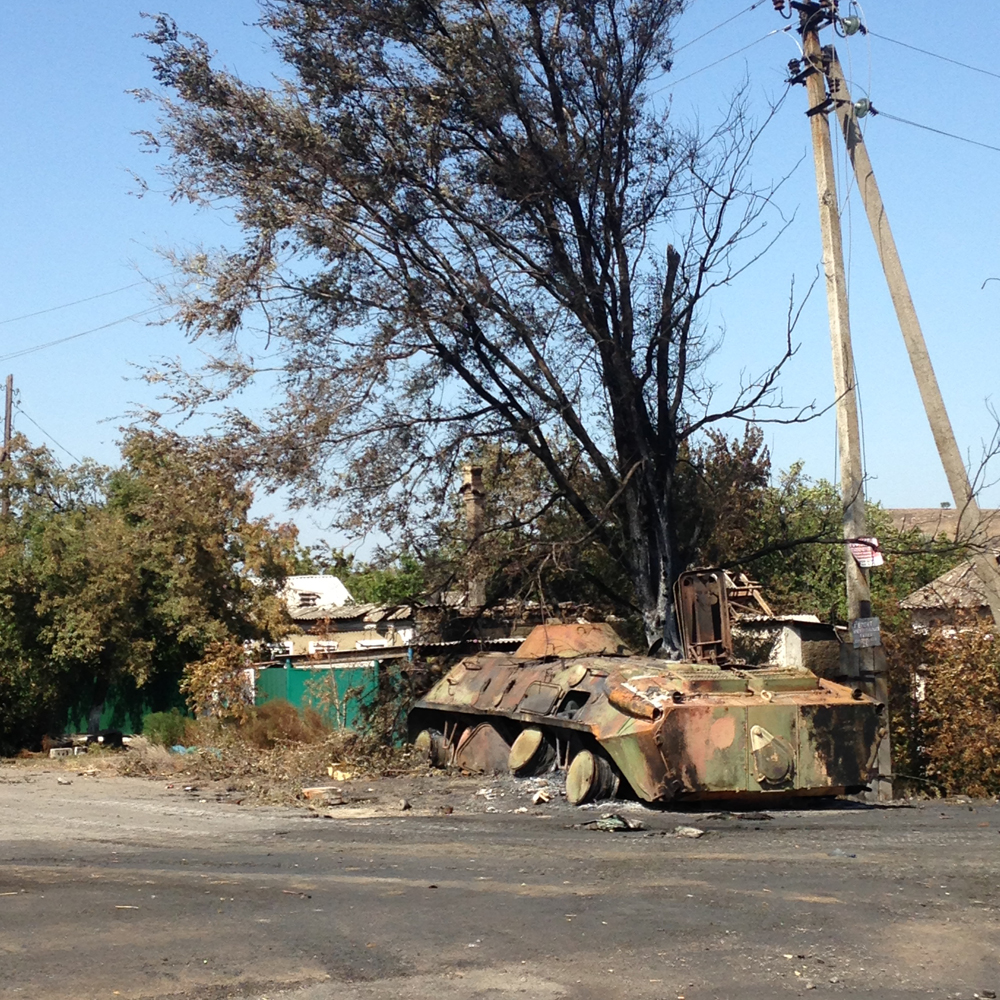
The burned combat vehicles of the Ukrainian army are often found in the Donetsk region. Olginskoye, September 3, 2014 /Photo: Sergey Khazov-Kassia
Rear
Putin and Poroshenko and the fighters and the fighters and the fighters at the DPR checkpoint next to the village of Zaichenka, which was 13 km from Mariupol, did not respond too much - the front line moved here on September 3: “But you never know what they are talking about there,” the commander of the call sign “Kalmyk” waved his hand, a tall guy with a military befielding in a masking summer suit. With a hood that is not like an ordinary heterogeneous camouflage of the DPR militia. On the ear, Kalmyk hangs a microphone connected to the walkie -talkie, in unloading with the stores from Kalashnikov a special device for determining the location - the correspondent of The New Times did not see such accessories. However, it helps Kalmyk a little - he does not know the terrain. Of the two dozen fighters at the post, it seems, there is not a single Ukrainian. The military was at a standstill of the Ukrainian technical passport, shown by one of the drivers detained for checking: it turns out that they were issued before 2003, which few knew about the checkpoint.
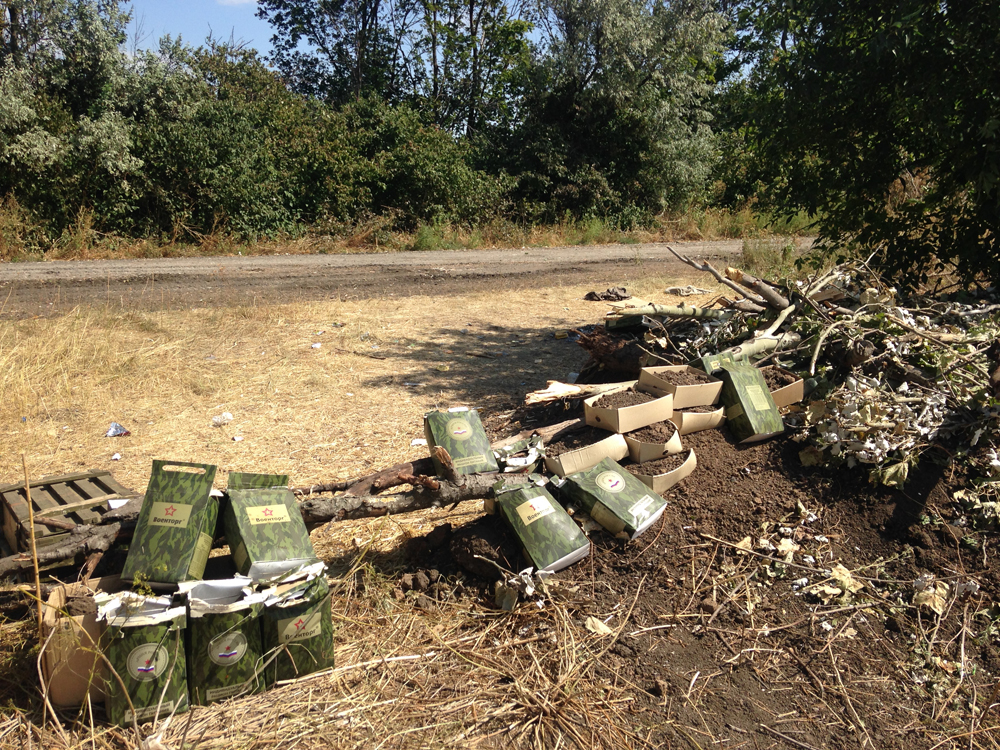
Professional army straightening and the same camouflage - another fighter at the checkpoint, assistant Kalmyk; The crew of the T-72 tank (was in service in the USSR, therefore, is not similar to volunteers, and therefore in the army of Ukraine and in the army of the Russian Federation), who suddenly left the bushes: everyone was dressed in the same camouflage and helmophones. Nearby in a roadside ditch lies a box from Sukhpike of the Russian army with a large inscription "Voentorg" - you often meet such boxes in Ukraine recently.
When one of the fighters admitted that he was from Volgograd, the commander of Matvey barked at him so that the guy was blown away like a wind, and a correspondent warned: “I will write - I’ll shoot!”
"
The arrival of the journalist at such a crucial moment seems suspicious to the warriors, Kalmyk generally sees accreditation of the DPR for the first time, and "they can’t contact the center at the headquarters." “Sorry, buddy, it is said to hold you,” says Kalmyk.
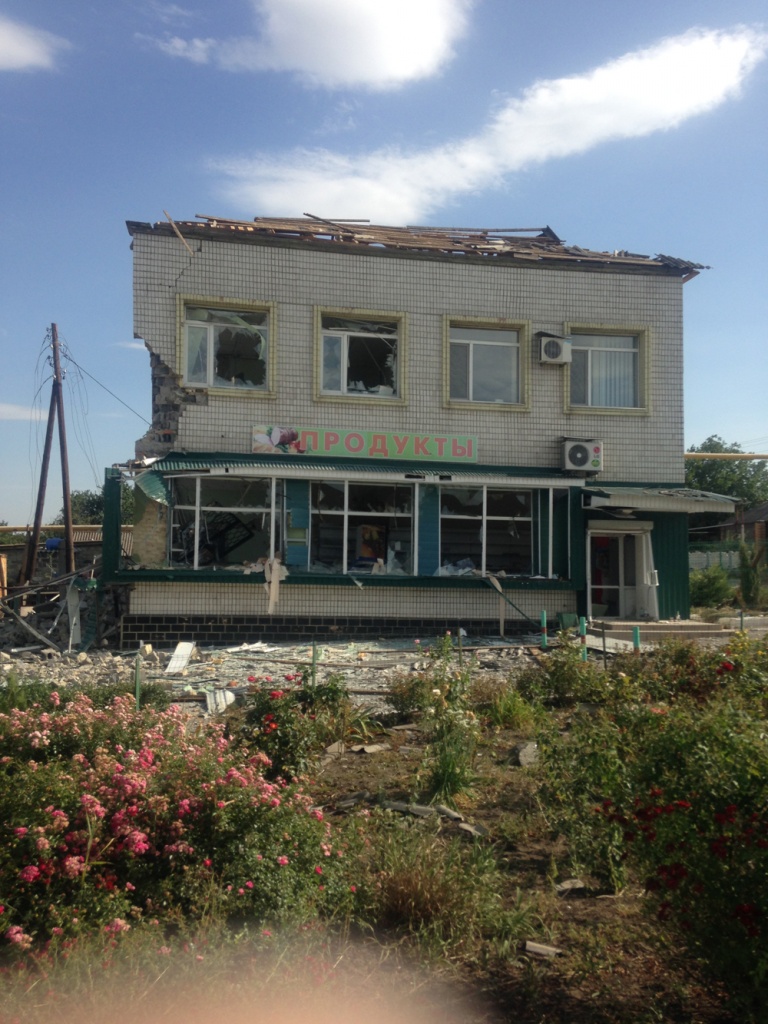 |
| The Ukrainian units, not informed about the humanitarian corridor, tried to leave the battle from the boiler near Ilovaisk. Starobeshevo, September 2, 2014 /Photo: Sergey Khazov-Cassia |
At some point, we shoot from the place and move to the intersection 500 meters closer to the city-a fortified checkpoint will be built here. From the landing next to the road, the “Ural” invisible to this with fighters on board also unexpectedly leaves, behind him, the KAMAZ that appeared from nowhere is coming. Instead of the number of the unit on the “Ural” door, a white circle, the DPR flag is drawn over it-like on the combat vehicles of the “lost” on August 25 of the 331st regiment of the 98th division of the Russian Airborne Forces.
The fighters are not particularly shy of the journalist, one of them is eager for battle: he could not shoot before, more likely already. Kalmyk smiles broadly at the girls in passing cars and talks about one, well, in a very open dress. One of the fighters asks Kalmyk where to fold food (the usual militias of the DPR DPR does not, they even ask the taxi driver to drive for groceries to the store), the commander indicates the place: “To put it there, tomorrow we will leave here, there are already rear.” In order for the Zachenki to become “rear”, you need to take Mariupol.
The journalist at the checkpoint is nervous of Kalmyk: it is not ordered to let go, and his presence here, and even with an iPhone, is dangerous: it is impossible to take out the battery from iPhones, and Ukrainian arthrotakers can spine up even the turned off the phone.
As a result, without waiting for a connection with the “center”, Kalmyk returns the documents: “Do you have parents, girl, is there? Think about them: we are not going to bomb the city, and we have nothing to do, but that these (Ukrainians. - The New Times) will do when the departure - no one knows. ”
The taxi driver, who arrived the next morning for that crossroads beyond the city line, where we talked with Kalmyk, found there not the rear of the DPR army, but a checkpoint broken after the battle with burnt BMPs and charred corpses. They also probably had girls and parents ...
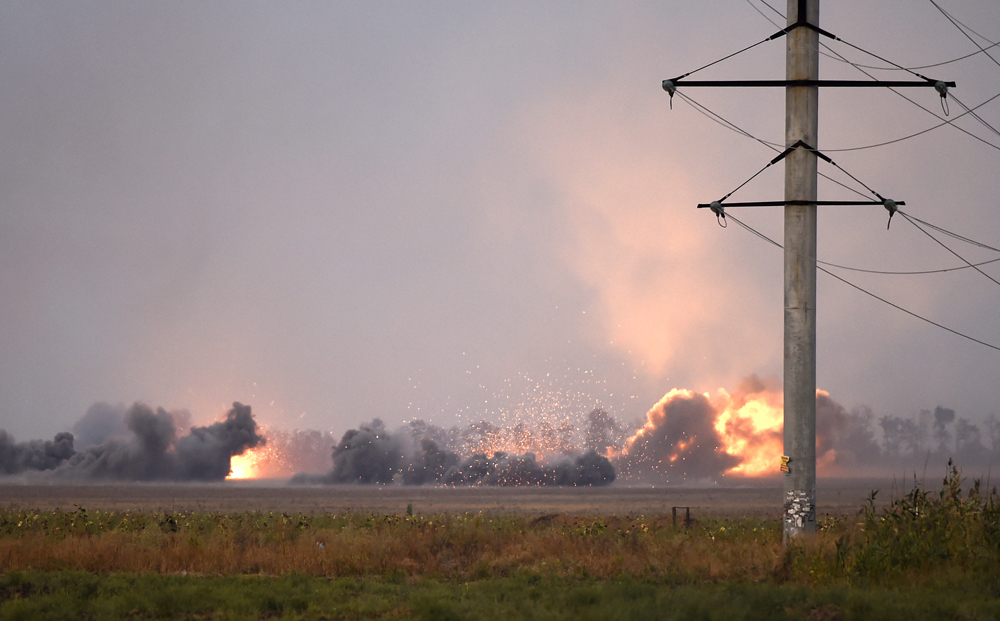
On September 4, the assault on Mariupol began. /Photo: Philippe Desmazes/AFP
The new power of Starobeshevo
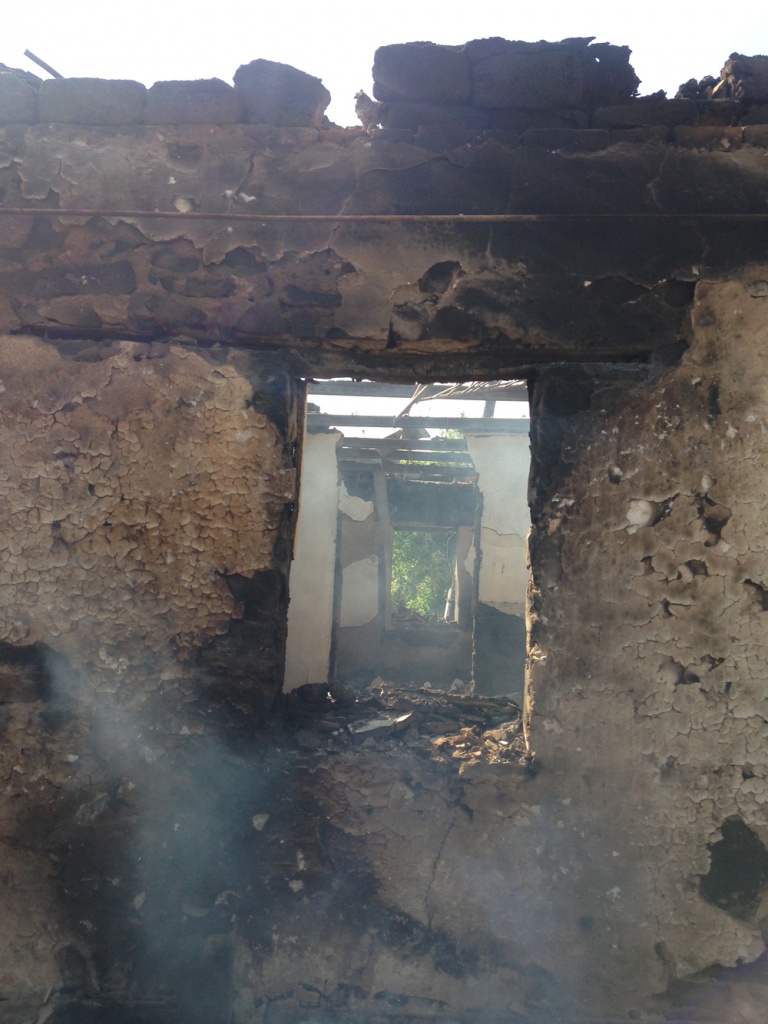 |
| The village of Novokaterinovka was in the way of the exit of Ukrainian troops from the boiler near Ilovaysky. September 3, 2014 /Photo: Sergey Khazov-Cassia |
The DPR militias knew about the assault on Mariupol before Putin - Poroshenko’s telephone agreements. So, Matvey, the commander of the garrison of the urban type of Starobeshevo, 40 km from Donetsk, on September 2 assured the correspondent of The New Times: there were very few left before the capture of the city.
A little less than two weeks ago, Starobeshevo was under the control of the Ukrainian army, today it is one of the strongholds through which the “humanitarian corridor” passes to withdraw Ukrainian units that fell into the boiler near Ilovaisky. The separatists organized the corridor in response to the appeal of Vladimir Putin on August 29, but the removal of the retreating units did not do without excesses: many Ukrainian military knew nothing about the corridor and tried to break through the battle.
For example, in Starobeshevo such a battle happened on August 29. Matvey, not without pride, tells how he, smaller than the enemy, burned one armored personnel carrier and repelled five tanks from Ukrainians. On the chest of Matvey, in the past - a sling from the village of Debaltseve, the medal “For Military Merit” (for battles near Slavyansk), behind the back - a store building broken by the Ukrainian tank. Assistant Matvey, Ossetians with the call sign “Hassan”, tells how he was thrown away from the store by an explosive wave, but “he survived and even the bones are intact” - Hassan smiles, exposing a number of golden teeth. Nearby, on the territory of the poultry farm, is the same burned armored personnel carrier. Matvey explains how difficult it was to blow it up - it was necessary to get from a grenade launcher into the exhaust hole: it was possible only from the sixth time.
The few Starobeshevites remaining in their homes are happy with the arrival of the DPR. So, Sergei, the head of the poultry farm where the battle was going on, tells how the Ukrainian army occupied his enterprise, giving him three days to get rid of the chickens: “I was lucky, I managed to take them to Donetsk and put them to the base, and now for two months without work, so then I was accused of helping the“ dill ”. And how can you not help when you came to you at three in the morning with an automaton?! ”
Sergei is a Greek, like many Starobeshevites: the village was founded in 1779 by the former Crimean Greeks. But he wants to live “either in Russia, or in an independent republic” - with Ukraine, the poultry farmer is sure, he is not on the way. When asked why he didn’t leave, because the village was in the epicenter of battles for almost two weeks, he says that in January his mother buried, and his father broke paralysis, so that Sergey could not even go down to the basement during shelling. "He all asks me:" Seryozha, tell the children to stop indulging and let the firecrackers. " I tell him that this is not firecrackers, but a war, and he does not believe: "When I was small, there was a war, now there can already be no war."
Somewhere in the distance there is a battle, BTRs of the DPR, but the Russian troops are never visible; Only fresh marks from caterpillar equipment lead from Russia to the Donetsk region
"
Supports Sergey in love for the DPR and neighbor Valentina Trifonovna, a pensioner with an eagle Greek profile: “dill” occupied a sewing workshop opposite the house and walked every day. Get drunk, turn on the music and let's shoot into the air, smoke. We were afraid to go out into the street. And ours do not drink - discipline. "
Valentina Trifonovna shows her economy: a garden of 15 acres, a small garden. There is no light or water on its half of the village for two weeks, but there is a well, and food is prepared at the stake. They purchased pasta and cereals in advance, and so the new power was opened by one of the stores and handed out food to people (and some of the villagers are for some reason sure that this is the same humanitarian Russian assistance from that “white” convoy). Army form flutters over the beds with faded strawberries on the rope: "The guys from the DPR go to wash to me, she washed one shape."
Even more reasons not to love Ukraine with the 60-year-old Nikolai Mikhailov, the owner of the construction store: the fighters beat him and his 23-year-old grandson Dmitry either the Dnepr battalion, or the Donbass, who was thrilled in Starobeshevo: “They came to the store first, everyone turned over there. I ask - what are you looking for, they answer - weapons. I had no weapon. Then they went to my house, pulled out the grandson out of the bed and took us both to the police department - you say, gunners for artillery. They beaten, loaded onto cars, took it to Sedovo, and there was again tortured all night. ” In the morning, Nikolai Mikhailov was taken to the city of Telmanovo to intensive care, and Dmitry’s body was found in the middle of the road from the village: “The ribs, fingers and legs are broken, the skull is pierced, his head was tied with tape, and so it was inflated that the tape was eaten into the body,-in the salt, Nicholas clearly cuts down and barely restrains the tears. “It hurts me to talk about it.” Nikolai thinks that neighbors who put their eyes on his business took his scores. But there is another version - his son, Oleg, serves in the militia.
Here stood a camp of three tanks with the numbers smeared with white paint, as in the combat vehicles of the “lost” on August 25, 331 regiments of the 98th Guards Svir Airborne Division. The track between the villages of Kumachovo and the culture of the Donetsk region, 10 km from the Russian-Ukrainian border. September 3, 2014 /Photo: Sergey Khazov-Cassia
Night in the militia
According to Starobeshevites, out of 7,000 fellow villagers in the militia - about 30 people. The base is located in the building of the Starobyshevsky MIVD: everywhere a mess, knocked out doors, dirt. The third floor is empty, on the second - fighters are sleeping in the offices, on the first - the duty officer, and in the basement - the GRD: in half the cameras they placed the personnel, in the rest - prisoners. It is interesting that in addition to the Ukrainians who are sent to Donetsk, a couple of Starobeshevites are sitting here - for collaboration with past authorities.
Among the fighters there are many citizens of Ukraine: from Makeevka, Donetsk, Komsomolsk. Here, the steering wheel is local, Starobyshevsky. While Ukrainians stood in the village, the steering wheel was hiding at home when they left - entered the militia.
“I had two problems-a 15-year-old daughter and parents. The daughter quickly sent to the Crimea, and the parents did not want to leave for any, they said - hut, economy. But next to our house they put a checkpoint of the DPR: we have the highest place. I explained to them: if there is a storm, the house is still a khan, so even if they themselves are saved. ” However, most of the militias came from Russia: “Ours fled, do not want to fight,” the steering wheel shrugs. “Cowards, what to say.”
The geography of visitors is extensive. Volgograd, Petersburg, Moscow, Tula, Tver, Tskhinval. True, for some reason it is impossible to tell reporters about this: when one of the fighters admitted that he was from Volgograd, the commander of Matvey barked at him so that the guy was blown away as the wind, and the correspondent of The New Times thundantly warned: “Write-I will shoot!”
But you can’t hide an awl in the bag: a guy enters the police on duty, with whom the New Times correspondent met three weeks ago in Kamensk-Shakhtinsk, Rostov Region on the border with Ukraine-Andrei then only went to the war, and here he is now responsible for prisoners, whom he calls “convicted”, with stress on “y”. He was from Samara, he signed up for volunteers through the military registration and enlistment office, but went to Peter to the training camp - at the address: st. Dresdenskaya, d. 20. Here is the office of the public movement “For Novorossia”, created on the initiative of the Russian Imperial Movement and the Prejourion Party. According to the VKontakte page of this movement, assistance is accepted at this address for the militias of Donbass, but, as it turns out, help is not only money or clothing, but also a living force.
“You see, we are not just like that,” Suso is dreamily pulling from Volgograd and looks into the star Donbass sky. "We are doing history ..."
"
None of the volunteers said whether he received money for his service. But even if this is the case, it drives them to this war not at all self -interest. Все они немного чудаки и романтики. Андрей, к примеру, «всю Сибирь и Урал прошел пешком», рассказывает, как однажды чуть не умер от голода, пришлось в какой-то деревне поймать и съесть собаку. При этом Украина — вовсе не первая война, до этого Андрей побывал в Югославии, три года провел в монастыре. Религия и разговоры о Боге — еще одна отличительная черта этих взрослых детей, с которыми постоянно ловишь себя на мысли: это все несерьезно, они просто играют в войну. Так, 39-летний Инок (классический русский мужик из стихов Некрасова с окладистой бородой) провел в келье аж 10 лет, пока в 2002 году его монастырь не был расформирован. Инок не просто боец — опытный снайпер. Он тоже любит поговорить о Боге и о предназначении Человека, о том, что «добро не бывает без кулака», потому, мол, и взялся Инок за оружие.
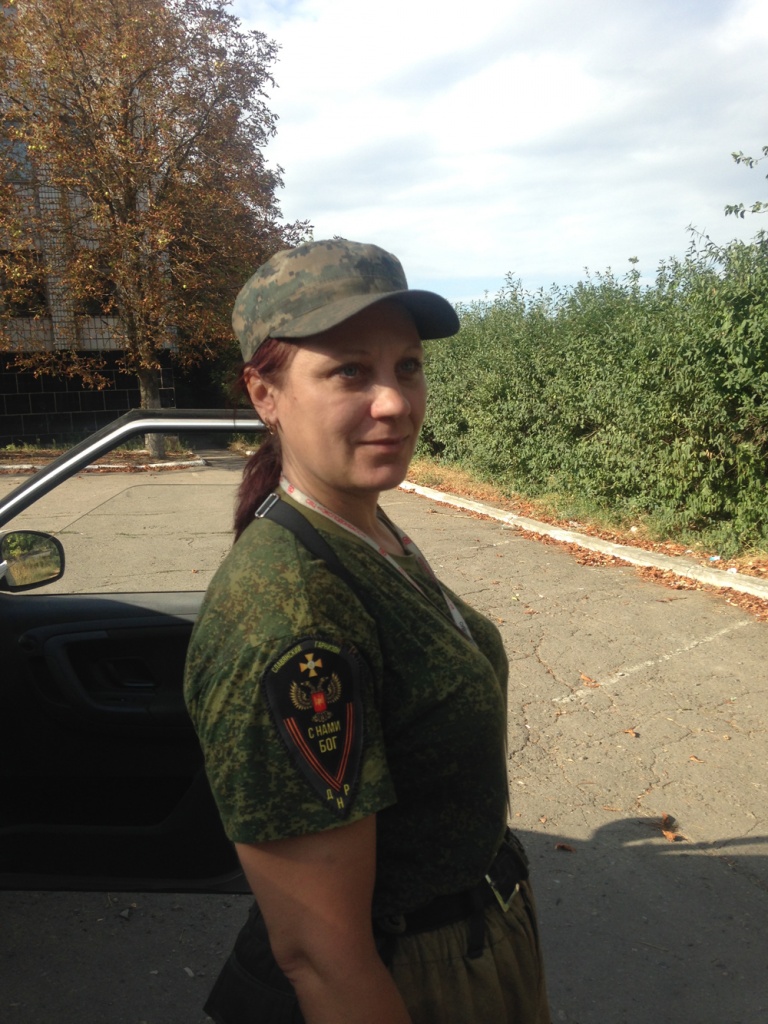 |
| Ополченка из Славянска с позывным «Теща» воюет за ДНР с июня. Теща нашла на войне свою судьбу и подала рапорт на брак с Чехом. Старобешево, 2 сентября 2014 г. /фото: Сергей Хазов-Кассиа |
Who to fight with? Не только с «фашистствующими укропами», но и с «жидовским интернационалом». «Ты знаешь, что Обама — жид, и брат у него жид, и Порошенко тоже из этих, у него на самом деле фамилия — Вальцман». Путина Инок, впрочем, тоже не любит, по его словам, Путин тоже еврей и часть мирового заговора, цель которого — разрушить и расчленить Россию.
На столе в комнате-камере Инока стоит пластиковый стакан с джином и пакет яблочного сока, лежат шоколадные конфеты, из маленького переносного приемника Юрий Шевчук поет про осень. Услышав, что Шевчук против вторжения на Украину, Инок удивляется, не очень верит этому, но музыку меняет: «Война — дело молодых — лекарство против морщин» — это про нас», — говорит Инок.
Среди старобешевских бойцов корреспонденту The New Times не удалось обнаружить кадровых военных, пусть даже и в отпуске. Сузо из Волгограда пытался поступить в спецназ ГРУ, но его комиссовали из-за язвы. Он проработал грузчиком на заводе «Кока-Колы», но тяга к приключениям взяла свое, через ГРУшные контакты попал на Украину. «Понимаешь, мы же тут не просто так, — мечтательно тянет Сузо и глядит в звездное донбасское небо. — Мы творим историю…»
А вот боец с позывным «Немец» приехал из Германии, куда в свое время эмигрировал из России — продал бизнес, оставил троих детей (с женой Немец разведен) и сытую бюргерскую жизнь, чтобы воевать за «русский мир».
А грузный пузатый Чех — настоящий чех, хоть и говорит по-русски без ошибок и почти без акцента. По профессии Чех экскаваторщик, а русский выучил в школе. На Украину приехал через Россию из маленького чешского городка на границе с Германией, чтобы «бороться за православных братьев» — вместе с двоюродным братом и лучшим другом из Брно: оба они уже убиты.
Рядом с Чехом сидит женщина средних лет с позывным «Теща» — она родом из Славянска, пришла в ополчение вместе с сыном и дочкой, к дочке все сразу стали свататься, вот ее и прозвали Тещей. Сейчас Теща отправила детей в Россию через один из лагерей беженцев, а сама осталась с сепаратистами. Она с гордостью носит свою форму, на шевроне которой написано: «С нами бог».
Теща и Чех подали рапорт с просьбой разрешить им заключить брак — и позволение от командира получили, но тут вдруг погиб брат Чеха, так что полковую свадьбу пришлось отложить: «В Донецке будет аллея Славы, — смущенно улыбается Теща. — Надо туда перевезти тело, а потом уж жениться».
Догнать 331-й
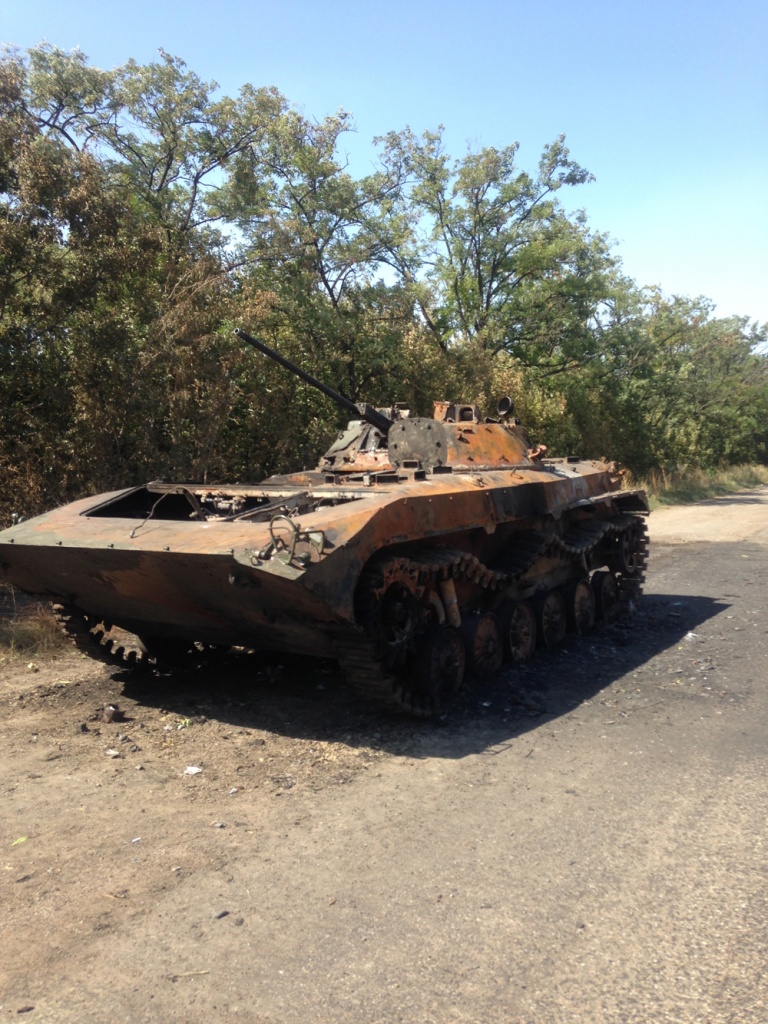 |
| Сепаратисты хвастаются прямым попаданием в боевые машины украинской армии. Трасса на Первомайское, 2 сентября 2014 г. /фото: Сергей Хазов-Кассиа |
С утра бойцы просыпаются долго, командир Матвей сопит на диване рядом с дежуркой: всю ночь был на выезде. «Сегодня в Донецкой области стало еще спокойнее», — говорит по ТВ диктор новостей кабельного канала Lifenews, водя руками по карте на заднем плане — как будто рассказывает прогноз погоды. Основной упор дикторского повествования — на то, что Мариуполь оказался в плотном кольце сил ДНР. В столовой-подвале заваривают чай, Теща болтает с молодым бойцом, который рассказывает ей про свой первый бой: мол, совсем не было страшно, даже запал какой-то. «Это всегда так в первый раз, — со знанием дела говорит Теща. — Во второй раз будет очень страшно, а потом уж так и пойдет как по маслу». Во двор входят два новых бойца, только что с блокпоста, они рассказывают, что видели колонну техники с белыми кругами на бортах: «Это не наши, это что-то посерьезнее пришло». «Посерьезнее» — это значит, части российской регулярной армии.
Колонну на марше застать не удалось, но источник The New Times сообщил: всего в 8 км от Старобешево, на высотке рядом с селом Новокатериновка стоит большой контингент российских войск: тот самый 331-й полк 98-й дивизии ВДВ из Костромы, а также 9-я отдельная мотострелковая бригада из Нижнего Новгорода. Общая численность личного состава — 1600 человек, 200 единиц техники.
В самой Новокатериновке — разбитые танки, БМП и «Грады» украинской армии, с которыми фотографируются местные жители. Они-то и объясняют, как проехать: «Вот там стоят ДНР, а вот тут — русские, поезжайте направо и по-над леском». Таксист же говорит, что возил уже журналистов в том направлении, но на полпути его развернули вышедшие из лесу люди.
В этот раз из кустов никто не выходит, впрочем, оно и понятно: жители села Кленовка говорят, что «русские вчера снялись и уехали в сторону Мариуполя».
На указанной высотке — следы лагеря, под одиноким деревцом собраны остатки боеприпасов, которые сторожит угрюмый бородатый осетин, рядом стоят три неисправных БМП, а по земле разбросаны коробки все от тех же сухпайков российского производства. «Что вы тут снимаете, не интересно, — говорит осетин. — Вниз езжайте, там вон выбило украинского парня из танка взрывом, он на проводах повис. И рядом еще три трупа. Вот хорошие фотки получатся».
Едем дальше — в село Победа Амвросиевского района. В Победе якобы находился штаб российской армии, а также 500 бойцов и 40 единиц техники. По дороге тут и там попадаются сгоревшие остатки танков, БМП и просто грузовых машин, три вздувшихся трупа украинских военнослужащих лежат на дороге между селами Ольгинское и Новоивановка, неподалеку стоит сгоревшая легковушка, рядом с которой похоронен ее водитель: вместо креста к палке прикрепили номер от машины.
Где-то вдалеке идет бой, мимо проносятся БТРы ДНР, но российских войск, впрочем, так и не видно — и в Победе тоже; лишь свежие следы от гусеничной техники ведут из России в Донецкую область.
Между селами Кумачово и Культура натыкаемся вдруг на колонну из трех танков с замазанными белой краской номерами, их сопровождают БТРы ополченцев. Танкисты также одеты в «правильную» форму и шлемофоны, а на месте их ночевки разбросаны все те же российские сухпайки, лежит использованная гильза от гранатомета «Муха» и картонка с надписью: «Всем спасибо, ушли на Донецк».
Ну, хорошо, хоть не на Киев.