
Translated material
Prices: not a step backward
On September 5, Rosstat published data in food prices for August. For the first time in several years, this figure again became two -digit - 10.3 % in relation to August 2013.
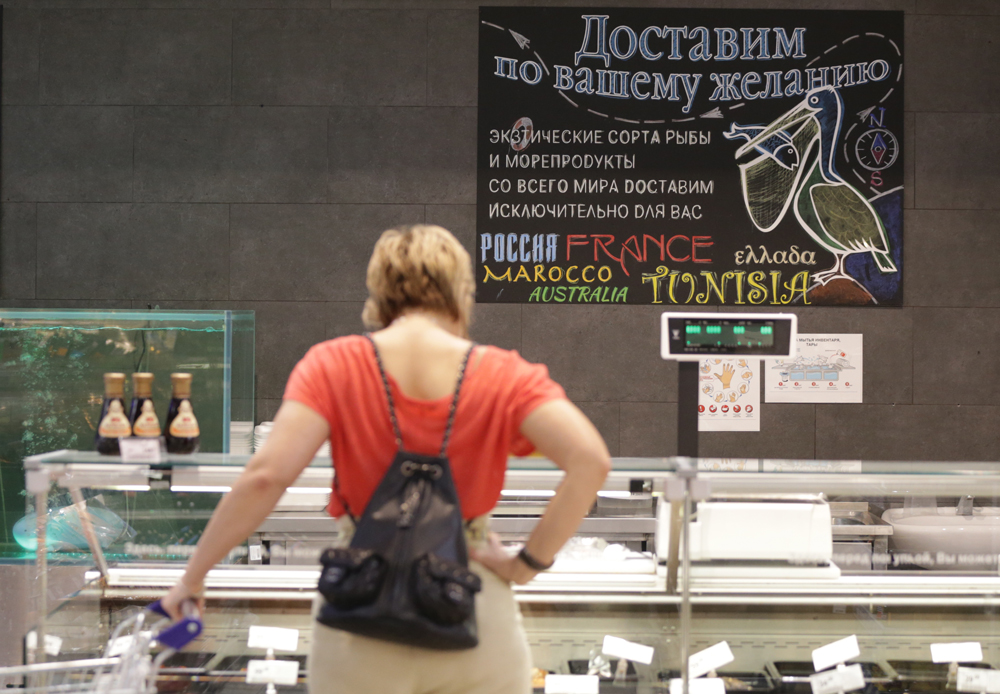
Photo: ITAR-TASS
Such a jump in prices should be expected, and then they will only grow. The food basket by the end of the year will increase by an average of 20 %, and dairy and fish products can rise in price to 40 %. We make our estimates on the basis of consultations with various industry associations, including fish and dairy unions. Our interlocutors in the dairy industry are confident that their products will rise in price, including because due to sanctions, the import of milk powder is closed, which in the winter season in huge quantities is imported by our dairy. If we assume that the government will find some way to regulate prices, as it was with retail chains in August, we will inevitably have a shortage.
Beef and pork, according to our data, by the end of the year are also rise in price by 20 %. We still cannot fully provide ourselves with these types of meat. In order to establish your own production, except for money, which in general is not, you still need time: from one year, if you already have a pig farm and you decided to grow pigs, up to several years, if we are talking about a cycle of beef production from scratch.
For many types of food, we are greatly dependent on imports, so talking about some kind of food security, as it has been fashionable recently, for now-pure PR. The result of our response sanctions is either inflation or deficiency. The ban on food imports from the EU, Norway, the USA, Canada and Australia is not yet very felt, because the seasonal factor is valid. Everything will begin closer to winter.
"
The result of our response sanctions is either inflation or deficiency. Everything will begin closer to winter
"
Now, in my opinion, there is, in my opinion, one way to preserve the face and maintain a rise in prices - not to pay attention to re -export from sanctions countries through the territory of our partners in the Customs Union - Belarus and Kazakhstan. Let, for example, Polish apples are re -finished into boxes with a sticker “Made in Belarus” and taken here. Through Belarus, there were up to 90 % of food import from the EU countries, this is most optimal in terms of logistics. If our power closes our eyes to such deliveries, we will save to half of what we received before the introduction of response.
Russia can produce a lot - well, except with the exception of exotic fruits and spices. But for this we need long money, which are not in agriculture, we need a state policy designed for decades, you need to declare and not change the rules of the game. Who will invest in agriculture, even with the expectation of sanctions? And if in a year they are still canceled? Where in this case will the invested money go? It is these questions that is now asking for a business.