
Translated material
Politics cure
The government wants to limit the public procurement of imported drugs and transfer the population to domestic counterparts. The New Times found out what will happen if the medicines become a victim of the sanctions war. Once every two months, Olga Vasilievna leaves her house on Altufevskoye Shosse in the north of Moscow to the oncode dispensary in the neighboring area of Otradnoye. Olga Vasilievna is 76 years old, she has two operations behind the Herzen Oncology Institute (MNIOI), now her life depends on the medicine, the original of which is produced in the United States. Its cost in different pharmacies on average is 7,000 rubles, the Russian analogue is about 6,000 rubles. It is he who is prescribed in the oncology dispensary - these are the rules. Having served in line and receiving the recipe, Olga Vasilievna goes with transfers to the pharmacy to the neighboring area of Medvedkovo, only there this tool can be obtained by quota for free. It turns out a triangle with sides about five kilometers, it usually takes half a day on all these trips. “My daughter agreed with friends in France, they send me a real medicine from there - I don’t believe in ours,” says Olga Vasilievna The New Times. - The doctor told me that here, most likely, they are only packaged, but where they do is unknown. I get these free pills in a pharmacy and give the doctor in the oncology center so that they are not in vain. The doctor rejoices, says that they have patients who cannot go to pharmacies themselves. ”
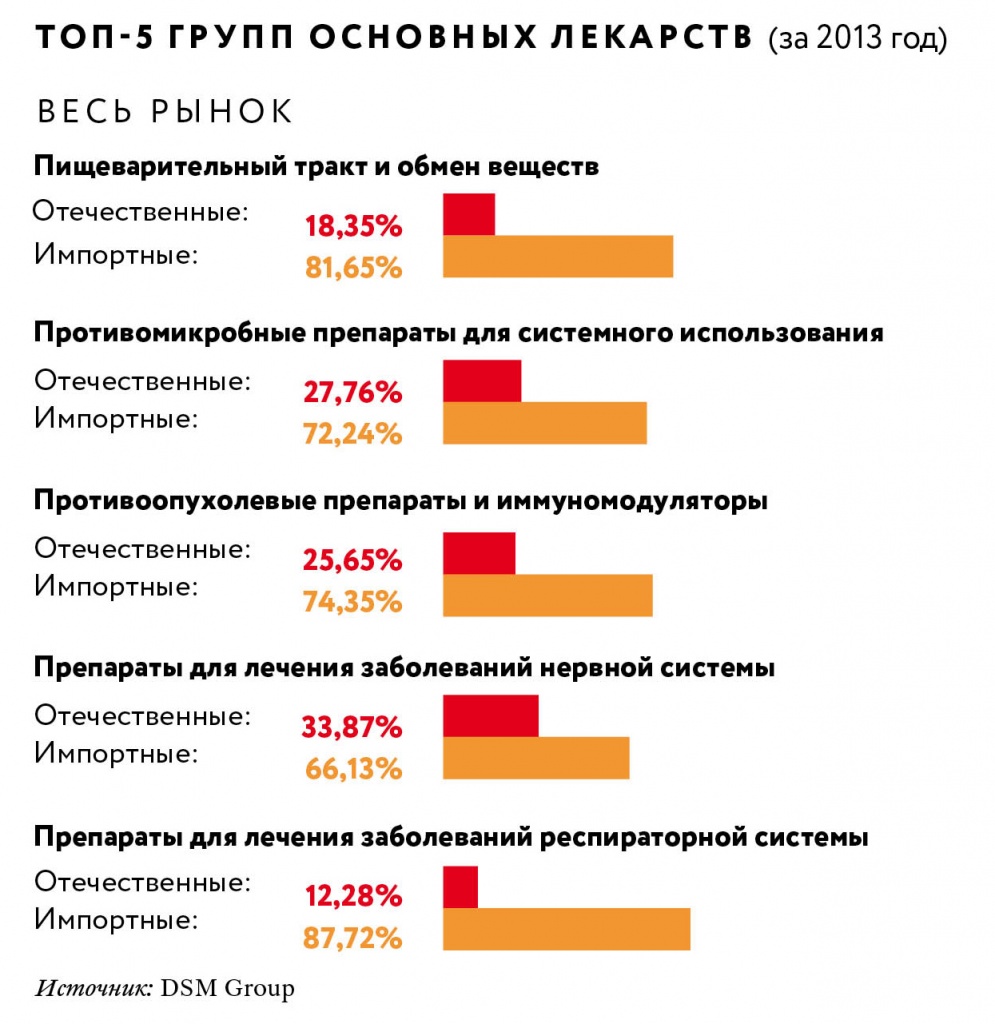
We and this on the shoulder! The draft government resolution, published on the website of the Ministry of Industry and Trade on September 4, 2014, offers additional measures to support pharmaceutical producers in Russia. This document is about “restriction” on the import of drugs: when purchasing for state and municipal needs, foreign medicines will still be allowed to the competition if there are at least two analogues produced in the territory of the Customs Union-in Russia, Kazakhstan or Belarusian. The short text of the draft resolution says only about "medicines originating from foreign states." The New Times asked the resuscitator from the scientific center of the Russian Academy of Sciences Oleg Tomarovsky to list what exactly could fall under the decree: “This is the majority of vital imported drugs that are used in the treatment of cardiological, cardiac surgic, oncological patients, people with respiratory diseases and systemic diseases, and finally in surgery. Analogs of these drugs in Russia have never been made ”(for more details see a certificate in the fields).
*Generic is a “copy” of the original medicine, contains the active substance with the same chemical formula, is sold under a different name and costs, as a rule, cheaper. Academician Yevgeny Choynzonov, director of the oncology Research Institute of the Siberian Branch of the RAMS, at the request of The New Times described the situation with medicines in his industry: “Today there are no effective domestic drugs in oncology. We use only two: sarcolyzine and 5-fluoruratsil. But this is not even yesterday, this is the 50-60s of the last century! " The academician is confident that it is possible to replace Western drugs with Chinese, Turkish or Indian generics* only if the doctor is indifferent to the doctor: “Patients are very difficult to endure such therapy.” The treatment of cancer patients in our country should be carried out according to international protocols that strictly regulate the nomenclature of drugs, including “cocktails” for chemotherapy. “If the import of oncumber is limited,” Andrei Pylev, the chief oncologist of one of the private clinics in Moscow, told The New Times, “we will not be able to treat the protocols. In the end, all this will just fall on the shoulders of the sick. And who has money, will, as now, will leave to be treated to Germany, Switzerland or Israel. ” “In dentistry, domestic products are 5 %,” the doctor of one of the leading metropolitan clinics told The New Times. “But this is Corvalol and Validol, that is, a sudden first aid kit, even gauze - and that imported, because threads remain from our gauze in the mouth, it cannot be used.”
Professor Pavel Vorobyov categorically does not agree to treat or stimulate the initiative of the Ministry of Industry and Trade by the Deputy Chairman of the Formolar Committee at the Russian Academy of Medical Sciences (RAMS). “No one in the world has such a task - to stimulate industry. This is a business! He is indignant. - I have never heard, for example, about the US government program for the development of farm industry. If there are good medicines, you need to buy them, and if you offer to buy bad ones, why treat the patients then? ” The development of a new drug is an extremely expensive matter, we can talk about dozens, if not hundreds of millions of dollars. Such expenses can afford only giants of the pharmaceutical industry. When the duration of the patent for the medicine expires, generics from other manufacturers appear on the market. The most famous example is Bayer Aspirin, which has been sold for more than a hundred years. In the pharmacy, in addition to Aspirin, you can buy tablets with the same active substance - acetylsalicylic acid, which have been produced from us since the time of the USSR. However, replacing the original drug with a “copy” should be made with very great caution, doctors say, because generic can give side effects. Here is the story of a resuscitator Oleg Tomarovsky: “A young man entered our hospital, he was not yet 40 years old, with signs of acute rejection of a transplanted heart. For two years he lived completely normally with this transplanted heart, took a special expensive English drug that suppressed the immune response to someone else's tissue in the body. And then local officials decided that this medicine should be replaced with a cheaper Indian generic. Savings per year for them amounted to about $ 2000. It turned out that the new drug does not help. It was necessary to first choose the necessary concentration of the active substance, and this is not always possible in the usual regional clinic. This man came to us himself, on his feet, it was still possible to communicate with him. But for two days, unfortunately, he died. ” Doctors when choosing medicines often find themselves in a very difficult situation. “Officials are closely monitoring how we spend state funding,” complains academician Evgeny Choynzonov. - By law, we must conduct a tender and choose the cheapest drugs, that is, generics. If I, as the head of the medical institution, will admit “overspending”, preferring more expensive drugs, they will finish me. Already fined several times. ”
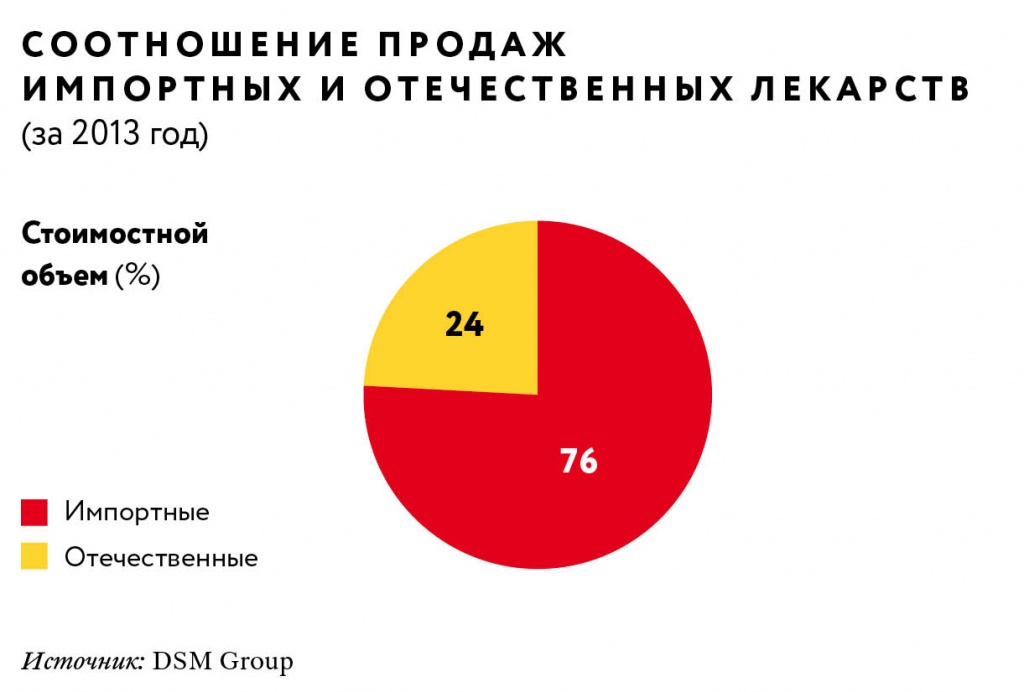
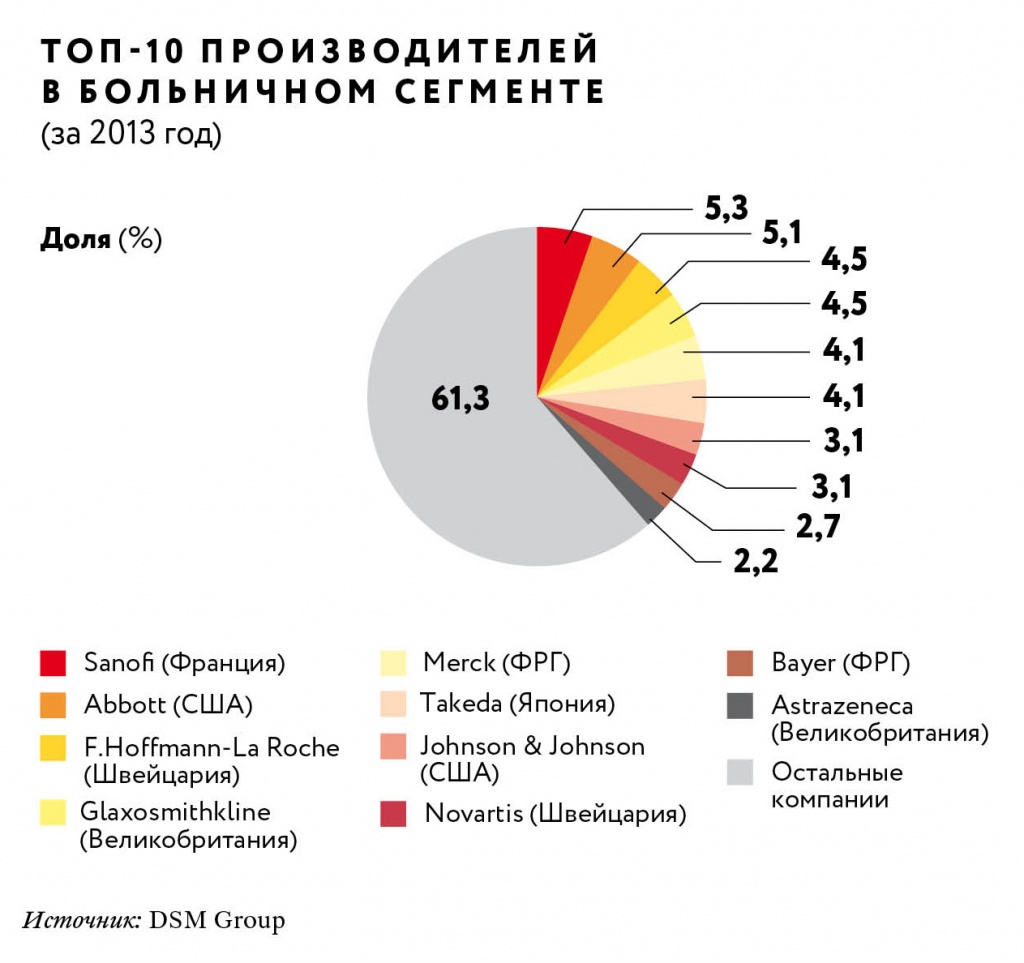
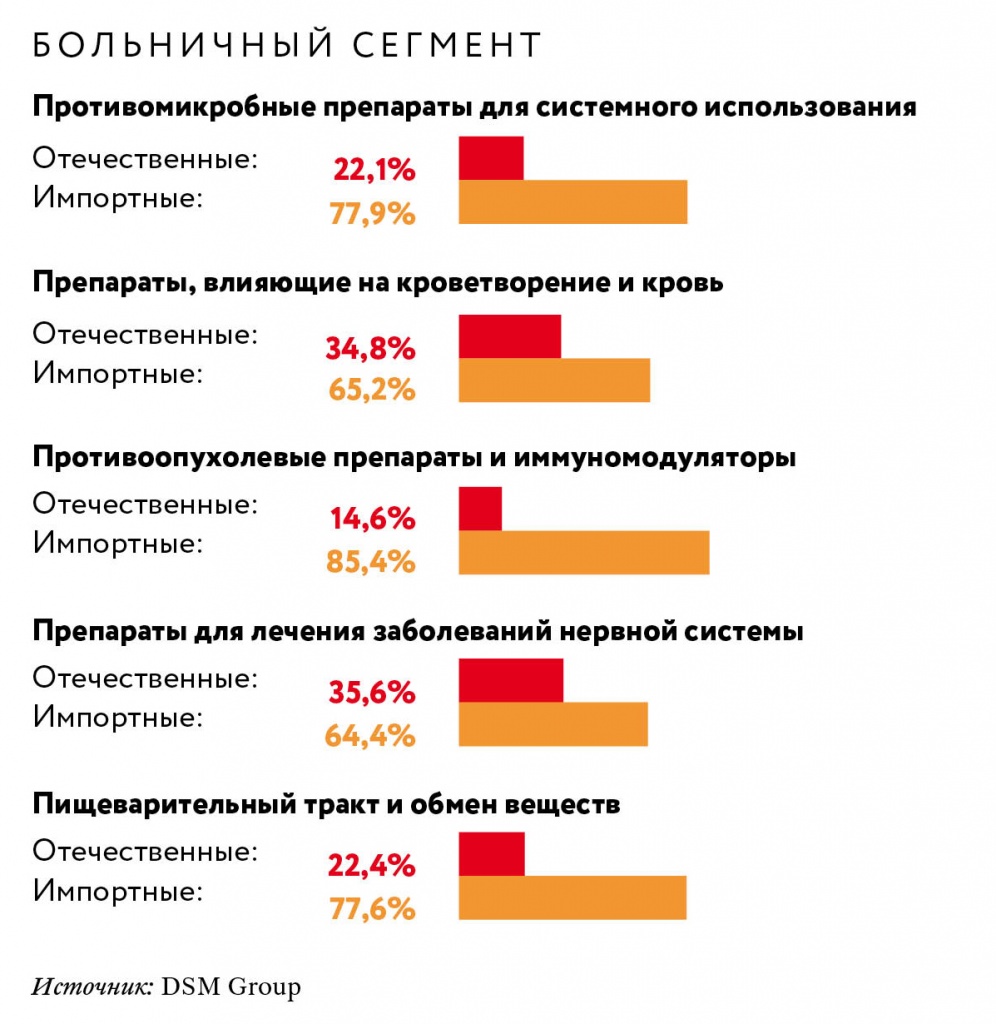
Napoleonic plans according to the DSM Group, most of our market belongs to foreign medicines - up to 80 % in value terms. The market volume in 2013 amounted to 1.044 trillion rubles, and the state’s expenses for the purchase of drugs - 182 billion rubles. The task that officials set is to increase the share of domestic drugs by 2018 to 90 % (such a goal was set in the May Decree in 2012). Professor Pavel Vorobyov evaluates the possibilities of the domestic pharmaceutical industry skeptically: “In the best case, we can re -add, because all the substances are either Indian, or Chinese, or Polish, but not domestic. Over the past 25 years, our industry has not brought a single clinically significant drug to the market. ” In addition to the expensive scientific developments that we do not have, it is necessary to production certified according to the international standard GMP (Good Manufactoring Practice - “Proper Production Practice”. - The New Times). But such factories in Russia are only 15 % of the total number, as the director of the Center for Social Economy David Melik-Guseynov told the magazine. Re -equipment of production requires very serious investments, starting with the fact that new floors should be poured in the workshops and install special ventilation. ** The case of Mildronat is a criminal case against the five pharmacists of the Sotex company. According to the investigation, in July 2008, as a result of their actions, the drug Listenon, contraindicated in cores, was released with the label of the Milronate medicine, which is used to treat cardiovascular diseases. As a result, the mistakes of the pharmacists were killed by two people, more than 20 people were injured, 11 of them received severe harm to health. “I do not believe our pharmaceutical industry,” the Doctor of Medical Sciences Alexei Starchenko categorically states The New Times, the Member of the Public Council under the Ministry of Health. Remember the work of "Mildronate" **? In 2008, employees of the Sotex pharmaceutical companies mixed up ampoules with medicine, as a result, 2 people were killed, dozens were poisoned. And then it was almost the only enterprise in the country that worked according to GMP standards! ” “There will be no deficit” in the Ministry of Industry and Trade emphasize that the project to restrict public procurement of imported drugs does not apply to private pharmacies. “The priority for the Ministry of Industry and Trade is the well -being of Russian citizens and providing all the necessary drugs. The proposed measures cannot cause a deficiency of drugs, ”the head of the department Denis Manturov said last week during a working trip in the Volgograd region. Despite the general rise in patriotism, in such a sensitive issue as health, citizens seem to trust their life experience more than the authorities. Before Russia, Russia was introduced against the Western countries, the diabetics began to buy insulin and related goods in pharmacies - this was reported on August 13 by the New Region news agency (Yekaterinburg). In Russia, about three million people suffer from diabetes, and they well know that more than 90 % of insulin is produced by three companies from countries of sanctions lists: these are Lilly (USA), Novo Nordisk (Denmark) and Sanofi (France) (list of leading companies in the Russian market, see the fields). And what other sanctions can Russia be introduced against these countries, no one seems to know. "
“I have no doubt that the officials themselves and their relatives will be treated with imported drugs, as it was under the Soviet regime.”
”*** In 1996, Vladimir Bryntsalov’s company“ Fereyn ”bought a license from the Danish Novo Nordisk for the production of insulin. Two years later, the deal was terminated due to the violation of the“ Ferie ”of the license agreement and debt to the Danish company. In 2001, a criminal case was opened under the article“ Fraud ”. According to the investigation, the company instead The genetically engaged in a low -quality pork, the case did not reach the trial. The Ozerki Pharmacy near the Academician metro station in St. Petersburg, the Farmith girl has replied: “There is a fist of French. And his price, of course, is lower. - Why? - for obvious reasons: the degree of cleaning, storage conditions, and so on. I do not advise, to be honest. " “This is not entirely true,” the President of the Russian Diabetic Association, the Diabetologist Mikhail Bogomolov, corrects the Farmith's girl in an interview with The New Times. - Scandals associated with the advent of poor -quality insulin, which is made from imported substances in Russia, of course, are. Diabetics perfectly remember the story with Brynzalov ***, hence the distrust of our products. But we still have one of our own enterprise of the full cycle, there are quality standards no worse than in the West, only the share of this plant in the market is less than three percent. ”
The Russian cross is promised to bring the Ministry of Industry and Trade to the Ministry of Industry of the Ministry of Industry of drugs to the government in mid -October, now it is coordinated with interested departments. So the final text of the document can be radically different from the fact that it is published on the website of the department. The New Times interviewed experts what will happen to the worst scenario - a serious restriction of drug imports. According to Professor Pavel Vorobyov, any person who got to the hospital will be at risk: “Imagine that your antibiotics do not act. What will happen to you? And this will not give any savings. If you treat with cheap ineffective drugs, you will have to spend money on increasing your stay in the hospital. ” The resuscitator of the Scientific Center of the Russian Academy of Sciences Oleg Tomarovsky is confident that if, as in Iran, to completely replace imported medicines with domestic drugs, patients will simply die: “I have no doubt that officials and their relatives themselves will be treated with imported drugs, as was the case under the Soviet regime.” Member of the Public Council under the Ministry of Health, Alexei Starkchenko, draws an apocalyptic picture: “Imagine that we will stop the public procurement of imported drugs, and the largest world pharmaceutical corporations will simply leave our market in response. It will be like in the early 90s, when we did not have any medicines. People survived only thanks to the responsible work of surgeons, mortality in all types of diseases was wild. Then the concept of “Russian cross” appeared - the mortality curve crossed and exceeded the birth curve. ”