
Translated material
Korean grain rations
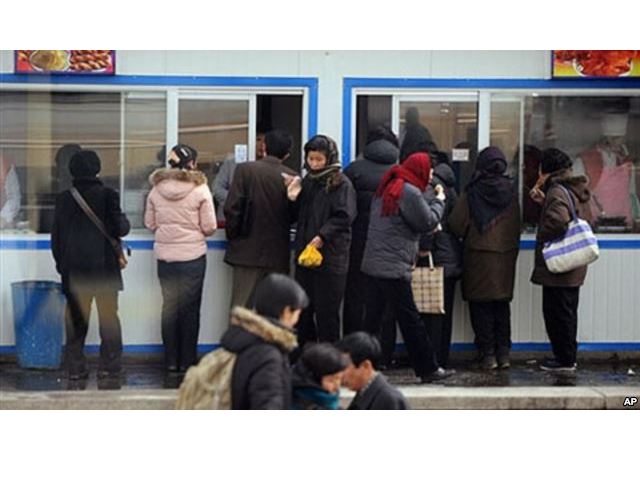
We continue to publish a cycle of articles of a wonderful mother -in -law, Associated Professor University of Kukmin (Seoul) Andrei Lankov about how North Korea lived under Kim Il Sena when she was the most contrary society in world history.
See also:
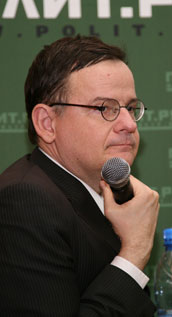 Andrey Lankov
When the residents of the DPRK talk about the events of the last two decades, they most often call this period “mi conghypsyide”, that is, if you are translated literally, “the time when they do not give out [goods] on cards”. Indeed, during the time of Kim Il Sen, from the end of the fifties until the beginning of the nineties, North Korea was the country of the total card system: all or almost goods were distributed, almost nothing came on free sale. It is the decay of this system in 1992-95. He clearly demonstrated to most Koreans that times have changed (for the majority - to the worst, at least at first).
Almost everything was distributed by cards in North Korea, but the most important of all distributed products was grain. In the DPRK, then (yes, in general, and now), the majority of the population retains the nutrition scheme traditional for agricultural peoples: the source of almost all calories are grain, and all sorts of additional pleasures, like pickled vegetables, play an auxiliary role.
In North Korea, the cereal card system was first introduced in 1946, and initially it acted only for employees of state enterprises and institutions. By the mid-1950s, according to the Soviet Embassy, grains received from 3 to 3.4 million people according to cards, that is, the majority of the population.
In 1955-57 Collectivization was held in North Korea. Private agriculture was liquidated, and after this, in December 1957, grain was prohibited: from now on, grain could be distributed only through the card system, and they were private in private. This ban is formally not canceled to this day, but in reality it was seriously observed only until the end of the eighties.
At the same time, grain and cereals distributed by cards were supported by the state at an extremely low level. For many decades, one kilogram of rice received by cards cost 0.08 won (during this time the average monthly wage increased from about 50 to about 100 won). It will only be a little exaggeration to say that the state did not so much sell grain as it distributed it for free, but according to the established standards.
Each resident of the DPRK had the right to a clearly defined (and, I repeat, almost free) cereal rations, and the norms in the grain distribution system (PEGIP) were common to the whole country. The size of the grain soldering depended on the kind of work of the receiving. The largest ration, at the level of 900 g of grain per day, was intended for those who were busy with heavy physical labor (steelmers, miners, lumberjacks). Most workers and employees had the right to daily ration of 700 g of grain. Students and high school students received 500 and 600 g, while primary school students were supposed to be 300-400g, depending on age. Pensioners also had the right to 300 g of grain. By the way, theoretically, these norms are still in effect, but in practice, over the past two decades of soldering, only a minority of the population receives.
In cities, grain rations were issued twice a month. On the established day, a family representative (as a rule, the hostess of the house) went to the center of the distribution of grain, for which this family was assigned. There, she presented a certificate of personality, gave cards, paid the reckoning symbolic amount - and took family calories for the next two weeks.
The peasants sat on the cards. The standards for the issuance of grains in the village were the same as in the city, but shepherd was given not twice a month, but once a year, in the fall, after harvesting.
Often in Russia you have to hear sympathetic words about the "poor North Koreans", "which, they say," feed on one rice. " I must say that these words themselves would have fun - both with Kim Il Seine, and before Kim Il Sen, and after Kim Il Sen, rice in North Korea was food elite, which was available only for special occasions. This belonged, by the way, to South Korea: the rice there entered the massive everyday life.
In the DPRK, Kim Il Sena, standard grain ration consisted of a mixture of various types of grain. Despite the fact that the size of the soldering was the same throughout the country, the proportions of rice and other, less valuable, signs, were very varyed: in more prestigious areas, the share of rice was much higher. In the prosperous seventies in Pyongyang, the share of rice in the ration could reach 60-70%, but even in those days in remote areas of the country, the card diet was almost completely made of corn and barley. In the deaf province, the share of rice in the soldering could be only 10-15%.
700 g of grain per day may seem to seem like a generous diet at first glance, but it should be borne in mind that all other products were issued in very small quantities (meat, for example, several kilograms a year), and few used commercial trade. On the other hand, then no one really starved in the DPRK - although only officials could boast of round tummy. Such a tummy, by the way, was considered a sign of success and solidity.
Now the majority of the northern Koreans recall the times of Kim Il Sen as an era of well -being and stability. However, the economic situation in the DPRK began to deteriorate for a long time - and this immediately affected the rations. The first reduction in the rations took place in 1973, when it was announced that “due to the complication of the international situation,” the diet would be reduced: every two weeks two daily rations will be aimed at creating strategic reserves. In 1989, the rations were reduced again by 10%, and in 1992 - by another 10%, but by that time the system created by Kim Il Sen was already beginning to fall apart. There was a new era in which there was no more place for strokes.
At the same time, the majority of the population still have very warm memories of the times of the universal card system. It is the card distribution of products and services that is still perceived by most Koreans of the middle and senior as the norm, as an ideal that we must strive for. True, young people who have already grown up in the new conditions adhere to a different opinion on this issue.