
Translated material
The election of the governor ended in Primorye, the leader of the unicorn Miklushevsky
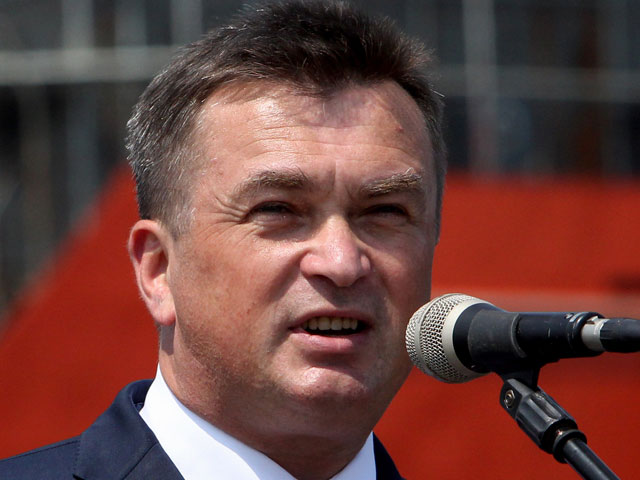
The Electoral Commission of the Primorsky Territory announced the preliminary results of the final elections of the governor of the region. After processing 29% of the ballots, the candidate from United Russia Vladimir Miklushevsky, for whom 78.64% voted (after processing 6.25% of the ballots - 71.11%) voters. Since May of this year, he has been the temporary acting of the regional chapter. The site of the local election commission reports that the turnout amounted to more than 32.12%.
Its closest competitor is communist Vladimir Grushikov - 12.8% (8.38%), the representative of the LDPR Andrei Andreichenko - gains 4.4% (11.65%) of votes, Interfax reports. The election of the governor will be held without a second round if one of the candidates in the first round gains more than 50% of the vote. As expected, the final results will be known on Monday morning, September 15.
According to the secretary of the regional election commission of Roman Okhotnikov, the vote took place without significant violations. "One appeal was examined from a citizen with temporary registration in Primorye, but with a residence permit in Moscow. She complained about the inability to vote. The complaint was considered and rejected," the agency quoted the representative of the commission. He suggested that complaints from candidates who are dissatisfied with the results of the elections will appear in the nearby.
Miklushevsky, who took the post of Governor of Primorye in the spring of 2012, asked President of the Russian Federation Vladimir Putin about the possibility of early elections in May of this year. Then the head of state supported this request and accepted his resignation.
Prior to this, several more Russian governors resigned ahead of schedule to take part in early elections. Among them, Oleg Kuvshinnikov (Vologda Oblast), Yuri Berg (Orenburg), Alexander Mikhailova (Kursk), Vladimir Yakushev (Tyumen), Oleg Korolev (Lipetskaya), Marina Kovtun (Murmanskaya, Alexey Orlov (Kalmykia) and Yegor Borisov (Yakutia).
The string of early resignations was then explained by the chairman of the CEC of the Russian Federation Vladimir Churov. According to him, officials resign and go to the polls in advance to take advantage of the "positive socio-economic conjuncture." Some of them also do not want to combine an election campaign with a campaign for the election of deputies of the State Duma of the seventh convocation in 2016.
Last summer, the mayor of Moscow Sergei Sobyanin resigned in the same way to participate in early elections. On the election of the head of the capital on September 8, 2013, he won, gaining 51.37% of the vote.
On Saturday, September 14, a single voting day takes place in Russia. In Moscow, they choose deputies of the Moscow City Duma, in St. Petersburg - municipal deputies and the governor. In 30 regions they choose governors, in 14 regions - members of parliaments. On September 14, about six thousand election campaigns are completed. Only one Russian region does not vote - Ingushetia.
According to the CEC of the Russian Federation, the elections on September 14 cover 75 million voters. As noted by the deputy chairman of the commission Leonid Ivlev, "in the entire history of the Russian electoral system, this is a record when so many voters participate in the regional elections." Throughout Russia on September 14, 64 thousand polling stations operate, the circulation of ballots exceeded 150 million copies.
By noon, less than 6% of voters (almost 400 thousand people)came to the elections in Moscow.