
Translated material
Writ time
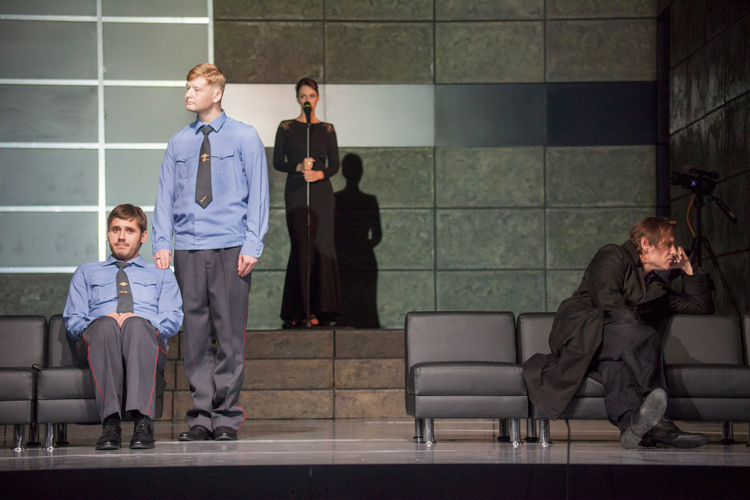
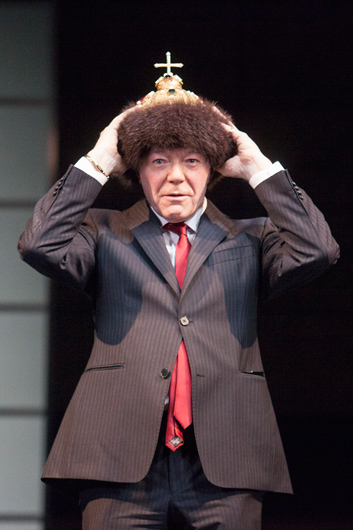
Mark Zakharov was right. Having offered Konstantin Bogomolov to put a performance in his theater, he will now receive exactly what he was laid on. This package includes: a) unnecessarily evil reviews interspersed with excessively enthusiastic; b) solid cash success; c) prestigious theater awards for actors: at least three participants in the performance-Alexander Zbruev (Boris), Maria Mironova (Marina Mnishk) and Igor Mirkurbanov (impostor)-they will conquer something pleasant.
In high audience demand, remembering the success of the Moscow Art Theater “ideal husband”, there is no doubt. After all, “Boris Godunov” is something like a sequel to a “ideal husband”. I don’t know if the director agrees to officially unite them into a dilogy, but if so, then the “ideal husband” could be designated in the Moscow poster as “Urki in the Kremlin”, and “Boris Godunov” will then automatically rename into the play “Urki in the Kremlin - 2”.
 © "Lenkom"
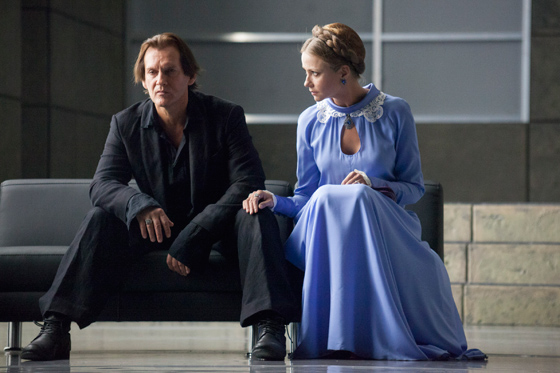
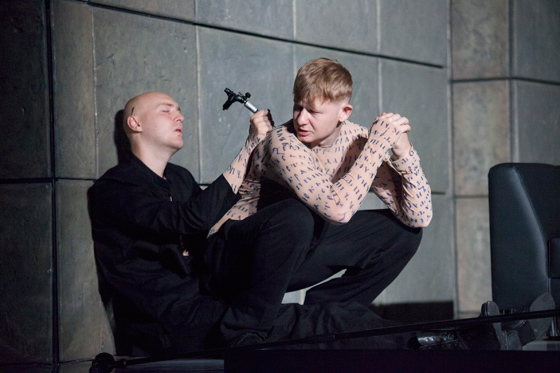
Urke Urke is different, and the heroes of the two Bogomolov productions take place through completely different articles of the Criminal Code of the Russian Federation. They are related by love for the thieves chanson, but if the characters of the “ideal husband”, set only a year and a half ago, were selflessly given to theft in especially large sizes, then the main figures of the Lenkomovsky performance in the battle for the Sugar Kremlin finally signed up to Mokrukh. The number of “bloody boys” (and girls too) many times exceeded all Pushkin standards: that Boriska, that Grishka - both are ready to use at least thieves sharpening, at least a black gun. They will slam Ksenia Godunov, Pimen will float, and one of the “bloody boys” will fall the death of the brave directly in the auditorium. Nameless victims that are not marked in the program, and more: from time to time, wooden coffins are carried from the wings to the curtains. War, vague time. What began with a greatft in the “ideal husband” ends with great blood in the second part of the dilogy. Pushkinskoye "What are the herds of the gifts of freedom? They must be cut or cut ”would be an excellent epigraph to these two performances. They cut it, they cut it here.
 © "Lenkom"
“She is full of glorious jokes and subtle hints of the story of that time,” Pushkin boasted of his play about Godunov and Grishka Otvyv. What the director of the Bogomolov can boast in his Lenkom production is a glorious joke. There are plenty of hints of the history of our and not our time - although go still analyze, where is ours, but where not ours. Jumping from century to century is Bogomolov’s favorite fun since the time of Lira. For the monitors who flooded the entire space of the stage, for example, such credits are running: “There was 1597 in Rus', and in Poland the Sopot-1979 festival was held at that time”. Our Kremlin, our Sopot, all ours. The twentieth century from the sixteenth also not far away.
 © "Lenkom"
The principle of “three unities”, trampled by Pushkin, was again restored in his rights. The whole spatio-temporal continuum is now concentrated in the faceless television pavilion (scenographer Larisa Lomakin), who does not even think of pretending to be in sleep or the Kremlin. In order to cross the Russian-Polish border, without running into the border guards, it is enough to let this, for example, the titer: "Pushkin’s brother talks with Pushkin’s brother on Skype." Moving from the sofa to the sofa, Viktor Verzhbitsky will alternately serve replicas for political emigrant Gavril Pushkin, then for the faithful supporter of the Kremlin Athanasius Pushkin. It is the remark that becomes the main character and the main building material of the Bogomolovsky universe.
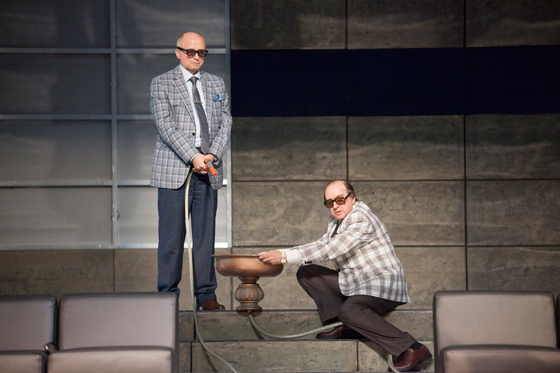 © "Lenkom"
The most famous Pushkin remark “people silent” on the monitors will not slip, but the silent scene transferred to the middle of the first act will be thoroughly executed. The role of the herd, which must be “cut or cut”, will play, as it is easy to guess, the audience itself. Before the coronation of the tsar, the scene will be empty for a long time, and the audience will patiently wait for the lull, looking at the screen, according to which the titer “people patiently expects when they tell him what to do next. The people are stupid cattle. "
The closer to the final, the less often laughter is heard in the hall. The Bogomolov version of Boris Godunov, unlike the “perfect husband”, is witty, but not at all fun. Fierce contempt - so, probably, you can determine the director’s attitude to all the characters of the play, played by Russia, who has been played by Russia, which has been in its history. Bogomolov does not spare either liberal or patriotic villains, but most of all despise the people. You yourself know why. For silence.