
Translated material
38 is parrot
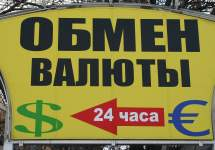
The dollar exchange rate to the ruble on the Moscow Exchange on Monday morning increased by 24 kopecks compared to the closing level of Friday and for the first time in history reached 38.02 rubles, Interfax reports . The euro strengthened to the ruble on 25 kopecks, up to 49.20 rubles. The cost of the bivalyut basket increased by 24 kopecks and reached the level of 43.05 rubles.
According to analysts, the reduction in the ruble at the beginning of the auction is a consequence of the announced new sanctions by the EU and the USA, as well as a noticeable reduction in world oil prices to the mark of 96.5 dollars per barrel of the Brent variety.
On the morning of September 12, the dollar exchange rate to the ruble on the Moscow Exchange grew by 19 kopecks compared to the level of closure of the previous day and amounted to 37.70 rubles, updating the historical maximum . The euro strengthened to the ruble for 24 kopecks to 48.72 rubles. The day before, the dollar rose by 24 kopecks.
On September 12, a list of new EU sanctions against Russia was published in the official journal of the European Union. Thus, they entered into force . Belief, new oilfield contracts, double -use technologies, financing of five state banks, three defense holdings and three fuel and energy complexes for a period of more than a month were banned.
Trading bonds and other securities of these companies with a circulation period of more than 30 days and participation in the organization of issues of such papers are also prohibited. For nine defense companies, the supply of European dual -use technologies is prohibited. Similar restrictions on access to capital markets are introduced for five Russian state banks. In addition, the EU prohibits resident companies to provide oilfield services for deep-sea drilling, the development of deposits in the Arctic and shale oil deposits in Russia. The restrictions will not apply to service gas contracts.
Later on the same day , the United States announced the introduction of a new package of sanctions . In many ways, these measures are similar to the sanctions of the European Union, although they do not fully repeat them.