
Translated material
What critics are silent about
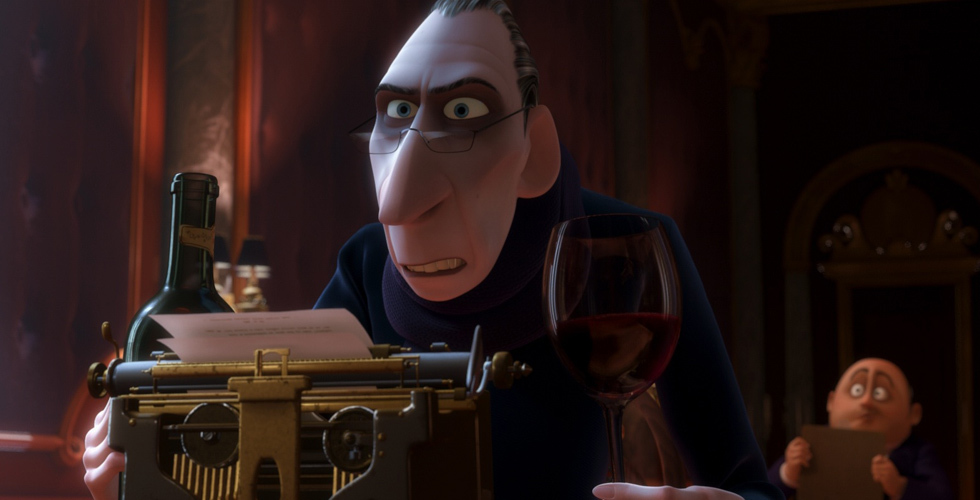
Once I had to watch an amateur performance in the production of a familiar failed director from New York, who moved to permanent residence to India. When finally my torment ended, she came up to me and asked about impressions. I did not want to offend a person, but I did not turn to praise the tongue. All that I was able to squeeze out was: “Well, I saw it” (“Well, I saw this”). Is she offended? It's hard to say, but since then we have not talked anymore. Never.
Who needs criticism at all? Certainly the artist, first of all. The artist - basically - wants to receive feedback, learn about the reception of his art, understand that what he worked on the last month, six months, a year, did not fly into the abyss of indifference, indifference and ignore. In addition, the artist is not always able to fully understand what he did, and here, in theory, to help, like a chip and Dale, a critic should rush with a thoughtful analysis of his work. "What? Did you suffer a year? But we don’t care how much you suffered there! ” At the same time, any writer who appears on the horizon by most artists, especially young people, is automatically reckoned with the rank of celestials - that’s with whom to be friends. Although, it would seem, what's the point?! One does not give a damn about what the artist says, and the others, accordingly, should be the same as being squeezed out of themselves.
Almost the entire press comes down to the statement of the fact that this or that event happened (“Well, We Saw It”) . From the announcements and that is more benefit - at least it is clear what function they perform. It is undoubtedly made to report what will happen about what it will happen, but it is at least pointless to report what happened. At this stage, it would be nice to evaluate what has been seen and what happened. How to evaluate - depends on the position of the critic. By the degree of avant -garde of the work, for example.
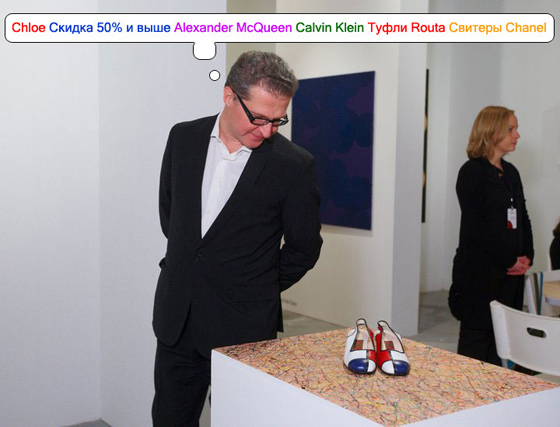 © Art_buzz
“Avangardism is a position of cultural confrontation, it does not exist without the fight against culture. As there are no revolutionaries in themselves without the system with which they are fighting. The avant -garde is political art. The tasks of the avant -garde include the creation of artistic objects unacceptable for the culture. In politically, this position is left-handed to modern bourgeois society ”-Avdey Ter-Oganyan, from Catalog to the exhibition "In the ass. Museum of the Russian Futurist. "
Or based on the concept of “ high art”-the intellectuals brought up again at the forefront support the exceptional elitism of communicative research practices, but for some reason their texts are found less and less, and they won’t find them with fire in the afternoon.
Or - that, as a rule, is characteristic of lovers of beautiful and spiritual - to evaluate art only from the perspective of skill. But this is a very difficult case. As Benjamin Bukolo said , "interest in the verge of the disappearance of tradition can be noble, but on its basis it is hardly possible to build a strategy of cultural and political criticism."
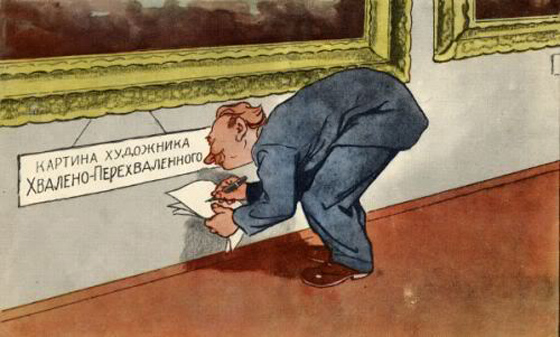 From the magazine "Crocodile", 1953
Many are concerned about the “lack of market” in the system of Russian contemporary art. And the lack of criticism as a fundamental link in the same system for some reason is not worried about few. In such a situation, two and a half homegrown collector with a calm soul can amuse themselves with the thought that they are cheap and determine where good art is, and where the garbage is completely unworthy of attention. Without a twinge of conscience, they ask the artists “as a gift” or bargain them for nothing, being confident that being in their so -called collection is the limit of the dreams of unfortunate authors.
To talk about what Russian critics are silent about, you need to first voice the opinion popular in the art community: "Here, in general, all this is not interested in anyone." When asked why we do not have professional respected publications, they answer me: “No one will give money for this, criticism is not a show. But there is no show - there is no audience. " The fact that in the representation of domestic professionals, forever poisoned by the best translations of post -structuralists, criticism by definition cannot be a performance is the problem and work of the drowning people themselves. And most importantly - this is their deep error.
“In order to publish in magazines, you need to write in a bird's language on not very serious topics - this is what the reader wants and requires the editor,” the young art critic is complaining about the hands and feet.
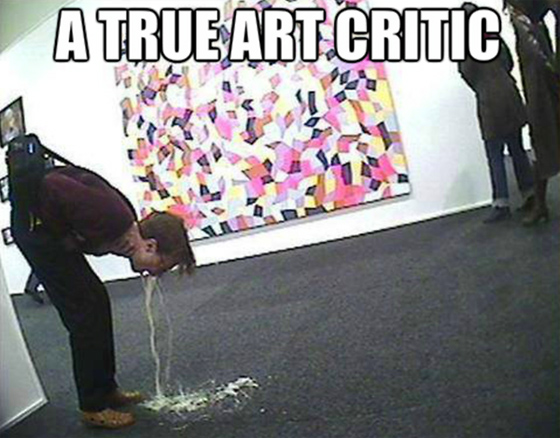
It is now customary to talk about art in Russia (read: in Moscow) right as a deceased - either good or nothing. And in the case of "good" it is so good that nothing is better. The spirit of time defines Facebook - everyone is friends with everyone, wink, smile, like. Either like, or nothing-repost-moderation, stagnation, boredom. And the most dangerous and irresponsible people are intellectuals with a reputation, firmly stood on guard of stagnation, legitimizing with abstract comments any glaring non -juracy.
In conclusion, it would be worthless to outline a utopian portrait of an ideal critic, it would probably look like an instruction from a glamorous magazine-something like “choosing shoes” or “in search of your second half”. Of the components of such a “photobot”, as usual, an enchanting monster would have been born as if it were to be ridiculous and quite performance.
But the bottom line is not in finding an ideal, but in not to go crazy in unbearable, almost vacuum silence.