
Translated material
In the online store for wine
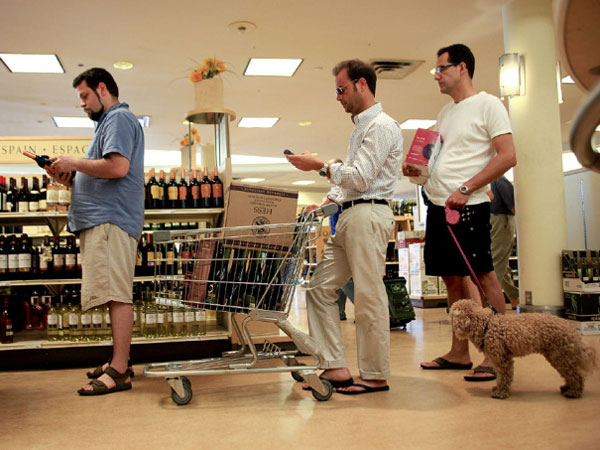
The Government of the Russian Federation is ready to partially remove the ban on the sale of alcohol via the Internet, the newspaper Kommersant reports with reference to its own source in the government.
Prime Minister Dmitry Medvedev instructed Rosalkogolregoling and other relevant authorities to work out this issue on Monday. According to the publication, it was decided to start the ban from the remote sale of wine in the government, but it is possible that the ban will be canceled to other categories of alcohol soon.
 Victor Zvangelsky
Recall that the ban on the remote sale of alcohol was established by a special resolution of the Government of the Russian Federation back in September 2007, but these restrictions were never spelled out in the legislation. To fix this, the deputy chairman of the State Duma Committee on Economic Policy Viktor Zvagelsky, just this year, introduced a bill, which includes a number of measures to ban different methods of distance trading in alcohol. Including the bill of Zvagelsky implies a ban on the sale of alcohol complete with other goods. This is due to the fact that alcohol sellers often resorted to such a way to circumvent a number of prohibitions on the sale of alcohol - they simply sold alcohol as a addition or a gift for other goods.
Zvagelsky himself stated that his project is now edited in accordance with the new ideas on this issue, which were heard during the meeting with Deputy Prime Minister Arkady Dvorkovich on Tuesday: “I agree with the position of deputy prime minister and currently refine the bill, which will allow those participants in the Internet trade,” said Zvagelsky publication "Kommersant".
One of the proposals in the framework of discussion by the Government of this issue was the creation of a special registry for online alcohol sorters. Such a register will be under the jurisdiction of the Federal Air Transport Agency. It is also noted that companies engaged in the sale of alcohol online will be required to receive a license not only for retail trade in alcohol, as it was before, but also for wholesale sales of alcohol.
And the conversation about lifting the ban on the sale of wine via the Internet also has its own restrictions: remote sale of not all wine, but only with a protected geographical name, can be allowed, but both Russian and imported.
The current ban on the remote sale of alcohol was repeatedly tried to challenge. Such attempts were made by the company "Europe" and the President of the Public Organization of Small and Medium Business Opora Russia Alexander Brechalov. The latter even wrote a letter to Arkady Dvorkovich, in which he expressed his disagreement with this ban. According to Brechalov, the ban limits only the activities of legal and conscientious entrepreneurs, while illegal alcohol merchants continue their activities, even despite the absence of their appropriate license. As a result, the organization made its own proposal to introduce a special license for the sale of alcoholic beverages on the Internet, which would be issued by the Rosalcool Regulation.
The problem of illegal sale of alcohol is relevant throughout Russia. For example, four sites will be closed in Tyumen at once, on which it was possible to order the delivery of alcoholic beverages around the clock. The prosecutor's office discovered the advertising text of the following content: "Delivery of alcohol in Tyumen, ordering alcohol to the house around the clock." As it turned out, this is a violation of the law on information, that is, the information for which criminal or administrative liability is provided, with which the Tyumen district agreed with, satisfying the prosecutor’s requirements to close unscrupulous Internet resources.
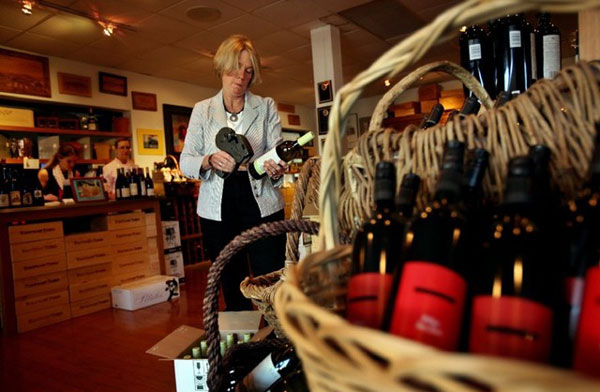 Photo: naplesnews.com
Altai deputies went further, one of their last initiatives is a bill on a complete ban on low -alcohol "energy" drinks. According to the document, it is planned to prohibit the sale of tonic drinks with the content of ethyl alcohol from 1.2% to 9%, as well as caffeine or other tonic components throughout the region. This initiative has grown into the bill thanks to the youth parliament of the Altai Territory. The Commissioner for the Protection of Entrepreneurs' Rights in the Altai Territory, Pavel Nesterov, saw in this bill serious prospects for Altai drinking producers: “This is an additional opportunity for our manufacturers to replace imported drinks produced here, for example, kvass or sidr.”
Recently, the State Duma has rejected a bill prohibiting the retail sale of alcohol in the buildings of federal, regional and local authorities. The author of the bill is the deputy Andrei Ozerov noted that alcohol products are freely sold in state and municipal authorities, in particular, alcohol can be bought even in the building of the State Duma and the Federation Council. Ozerov also insisted that the regional authorities be endowed with the right to prohibit the sale of alcohol where they consider it necessary, but not one of these initiatives was supported by the rest of the deputies.