
Translated material
Sanctions: Help for the oil industry
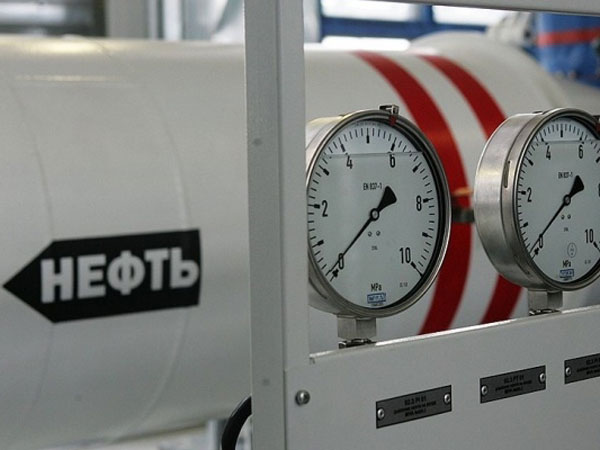
As gradually it turns out, the topic of economic sanctions is inexhaustible. Before the United States, Canada, Australia and the EU countries to impose sanctions against Russia, and Russia, in turn, respond with counter-sanctions on how new reasons to expand the stoplist. Additional prohibitions relate to the supply of technologies and services for deep -sea, marine Arctic and shale projects in the Russian Federation or Russian waters, if they have "oil production potential". True, in this case, the situation develops in such a way that Russia most likely does not have to introduce any response measures of Russia. For it, everything will do the conjuncture of the world market.
The fact is that over the past two months, oil prices are reduced all the time. From $ 107- $ 108/barrel. In July, prices failed to $ 98- $ 99/barre. In mid -September. And if this decrease will continue further and reaches a certain level (of course, not as low as in 2008), then developing deposits on the shelf or shale oil deposits will become simply unprofitable. That is, the ban on the supply of equipment to Russia for such work now does not have much importance, since it is unlikely that anyone will start mastering complex deposits at falling prices.
Moreover, oil companies that have invested in large funds in the acquisition of equipment and drilling wells in these types of deposits may suffer serious losses or even go broke. But those companies that did not have time (or could not) master the most advanced drilling technologies can remain afloat - just because their balance sheets are not burdened with expensive high -tech assets, and the cost of oil produced is relatively low.
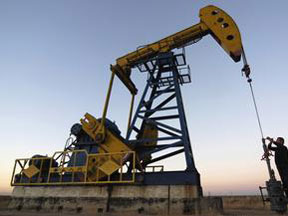 Oil Production
Of course, these considerations are more related to Russian companies, which so far produce oil at traditional fields according to traditional technology. They will be able to withstand price reduction thanks to two circumstances. The first-the cost of production in them is in the region of $ 20- $ 23/barrel, which is much lower than the cost of production of shelf and shale oil. And the second circumstance-all large Russian oil companies are vertically integrated, that is, they include oil refining. Therefore, even if raw oil prices are low, this will not affect the total profitability of companies, since that the low margin in the production sector will be compensated by a higher margin in the processing sector.
But companies that have a significant part of production fall on shale or deep -sea oil. If they are engaged only in prey, then its volumes will have to be greatly reduced or even stop this lesson. If they are still integrated and, in addition to prey, they also have processing, then they will automatically reduce both processing or, if financial capabilities allow, purchase raw oil in the market, companies with traditional ways to obtain it. But, in any case, they will have to write off the capital costs in non -traditional production technologies at a loss.
Naturally, this kind of forecasts of the future state of the oil sector companies can be built for a situation where retail prices for oil products will remain unchanged, and if they decrease, then it is inconsistent. Otherwise, not only the margin of mining units, but also processing ones will suffer. True, so far no retail prices for fuel are heard; Moreover, in Russia, the prices for autobensin have even risen. And, therefore, while with margin, vertically integrated companies, especially Russian, should be all right. The elimination of part of the competitors from the market, if it occurs, only helps to strengthen the financial situation of Wink.
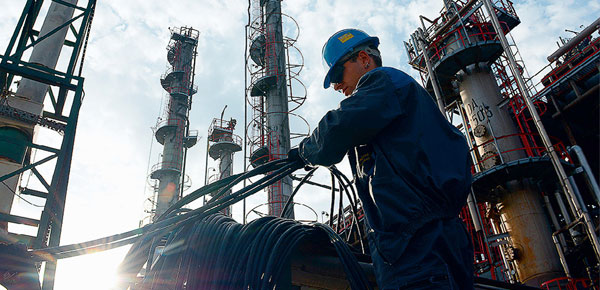 Oil refining. Photo: Gazprom-neft.ru
True, we can’t say that what is happening now a decrease in oil prices is seriously and for a long time. The current price failure can be caused by purely seasonal factors - the harvester is almost completed, and the heating season has not yet occurred - therefore, the demand for fuel and, accordingly, raw oil, has decreased. In addition, statistics show a slowdown of economic growth in China, and if it continues further, the demand for oil in the world market will continue to decline, which will drive prices further down. If China will be fine, and even the cold will come, then oil prices will surely play lost positions.
Nevertheless, if you distract from seasonal fluctuations, and look at the current situation from a general theoretical position, we can say that the current state of affairs is quite characteristic of industries that have natural restrictions on increasing production. When demand for the products of these industries is growing, they cannot quickly increase the supply, so they first raise prices. After that, it becomes profitable to involve additional resources into economic circulation, which leads to an increase in the release. True, the growth of production using such resources requires additional investment costs and higher operating costs, since these resources of much worse quality (therefore they are also called marginal). When demand and prices begin to fall, margin resources cease to be used first of all, because with a decreased price level, their operation quickly becomes unprofitable. Namely, this is now happening with shale and shelf deposits.
Thus, if a decrease in oil prices will continue, Russian oil companies in a sense will have to thank the organizers of the sanctions, since they “did not allow them to deepen into the development of marginal deposits and made it possible to go through the difficult situation in the global oil market without large losses.