
Translated material
Great Internet wall
On September 19, the Vedomosti newspaper announced the concept developed by the Ministry of Communications of the Ministry of Communications to turn off Russia from the global Internet. According to the publication, the exercises conducted by the ministry showed that the Runet is vulnerable, and measures are being discussed to minimize the risks, including the possibility of temporary disconnection of Runet from the outside world in the event of a threat of national security.
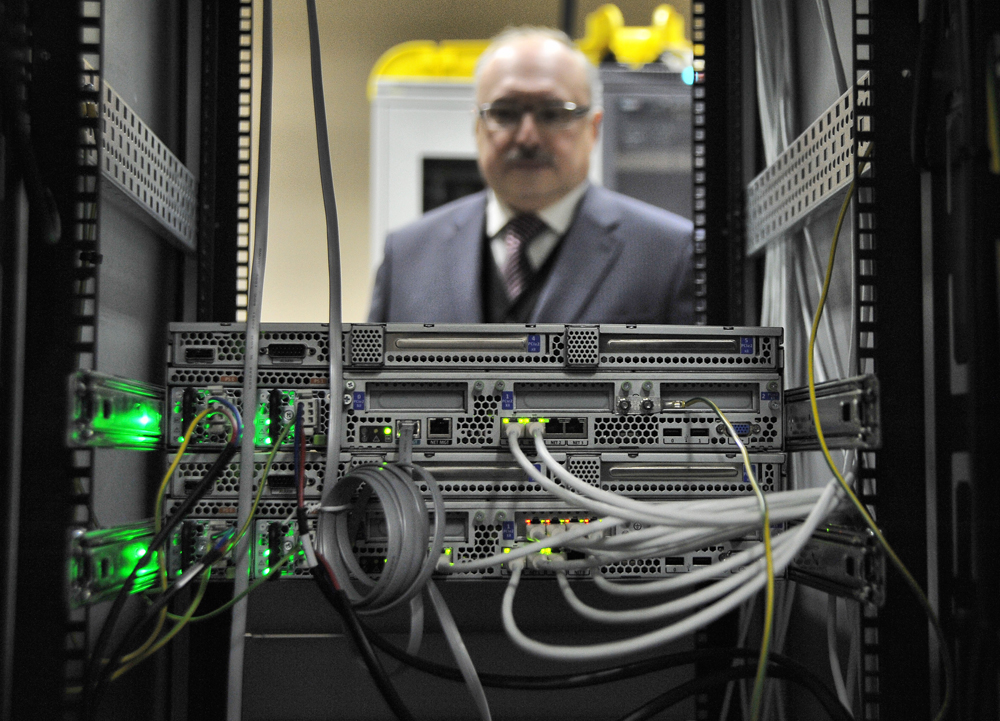
Russia is ready to disconnect from the world network/photo: Valentina Svistunova/ITAR-TASS
The possibility of turning off the Runet from the World Network has always existed. There are different ways to do this. The first option can conditionally be called “Chinese” - filtering by keywords and blocking everything that relates to a certain area.
The second is the overlap of the cross-border points of the transition of the Internet traffic (i.e. the points of the “connection” of the Runet with the rest of the world network), which are concentrated in the hands of several communication operators. There are attempts to transfer all such points to Rostelecom's hands, which will make the procedure for turning Russia from the external Internet quite simple for the authorities.
Nevertheless, even with this option for the development of the situation, of course, there will be methods of the so-called smuggling of prohibited foreign Internet traffic.
For example, there are satellite channels for obtaining data and even organizing the point of receiving smuggled Internet traffic via telephone wires (Dial-up). Then you need to organize the distribution of it to other users. You connect to the “external” satellite Internet and distribute the received through the open wi-fi, for example. According to Dail-APU, you create points of receiving Internet traffic through a telephone line, for example, in border areas, and then using different technologies this traffic will be transmitted further. Yes, it will no longer be high -speed Internet. But at least something.
The ways of bypassing the "filters" are also known. First of all, you can try to use VPN-this technology, as it were, throws a virtual cord to the outside world, bypassing regional Internet traffic filters. Those who provide such a service both on a paid and free basis are a mass. For example, in the same China there is always the possibility of bypassing the Great Internet Stenee through a VPN technology.
The information internal blockade can never be complete, but nevertheless it threatens the development of new technologies and can lead to a sharp decline in Internet economy, which makes a significant contribution to the country's GDP.