
Translated material
Sound Kunstkamera
Radio broadcasts of fifty years ago. Interview of the scandalous London publisher Alexander Flegor. Renata Schweitzer's story about correspondence with Pasternak, about a trip to Peredelkino, about dramatic weeks around the novel. Panorama of the achievements of Russian emigration. Songs of Radio Freedom employees - Galina Zotova and Leonid Pylaev. All notes - 1964
Ivan Tolstoy: Sound Kunstkamera. When half a century passes, photographs, objects, conversations begin to seem naive, rustic, a little foolish. You feel in a certain aesthetic Kunstkamer. This is the charm of all retro, his unattainable childhood and an occasion for aesthetic excitement, fressson, drafts from the past.
The radio broadcasts of fifty years ago, political views, first opened memoirs, music.
(Song)
Ivan Tolstoy: The song by Pete Siger performed by an employee of Radio Liberty Galina Zotova. 1964. Frankly, I don't know whose translation. It is possible that Zotova herself. In the 64th, the new program “Emigration” appeared on our waves, introducing Soviet listeners to this incognite Terra for them. The microphone has Galina Rudnik.
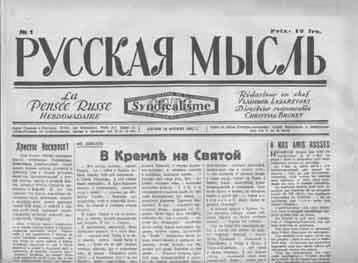
Galina Rudnik: Now, apparently, there is no country in which emigrants from Russia or from the Soviet Union would not build their new life, life in a foreign land and sometimes very far from their native land. From time to time, we talk about this life in special programs “Our countrymen abroad”. Today we will introduce you to the newspaper Russian Thought published in Paris. “Russian Thought” is one of the newspapers of Russian emigration. And if the “Russian thought” falls into the hands of the Soviet Union, he is primarily interested in whose newspaper, where it is published, looks at the headline and immediately sees that the newspaper is released in Paris and that the reception of the editorial office from 10 to 18 hours, except Saturdays and Sundays.
Announcer: who came from the Soviet Union for the first time, he still does not know that the “Russian thought”, published in Paris and diverging through all the corners of the globe, where emigrants, our countrymen found a shelter, that “Russian thought” is not the largest and old Russian newspaper, that it is largely inferior to the New York “new Russian word”, the newspaper, in the format of equal “Moscow Truth ". “Russian thought” is less, maybe because the Western European press is generally more modest, and a clear imprint of American scale on the New York “New Russian Word”. Nevertheless, we decided to talk not about the “new Russian word”, about this someday later, but about “Russian thought”, published in Paris.
Galina Rudnik: “Russian Thought” - the name itself testifies that this newspaper talks to its readers that they, Russian readers, are most interested in. Interested in a lot of them, even more - interests the whole world. Well, a man has been created, there is nothing to be done here, and even more so with an emigrant. The whole world for a person begins with his native land, even if it is far away, this native land, but the emigrant first rushes into articles and notes in which he sees the gleam of great glory, some cosmonauts that are worth it, and the reflection of the prolonged greedy not for himself, not for his children, but for a certain future abstractly beautiful life, which are rewritten at least once.
Announcer: by the way, those Soviet writers and journalists who are sometimes allowed to visit Europe or America, in their articles or essays, the Russian foreign press is called both slanderous and evil. It is very difficult to find the truth in this. They overthrew Khrushchev, a mysterious Kremlin-Party Revolution occurred, in power of Brezhnev and Kosygin. Is this not bread for slanderers and spindlers? And before us, the hem of the numbers of “Russian thought” after the historical October Plenum. On the pages of "Russian thought" neither slander nor splendor. Serious objective reviews of party-Soviet events, analysis of the responses of the Western press, including communist, and no hysteria, no slander. After all, it is impossible to consider representatives of the Danish, Italian and other Communist Parties about the Kremlin coup only because these statements are published in “Russian thought”, but are not placed in Soviet newspapers.
Galina Rudnik: It would be strange to deny the right of any newspaper, including “Russian thought”, to express his thoughts on how the new Soviet party leadership will go in the post -Khrushchev period of history. “Russian Thought” did not act either in the ridiculous role of the blind defendant, or in the role of hysterical clicus. The “Russian thought”, like most Western newspapers, admitted that the new party-Soviet leadership is quite soberly looking at the problem of war and peace, at the need for peaceful coexistence for the sake of preserving humanity. “Russian Thought”, for example, with a sense of sincere satisfaction told its readers that, as if Johnson, Brezhnev and Kosygin won Johnson in the United States of America in the presidential election and expressed the hope that the policy of peaceful coexistence, begun by the president of Kennedy, will be pursued by Johnson.
Announcer: Our listener, of course, can say: such seriousness is inherent in “Russian thought” only when it comes to high matters, but how does she talk about the affairs of the intra -Soviet ones, will she slander here? This question is very controversial and far from simple. Returning with memory in a relatively distant past, let’s say that some even in the West considered the memories of the Soviet concentration camps in the “Russian thought” anti-Soviet fabrications. And what happened in fact? Official recognition of crimes and cult of the personality of Stalin. An example of a more recent one is virgin lands. The newspaper called it both an ill -conceived venture and an adventure harmful to agriculture. The newspaper argued that forced agricultural emergence would not lead to good. What happened? Among the sins of the overthrown of Khrushchev are agricultural explosion. And a hurry to run to communism: our generation will live in communism, down with personal plots. Bottom line: Brezhnev and Kosygin decided to return the gardens, calves and sheep selected from them. Brezhnev and Kosygin do not refuse communism, but they do not mention our generation yet, they say, history will show, or, as he said in his story “What the Nightingale” Mikhail Zoshchenko: “The author does not want to make what life there will be there. Why rub your nerves and upset health, anyway aimlessly, the author of this future beautiful life will still not see, and whether it will be beautiful - this is another question. ”
Galina Rudnik: “Russian Thought”, a newspaper of Russian abroad, in order to exist, should have readers. The Russian abroad - it sounds loudly, but this is not a state, no one subsidizes the newspaper, it lives at the expense of subscribers and buyers. And so that they are, these subscribers and buyers in different countries of the world, you need to be able to make an interesting and good newspaper. You won’t do it - subscribers will scatter or, rather, run to another newspaper, also Russian, and also emigrant, and also trying to increase their circulation. Therefore, “Russian thought” must be widely, seriously and truthfully show and tell what the world lives. As she shows and talks about Soviet affairs, we have already said that it is much easier and easier to cover international events, the availability and wealth of information here is directly inexhaustible.
Announcer: But the “Russian thought” would not be a newspaper of Russian abroad if it had forgotten about this very foreign country. And because it is the pages of letters and essays, correspondence and articles not only from the European countries neighboring France, but also from Canada, America, Australia and sometimes even from fiery land. And the fate of someone from the Valdai Upland, or from the Siberian open spaces, brought there.
Galina Rudnik: On the pages of “Russian thought”, we are talking about the last few newspaper numbers, published articles that are undoubtedly interesting not only to emigrants, these articles would attract attention to readers from the Soviet Union if “Russian Thought” would be available to this reader. First of all, we mean articles such as “Two anniversary of Igor Ivanovich Sikorsky”, “Memories of Maxim Kovalevsky about Karl Marx” and an article by the Australian doctor Sazhin “On the moral heritage of Pirogov”. These articles, published in Russian Thoughts, deserve to be given completely, but the framework of our transmission does not allow this to do this and therefore about each of them is extremely short and very fluent.
Announcer: "Two anniversary of Sikorsky." But before saying two anniversaries, we will give a certificate from the second volume of the encyclopedic dictionary, Moscow, 1964. This is this certificate.
Galina Rudnik: “Sikorsky, aircraft designer. Born in Russia. Since 1908, designed planes. In 1913, under the leadership of Sikorsky, the world's first multi -engine aircraft “Russian Knight” and “Ilya Muromets” were created. In 1919, Sikorsky emigrated to the United States of America, where he continued design and entrepreneurial activity mainly in aircraft construction. ”
Announcer: This is a certificate of the Soviet encyclopedia. Would it not be interesting to recognize the people (Sikorsky - the son of the Russian people) that:
Galina Rudnik: “Sikorsky worldly recognized“ father ”of helicopters, including the latest S-65 models for 48 passengers, and S-64, a giant flying, a lifting crane.”
Announcer: Would it not be interesting to know the Soviet people that:
Galina Rudnik: “Created by Sikorsky in 1933 in cooperation with the Pan-American airline S-38, S-40 and S-42 were among the first flights through the Pacific Ocean to New Zealand and through the Atlantic Ocean to Ireland.”
Announcer: an article about Sikorsky, placed in “Russian thought”, ends with these words: “For Russians scattered around the world, Sikorsky remains dear Igor Ivanovich and a brilliant representative of Russian culture.”
Galina Rudnik: "Memories of Maxim Kovalevsky about Karl Marx." Of course, the emigrants have their long -standing and very difficult scores, if not with Marx itself, then with his students. Why - it is hardly necessary to explain. Nevertheless, the “Russian thought” did well that she stated the ordinary, purely human and personal memories of Maxim Kovalevsky about Karl Marx. These memories are useful for those who study the biography of Marx and his teaching. These memories can be found in the Moscow Literary and Political Journal "Russian Thought" for 1895. We repeat: the Moscow Literary and Political Journal "Russian Thought" for 1895.
Announcer: "On the moral heritage of Pirogov." This article by the doctor of the doctor Sazhina, undoubtedly, would attract the attention of Soviet doctors and medical workers. This article would largely complement the official-commissioning recognition of the merits of the medical scientist Pirogov, whom you can get acquainted with Soviet encyclopedias and medical press. Have the opportunity to read this article, young Soviet doctors, they would have come to the natural conclusion that the monument of Pirogov, a friend of mankind erected in the Soviet Union, obliges to reprint not only scientific, but also the philosophical works of Pirogov, his “charters”, his “issues of life”, his “diaries of the old doctor”, on which generations of Russian doctors of the past and the beginning of our century were brought up. They were brought up not on ideology, but on the eternal laws of morality, the laws of love for man.
Galina Rudnik: They may notice that the name of Pirogov in the Soviet Union is not forgotten. This is good. But it is bad that the scientist is officially deposited, a doctor. And where is the Pirogov thinker and social activist? Where is the Pirogov preacher of humanism, erected on the religious moral covenants of Christianity? After all, this is what allowed Russia to talk about Pirogov, brilliantly combined pure science with the service of higher values. Remembering this, the article “On the moral heritage of Pirogov”, in particular, cites the words of the historian Solovyov, who said that “Pirogov erected a monument to the Russian people and glorified the Russian name far beyond the borders of his homeland.” The newspaper also recalls Turgenev’s words that “the Russian nation gave the glorious names of Peter the Great, Lomonosov, Pushkin, Mendeleev, Mechnikov, Pirogov.”
Ivan Tolstoy: Alexander Markov’s song “Zosenka”. Performed by Eduard Petrov.
(Song)
Ivan Tolstoy: "Zosenka." Under the name of the poet Alexander Markov, a former Soviet prisoner, author of radio programs on philosophical topics, memoirist Alexander Vardi, disappeared. And Zosenka is the name of his wife Sonya, a native of Poland. In the 60-70s, Alexander Flegon was one of the most famous Western publishers of Russian literature. He was the most mysterious figure. Together with the growth of the popularity of his publications, his scandalous glory grew. I remember that in the early 70s, his reference was walking in his hands “outside the Russian dictionaries” - no longer in a book form (where there was! The publication was unsystematic, semi-literate, not at all academic, but simply by free-hooligan. So Flegon himself remained until the end of his days. All the slopes that could be tied in Russian and Soviet literature, in Russian folklore, fairy tales and sayings, all this Flegon carefully and with teenage pleasure brought into his dictionary. The work, of course, is necessary, but this is no less painful. Then it became known that Flegon was piracy and sued Russian emigrants. In particular, this can be read about this from Alexander Solzhenitsyn in his memoirs "landed a grain between the two millstones."
But it will be much later, and now, in the 64th year, Alexander Flegon is the guest of the London Studio Radio Liberty. Victor Frank is talking to him, calling the interlocutor Oleg Vasilievich (the true name of the Flegor - Oleksandr).
Record: Says the Radio station Freedom. Now a special program from which you can find out how easily and just reach the books of Soviet writers to a foreign reader. And easily and simple, because in Western countries, publishers are not printed by presidents or parliaments, but what the publishers themselves consider interesting and necessary for the Frenchman, the Englishman or the American. So, listen to a special program.
Victor Frank: Says the London Studio of the Radio Station Freedom. Oleg Vasilievich Flegon is now in our studio. Oleg Vasilievich Flegon recently founded a new publishing house in England, the publishing house is unusual in that it concentrates its activities in the publication of modern Russian writers in Russian. Oleg Vasilievich, what have you released since your publishing house?
Oleg Flegon: Over the past year, I managed to release several very successful books. Successful because they dispersed within a month after the release. One of the most successful - it was, of course, the book of Yevtushenko poems. There was one anthology under the title "Heirs of Stalin." Then there was another book “Apple”, then Voznesensky’s poems under the title “I scare me with formalism” and other Soviet writers, such as Abramov “Around Bu,”.
Victor Frank: I see, in front of me lies your new book “Autobiography” Yevtushenko. This is the same “autobiography”, the translation of which in the French weekly Express caused such a noise in due time both in the Soviet Union and beyond. Tell me the story of the text that is printed with you.
Oleg Flegon: In my opinion, this is a very interesting book. It is a pity that she cannot get into the Soviet Union currently. It is of great interest to readers in the Western world, but, in my opinion, she would have been even more interest for readers of the Soviet Union. Unfortunately, it exists or still existed in almost all the main languages of the world, except for the Russian language.
Victor Frank: But this is not a reverse translation from French - is this genuine text of Yevtushenko?
Oleg Flegon: Not the opposite, yes, this is Yevtushenko's genuine text. It is that remarkable that represents a biography in the form in which it was written. We know from Yevtushenko’s speeches that Express printed it a little distorted. The reasons, of course, were different, people may not have known the language well, then they hurried, and so on. Translated into English, too, there are different mistakes. Therefore, I decided to print it in the same form in which it was provided by Yevtushenko himself Express magazine.
Victor Frank: What readers do you count on by publishing books in Russian in England?
Oleg Flegon: Mainly, of course, for readers of the Western world, not in England only, but I would say more - abroad. In America, there are a lot of readers in Russian, in France, in Germany, and so on. All bookstores of the Western world that trade in Russian books know about my activity and order these books. In addition, sometimes Soviet tourists come here, buy, and sometimes I send my friends in the Soviet Union through their friends who go to visit the Soviet Union.
Victor Frank: I see that you opened a bookstore in London, so in theory Soviet tourists can just go to the store here and buy those books that will interest them?
Oleg Flegon: Yes, it was, in my opinion, it was necessary. Because to date, there was only one book store in London and here, unfortunately, it was impossible to buy everything that was interesting in Russian. Этот магазин находился под контролем советского посольства, и если существовал хороший журнал, как, например, журнал «Студент», его нельзя было достать в этом магазине, потому что советское посольство запрещало продавать этот журнал. В моем магазине можно найти любую книжку на русском языке, которая была напечатана в Советском Союзе или на Западе.
Виктор Франк: И достаточно просто написать открытку по адресу Флегон-пресс, Лондон, чтобы вы были уведомлены о желании такого-то или такого-то купить у вас книгу?
Олег Флегон: Я получал много писем до сих пор из разных стран мира просто по адресу Флегон-пресс, Лондон, и к моему удивлению все пришли по моему адресу.
Виктор Франк: Хорошо, Олег Васильевич, наряду с книгами на русском языке вы издаете также книги на английском языке. Я вижу, что рядом с Евтушенко на столе у нас лежит книга генерала Горбатова, публикация, которая шла в «Новом мире». Что вы скажете об этом начинании вашем?
Олег Флегон: Я считаю, что нужно проводить такое дело и выпускать на английском языке книги, которые печатаются в Советском Союзе и которые должны находиться в библиотеках Англии, Америки, Австралии, и так далее. Генерал Горбатов написал очень интересные мемуары, по-моему, их следовало перевести на английский язык как можно быстрее. Я выпустил в прошлом году на английском языке книгу Абрамова «Вокруг да около». Я, конечно, не говорю о технических книгах, которые я выпускаю на английском языке, - словари, и так далее. Книга Абрамова пользовалась большим успехом и поэтому, я надеюсь, что эта книга генерала Горбатова будет пользоваться не меньшим успехом.
Виктор Франк: Какие у вас планы на будущее, Олег Васильевич?
Олег Флегон: В настоящее время я готовлю большую книгу о советской промышленности, которая выйдет в течение следующей недели, и какие-нибудь другие 10 книг о советских писателях, написанных или советскими писателями, или в переводе на английском языке. В настоящее время печатается антология советской антисталинской поэзии, я думаю, что это будет очень интересная книга, там будет много стихов, которые никогда не были напечатаны на русском языке ни в Советском Союзе, ни на Западе.
Виктор Франк : Разрешите мне вам пожелать всего хорошего в вашей издательской деятельности, Олег Васильевич.
Иван Толстой: Беседа Виктора Франка с издателем Александром Флегоном, 9-е сентября 64 года.
(Song)
Иван Толстой: Песня Леонида Пылаева 64 года. В западногерманском издательстве «Курт Деш» вышла книга «Дружба с Борисом Пастернаком: Переписка». Составительница книги – немецкая поэтесса Рената Швейцер. Она включила в книгу письма Пастернака к ней, свои ответные письма и изложение драматических событий вокруг издания на Западе романа «Доктор Живаго». В заключение Рената Швейцер пишет о своей поездке в Москву и встречах с Пастернаком в Переделкино, на Пасху 60-го года, за полтора месяца до смерти поэта.
Рената Швейцер: «Я ожидала встретить крупного, энергичного мужчину и была, кончено, удивлена, когда передо мной оказался тонкий, очень изящный человек. Он был среднего роста, седые волосы постоянно падали ему на лоб, на меня смотрели черные глаза с золотыми искорками. Он подошел ко мне легкой походкой. Когда мы с ним поздоровались, я обратила внимание на руки: его руки были узкими, совсем не руки пианиста, которым он когда-то хотел стать, они были одухотворенными, одновременно оставляя какое-то необъяснимое ощущение силы».
Диктор: Так описывает cвое впечатление от первой встречи с Борисом Пастернаком Рената Швейцер. Обратимся, однако, к опубликованной в книге переписке. Она велась на немецком языке, и мы ее даем в переводе. Наиболее интересными представляются нам письма, в которых Пастернак рассказывает о себе, вообще о творчестве или о своем романе “Доктор Живаго”. В ответ на первое письмо, к которому Рената Швейцер приложила свое стихотворение “Страстная пятница”, она получила открытку.
«Москва, 3 апреля 1958 года.
Дорогая, дорогая госпожа Швейцер! Благодарю вас бесконечно за значительное, трагическое стихотворение “Страстная пятница”, за ваше полное доброжелательности жизни и поэтичности письмо. Оно застало меня в больнице, где я нахожусь уже второй раз из-за моей негодной ноги. Вот почему я прибегаю к почтовой открытке. С другой стороны, больше и надежды на то, что открытка и до вас дойдет. Увы, почти вся моя корреспонденция пропадает в дороге”.
Диктор: И дальше откликаясь на то, что о нем писали тогда на Западе, Пастернак пишет:
“Мой образ приукрашен, мое значение бесконечно раздуто. Я не настолько дерзок, чтобы безапелляционно категорически судить о народах и говорить: вот мы, мы русские. Прочитайте “Доктора Живаго” непременно - это глубже, точнее, скромнее, определеннее. Все в нем вращается вокруг центрального пункта, образуемого личностью”.
Диктор: И еще на той же мелко исписанной открытке:
“Мы тоже перед Первой мировой войной обладали совершенно новым, возвышенным, восторженным искусством и культурой. Во имя преданности и любви к ним следует этот путь продолжить. Продолжать дальше в сторону ясности, определенности, значимости. Не теряя, однако, при этом исторической и художественной правды, чутья к постигнутым тайнам. Этот путь я всегда мечтал осознать и пройти. В “Докторе Живаго”, кажется мне, я это сделал. Желаю вам best wishes".
Диктор: Из письма Ренаты Швейцер Борису Пастернаку:
“Берлин, 13 апреля 58 года.
В радиопередаче рассказывалось немного из вашей биографии и передавалось содержание книги, затем следовал отрывок смерти доктора Живаго. Боже мой, как описать все те чувства, которые вызвала во мне эта сцена, этот язык, как только может мужчина так воплощаться в переживания женщины. Сегодня примите от меня поклон в знак счастья, которое вы мне доставили, и как свидетельство того, что дни мои заполнены мыслями о вас. Be healthy. Прилагаю стихотворение “Ангел”.
Диктор: Пастернак ответил таким письмом:
“4 мая 1958 года.
Госпожа Рената, мой дрогой друг!
Ваш замечательный “Ангел” у меня, и мне чудится тембр вашего голоса. Я счастлив, что мой новый прекрасный друг так талантлив, преодолев меня в поэтическом единоборстве”.
Диктор: Дальше Пастернак сожалеет о том, что «Доктор Живаго», только что вышедший в Италии, еще недоступен для не знающей итальянского языка Ренаты Швейцер, и заканчивает:
«А теперь дайте мне обе вашей руки, вот так. Ваш «Ангел» чудесен, в душе моей вечность проходит. Я не подписываю этой открытки для того, чтобы она вернее дошла».
Диктор: Переписка продолжатся, и впервые в письмах Пастернака Рената Швейцер замечает налет грусти.
“20 июня 1958 года.
Грустной была моя открытка из-за душевной усталости. Когда вновь мое существование потрясает ужас пусть смягченного, но все же бессердечного и произвольного времени, преследующего меня своими угрозами, когда, несмотря на мой возраст, недостаток времени, препятствия и отсрочки, все то многое, что еще должно быть сделано и постоянно откладывается, тогда наступает если не полное отчаяние, то, во всяком случае, изнеможение”.
Диктор: К этому письму Пастернака были приложены три рукописных страницы для передачи музею Фауста возле Штутгарта в Федеративной республике Германии. Пастернак добавил в письме:
«Перешлите, пожалуйста статью, не исправляя моего смехотворного немецкого языка. Я не хочу казаться лучше, чем я есть на самом деле, даже благодаря вам».
Диктор: Вот выдержка из этой статьи Пастернака, посланной музею Фауста.
«Я переводил первую часть «Фауста» осенью и зимние месяцы 1949 года. После трехлетнего перерыва, в течение которого я писал начало моего романа «Доктор Живаго», я вновь возобновил работу над переводом трагедии, закончив вторую часть в 1952 году. Всего работа заняла 15 месяцев: 6 месяцев первая и 9 месяцев вторая часть.
Boris Pasternak. Переделкино под Москвой, 18 июня 1958 года».
Диктор: У Ренаты Швейцер возникает мысль поехать в Москву и повидаться с Пастернаком. Отклик Пастернака на это намерение.
«12 августа 1958 года.
Вероятно, удастся кого-нибудь найти, сам я не имею права переступать порога посольства, кто за вами заедет и проводит к нам. Только почему вы хотите быть здесь до появления «Живаго» на немецком языке? Ведь эта работа — моя плоть и кровь. И до тех пор, пока вы с ней не познакомитесь, я для вас должен остаться бестелесным миражом. Хочу им остаться».
Диктор: В начале сентября от Пастернака пришло письмо, опущенное в Риме и датированное 7 мая 1958 года. Пастернак несколько раз о нем упоминал, и его уже считали потерянным. This is a letter.
«7 мая 1958 года.
Пользуясь случаем, окольными путями написать вам немножко подробнее, а главное — свободнее. Несколько дней назад вернулся из больницы домой, нога еще побаливает, но болезненные припадки стали реже. Эти дни у меня были нежданные и никчемные посетители. Не переношу неоговоренных встреч — мне дорого время. Потом нужно было отвечать на письма, хорошие письма из-за границы, частично из Франции и Германии. И если я теперь от них перехожу к ответу вам, то лишь потому что сознаю вашу неповторимость.
Давайте будем друзьями. У меня жена хорошая и прекрасная. Она была замужем, а я женат, но я ее отбил, и две семьи от этого пострадали. Нелегко мне это было. Черствость и бесчувственность мне чужды. Бесконечная приверженность жены, ее умение во всем, будь то мытье, готовка или воспитание детей, создали наш дом и сад, венчали нашу жизнь в течение дня. Жене я обязан необходимыми для работы условиями, порядком, спокойствием. Она недоступна упрекам. Ей принадлежат любовь, благодарность, преклонение. Обмануть ее, от нее что-либо скрыть или изменить немыслимо. И немыслимое вошло в жизнь, обрело право на бытие и достойно его.
После этой войны я познакомился с молодой Ольгой Всеволодовной Ивинской, а вскоре, не перенося моей раздвоенности и молчаливой безукорной печали жены, я пожертвовал возникшей привязанностью Ольги Ивинской и мучительно с ней разошелся. Вскоре ее арестовали, и она провела 5 лет в тюрьме и концентрационном лагере. Ее арестовали из-за меня, как, по мнению органов госбезопасности, мне самого близкого человека. Арестовали для того, чтобы под угрозами, на страшных допросах получить от нее показания против меня. Ее героизму обязан я жизнью, тому, что меня тогда не тронули. Это она Лара из «Доктора Живаго», которого я в те дни начал писать. В ней воплощены жизнь и преданность. Выход книги принесет не только радость, будут нападки и преследования, политические из коммунистических кругов, эстетические — за несовременную наивность, простоту и прозрачность языка, за скучные избитые места.
Но я больше не в состоянии мучить вас и себя бесконечным писанием, иначе я разъяснил бы вам, почему книга про самое важное, стоившее нашему столетию столько крови и безумия, должна быть ясно и понятно написана».
Диктор: Письмо подписано: «Ваш Б.П». В книге Ренаты Швейцер воспроизведено факсимиле Пастернака на немецком языке, как мы говорили, датированное 7 мая, письмо пришло в сентябре, а в октябре Пастернак писал.
«9 октября 1958 года.
Иные считают возможным, что Нобелевская премия в этом году может быть присуждена мне. Я твердо надеюсь, что она меня минует и будет присуждена Альберту Моравиа. Ты не можешь себе представить, сколько одно только ожидание такой возможности вызывает во мне забот и мучений».
Диктор: 21 октября 1958 года ночью, накануне присуждения ему Нобелевской премии, Пастернак пишет:
«Из-за моей ноги мне нельзя долго сидеть неподвижно, я должен ежедневно минимум три-четыре часа энергично ходить, почти маршировать. И потом это шведское событие, если оно осуществится, а это не исключено, грозит перевернуть всю мою жизнь. Темные тучи нависли надо мной».
Диктор: Полтора месяца спустя из письма Пастернака от 5 декабря 1958 года.
«После успеха «Доктора Живаго» всюду начали без разбору печатать мои вещи, среди них ранние — прозу, стихи. В большинстве случаев это все неприемлемо, носит отпечаток экспрессионистского периода, периода распада формы и затрудняемого, неполноценного восприятия содержания. «Доктор Живаго» возвышается над всем этим ясностью мысли, последовательно доведенной до конца».
Диктор: После присуждения Нобелевской премии Пастернака травили, лишили материальных средств. Помощь в это время пришла от Союза польских писателей. Хотели выслать из страны. Несмотря на все это и на смертельную болезнь, уже наложившую отпечаток на его внешность, Пастернак задумывает пьесу «Слепая красавица», о которой пишет в письме от 14 мая 1959 года.
«Хочу написать пьесу, только когда найти время».
Диктор: Чтобы заработать средства на жизнь, он работает над переводами по поручению польского Союза писателей. В этом же письме Ренате Швейцер Пастернак пишет о «Докторе Живаго».
«В Америке мою книгу пытаются расшифровать как какой-то секретный документ. Названия улиц и имена собственные, ситуации, все вплоть до отдельных слогов должно, по мнению расшифровщиков, содержать аллегорию, символ или скрытое глубокое значение. Но спрашивается: за что же тогда хвалить, если подобный противоестественный, антихудожественный подход был бы возможен?».
Диктор: О новой пьесе «Слепая красавица» в письме от 15 июня 1959 года.
«Единственное, чем я могу всех вас отблагодарить — это новая работа. Она подвигается медленно и лениво вперед. Я недостоин вас, но работа уже живет, я верю в нее».
Диктор: В сентябре 1959 года Пастернак, не испросив специального разрешения, посетил за кулисами дирижера Леонарда Бернштейна, приехавшего на гастроли в Москву с Нью-йоркским филармоническим оркестром. После этого он написал Ренате Швейцер 29 сентября 1959 года.
«Может быть, в течение некоторого времени я не смогу тебе писать и отвечать на твои письма, как это однажды уже было. Неужели я виноват в том, что во всем белом свете меня охотно читают? Многих здесь это приводит в бешенство. Я же стану жертвой этого признания. После посещения концерта положение ухудшилось. И это было преступлением невольным».
Диктор: 3 ноября 1959 года.
«Вот уже почти месяц, как я вынужден был оставить работу над пьесой. Нужны деньги. Я воспользовался случаем принять участие в одном издании Кальдерона и в три недели перевел «Стойкого принца».
Диктор: Еще раз о «Слепой красавице», пьесе, над которой Пастернак работал.
«Самое важное, что предыдущей книгой я затруднил мою теперешнюю работу, которая ни в коем случае не должна быть хуже».
Диктор: В Москву на гастроли приехал западногерманский театр под руководством Густава Грюнгенса с его знаменитой постановкой «Фауста», в которой Грюнгенс играл Мефистофеля.
«23 декабря 1959 года.
Здесь гастролирует драматический театр, приехавший с твоей родины. Я зашел за кулисы, большего не мог себе позволить. Пришлось отказаться от мысли пригласить их ко мне. Писать становится все труднее, времени все меньше».
Диктор: Месяц спустя, 25 января 1960 года.
«Никто не может себе представить, как серьезно, мучительно серьезно мое сегодняшнее положение после всего признания и доверия, которыми меня одарили».
Диктор: 25 апреля 1960 года.
«Пишу в постели. С четверга вот уже пятый день подряд страшные боли во всей грудной клетке, спине, левом плече. Не знаю, что это. Что это - сердце? Что это - рак легких? Сегодня вечером придет доктор, тогда напишу, что он скажет. Доктор был — нервы, невроз. Боли в левой лопатке невыносимые. Предписания, различные запреты: лежать, не нагибаться, и так далее и так далее. Больше не могу писать, страшные боли в сердце».
Диктор: Телеграмма от 6 мая 1960 года.
«Непосредственной опасности нет, но все же мучительные и изнуряющие боли груди, плеча, спины. Третью неделю в постели. Goodbye. Работай радостно, успешно. Борис».
Диктор: 30 мая 1960 года Борис Пастернак скончался.
Иван Толстой: Письма Ренаты Швейцер в русском переводе читала диктор Радио Свобода Екатерина Горина, пастернаковские письма – поэт Юрий Джанумов. Запись 2-го октября 64 года. И еще одна песня того же года. Поет Галина Зотова.
(Song)