
Translated material
Ural treasures
Traveling, for example, through Austrian music festivals and festivals or Italian opera scenes you will not surprise anyone. But the beginning of the concert season in the Urals turned out to be so saturated and amazing that I had to get dressed more and go on a musical tour along the Ural ridge.
"Satyagraha." Opera about non -violent struggle
The well-known American Minimalist composer Philip Glass already wrote 24 operas, which are set in many status places of the globe, including in the New York Metro. In Russia, where and without it a full repertoire holes, the opera Glass was not at all on the agenda. An idol of an alternative, semi -club audience - and enough. The news that the Yekaterinburg opera - the federal subordination Theater - opens the Satyagraha season, looked like a deadly joke.
As it turned out, it’s not to jokes, everything is very serious. The author of the idea is the director of the theater with all growing ambitions (Yekaterinburgers are already crowding competitors on the Golden Mask) Andrei Shishkin, whose youthful hobbies of India and rock music turned into such a fantastic dream. He recalls that he had already agreed on the notes and the staged team, but he still did not dare to hang out an order in his theater on the setting of the opera, at the bottom of which the inscription: “Filled in Sanskrit”.
 © Yekaterinburg State Academic Opera and Ballet Theater
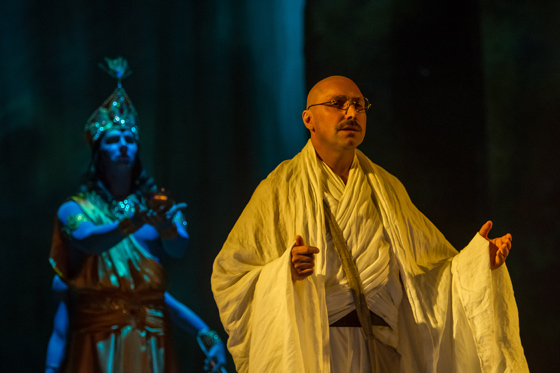
Yes, not only that, it was Yekaterinburg (and not Moscow or Peter) that became the place of the first production of the opera Glass in Russia, but this is the only opera in the world requiring a coach in Sanskrit (and there is one in the Yekaterinburg team)! Well, Sanskrit with a Sanskrit, it is unlikely that anyone will find fault with the pronunciation, but how the hermetic infinity of Glass should sound, today it is easy to recognize in Yetube. And how will they sing Russian tenor, singing Herman yesterday? Not to mention the fact that he will have to shave his head for the main role - and this is Mahatma Gandhi (before the premiere, Vladimir Cheberyak did it heroically) and further sing German in a wig. The theater is Russian, repertoire, Satyagraha are going to properly give interspersed with more familiar names.
Actually, the most incredible thing is that they perform this overseas Chud in Yekaterinburg exclusively on their own. Varangian - only behind the remote control, personally and creatively familiar with the Glashes of the maestro Oliver von Donanya, a representative of the famous conductor's family. He began to train the Yekaterinburg troupe at the Marathon vowels since winter. He says that in the orchestra pit, a rope descending from above was discovered - the violinist tied his hand by the elbow so that he was less tired during endless repetitions of the same phrase.
 © Yekaterinburg State Academic Opera and Ballet Theater
As a result, the orchestra and the choir, on which is also a huge load (chormaster Elvira Gayfullina), all three hours do not lose drive and excerpts, other baked busts of wooden winds or hundreds of times repeated the chorus of the choir are so close to the ideal that you do not believe your ears. It is more difficult to forget about Russian musical reality with soloists, there is no warmth and sincerity, no, yes, they slip into a completely intended airless space for this. Glass turned out to be some kind of Self and humanized, but it is even touching.
However, problems with the voice are not only musical, but also substantial. This opera is not a vacation or melodrama, as we are familiar, but a serious conversation on, as it turns out, still acute political topics. Its premiere took place in 1980 in Rotterdam. This is the second part of Glass’s opera trilogy about people who, he believes, changed the world by force of their spirit. In addition to Gandhi, two others are scientist Albert Einstein and the ancient Egyptian pharaoh, religious reformer Ekhnaton. There is no plot in the usual sense in the opera, there is a life of ideas whose similarities can be traced in the teachings of Leo Tolstoy, Rabindranate Tagore and Martin Luther King - these are the names of three parts of the opera.
 © Yekaterinburg State Academic Opera and Ballet Theater
“Satyagraha” translated from Sanskrit - “desire for truth”, as applied to Gandhi - the methodology of non -violent struggle for the independence that he developed while living at the beginning of the 20th century in South Africa. Its two forms-non-proceeding with the authorities and civil disobedience-are unsaeping in the present time, and a protective vignette in a booklet in the form of a quote from Putin about the fact that after the death of Gandhi there is no one to talk with, it does not seem superfluous.
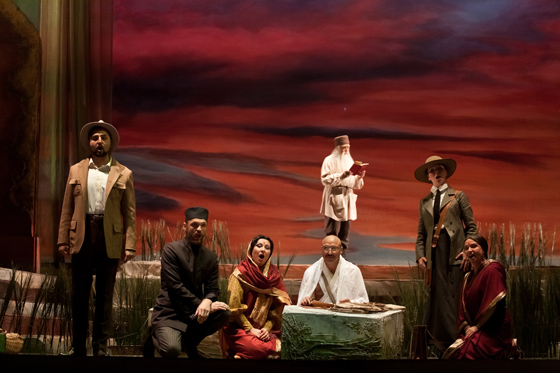
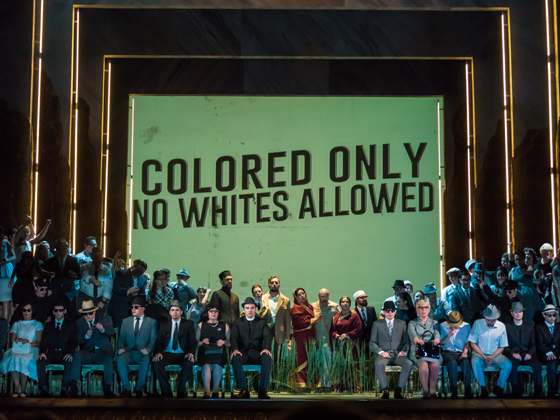
For the young American director Tadeusz Strassberger (aka scenographer), Satyagrakh became the first work in Russia. Ahead, however, the invitation to put Oresteus Taneyev in Mariinka (he already put it in the American bard college ). Its production is not aesthetic shock, but an attempt to reach. The most friendly as possible. He sends artists with ritual processions to the hall. He invents his human stories, simple and intelligible on stage. Here the colonialists drive the Indians forcibly register, take fingerprints, and they tear the resulting pieces of paper. Here the white woman covers Gandhi with her umbrella from the sun and saves him from the bullying of the crowd. The most exciting moment is just a video with the speech of Martin Luther King, said on August 28, 1963, where the dream of the equality of white and black is voiced. The performance of a standing ovation ends.
The third symphoforum. How can we finally equip orchestral Russia?
At the street -neighboring theater of Yekaterinburg Street - the Philharmonic, led by Alexander Kolutursky, the best in Russia, if you do not measure with Moscow (about Moscow, by the way, it is better to forget - there are other money, other grindings, fatigue, unbelief, saturation and fear). The directors of the opera and the Philharmonic, however, see each other more competitors than like -minded people, but from the outside it is clear that they are engaged in about the same - romantic exploits. What is your favorite philharmonic project: subscription series in branches with exit concerts and in very small and remote settlements-with Internet broadcasts.
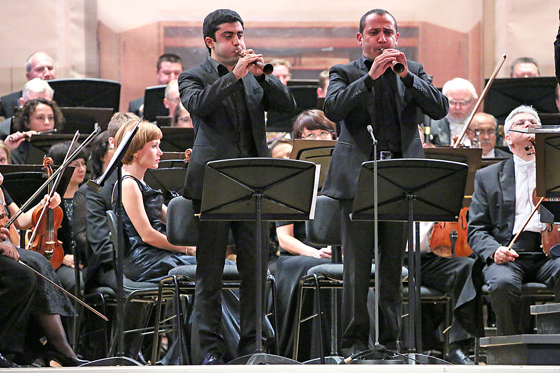 © Press Service of the Sverdlovsk Philharmonic
The tiny town of Alapaevsk for130 KPI Yekaterinburg, there was once a metallurgical plant, Tchaikovsky’s father served on it, the family lived here for 15 months when Petya was 9-10 years old. Now there is no plant, there is not enough work in the city, there is not enough money, but there is a Tchaikovsky house with holy ministers and a Philharmonic branch with no less holy managers. One of the reasons for the reasons I saw in an advertising leaflet of reasons is: “Those who are often abroad know that there are subscriptions to the academic hall - a distinctive sign of the elite of society.”
Every fall, the Philharmonic is conducting one of its image festivals - in the past years there was an international Eurasia , this time - purely domestic -Russian symphoforum, a view of the country's orchestras, whose ideology is visible who is who is on a dimensionless, unrequited and not observed by the Ministry of Culture, our orchestral, our orchestral space. And finally find out what is good and what is bad.
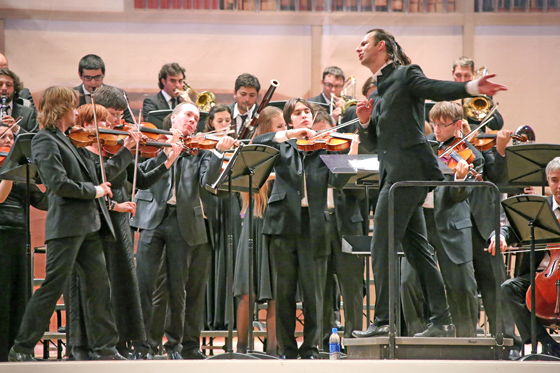 © Press Service of the Sverdlovsk Philharmonic Theodore Krentzis
The forum was held for the third time, had a special project dedicated to the harsh music of Avet Tertereyan (to the 85th anniversary of the composer, who was in Yekaterinburg at the end of his life), and gathered six groups this year, among which the Ural Philharmonic, headed by Dmitry Liss (at the final concert, performed the third symphony of Termen. With solo duds), as well as two media heavyweights: Musicaeterna with Theodor Kurentsis (the first departure of Permyakov to neighbors) and the state order with Vladimir Yurovsky (the first Gastro Maestro in the country). Krentzis caused a overwhelming, enthusiasm, gloomy glances, resentment and unreasonable disputes. Yurovsky, in the compulsory program of which was the introductory word and conversation with the audience after the concert, was decisively loved by everyone-including his skill to translate the abstract world of sounds into something specific, regarding you. If you summarize the words and music, then his speech, including the Francesca da Rimini "Tchaikovsky and dedicated to the First World War, was of a clear anti-war character, and the question of what is good and what is bad was resolved for some time-not only in the field of music.
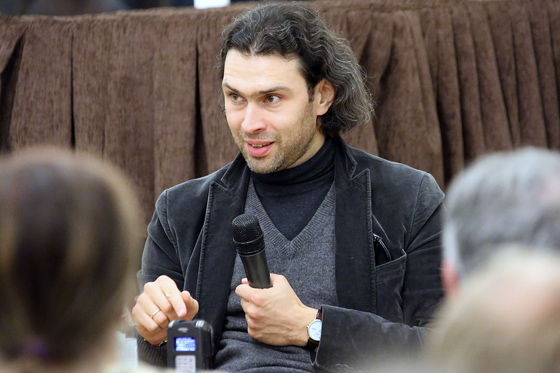 © Press Service of the Sverdlovsk Philharmonic Vladimir Yurovsky
"Don Juan." Viva La Liberta!
Five hours by train along the Ural hills - and you get to the front line of European art. The Perm Opera and Ballet Theater under the direction of Theodore Krentzis. What are the latest trends? What are the new horizons? What did they allow themselves again, what will they ask me about the whole season in different capitals in different languages? Along the way, fighting off the Minister Gladnev , they are waiting for the nearest Diaghilev festival of Romeo Castelcuci and Marcus Humanizer and accept invitations from Ruurtriennale and Salzburg. For the recording on the first opera of the Mozart - yes Ponte - “Figaro Wedding” - Echo Award has already been received Klassik . On the way, the release "All women do this." And then the final part of the trilogy is set - Don Juan. The disk will be released next year. And all three operas in a row will be shown for the first time on the Perm stage at the end of November. With Lutnaya and Hammerklavir, with residential strings and free vocal curls of soloists in the spirit of the 18th century. Yes, by the way, along with addiction to historical instruments and building 430 Hz, it is time to retrain to the Italian names of Mozart operas.
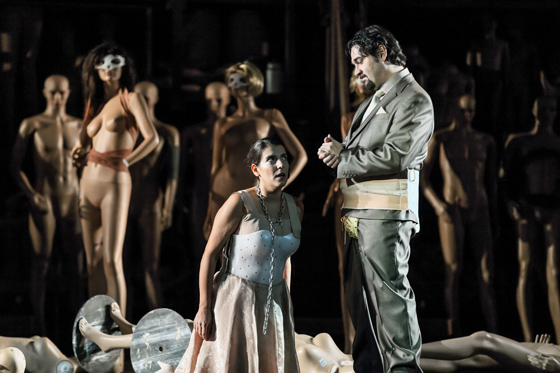 © Perm Opera and Ballet Theater
All of them are made by various imported teams in completely contrasting styles. Over the two previous years, it became clear that the general directorial concept was not necessary to wait, the Mozartovsky Perm project is primarily conducting, and we will not repeat again who his main character is. Nevertheless " DON GIOVANNI ” turned out to be a spectacular theatrical statement, from which you just won’t dismiss.
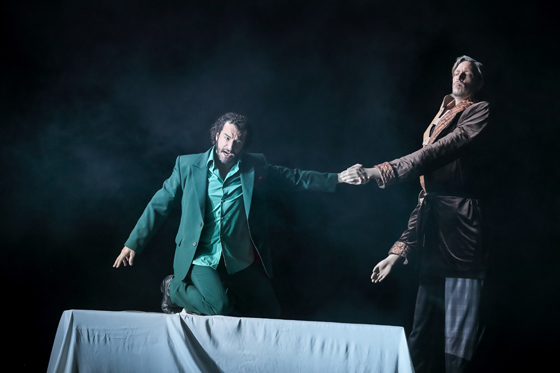
It was set by the long -term participant of the famous Catalan group LA Fura Dels Baus Valentina Carrasco - as if playful, without timidity and aspiration, with dashing and freedom. And he turned out to be spectacular, sensual, cheerful (the hall really constantly laughs), sad and very alive, despite the fact that it is about mankens.
 © Perm Opera and Ballet Theater
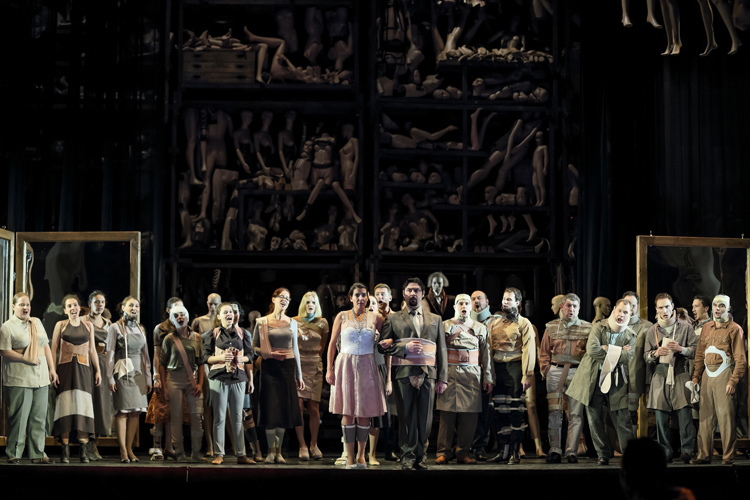
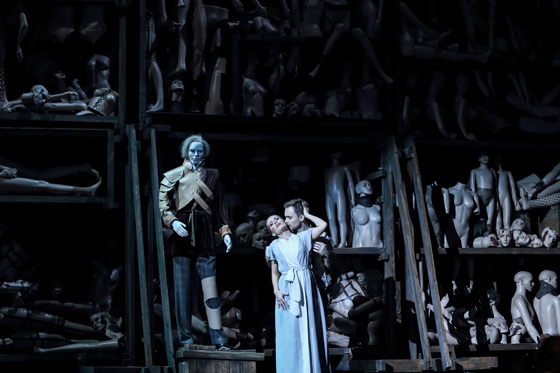
There are a lot of real mannequins in the production. Automated by the video traffic in the Noir genre, they fill the slyly darkened scene (the artist in the light - Peter Van Praneus) as the decorations (scenographers - Carrasco herself and Asterine Zarillo). Among them, the staff serving them, as well as, in fact, the heroes of the opera of Mozart, so that it is not difficult to get lost and tore off, as the plot requires. The bodies with female roundness, loaded in bulk and retail, are great for illustration of the Leporellova “Aria with a list”. At the same time, mannequins are a symbol of death.
Nothing unexpected about the protagonist is said, it is simply done very convincingly, informally, invalidly and with knowledge of the matter. Don Juan is the embodiment of freedom, he does only what he wants, achieves those he wants, fun, does not retreat, is not afraid of the death and restrictions imposed by society. It is only sad that he has to sing his serenade. In the first of the two compositions, this is a long -familiar charming and vital Simon Albergini in Kurentsisov projects. His servant Leporello (Guido Loconsolo) is closer to the rest in spirit, a witty bespectacled in a cap, carrying with him a toy Cheburashka in a road bag. Women, according to the director, are more inconspicuous, obscured, easier to merge with a mannequin mass. But, however, this does not interfere with noticing the vocal successes of Permyeka Natalya Kirillova (Donna Elvira) and the brand new star on the Mozart sky -in Kurentzis Nadezhda Pavlova (Donna Anna).
 © Perm Opera and Ballet Theater
Don Juan is the only one is not wrapped in all kinds of orthopedic corsets and bandages, does not merge with mannequins, stands out with a bright spot on the general background (costumes artist - meta). Everyone who comes into contact with him receives this vaccination of freedom - at least for a short while, at least during the stunning, bright, liberating, even if the hooligan holiday, which ends the first action.
At the end of the main, too free, the hero is still destroyed by these mankene people and remain boring, fresh and sexually unsatisfied. But a panel with its festive slogan - “ Viva La Liberta ! " (“Long live freedom!”) - it remains a symbol of the whole performance, and the artists come out with him to bow to the screeching and rumble of the hall. And, it seems, the theater is buzzing not only thanks to Mozart’s staged on his stage, but also resonating with what is outside.