
Translated material
Duties were hung over Ukraine
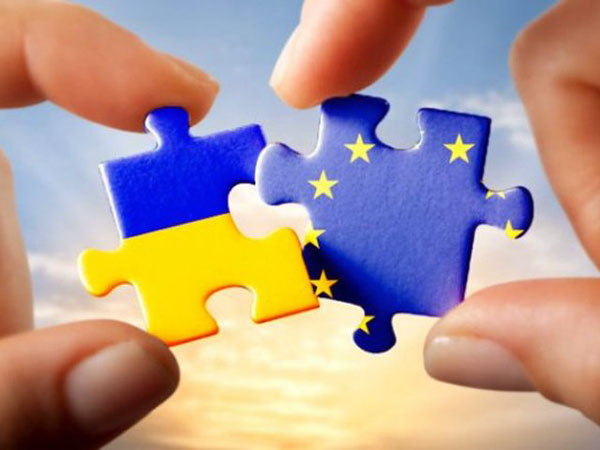
According to Reuters , in the letter of V. Putin P. Poroshenko (on September 17) it is reported that Russia will limit Ukraine's access to Russian markets, "if Kiev is implementing any clause of the economic part of the association with the European Union." Probably, all week in the EU we dealt with this collision and, finally, decided to publish it.
Of course, against the backdrop of everything else, the Ukrainian-Russian topic of the association stepped aside and it is even strange that something else is happening along this line. But it happens. On September 12, a ministerial meeting of the Russian Federation-Ukrain was held in Brussels. It seems to be a compromise: the parties agreed to postpone the temporary application of the Free Trade of the EU-Ukraine until December 31, 2015. In fact, the agreement did not imply additional evidence, but now Russia requires additional guarantees from Ukraine and the EU, accusing them of an effort to "conduct hidden implementation." This phrase is now playing. What is meant?
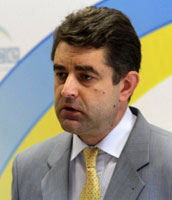 Evgeny Dubinis
From the official Ukrainian point of view, the matter looks like this. The Director of the Information Policy of the Foreign Ministry of Ukraine E. Perebiinis said that its temporary application may begin on November 1, 2014. Now the moment directly regarding the tripartite commission, on which everyone agreed to postpone the introduction of the economic part of the association. According to Dubiinis, temporary application will concern such sections as political dialogue and reforms, political association, cooperation and convergence in the areas of foreign affairs and security policy, justice, freedom and security, economic and industry cooperation, financial cooperation. There are no economic points there.
In this regard, Ukraine expected that the Russian side would comply with trilateral agreements in terms of maintaining the current trade regime as part of the CIS free trade zone.
It was this point that Putin had in mind. According to his letter, Russia eliminates the free trade regime with Ukraine, even in the case of changing national legislation in preparation for the entry into force of the free trade zone with the EU. “This will entail immediate and adequate measures in response to the Russian side,” the letter said, but it is not specified - what kind of measures.
Putin insists on adjusting the economic part of the Association Agreement, and one that takes into account the "full range of risks for Russian-Ukrainian economic ties and the entire Russian economy."
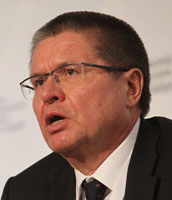 Alexey Ulyukaev
On the eve of Putin’s letter , there was a statement by the head of the Ministry of Economic Development of the Russian Federation A. Ulyukaev, from which it followed that despite the agreements of September 12 with the EU and Ukraine, Russia intends to introduce duties on Ukrainian goods. More precisely, the following: the Government of the Russian Federation must approve the decision on the commissioning of duties for Ukraine, and only then postpone its application if Kyiv and Brussels fulfill their promise to postpone the implementation of the Association Agreement in terms of free trade.
It is not entirely clear here: it follows from this phrase that the duties will be included immediately for any action of Ukraine or the EU, which Russia considers the fact of the implementation, but immediately Ulyukaev added that Ukraine will be able to avoid the abolition of the Sobodnoye Trade regime with Russia only if “some kind of act that we demonstrate that we understand the Brussels arrangement”. And only then Russia will decide on the maintenance of duty -free trade until the end of 2015.
Of course, the Ukrainian government immediately said nervously that they did not intend to provide any additional legislative guarantees. But it happens that Ukraine reacts very nervously, that is, politically, and then the EU somehow pacifies everything, returning to the economy.
In this case, it seems that it will not happen. On the topic, even the Wall Street Journal unsubscribed. In particular, “Moscow requires new negotiations regarding the agreements between the EU and Ukraine. The Kremlin claims that this is precisely what he allegedly agreed with Brussels and Kiev, and not to delay the creation of a free trade zone.”
Reiters describes this moment like this: in a last-minute concession to Moscow, the EU DELAYED IMPLEMENTING THE TRADE Accord Until Decc. 31 2015. Brussels Hopes that Will Give It Time to Assuage Russian Concerns ABOUT THE PACT, Which is now treaty that Cannot Easily Be Changed. But Putin's Letter Sugggests that Kremlin Considers The 15-Month Delayy to the Eu-Ukraine Agreement a Complete Freezing of the Process Until Russian Demands for Changs The Legal Texts Are Met.
That is, at the last moment the EU delayed the introduction of a trade agreement until December 31, 2015. Brussels believed that during this time, Russian fears would subside. But from the letter of Putin it follows that he considers a 15-month delay in the EC-Ukraine agreement to complete the process-until the moment when Russian requirements are taken into account to amend the agreement.
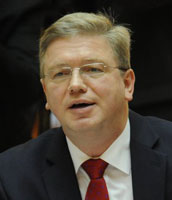 Stefan Fuul
Yes, Fules also added that "the EU and Ukraine are looking for real decisions, it is better for Russia to leave its virtual world and also join this process."
Actually, he exaggerated about the virtual world. For example, D. Medvedev has already signed a document that introduces customs duties on the import of Ukrainian export goods. According to him, this applies to food, as well as products of light and manufacturing. All according to Ulyukaev: "These duties will be introduced if Ukraine nevertheless begins to apply economic articles on the Association Agreement with the EU earlier than the above (early 2016), that is, it will begin either legal implementation or the actual application of these provisions."
However, Medvedev does not say about that. that Ukraine, by the end of October, should accept "some kind of act",
As for Russia's claims to the agreement, Reuters also mentions this: “According to eu Officials, Russia Wance to remore than 2.000 Products Eligible for Duty-Free AcCess to the EUROPEAN Union, Teining Up ABOUT A QuARTER of the Agreement ". In a word, Russia wants to cross out of the duty -free list (from Ukraine to the EU) more than 2.000 types of goods. That is, erase about a quarter of the agreement.
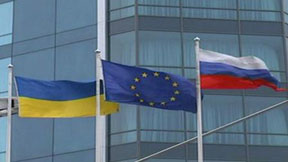
In total, all this already looks like a complete dead end, but the same Reuters finds another problem, the solution of which - it seems to them - can move the matter. It is assumed that Russian companies are very concerned that they will not be able to import into Ukraine after Ukraine accepts higher EU standards (as part of the association). The nuance is for them. That Ukrainian companies will receive technical assistance and EU funds to adapt to these requirements. And the Russian will have to reach these standards at their own expense and, in general, it is not clear with what joy.
Here Reuters sees the possibility of a compromise. Let's say everything can be done tenderly: to hang on Russian exporters the entire obligation to someday meet the requirements of the EU. Someday not soon, even not very soon. However, a compromise on this topic does not look decisive.