
Translated material
"In art, security is boring"
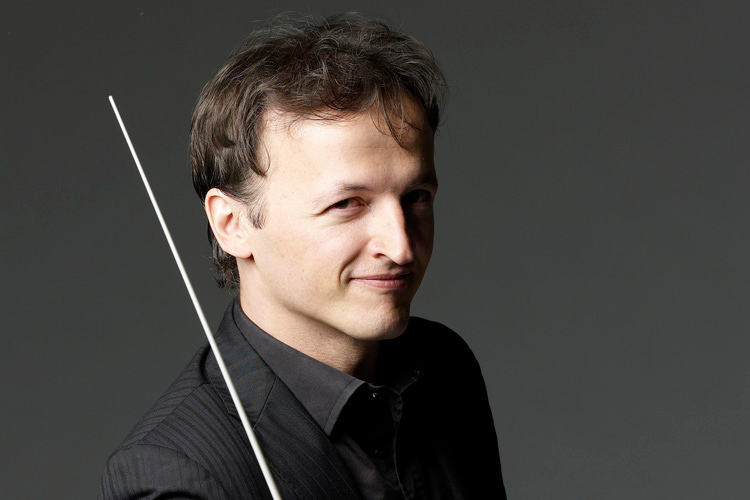
Today, the Moscow Philharmonic is represented by one of the most anticipated guesters of the season: the Matheus ensemble under the direction of the violinist and conductor Jean-Cristopher Spinosi is in the Tchaikovsky concert hall . Spinozi is considered to be the postatists: on the one hand, respect for the score and playing historical instruments, on the other hand, performances at rock festivals, which is hardly possible for older-generation authentists. After a series of music notes, Vivaldi recently Spinosi and his ensemble released a disk where, in addition to Bach, Barber and Shostakovich sound. Ilya Ovchinnikov spoke about the reasons for such turns Spinosi.
- Maestro, your ensemble brings to Moscow his own corona program from the works of Vivaldi, Handel, Teleman ...
- Yes, and with great joy we are waiting for this. I hope the audience will not be too surprised ...
- ... and at the same time you are moving more and more towards another repertoire, whether Rossini or Shostakovich. Could it happen that one day you will part with baroque?
- Over conscience, at first I was an ordinary musician and did not come to Baroque right away, it took some path. Say, Arnoncur at one time was also the most ordinary orchestra and only then began to read and interpret the old scores in a new way. In my youth, I played a modern violin, learned to conduct. When the revival of interest in Vivaldi began, I was glad that it began for me even earlier: in my youth I found a lot of his beautiful concerts, which never recorded, no one knew them. Prokofiev or Shostakovich played much more willingly. Later, I discovered Vivaldi operas, and then Naïve decided to publish their meeting, I was offered to record several operas and his other works. I agreed, and this whole series is a great success. After that, they began to associate me only with Baroque music, although any composer I am working on, I try to feel, understand, to love with all my soul, to find works from him, which I have to say. For example, I have already conducted seven operas of Rossini, including three with the participation of Chechilia (Bartoli. - Ed. ).
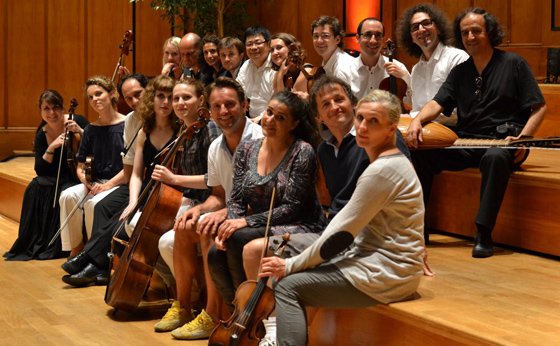 © Jean-Christophe Cassagnes ensemble Matheus with Chechilia Bartoli
- Why did Rossini carry you so much?
- There is a long tradition of interpretation and singing of Rossini, which was set by Abbado in the early seventies. However, almost fifty years have passed! But many are sure that Abbado approved the standard of execution of Rossini once and for all. And Rossini can not have any standard, as Bach, Mozart or Brahms cannot have. Perhaps my notes by Vivaldi will seem outdated in a few years in a few years: any interpretations are subjective, no one talks about their eternity. What Abbado and Rossini did in the seventies was great - a new level of respect for the score, which was not before. But now Chechilia sings Rossini so differently than Teresa Bergans ... Working on composing any era, I try to understand and feel it, use suitable tools, delve into the score and text: all this is to create a modern interpretation for the current listener, to let him feel the pulse of the present rather than the past. And therefore my repertoire is from Monteverdi to the present day.
- And yet for the majority Matheus - it is the ensemble of ancient music ...
- True, we really played a lot of old music. I think that the beginning of the Matheus path can be compared with the start of the Arnoncura ensemble Concentus Musicus Wien with how the context has changed. I look at Arnoncura with enormous respect and in no case put myself forward ... But today it is not the seventies, not the sixties, not the fifties, today we have new challenges. Of course, we did a lot of baroque music, and the musicians of my ensemble are large specialists in the same Vivaldi, but not only! Now we are busy with completely different things. Although I will be glad to return to the “Seasons” and, I am sure, I will play them differently than I played ten years ago. I will still be, but there is so much around us that gives inspiration for new interpretations! The music of three -century ago has a huge resource in order to fill it with modernity. The world is changing, and art, including music, including baroque, should be an echo of today, a reflection of society, human relations, crises, war, new technologies.
Vivaldi , concert "Il Gardellino". Plays and conducts Jean-Cristopher Spinozi
- Knowing about your novel with Vivaldi, all the more unexpected to see Shostakovich’s chamber symphony on your new disk, although you used to play in a quartet, where you also did not pass by Shostakovich. There are no records of those years left?
- (Laughs.) It was a long time. There are no records. You know, I often ask ourselves why we do not continue to play a quartet. But because it takes a lot of time. Now I have my own orchestra, I also conduct other orchestras, I act as a soloist ... Maybe later, when I get a little older, there will be more time on the quartet. I really like this idea.
- It is also nice to see on this disk the name of the wonderful singer Malena Ernman - she is partly as crazy as you, do not understand me incorrectly.
- (Laughs.) Yes! She is for me - the standard of a modern artist. She treats the past with great respect, we put opera with her, just - Handel's “Xerxes” in Stockholm. She sings Handel incredibly beautifully, technical, with philological, I would say, an approach, but her singing is filled with an imagination of a person of the 21st century. It is in this, in my opinion, the future of Baroque music. We must remain modern in order to dignily fulfill it. However, this applies to all music, including Shostakovich.
“Would you like to contact one of his operas ever?”
- Of course I want! It would be great if some theater invited me to carry his opera. It is very interesting for me to combine my experience with baroque, with classic operas - and Shostakovich’s crazy world. There is something baroque in it, not in notes, but in the very spirit of music.
- Certainly. It is no coincidence that his music goes so well with Bach's music.
- It is combined, right, between them you can find a bridge. Although in order to move from one to another, it is necessary to rebuild, as if to change the composition of your blood. And all the more interesting! When a specialist in music of a certain period is limited only to her, it is like marrying a cousin: some children from this marriage will be in order, others with big problems. And when I look at the same Malene, I see a singer with endless possibilities - it is true that the courageous director of the theater needs to use them. After all, often for years they invite artists of the same circle for years. “We invite this eminent Italian maestro to properly ... And that Russian conductor to carry Shostakovich ... and the Frenchman to fulfill Ravel ...” This is very reliable, safe. But in art, security is boring. And not creative.
- And what is creative?
- For example, bring baroque experience in the performance of Shostakovich. I recorded it because thanks to the game in the quartet I know and feel it well. There is also an essay on Nicolas Bakri on our disk - he is a fan of Shostakovich, and in his music this is well audible, we did not accidentally put their works nearby. If you know the director of the theater who would invite me to put the opera Shostakovich, I will run! This season I conduct the “classic” symphony of Prokofiev behind the remote control of the Royal Stockholm Orchestra. And I will also play the violin in the "Fairy Tale of the Soldier" of Stravinsky! Together with his son, he is a violinist and an actor. He will be a soldier, I am a devil, we have five or six performances. I am very happy about this, for me it is very personal just as for a violinist.
-At the Brest festival, your ensemble sometimes performs with rock musicians. How does this happen?
- In Brittany, I live just in Brest. There, in the Department of the Finister, a large rock festival, the largest in France, is the Festival des Vieilles Charres (“Festival of Old Plugs”). 25 years ago there was nothing in this place. In Brittany, then there was a marine festival, where the most beautiful ships gathered once every few years. And all the interests of politicians were related to its financing. There were people who decided to organize an alternative festival - “old plows”, since it was on the field. Suddenly he was successful and attracted the attention of the performers - just say that this year there were Elton John and Franz Ferdinand . We were the first performers of the classics who were called there: I played, conducted, Malena sang ... We performed a day after Sting and before Bob Dylan, it was cool. The whole festival is similar to someone's fantasy: 300,000 spectators gathered in a huge field in four days!
Ensemble Matheus and Malena Ernman at the Vieilles Charres festival
- It looks like Woodstock.
- More, more! Playing such an audience is a real gift. We decided to start the performance of the baroque play, absolutely classical, and then move towards rock and roll. This also goes root in childhood - I have a brother, he plays the classic guitar, and in our youth we had a group, we performed in nightclubs. It happened that we played with him on two guitars or he was on the guitar, I'm on the violin. I am very expensive for the memory of our game in clubs, it is like a symbol of freedom ... The guitarist played with us at the festival, and our first double bass player also played on the bass guitar. They are all a little crazy, like Malena Ernman, everything can. She also sings pop music ...
-... and even participated in Eurovision -2009, held that year in Moscow.
- Yes, she is crazy! But fantastic. This is a positive form of madness. It's great when people can be like children and enjoy it. In December, in Buenos Aires, we play the same program that was on Festival des Vieilles Charus , after all, there will be summer! I will be happy to play the Baroque to Rock program. We start with pure baroque - with a heart, since this is in the open air for a huge audience. Then there are several plays in the spirit of Crossover , it can be Vivaldi’s play from the same “Seasons” in processing with shock and electric guitar-a real rock and roll number with improvisations is obtained. The show has three parts - baroque, rock and the transition part between them.
“Is it true that you are also interested in Verdi?”
- Oh yes, and for a very long time! I conducted Rossini, Bellini, and after that it is logical to come to Verdi. Verdi is one of the foundations of the theater and opera, of course, I love him. And we are talking to some of the colleagues to put his opera. But here it is important to find the right voices and tools. Верди нельзя петь как Пуччини, ему нужен оркестр, который не приходится постоянно перекрикивать вот так: «Уа-а-а-а-а-а-а!» Actually, I approached Rossin in the same way, we talked a lot about this with Chechilia: why do the singers constantly force the sound, shout out a large orchestra? In Vienna in November, I conduct the “pearl seekers” Bizet in the new production of the theater of the An-Der-Win Theater, then Mozart King Paris in January awaits me in January. In March - “Seville Barber” in the Vienna Opera, the most classical performance. I haven’t had to conduct the operas yet, I really have to wait.
- How are you looking for a “right sound” for each composition?
- For me, music is primarily the theater. Over time, the tradition of extracting sound has developed, very far from what is really required. Once I rehearsed one opera of Mozart, stopped the singer and asked why heroism sounds in his voice where despair is needed, in ordinary life at the time of despair, he will not say that. Therefore, in operas or symphonies (they are like operas for me) I am looking for different sounds that will make us believe in the reality of what is happening. I am not enough only for the technique and performance of notes, I need a real stage action. Therefore, we work so much with Chechilia that she feels the same, she is a real actress. And the sound of her voice is always logical, always proceeds from a specific emotion, like natural speech. We always do not speak with the same intonation, and here - the sound should be realistic. And often you have to fight with orchestra - ask them not to be afraid to open a new sound, think about what and why they play is a kind of psychoanalytic approach. Speaking with the singers about strokes, you must rely on drama, then it works. And if you just ask Forte or double pianissimo, this is a technique, but not work on the sound.
- For several years, you have also spent the opera “Opera in the regions” in Brittany, trying to make the opera accessible to the general public.
- I really love the opera, and so many people today do not know anything about her! 99% of people do not go to concerts, have never heard Mozart and will not hear - this is far from them, it seems boring, too serious. And I have five children (and I myself am still a child), and I see how they react to the traditional, generally accepted performance of classics. When making an “opera in the regions”, I tried not to think about possible criticism at all, about who would look at it: I wanted to show the audience that the opera could be cool, like a cartoon “Piksar” or Spielberg’s film, to take the characters with which he would want to associate himself. And this is impossible within the framework of conventional opera production, which seven -year -old children will not understand. We have done this several times, but it is difficult to find partners for this, people do not believe, do not understand why. In addition, it is expensive, not all can be sold tickets, sponsors are needed. But I am sure that work with singers, when you suggest that they be not as in a regular performance, and as in modern cinema, can give the opera a new audience.
- After Vivaldi in your repertoire, Arvo Pyart, John Cage, George Krum, which you also perform sometimes performing ...
- Yes, I performed their music both as a conductor and as a soloist, usually this is not just a concert, but a concert with elements of the production. The performance of the Krama Quartet, for example, was accompanied by a lot of work with light, I see no reason to perform this music as in the most ordinary concert. It's boring. Music asks me the question: how can you fulfill it so that the “liturgy” of an ordinary academic concert does not turn out. After the premiere of Cinderella in Salzburg, we had a reception, the musicians and I went to the bar with instruments, played jazz, improvised, I myself played until three in the morning. Believe it, the quality was fantastic, full of joy - not that I wanted to play so always, but it was this moment that he gave an incredible sense of naturalness, uniqueness, which was not at ordinary concerts. This is very important - the uniqueness of the moment that changes us as a meeting with a person.
- Finally, I wanted to ask you about cooperation with Oleg Kulik, with whom you put the “evening of the blessed Virgin” of Monteverdi in Paris.
- He is absolutely insane too! I was surprised by our meeting - before that I saw his performances when he portrayed the dog, for example, and met a very sincere guy in love with Monteverdi and his composition. I thought he would offer something radical, and he was mistaken. He is full of love for art and what we did. The very religious idea of "Vespers" was very important for him. It was a real work, without any scandalous, most viewers liked it.