
Translated material
Perverted Father
Nietzsche proclaimed the death of God, denoting the future of the secular space of the twentieth century. Freud studied gods and heroes and showed that the power of the symbolic Father rests on the authority, submission and love of sons, but also fatherly love for sons (apparently, we were talking about the head of state known to him, this was the Austro-Hungarian Emperor Franz Joseph). Freud devoted a lot of work to mass psychology; Among other things, he seriously explained the nature of xenophobic sentiments using the example of anti-Semitism (according to his theory, hatred of the “other” is the so-called symptomatology of a “small cultural circle”, when all positive qualities are assigned to people of one’s own family or clan, and all negative ones are repressed and transferred to “strangers”).
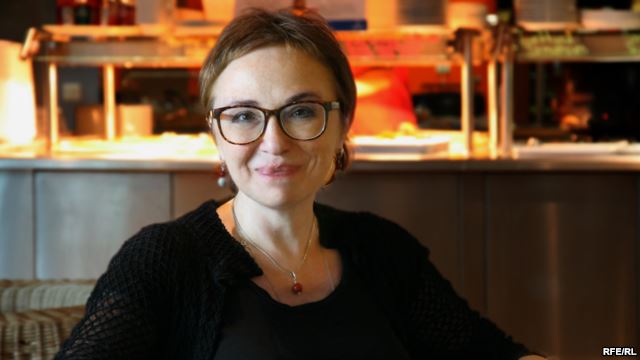
Psychoanalysts of the 20th century, shocked by the scale of World War II, examined the sources of fascism and totalitarianism from different angles, developing mainly Freudian principles about the individual and the crowd. However, no one has challenged, decoded or modified the classic figure of Freud's Father, stern but fair, punishing and rewarding exclusively according to the law. The philosopher Mladen Dolar , known to the reading public primarily as a colleague of Slavoj Žižek (he and the sociologist Rastko Močnik created the Ljubljana School of Psychoanalysis), undertook such intellectual sabotage back in 1982. I came to interview Dolar at the University of Ljubljana with the goal of talking about his art criticism works, about his main books, “The Voice and Nothing More” and “On Avarice” (Dolar is a witty and elegant thinker; I wanted to know what, for example, his article “Smoking and Communism” was about), I wanted to ask about his love for Franz Kafka and Hitchcock. But we started talking about the collapse of Yugoslavia, about the Yugoslav wars, about how many now compare them with the military conflict in eastern Ukraine, about the similarities and differences.
We started talking about his first book, The Structure of Fascist Power, and talked for an hour and a half. You could say I was simply recording a lecture by one of the most important European intellectuals of our time. Dolar wrote the “structure” in 1982; it is not available in either Russian or English; I was interested in how the young scientist (he was 31 years old at the time, he was and remains a leftist, a neo-Marxist, like Žižek) looked at the theory and practice of fascism. Dolar believes that the arrival of Adolf Hitler on the historical stage of Europe means the emergence of a new type of leader, whose traits were not recognized by contemporary politicians. This is no longer the "father of the nation".
The leaders of the self-proclaimed republics and ordinary militants of the DPR-LPR are turning to Putin with active demands for military assistance and psychological support. One simple thought is visible in their spells: Father, you promised us easy prey. Why aren't you protecting us now?
Roughly speaking, with the advent of fascism and right-wing discourses, Dolar in the semantic, symbolic field proclaims the Death of the Father, as Nietzsche once did - the death of God. Hitler (and after him all the leaders of the ultra-right wing) is a so-called perverse (perverted) father, whose main (but not immediately clear and easily exposed) feature, unlike the real Father, is irresponsibility to his sons. He charms his sons emotionally (this is more of a feminine and actorly trait); plays on feelings of national inferiority and superiority; finally, he inspires his sons to conquer foreign territories, promising them booty. Booty is the main reward and capital in this symbolic story. The promise is its main tool.
He is an adventurer and temporary worker, making impossible promises, fascinated by the image of the real Father and misappropriating his qualities. Nationalist legends do not give rise to another Father. The real symbolic Father takes into account the complexity of the different sons. I asked if these characteristics applied to the main Yugoslav politicians during the collapse of the country. Answer: undoubtedly, these are the traits of Slobodan Milosevic. Question: what type is Vladimir Putin? Answer: This is the same type of politician. Here I remembered the confusion of European leaders in front of Putin’s Ukrainian strategy (I am now omitting their pragmatic interest in economic ties with Russia, I am only talking about the symbolism of the political). No one expected to see on the modern European historical and political arena the Perverse Father, who acts according to the model described by the Slovenian philosopher 30 years ago.
We read a lot, but it turns out not enough. Immediately I remembered numerous Internet videos in which the leaders of the self-proclaimed republics and ordinary militants of the DPR-LPR turn to Putin with active demands for military assistance and psychological support. One simple thought is visible in their spells: Father, you promised us easy prey. Why aren't you protecting us now? If we go further in deconstructing this plea, we can see behind it the filial suffering: why did you (You) leave me?
An interview with Mladen Dolar is being prepared for publication on the Radio Liberty website.
Elena Fanailova is a poet, winner of several literary awards, author and host of the Radio Liberty program “Freedom in Clubs”
Opinions expressed in the "Author's Rights" section may not reflect the views of the editors