
Translated material
Iraq: The outcome of our time
The US Air Force struck the first blows to the positions of the Islamic State group in Syria, and the UK and France are ready to join the military campaign in Iraq. But tens of thousands of Iraqi Christians are forced to flee the country
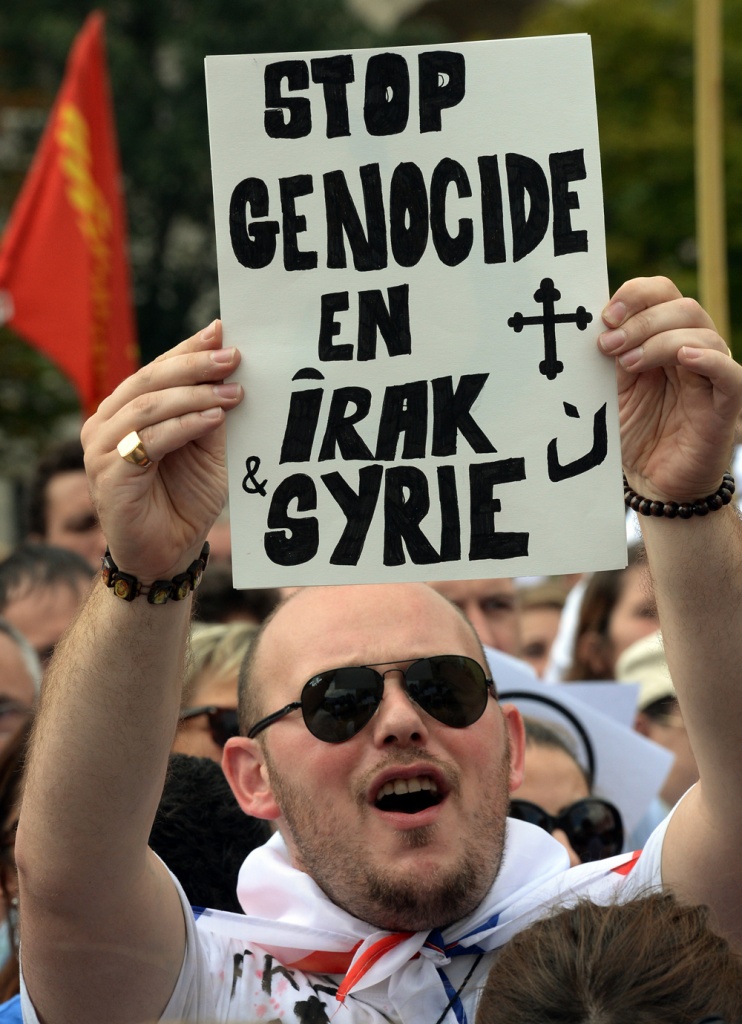 |
| A participant in the demonstration in Paris requires stopping the genocide of Christians in Iraq and Syria. July 2014 /Photo: Pierre Andrieu /Ap Photo, Daniel Williams |
On September 10, Barack Obama President, in a television show to fellow citizens, unveiled a strategy for the fight against the Islamic State (IG) terrorist group, which, according to him, is turning into an immediate threat to America: the USA, the president intended to act against the IG “on the offensive vein”, squeeze the militants from the territories seized by them and ultimately win. By that time, America had already been produced by more than 130 airstrikes on the positions of militants in Iraq.
Probably, in Obama’s speech, the smallest attention was attracted by him by the need to help his foci of Christians and other religious minorities of Iraq, who were expelled by Islamists from cities and villages in the north of the country. “We cannot allow these communities to be expelled from their historical homeland,” the president said.
Alas, at least in relation to Iraqi Christian Obama was mistaken. 120 thousand of them have already found refuge in Iraqi Kurdistan and will not return, even if their tormentors suddenly disappear.
Unbearable
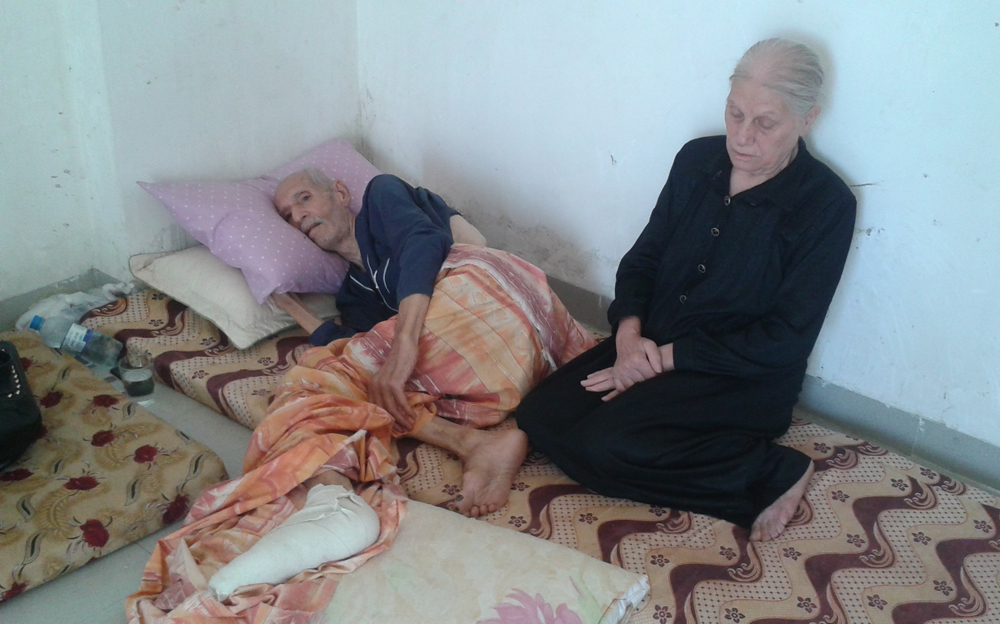
Erbil, the capital of the autonomous Iraqi Kurdistan. The first half of September. The interlocutors of the author of these lines are Christian refugees. From Mosul, Karakosh, other cities of the Ninevia plain. And all as one: "No, we will not return there anymore." And the point here is not only that these people received an unhealed psychological trauma, lost housing, property and business. In the end, some of the refugees were not enough to lose. Dalila Daniel, who was more than 70 years old, only burst into tears when she remembered how the IG fighters on the checkpoint tore off her gold earrings, a wedding gift for more than half a century ago. But there were real tragedies. The Islamists pulled out young children from the hands of mothers, and then demanded a ransom for them. Young husbands were taken away from their wives and children, boarded buses and taken away in an unknown direction. Entire families were locked in the basements, kept it in the morning, tortured, and mocked. The 80-year-old Gazala al-Snajar told how the IS militants threatened her with death for 10 days in a row if she did not accept Islam. “I told them: kill me. I will never become a Muslim. And I will die a Christian here. ” Marked by the adamant of an elderly woman, the Islamists let her go.
"
“I told them: kill me. I will never become a Muslim. And I will die a Christian here "
"
But again, all this is not the main reason for the reluctance of Christians to return to the "historical homeland."
“Real trouble is different: in recent years, the habitat has changed, the discord among the Iraqis has been sown. We became enemies for Muslims - both Sunnis and Shiites, ”one of the refugees complained in the conversation. In Mosul and nearby villages, the residents of the Muslim residents not only greeted the IG fighters, and they also marked the house of the Christian neighbors, prompted the militants, where especially wealthy of them live.
The last three months for Iraqi Christians have become the culmination of the eleven -year -old hell. Problems for them began a year after the overthrow of Saddam Hussein. Persecution, reprisals, murders and bullying, explosions of churches - all this was before. Sometimes there was Al-Qaeda, sometimes the Islamist-Sunnis, yearning for Sunni control over Iraq (“like under Saddam”), sometimes-chisial militants, fighting with the Sunnis, “over the way” also persecuted Christians.
10 years of terror
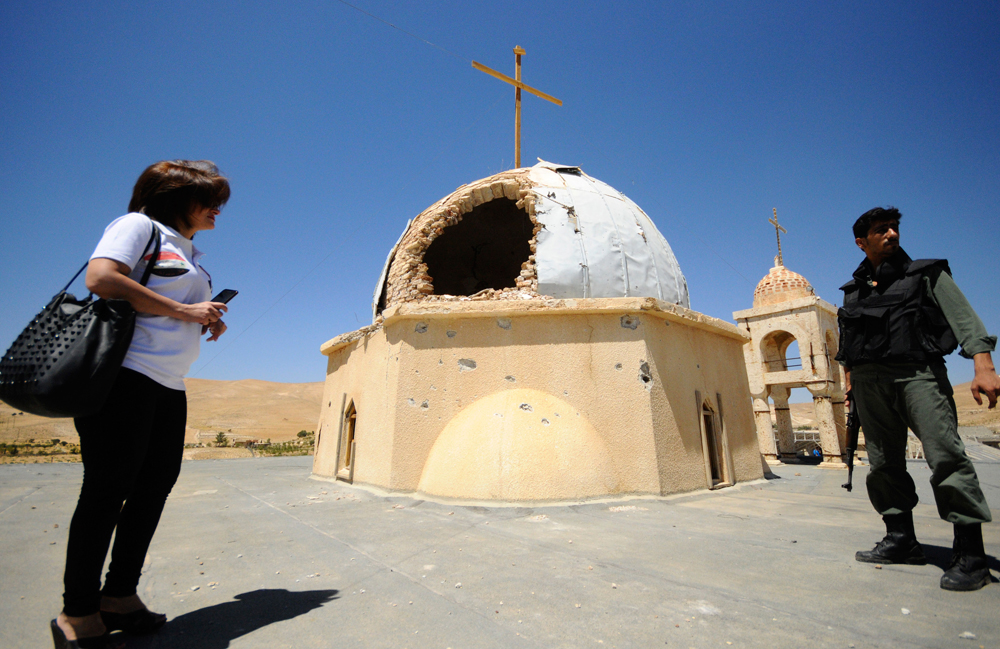
It all began in 2003 from attacks on Christians belonging to alcohol stores. In August 2004, four churches in Baghdad and one in Mosul exploded: 11 people died. Two more churches were blown up in November of the same year, and Christians began to flee to Iraqi Kurdistan, Jordan and Syria. Since then, 70 churches throughout the country have been blown up, for the last time - at Christmas last year. Iraqi priests and bishops became “especially valuable targets” - they began to kill them as a reminder of the flock: none of you are safe. In Mosul in June 2007, the militants demanded from the priest-Khaldeus to kill the three deacons of his parish, and to contact Islam himself. He refused. They killed all four. In 2008, Sunni militants abducted the Chaldean archbishop Mosul Paulos Rahho, killing three of his bodyguards. The kidnappers threw Rahho into the trunk of the car, but he was able to call his colleagues on a mobile phone, ordering them not to pay a ransom for him. A few days later, Rahho was found dead in a shallow grave.
Christian women throughout Iraq received letters with threats and the requirement to stop working. Christian families throughout the country received anonymous messages - Darfar, at local slang - the requirement to pay a tax of $ 10 thousand for the right to life. Children were stolen from Baghdad's streets in order to get a ransom. Dora, the suburb of Baghdad, once inhabited by Christians, the efforts of the militants - both Sunnis and Shiites - was practically cleaned from the "Gentiles". So the fighters of IG came to Iraq on well -fertilized soil.
One priest in Baghdad, who bought himself for $ 85 thousand years ago, told how one of his familiar Muslim once approached him with the words: “Saturday passed, today is Sunday, and you were still here ...” He meant that Jews worshiping Saturday had long left Iraq, so why Christians worshiping Sunday continued to stay in the country.
Neither in Mosul nor in the cities of the Ninevian plain of Christians were left at all
"
In 2003, more than 1 million Christians lived in Iraq. Now there are no more than 300 thousand of them. At the same time, neither in the Mosul nor in the cities of the Ninevian plain, which was under the control of IG, Christians did not remain at all. And no matter how sad it sounds, it has to be recognized: Christianity in Iraq comes to an end. As one refugee said: "We wanted to be with Iraq, but Iraq did not want to be with us."
The USA and Europe, of course, are able to provide temporary protection to Iraqi Christians, including economic assistance, the opportunity to lead a normal lifestyle. For Iraqi Christians, as well as representatives of other minorities, the historical homeland has forever remained in the past.
Photo: Reuters