
Translated material
"I watch RT and remember youth"
Former KGB General Oleg Kalugin, who in the early 60s worked for Soviet foreign intelligence in New York under the guise of the Moscow Radio correspondent, modern Russian propaganda resembles the personal experience of the Cold War
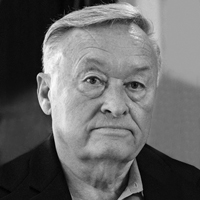 |
| Oleg Kalugin, ex-General KGB of the USSR |
At times, I watch the evening broadcast of RT - not because I like this channel so much, it just starts me, angers the unceremonious aplomb of commentators and returns it during my youth. This stylistics and backstage resemble the first half of the 60s, when I worked under the cover of the Moscow Radio at the UN.
My journalistic work began exactly at midnight in the time of the east coast of the United States - I went out on the morning eight -hour air with news reports. It was a time of the Caribbean crisis, the murder of US President John Kennedy, the attempts of the Americans to overthrow Fidel Castro in Cuba - that is, the height of the confrontation between the USSR and the USA, known as the Cold War. I was not the worst reporter and was even elected vice-presidential association of journalists at the UN, although I did not engage in self-nomination. The rest of the time, from nine in the morning until midnight, I devoted to work in the main specialty - intelligence.
I can’t say that Soviet journalists sent abroad worked for the KGB, but collaborated with the “office”, of course, that's all. We were simply friends with the “Pravda” by Boris Strelnikov - the truthfuls always stood mansion, not merging with the state security organs. But friendship sometimes cost more than recruitment. So, my close contacts with an outstanding political commentator, writer, philosopher Walter Lippman gave extremely rich food for our intelligence agency. This man, one of the authors of the text of the Versailles Agreement and the Convention on the creation of the League of Nations, indirectly helped us, providing me with the opportunity to be entered into his house, which opened up unique opportunities in terms of acquisitions with the necessary ties. I did not even try to recruit Lippman, and I am sure that this would be absolutely impossible.
The status of a journalist helped a lot in my profession. Once, for example, the TASS correspondent and I went to Miami, where there was a center of anti -communist actions against Cuba, to collect information about plans directed against Castro. I introduced myself as a Norwegian journalist, the Tassovets - Turkish, and, as the “NATO”, we managed to scout quite a lot of useful information at the top of the Cuban diaspora.
Again - "stuffing"
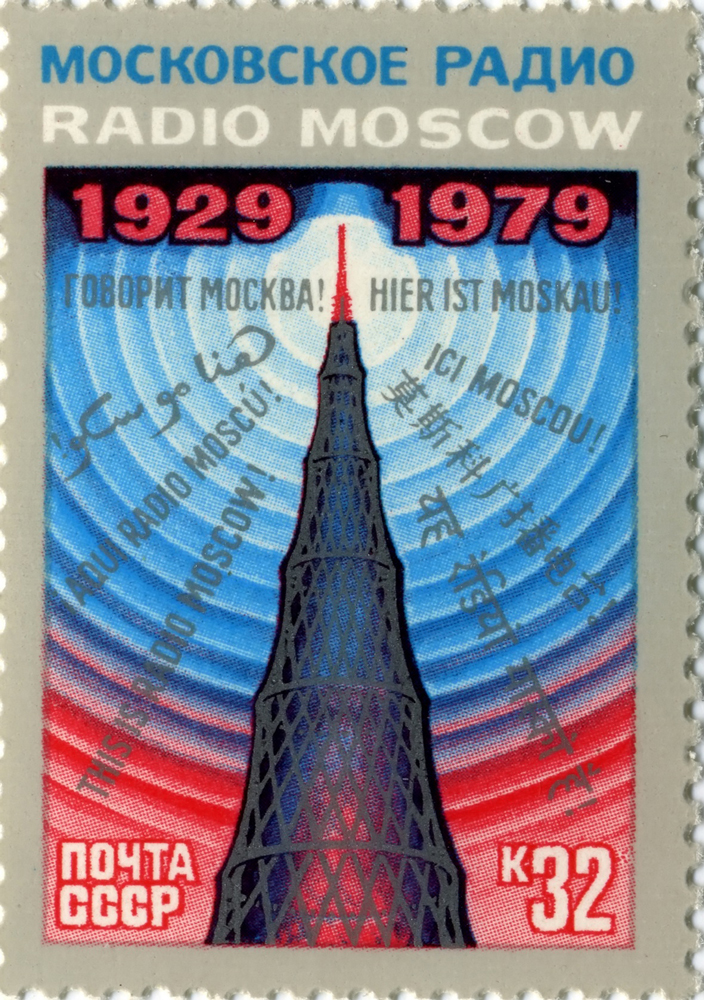 |
| Mail brand released on the 50th anniversary of the Moscow Radio /Photo: Postal Service of USSR /Wikipedia.org |
My task, in addition to the extraction of the information we need, was to expand the zone of influence of the USSR in the United States. That is, it was about the “stuffing of information”, which, as I see, is again relevant for the Russian propaganda machine. Our task was to discredit the policy of the American government and put the position of Moscow in the best light.
In the structures of the KGB of the USSR, there was a special disinformation service that created materials, which we then pushed into the English -language media. Judging by what I see on the RT screen, a similar structure or its worthy substitute is in today's Russia.
Some publications published our “KGB works” for friendship - such as Christian Science Monitor, where I had friendly relations with the editors. Some posted these articles for money. There were two criteria for submitting such material in America - extreme tendencies in the interests of Moscow and just disinformation.
However, we expanded our sphere of influence, not content with only informational stuffing. Thus, the KGB stood at the origins of the creation of several progressive publications in the United States, focused on opposition social groups, for example, dissatisfied with discrimination of African -Americans or pacifists advocating US disarmament.
"
“In the structures of the KGB of the USSR there was a special disinformation service. Judging by what I see on the air of RT, there is a similar structure in today's Russia "
"
Personally, I took an active part in creating a magazine for the leader of the Civil Civil rights movement in the United States Martin Luther King. This magazine, financed with the KGB money, involved both left -wing organizations and extremist into its orbit, spurring the radicalization of the movement of blacks. He went out with a rather small circulation, nevertheless he served his service, being a printed platform for inciting protest moods.
As a personnel intelligence officer, I also stood at the origins of one pacifist publication, which enjoyed the reputation of the organ, which expresses the position of American intellectuals outside the mainstream. The editorial board included the Nobel laureates and the Generals of the Pentagon - they were unlikely to realize that they were working in the "CGB of the USSR". We simply used their names and authority for our own purposes. What can I say, one of the very high -ranking leaders of Radio Liberty was our recruited agent.
New notes
The techniques of invasion of the information space were well developed in the 60s. For me, the desire of the current Russian authorities is obvious to return the country to the good old Soviet times, when the Kremlin dictated that we can read, watch and listen. I recognize the old “stuffing” in the absurd rhetoric of the current ideological horns, and this rhetoric has become completely odious in the last six months-after the events in the Crimea and in the southeast of Ukraine.
There are, however, the differences - today's Russian nationalism, a claim to the historical specialty presented by the government of Vladimir Putin as “the rising of the nation from the knees”, were completely alien to Soviet internationalism. Therefore, in a new rather aggressive propaganda, notes of German Nazism before the Second World War with its slogan "Germany are above all."
Is the tendentiousness and misinformation that replaced the principles of objective journalism? As a person who is accustomed to analyze not “news”, but the facts, I would like to warn: distorted information leads not only to mass disorientation, which the Kremlin achieves, but also to make erroneous irrational decisions. In the current hot situation that has developed around Ukraine, this can lead to drawing into an armed confrontation between third countries and the release of the conflict beyond the regional.