
Translated material
Mikhail Alshibaya: "Trying to establish the truth"
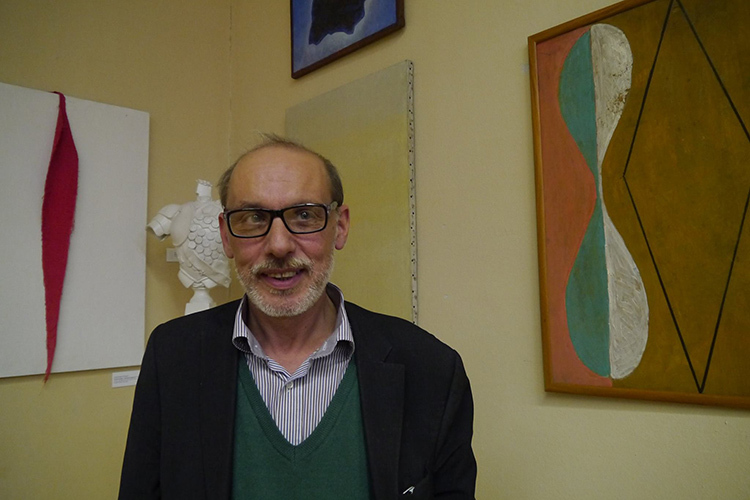
In September, a new constant exposition of Russian art of the second half of the twentieth and early XXI centuries at the Museum Center of the Russian State University opened . The opening of the exhibition was held as part of the VIII festival of collections of contemporary art of the GCS. Instead of the exposition of work from the collection of Leonid Talochkin, transferred to the Tretyakov Gallery, part of the meeting of the famous collector, cardiac surgeon Mikhail Alshibay is now shown here.
- Mikhail, as I understand it, for you this is a very important event: a constant exposition has opened in the Museum Center of the Russian State University, consisting of part of your collection of contemporary art.
- Yes, you are absolutely right, this is a very important event for me.
- But I think it is important for the RSUSU and for culture as a whole.
- Maybe. It seems to me that the period of our art that I collected is still in the shadows, is extremely poorly studied, although in recent years a number of monographs have been published, and market demand has appeared. But, you know, I immediately want to say: my collection has nothing to do with the market. No, I acquired most of the works in the collection, but not in galleries, not in the market, but directly among the artists. And he never considered his gathering as an investment - rather, it was a study. Collecting for me is such an experimental method of art history.
- What part of the collection is presented at the exposition of the RSUSU?
- No more than 10%, but I gave the best things.
- How was the selection carried out?
- We worked with the art of Julia Lebedeva, who for 15 years was the keeper of the collection of Leonid Talochkin, exhibited at the Russian State University until May this year. When the collector’s widow decided to transfer Talochkin’s collection to the Tretyakov Gallery , the museum’s directorate in the person of Irina Bakanova invited me to place her collection in this space, for me this is a high honor. The fact is that Julia and I previously made two exhibitions from my collection to the RSUSU-in 2004 and 2011. And this constant exposition in a sense is the development of those projects, and even my other exhibitions, held in different galleries.
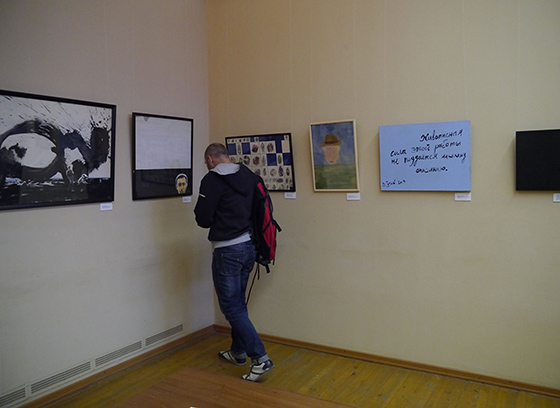 © Larisa Kashuk Exhibition of the collection of Mikhail Alshibia at the RSUSU
- After all, you really have implemented many exhibition projects?
- Yes, more than 30 over the past 10 years.
- How do you come up with the concepts of projects?
- Don't even know. From some point, I suddenly began to have the ideas of exhibitions one after another.
-Reading about your exhibitions, I noticed that since the beginning of 2012 you have been observing some kind of special surge in creative activity, new projects have been going on one after another, and all of them are extremely interesting and non-standard.
- You know, when I was just starting to think about the device of exhibitions from my collection, ideas suddenly began to suddenly be born in my head. The first conceptual project arose when I read the poem by Heinrich Sapgira “Firebird” and found that almost everyone was present in my collection, there are their work. The poem is dedicated to the memory of the deceased artists, friends of the poet, their tragic destinies. In fact, Sapgira’s poem served as a source of a number of projects and influenced the whole concept of my searches. I read it in 2000, it seems, the year, and the first conceptual project was the exhibition in the Literary Museum, which was called-“Firebird”. I, as it were, visualized the poem by Sapgir in the space of the museum: fragments of the text were associated with the paintings of artists mentioned by Henry Sapgir. It turned out what I called the "book-update." So, the idea of making such an exhibition was born in 2000, and I realized it only in 2005.
My collection has nothing to do with the market.
- And what served as a direct impulse for a series of projects of 2012-2013?
- An important factor that led to this series was some personal experiences. I am deeply convinced that personal circumstances and especially deep experiences can be a source of creative projects, not only in art, but, possibly, in science. At the end of 2011, I survived a rather serious personal ... I will not tell a tragedy or drama, but I will say this: I experienced a strong emotional experience, even shock. I was in a state of depression with all the characteristic symptoms, and here is still a gray Moscow autumn, a gloomy atmosphere. And then I suddenly had this “gray” project - the first in a series of exhibitions of 2012. There was such a gray background on which this project arose, but there was a direct impulse, a certain outbreak. I remember this very well: October 2011, the artist Sergei Volkov, whom I really appreciate, suddenly called me, and said that he wanted to give work, which I had long dreamed of. We met at the metro, under the gray sky, wet snow fell on gray asphalt, instantly turning into a gray slurry. I received a packaged picture and, having come home, began to tear off a plastic package from it. In my hands, it turned out to be pearl-gray with oil written canvas, on which the familiar words “We were born in light gray letters from a darker background to make a fairy tale to be by the past!”. And here it arose: I looked around the walls of the room in which I was, several gray paintings hung on them. “It would be nice to make an exhibition with the name“ gray ”composed of gray works,” I thought. But there was a couple of impulses. I continued to think about the name of the project: just “gray” seemed to be some kind of awkward, I sorted out the options: “shades of gray”, or maybe “twilight”. I thought about where, on which site this exposition could accommodate. Natasha Ribrova from the Literary Museum, with whom we were connected after the “Firebird” by a number of projects, said that “Twilight” can be arranged for them-a completely literary name. But something did not work out. Then I talked about my foggy project to my close acquaintance, and she immediately exclaimed: you don’t remember, I have a Gutov’s work, a gray canvas on which is written with gray paint, a “gray in gray”, a conceptual thing. All! I decided with the name - “gray”, but where, where to make the exhibition? And this came as an insight: I suddenly realized that I could fully implement the project in only a single gallery. I will not go into details, but this is also due to the same personal experience. I was not familiar with the owner of this private gallery, I came to him, as they say, from the street, from Sery of Moscow Street. We agreed in just five minutes, he immediately understood the essence of the project and gave me a wonderful chamber space of the hall, which is really incredibly suitable for this exhibition. It opened on January 15, 2012, a 400 man came to the opening of the previously little-known gallery, and its space contains a maximum of 40. During the work on the exhibition, a whole network of meanings, connections opened, a special dramaturgy of the exposition arose, and at the very last moment, two days before the opening, I had another idea-I included my own art object made with the help of the artist Sergei Sergei Malyutin and connected the whole exhibition into a single whole.
I have to “walk in circles” all the time, return to what has already been said.
- How interesting: that is, there was a certain background and a whole series of seemingly random, unexpected impulses, ideas, coincidences?
- Yes, something mystical was in this. Well, after this project in June 2012, Excumation was held. Also a strange name, right? One girl, when I invited her to the opening, replied: I am very busy, but the name is so intriguing that I will probably come.
- Did you come?
- No, but it doesn’t matter. 200 people came. The exhibition was held in the A3 gallery on Arbat, where I had previously done several projects-Metaphysics in 2005, “Spiral and Heart” in 2006 (this is about cardiac surgery as art), “Palette” in 2010. My exhibition was included in the work plan of the gallery back in 2011, but the idea to make an “exhumation” arose shortly before the appointed time of the exhibition. However, it was not impromptu, like "gray." The idea of "exhumation" is closely related to my long -standing, first projects. Why "exhumation"? In fact, the name was invented by the artist Boris Zhutovsky, which I mention in the catalog of the exhibition. Remember, I talked about the poem by Sapgir, with whom it all started, so: there, all the artists have already died. I stumbled upon the Internet on the Sapgirov poem, looking for information about Gayan Deman. This is such an artist, she died tragically in 1973, and I became interested in her work, looked for her work, about which they told me that they all died after the author’s death. It turned out not so, I found something. Gayana is mentioned in the poem of Sapgira, so I, the poem, stumbled upon her. And in parallel, the plot arose with Tatyana Kiseleva, about which Zana Plainskaya told me and who, like Gayan, attended at first the Belyutin studio, and then worked in an independent, original manner. These two female artists also unite that the stories of their lives were dramatic, both died at a relatively young age under tragic circumstances, and both are actually forgotten. I managed to find quite a lot of works of Kiseleva, and then the young art critic Ksenia Alexandrov, who remembered Kiselev remembered from childhood, also had the artist’s things. And Ksenia and I made an exhibition, in fact, this was my first project, except for the exhibition of books and objects of Viktor Goppe in the Literary Museum in 2003. The exhibition of Tanya Kiseleva was held at the State Institute of Art of Art History in Kozitsky Lane in April 2004. It was not a conceptual project - the works of a long -dead, half -forgotten artist were simply shown. At that time, Boris Zhutovsky, who knew both Gayan and Tanya Kiselev still at the Belyutin studio, which they attended together, made small programs about artistic life on the Culture television channel, and he shot the plot about the exhibition of Kiseleva. In an interview, Boris asked me a question with a shade of black humor: how long I am going to engage in "exhumations"? You see, this was even before the “firebird”, although her idea already existed, and I thought: what an accurate definition, despite the fact that it sounds somewhat frightening. The artist is dead, and the memory of him is devoted to oblivion (the phrase from the ecclesiastes turned out), and I extract him from the dust, from the ground - this is how the word “exhumation” is literally translated: from the ground. After all, I really found the works of Gayana, Tanya Kiseleva, other artists often somewhere in dust, behind cabinets, on balconies buried under a layer of garbage.
- But many years have passed before the full -scale, so to speak, the implementation of the project?
- Yes, eight years, and that's why. I have to “walk in circles” all the time, return to what has already been said. Well, “circles” is a good metaphor, I had an exhibition with that name, I’ll tell you. I did not say that it was a direct impulse to find the work of Gayana Deman: my acquaintance in 1999 with the wonderful poet Tatyana Vrubel, in the only published book of poetry whose poems I found a whole poem dedicated to the memory of Gayana. It turns out that they were closely friends in the last years of Gayana's life. It was Tatyana Vrubel who told me that many Gayana work died. So, in this wonderful poem there are, woven into the intricate canvas of her text of the name of several paintings by Gayana of the Deman, and among them the “pharaoh” attracted my attention. I asked Tatyana Vrubel, and she said that yes, there was such a beautiful picture, written shortly before death. With the help of Boris Zhutovsky, I found the heirs of Gayana, and they confirmed to me that there was such a canvas, a “golden pharaoh”, and that he went after the death of Gayana Tanya, her father’s sister, a loser sister. But where to find this Tanya, no one knew. And I did not know why I really wanted to find the Golden Pharaoh, but took a search through the police. That is, I was looking for Tatyana Vladimirovna Deman, and, as it turned out much later, she lived at that time already under a different surname. Nevertheless, at first they found me her phone, which stubbornly did not answer, then the address. I went to this address and discovered only a whole quarter of ruins - freshly raised houses and preparations for a new construction site. This was the year in 2006. I even climbed over the fence and wandered a little among the ruins, hoping to discover somewhere abandoned when moving the Golden Pharaoh. And after this episode, I said to myself: That's it! This is madness. A few more years passed, and in 2010 I accidentally found out that the “pharaoh” is now intact and the safety of my classmate at a medical institute, with whom I have been familiar for 35 years. Yes, in 2006 I came to the ruins of houses, where in one of the apartments the Pharaoh hung for almost thirty years, and after the demolition back in 2000, he moved to the relatives of Tanya, into the family of my fellow student Natasha. But I managed to see the work only in early 2012, that is, my searches stretched for 12 years. And then there was a concrete idea to make a whole exhibition with the name "exhumation".
I show the works of all forgotten, dead artists and ask: is this art, is it valuable?
- Just a detective story - with the police, adventures, mystical coincidences.
- Yes. The plot from a series of collector stories. I have a lot of such. So, indeed-the “exhumation” in every sense of the word: the artist is dead, the memory of him almost erased, almost no one saw paintings (although in 2007 there was a small personal exhibition, to which I wrote the text about the life and work of Gayana). Further: “Golden Pharaoh” - a picture written shortly before his death, for 40 years sagging in private apartments, was never exhibited. The work that I was looking for as many as 12 years, knowing only the name and approximately the name of the owner. Found! Exhumation. This thing, of course, took the central place in the exposition. But actually there were 40 names, more than 50 works. The names are almost unknown, but the work is beautiful, from my point of view. And there was still a moment, similar to what happened with the “gray” exhibition. Two days before the opening, I realized that I should also include my own object in this project. It came suddenly. The fact is that, while still a first-year student of the medical institute, I only saw a real forensic exhumation in my life. Our anatomist, the so-called large sectional hall, was located (I studied at the 2nd Medical Institute) the door at the door with the forensic medical morgue, and we, curious freshmen, all the time sought to get there-to fresh corpses, and not formalized, by which we studied anatomy. Nothing that I tell such things? And once, on one of the marble tables of the Forensic Medical morgue, instead of the body, I saw a black coffin with the clogging clods of the earth. It was about suspicion of poisoning, and the task of forensic medical research, which required the exhumation of the body, was the establishment of a true cause of death. But after all, in my exhibition projects I try to establish the truth. I show the works of all forgotten, dead artists and ask: is this art, is it valuable? Such an axiological task. I didn’t come up with anything, I just recreated the picture that struck me, a first-year student. And again, everything somehow mystically coincided. I was in the workshop of my friend Lisa Lavinskaya on Arbat, and this workshop - a two -minute walk from the A3 gallery, where the exhumation exhibition opens in two days, and suddenly this thought flashed. Coffin, where to find the coffin? I ask Lisa: what do you think, where can you urgently find a simple wooden coffin? And she answers me: you know, my uncle in the village in the attic seems to be a long-standing coffin for a long time.
-Indeed, some mysticism. Gogol!
- Exactly! After all, the Lavinskaya workshop is the former workshop of Nikolai Andreev, the author of the very monument to Gogol, who once stood on Gogolevsky Boulevard, and then “moved” to Nikitsky, to the courtyard of “Gogol’s House”, where the library and the museum are now. "How to find an uncle?" I ask, and Lisa immediately connects me with him on a mobile phone. Yes, he answers, the coffin, but very simple, of rude boards, rustic. “Exactly! Not glazing. Where is the village? " - "100 kilometers." - “Can you bring to Moscow? Tomorrow?" - "No problem." The next day, Vitaly Kopachev and I entered the “object” to the gallery and installed it in a suitable place: at past exhibitions, the other objects were located at the same place - “Anatomy Lesson”, “Anatomy of the Heart”, “Living Palette”. Vitaly, the artist and curator who organized several hundred exhibitions in this gallery, walked away, critically looked at my “installation” and said: yes, this was not there! On the lid of the coffin I put the skull and bones that remained with me since my student times, and inside there was a small children's doll, but no one knew about it.
“Why did you put it there?”
-This is, personal, some memories of a rather banal story, something like the Nabokov “Obskura”, which I wanted to bury, are connected with her.
- Has succeeded?
- Now - yes.
- But there was a doll on the “gray” exhibition “gray”?
- Yes, but large - a trade mannequin, female, in full growth. I painted it with Malyutin with gray paint in accordance with the name of that exhibition. And at the “exhumation” he handed over to the “relay” toy doll enclosed in the coffin. Эта же детская кукла фигурировала и в моем следующем проекте 2012 года «Степь» в Литературном музее, по поэме Холина.
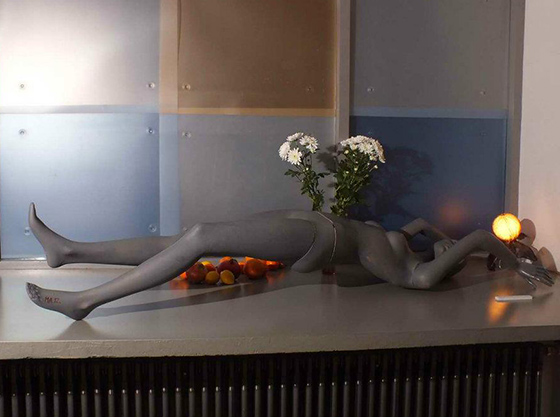 Объект Михаила Алшибая с выставки «Серое»
Это был третий крупный проект 2012 года — осенью, в октябре, кажется. «Степь» связана с «Жар-птицей». Ну, вы знаете, Генрих Сапгир и Игорь Холин были друзьями, оба входили в Лианозовскую группу. Крупнейшие поэты второй половины ХХ века. Холина я хорошо знал лично, мы дружили в последние годы его жизни. Это был невероятный человек! Гениальный поэт (не побоюсь этого слова). Машинописный автограф поэмы «Степь» он мне когда-то подарил, мы с Виктором Гоппе издали несколько его поэмок в формате «книги художника», тиражом 15—20 экземпляров. Отдельные «поэмки» (он их сам так называл, так и написал от руки на титульном листе) посвящены художникам: «Рыбина Рабина», «Надпись для книги» посвящена Брусиловскому, «Степь» — Василию Яковлевичу Ситникову. А у меня за долгие годы коллекционирования собралось несколько десятков работ самого Ситникова и его учеников, посещавших так называемую академию Василия Яковлевича. И вот я решил сделать вторую книгу-инсталляцию, теперь по поэме Холина. Дело в том еще, что когда-то мне посчастливилось приобрести портрет Холина, написанный в 1972 году художником Валентином Воробьевым, первую персональную выставку которого я организовал вот сейчас в РГГУ, она открылась одновременно с проектом «Новая жизнь “Другого искусства”». На этой выставке портрет Холина занимает одно из центральных мест, а впервые я показал его в «Жар-птице». Там мне нужна была какая-то завершающая точка, слегка оптимистическая. Вы понимаете, «Жар-птица» была некрополем — одни мертвецы, и я там сделал последний аккорд — две картины живых художников в отдельном маленьком пространстве: воробьевский портрет Холина (Холин тогда уже умер, а Воробьев здравствует, в Париже) и «Кладбище» Оскара Рабина, который тоже здравствует и тоже в Париже. Это было «Кладбище № 2 имени Леонардо да Винчи» из коллекции Марка Курцера. Название с элементами черного юмора и картина — фактически визуальный аналог поэмы Сапгира, тоже, кстати, написанной в Париже, в 1985 году. На своей картине Рабин изобразил кладбище с надгробными камнями и портретами тех, кто для него был важен среди умерших художников. На 70% «список Рабина» совпадает со «списком Сапгира», но есть различия: кого-то не хватает или Рабин включил Надежду Эльскую, понятно, а также Г.Д. Костаки. А еще он оставил там две пустые рамки — для Вали и для себя. Валентина Кропивницкая с тех пор уже умерла, вы знаете.
— Все умрут.
— Да, пользуясь метафорой Сапгира, «все окажутся на крыльях Жар-птицы». Но вернусь к «Степи». На этой выставке воробьевский портрет Холина занимал, естественно, центральное место — автор поэмы. Текст мы от руки написали на одной из стен, спасибо Ларине Николаевой. Вся экспозиция разместилась в двух залах, которые я про себя называл «Эрос» и «Танатос». Вы помните, «уроки» Ситникова — это главным образом рисование обнаженной натуры. Он разработал свою особую систему: сапожной щеткой черной масляной краской на ватманский лист наносили такие «тени» от периферии к центру изображения, как бы «вылепливая» округлые объемные формы. У меня с полсотни таких ватманов, сделанных учениками Василия Яковлевича, и на каждом его рукой написаны точная дата исполнения, иногда даже час, и имя ученика. Среди них и ставшие впоследствии известными художники (некоторые, придя на выставку, узнавали свои старые работы, сделанные 50 лет назад). Так вот, эти эротические «уроки» разместились ровной «линией» в первом зале, а во втором была совсем другая, почти «шпалерная» развеска, и там я вновь создал собственную инсталляцию, опираясь на текст поэмы Холина, где он описывает интерьер «студии» Ситникова. И самое главное — я нашел байдарку, деревянный скелет байдарки, мы его подвесили под потолок, по диагонали зала. Ситников ведь был «спец по изготовлению байдарок», как написано у Холина, и в его мастерской действительно под потолком висели такие же «скелеты». Мы поместили там же большую фотографию мастерской Ситникова, сделанную Пальминым, и там виден «скелет» байдарки под потолком. Это получилось прекрасно — нечто, подобное летящему объекту Леонардо или «Летатлину». И весло прикрепили, а я назвал это «ладьей Харона».
— Да, кажется, понимаю: серая кукла, гроб с куклой, ладья, отправляющая тело в последний путь.
— Именно, Танатос. But that's not all. В инсталляцию вошли и другие элементы, упомянутые Холиным в поэме. Там, знаете ли, центральный образ — «куча говна». Огромная. Да, именно так, с этого начинается поэма: автор приходит в гости к Ситникову и обнаруживает огромную кучу. И вот я сделал такую «кучу» с помощью строительной пены. Но получился скорее курган, могильный холм. А в углу разместились описанные Холиным предметы: неструганые доски, кусок водосточной трубы, старый проржавевший поднос, пробки от пивных бутылок, сломанные детские игрушки, среди которых была и детская кукла, прежде лежавшая в гробу.
— То есть вы ее оживили?
— Эксгумировал на время, чтобы узнать истину, а вскоре окончательно захоронил (смеется) .
— У меня создается впечатление (или где-то это было написано), что эти проекты являлись для вас своеобразной арт-терапией, аутотерапией.
— Да, я так писал. Но, честно говоря, не люблю термин «арт-терапия», мне больше нравится другой — «арт-хирургия». Правда, некоторые его используют для обозначения очень пошлых вещей, когда портрет или другое изображение вульгарно обрабатывают в фотошопе, как бы производя хирургическое вмешательство. Я не это имею в виду, а то, что искусство всегда содержит в себе хирургический радикализм и хирургическую точность. И очень сильно воздействует на человеческую душу, подобно хирургической операции. Требуется анестезия (улыбается) .
— А «куча»? Вы ведь ее еще где-то показывали?
— Да, был такой проект — в самом конце 2012 года. В Восточной галерее проходила групповая выставка. Куратор, Леонид Ротарь, задавал художникам вопрос «Как дела?», а те должны были ответить художественным произведением. И я случайно оказался одним из участников. Там была «куча», но на этот раз — просто земляной холм, а над ним прозрачная колба, лабораторное стекло. Я назвал эту инсталляцию, располагавшуюся в центре зала, «Ответное послание».
— Среди ваших выставочных проектов были ведь не только камерные, о которых вы сейчас в основном рассказываете, но и достаточно крупные: в ММСИ, Музее личных коллекций, Галерее искусств Церетели, в рамках «Арт-Москвы» 2013 года.
— Ну почему же, «Жар-птица» была крупным проектом — вся анфилада здания ГЛМ в Трубниковском переулке. Но вы правы, были и покрупнее. В МЛК и в Академии художеств — совместные выставки с моими коллегами, профессорами Марком Курцером и Давидом Иоселиани. А в ММСИ в 2006 году был мой личный проект, он назывался «Круги», и в нем я исследовал круги неофициального искусства. В 2011 году выставка в РГГУ называлась «Линия», там я показывал в основном работы художников более молодого поколения — 1980—1990-е годы, начало этого века, и я подчеркивал связь с более ранними «кругами». Ну и, конечно, был еще «Мультиверс» прошлой осенью на «Арт-Москве». Фактически он оказался репетицией постоянной экспозиции в РГГУ, хотя тогда я об этом не подозревал. Мультиверс — это такой термин из космологии, множественные вселенные, тоже некие круги. И линия. И вот я считаю, что самое точное концептуальное название для экспозиции в РГГУ — «Круги и линия». Думаю, что каталог экспозиции выйдет под таким названием.
— Что еще намечается в будущем?
— Боюсь заранее говорить, но вроде бы готов проект для замечательного пространства в самом центре Москвы. Он называется «Хирургия». Там будут показаны и вещи из коллекции (из разных коллекций), и кое-что еще — сердечно-сосудистая хирургия как искусство, как перформанс. И просто перформанс, возможно, будет.
— Михаил, последний вопрос. Скажите, ваши лекции об искусстве и смерти, которых в интернете имеется целых три — у Ольги Свибловой, на телевидении, в проекте TED - MED , — связаны с выставками 2012 года?
— И не только 2012-го, все связано. В «Жар-птице» это уже было. Это для меня важная тема. Не знаю, потому ли, что я хирург и смерть всегда близко. Или тут иные какие-то истоки. Видите ли, с очень давних пор Экклезиаст — моя любимая книга. А еще — Откровение Иоанна Богослова. Но я хочу, чтобы читатель понял: говоря о необходимости помнить о смерти, я имею в виду прежде всего хрупкость жизни и в связи с этим невероятную ее ценность. Помните старую притчу о визире, к которому привели стеклодува, создавшего рецепт небьющегося стекла: он бросает стеклянную вазу на мраморный пол, и она отскакивает без единой трещинки. И что сказал визирь? «Отрубите ему голову». Вся ценность стекла, как и ценность жизни, заключена в хрупкости.