
Translated material
The deputy head of the Ministry of Foreign Affairs of the Russian Federation spoke about the "terrorist international" in "IG": in Syria and Iraq, "dozens" are fighting "dozens of Russians
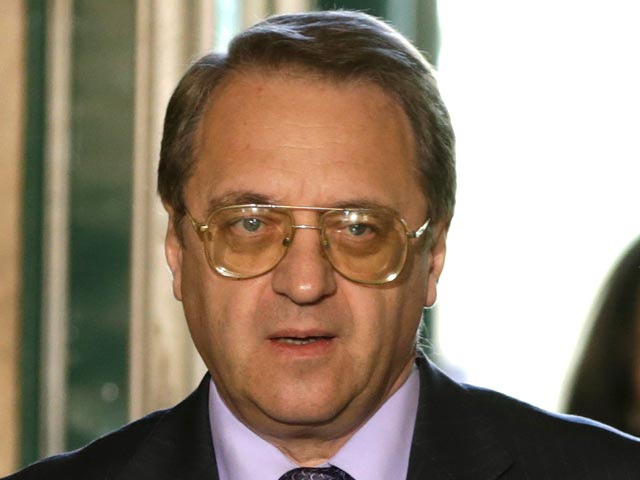
As part of terrorist organizations on the territory of Iraq and Syria, including the Islamic State, immigrants from 70-80 countries, including Russians, said Deputy Minister of Foreign Affairs of the Russian Federation Mikhail Bogdanov. The fight against the activation of terrorist groups in the Middle East and North Africa has become the key topic of the “ministerial week” of the 69th Session of the UN General Assembly yesterday.
"As part of terrorist organizations, including ISIS (the former name" IG " -" Islamic state of Iraq and Levant "), there are Russian citizens. In fact, we are dealing with a terrorist international. There (in Iraq and Syria), immigrants from a large number of countries are fighting, 70 or 80. All these people go there and they are returned there. They get there. They get there. Preparation, acquire skills, and therefore pose an exceptional threat to the national security of their countries, ”Bogdanov said in an interview with the Kommersant newspaper.
Answering the question of how many Russians are fighting in Iraq and Syria, Bogdanov said: "I think we are talking about dozens." Recall that recently, the data thatmore than 800 citizens of the Russian Federation were fighting on the side of the militants in the region.
The deputy minister also noted that the Islamic State is a danger to Russia. "The Americans say that terrorism poses a direct threat to their national security. I think that any country, including the Russian Federation, can say the same thing," he said. It should be noted that in early September, a video appeared on the Internet on which IS militants act with direct threats to Russia and personally to President Vladimir Putin, promising to start a war in Chechnya and in the Caucasus.
The question of how Russia will respond if the operation of the United States and its allies against IG will go to the land phase, Bogdanov appreciated as "very complicated." "It depends on what the land phase will be, who will participate in it, what goals will be pursued," he said.
“All these issues can be resolved within the framework of the Security Council and on the basis of the UN Charter, this is the path for constructive interaction between members of the world community. And if we talk about some kind of ground operation, this requires, of course, such decisions, and most importantly, interactions with the leaders of states, on the territory of which such operations can theoretically be carried out,” summarized the deputy head of the Ministry of Foreign Affairs.