
Translated material
"Songs in the void": "Himire" and Ratd Starkov

On October 15, a book of music journalists Alexander Gorbachev and Ilya Zinin “Songs into the Void. Lost generation of Russian rock of the 90s. " It tells the biographies of musicians, whose creative heyday and most often the tragic finale fell on the undeveloped decade, to which the epithet "dashing" was glued. The main characters of the documentary book, the 1990s counting from the advent of the Venna Rubin Club of Tamtam , the Third Way and the Third Path, were vivid representatives of the then Russian underground-the sincere bard of Venya Drinkin , the Moscow Tabacian Dogs and the Chaaman Aleksey Tagin, a violent otokarik Andrei Mashnin and punk-intellectual From the southwest "straw raccoons." And the “songs into the void” begin with the “amazing generation of the era”-the art-boorus group “Himer”-and the fate of her leader Ratd Starkov, who, according to his friend and part-time, “songs into the void” of the punk poet of Leha Nikonov, absolutely corresponded to the image of the underground star, but did not become it. COLTA . Ru He publishes a fragment from the chapter “ Fire must burn:“ Himer ”and the generation of“ Tam-Tama ”” dedicated to Ratd Starkov.
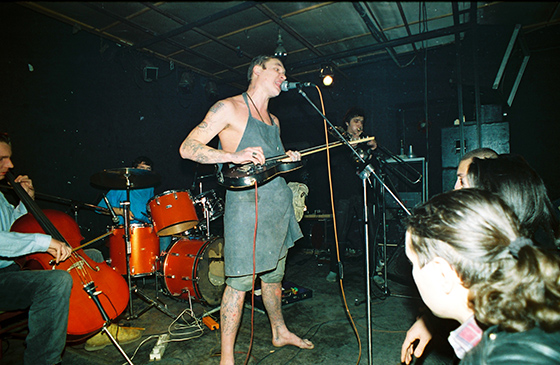
Brittle to zero, all covered with tattoos, a person stands on stage. On a bare body - an apron, in his hands - a guitar. He plays music - stormy, unbridled, burning ears. He brings a tin pipe to his lips and makes a piercing, powerful sound, like a certain epic hero, which announces the beginning of the battle with a mountain. He abruptly screams into the microphone of the word. He jumps and hangs upside down on the crossbar. He takes out a syringe, picks up blood from Vienna - and sprinkles into the hall.
The name is Edik Starkov, but everyone calls him Ratd. Its group is called the "chimera". The place where the concert occurs is the charred walls, on which esoteric drawings are applied, a bar, in which beer is illegally poured, young people in French and tunic in the hall, gloomy police officers, falling asleep in the municipal hostel with two floors higher, is the St. Petersburg club there-tam. Around Petersburg, the beginning of the 90s, who has just again received his old name, time and space of loss, cruelty and ruthless freedom-and the people standing on the stage seem to embody in their music all the rage, all the pride, all despair of this time and this city.
On stage, he was the same as in life. Edik Starkov, madman.
It would be difficult for this group to come up with a more successful name. The Himire became the brightest chimera of the Russian rock music of the 90s, an amazing generation of the era, which absorbed all its contradictions and sunk into oblivion with it. There were many brilliant groups in the Tam-Tama generation-perhaps it would not be an exaggeration to say that it was in this place that the advanced rock and roll front took place, and Ratd could be considered one of its commanders. Lost hopes, unconquered faith, homelessness and timelessness, drugs, esotericism, which hung with a heavy load, the legacy of previous eras - these people felt everything in their own skin. They had to live in a change of times - and they embodied this change into a sound, hurricane, knocking down, smart and crazy at the same time. The music of “chimeras”-and “there-tama” in general-coincided with what happened in those years in world rock, in a generally paradoxical way: it was not an imitation and transfer of other people's finds to her own soil-no, it was fully born of this, a dying soil. Like a few years earlier for Siberian Pankov, the songs here were not so much to self -expression as survival. All the so-called Russian alternative can only be considered at least some legitimate that at the beginning there was “there”-and in “Tam-Tama” there was a “chimera”.
***
“Vyborg,” the encyclopedia reports, “a city in Russia, the administrative center of the Vyborg district of the Leningrad region. Located on the banks of the Gulf of Finland 132 km from St. Petersburg. It is an industrial and tourist center. ” The population is under 80 thousand people (this is now, of course, less). A fragment of old Europe in Russia - there are the only real medieval castle and ruins of an old fortress. Petersburgers go to Vyborg on weekends, residents of Vyborg go to St. Petersburg for workers. In the early 90s, the city was impoverished and subsided, the next northern capital was not up to tourism, the inhabitants fled away. Edik Starkov, already calling on Ratd, repeated the general trajectory.
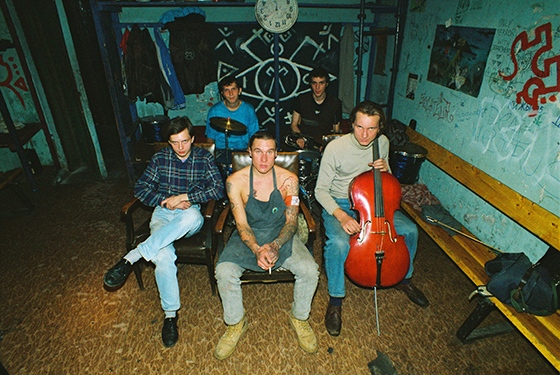
He studied in Vyborg, wrote the first songs in Vyborg, went to the army from Vyborg - and from Vyborg he fled to St. Petersburg: to nowhere, never. He escaped to play in his first group - “deputy of the Baltic”.
 © Anatoly Antonov
Alexey Nikonov
leader of the group "Last Tanks in Paris", a poet
I lived in Vyborg in a lumpenized social environment, which is now commonly called hooligan. There was no question of any metaphysical things, it was more about survival: who eh *zero, who is someone ** l, who had more chewing gum. And they said that there is such a dude - Ratd. That he, they say, writes the songs cooler than the crest and now in the army. And when he came, one friend showed him to me. Well, I looked - gopnik and gopnik, then it was a fuck **, I was only interested in the grandmas. We fucked the heifers and made the loot.
Vsevolod Gakkel
ex-vilolist of the Aquarium group, promoter, founder of the Twi-Tam club
Vyborg is a border town where there is no work. Edik clearly did not fall into this world. And he moved to St. Petersburg, where he had to work, as there was money. He worked as a janitor, because the municipality gave the janitors a room. He really worked, raked the snow, sweeping the streets on the Petrograd side.
Alexey Nikonov
At first I thought he was stingy. He, for example, was settled in an apartment where he could live and do anything, it was only necessary to sweep the yard once a month. And he began to stick out there! Girls came to me, they said: “Edik, you are an artist, creator, notice at least once a month!” And he sat under acid and said: "I don't care." I am five years younger than him - and when they left, began to convince: "Ratd, what are you, stay here!" And he: "I don't care, I will live in" Tam-Tama "."
Andrey Alyakrinsky
Sound engineer of the club "Tam-Tam", groups of Tequilajazzz, Zorge and many others, the sound producer of the Dobrolet Studio
Ratd himself from Vyborg himself, and in Leningrad he worked as a janitor, because the janitors were given an apartment. In it, he lived on the Petrograd side, so he met all the guys - with Yura Lebedev, Gena Bachinsky and Vitus, who studied at Leti, also on the Petrograd side. And so they became friends and made a group that performed in this in the evenings in this.
And he says: "I'm not going to live up to fifty."
Gennady Bachinsky (1971-2008)
Radio Dijeus, promoter, in the early 90s-musician of the Baltic and Himires deputy groups
I always loved new music. Once upon a time, Russian rock was new for me. I was his devoted supporter. I liked “Alice”, “DDT”, “Aquarium”, “TV”, “zero”, “civil defense”, “southwest”, “Auktsyon”. With coolness, but respect I treated the “cinema” and “Nautilus”. From Russian rock, I logically at the time of the “deputy of the Baltic” switched to The Cure and Bauhaus , the then icons of modern music. Edik and I were very surprised, listening to their records, that they and we have a lot in common. Many of Edik’s songs were consonant with the work of these groups, although I know for sure that Edik wrote his songs before he heard similar Western teams for the first time.
(From an interview with Dmitry Merkulov for the site edikstarkov.narod.ru)
Andrey Alyakrinsky
The mutual sympathy of “Tam-Tama” and “Himers” began with the “deputy of the Baltic”. In principle, they were no different from any other Russian group trying to play rock and roll, sounded quite traditionally for that time. That is, such a semi -acoustic sound, songs built rather on the traditions of the author’s song.
Alexey Mikheev
artist, musician, ex-employee of the club "Tam-Tam"
In “Tam-Tama” I was already working then, stood at the entrance. There were no “chimera”, there was a “deputy of the Baltic”, and they did not, let's say, residents of the club. In the general stream of fairly identical post -tank and hardcore groups of that time, the “deputy of the Baltic” stood out by the presence of cello, which very much attracted me while a fan of the Aquarium group. Edik had a rather peculiar headdress - a cap sheathed with different artifacts: badges, rhinestones, pepsic head and so on. Harism was very positive in appearance, at that moment he was a bright curly boy.
Then we began to communicate, and not so much with Edik as with all their parties: Bachinsky, Olya Khodakovskaya. They studied together, Bachinsky published a ridiculous newspaper, the "Bulletin of Labukha" was called. And with Edik we then just saw each other periodically.
"Deputy of the Baltic"-"Peter/ay-lullah"
***
“Well, this, you ... if something is wrong, bad, then you, this, do not be offended.” Several videos of the concerts of the Baltic Deputy were miraculously preserved - and, looking at them, it is almost impossible to guess in that Edik Starkov the future Ratd from Himers. A curly guy in a Alcoholic T-shirt, an absurd cap and with a wooden cross on the neck, similar to a typical Ivanushka Durach, looks at the hall with a naive peasant look and touching the public, turning to the public. Echoes of the future are difficult to hear in songs. Something, of course, slips-separate metaphors, epic and evil codes-but by and large the “deputy of the Baltic” was a group moving in the well-studied fairway of the early “Aquarium”. Picturesque acoustics, cello, village longing-they appeared a couple of years earlier, they would probably have accepted them to the Leningrad rock club. But in the 92nd there was no rock club. The Soviet rock, so persistently demanding liberation and changes, was not ready for acquired freedom. The former heroes died, went crazy, left or were unable to answer the challenges of time. The Starkov group not only changed the name - she completely changed herself, responded to the break of the era with a new, angry, heavy, torn to pieces, and not like anything like a sound. So began the "chimera".
Gennady Bachinsky
After the post -punk, we had a fascination with new American groups such as Faith No More , Primus , Red Hot Chili Peppers , Nirvana . Along with classic punk albums, Primus and Nirvana (at first seemed to us the same) were desktop cassettes in the early 90s and actually predicted the transition of the “deputy of the Baltic” to “Himer”.
(From an interview with Dmitry Merkulov for the site edikstarkov.narod.ru)
Andrey Alyakrinsky
At some point, Edik seemed to have heard the Metallica group and realized that the music could be much more powerful-however, this may be not true. In general, he suddenly had a lotion. And so he loved her that he even had a tattoo with the image of specifically this lotion, which he himself filled. Homemade, steel -colored lotion, her sound was completely unique - uterine, wild, creepy. And he turned it on and hellishly spilled on the guitar. He played very specifically. That is, despite the fact that he played quite accurately, it was an absolute, very powerful Noise.
***
On May 1, 1992, “Himer” first entered the “Tam-Tama” scene under this name-and since then the group with the club could no longer be separated. It is not surprising that in “Tam-Tama” Ratd found his real, metaphysical house. In the fair register of the speakers in the club there were more professional, tougher, more promising - but there was no group more than the group. Their fierce, bloody, sparkling from electric stress was as if a continuation of the charred, groaned walls, where people gathered, to whom there was no dealing with the state and society. It would be wrong to say that the “chimera” was the main group “Tam-Tama”; In the end, there are no power in the communes. They stood out not because they were more important or better, but because it was more accurate to correspond to the place and time. In the end, the Club of Tam-Tam, which existed contrary to all laws, contrary to the new economic reality, was a kind of chemira.
 © Anatoly Antonov
Vladislav "Vitus" Viktorov
ex-bapalist of the Himire group
“There-Tam” is the first club, there were no such stories in St. Petersburg. We performed with the “deputy of the Baltic” either in a recreation center or at some prefabricated concerts in cinemas. Of course, thanks to North Gakkel that he started all this. There was a chic sound that Alyakrinsky made. The room was small, the scene was essentially moving into the hall, it pumped very well, and we got great pleasure. Everyone who loved and wanted to hear something progressive and steep, came to “there-it”, there was nothing cooler. It was insanely interesting, and, probably, thanks to this at that moment, Ratd lived in “Tam-Tama”. He moved from the hostel from Gesha, lived there and, of course, absorbed something. And his music also changed.
Artemy Troitsky
Journalist, television and radio host, organizer of concerts and festivals, founder of the Steppe Wolf musical prize, author of the book “Rock in the Union”, etc.
The Himire was the best St. Petersburg group of that time, which absolutely perfectly expressed the spirit of "Tam-Tama". It was in the style of such an art punk, if you hang some label. That is, a completely furious, absolutely uncompromising punk group-but not dull. This was not one of the clones of Exploited or “Civil Defense”, which stupidly played three chords and yelled something obscenities. The Himire was very interesting and musically, with a truly interesting leader. I would compare Ratd with Panov from “automatic satisfactors” - in the sense that these were real characters, real punks, and it is not surprising that they all moved into another world at a sufficiently tender age. Ratd of them was, of course, the most wild.
Andrey Alyakrinsky
The Chimera group combined a number of amazing things, there was no such proportion in any other Russian group. There are a lot of magnificent pro -Western groups - x ** distinguish a construction group from Western Europe from a built -in group from Mitin. But they all hang in the air, since they have no support either on Russian musical traditions, or on the Russian word, for them it is all in some way the game. On the contrary, the groups exist, like all these ghouls - Yuri Yulianovich, Boris Borisovich ... And almost no one manages to combine both. And the Chimera group sounded like an absolutely Western group and at the same time was one hundred percent Russian, used the simplest Russian harmony and the simplest Russian words. This did not sound either Russian rock or as something stolen from Nirvana or Metallica , there was a feeling of some kind of originality and uniqueness. It was not clear where the legs grow from. I have not heard any such group.
"Himire"-"water-fucker", "control", "karma of the world"
Alexey Nikonov
What is a "chimera"? I will say what Ratd himself would first laugh at, because for him these theorizing were nonsense. It seems to me that the “chimera” is primarily an attempt by the North-Ugric language to penetrate the level of Russian through Noise-music. Through a destructive, chaotic sound conveying the chaos of the universe. Do you know the theory of Leibniz? Well, that every person is a monad: it is autonomous, but it reflects space. Here the concert "Chimera" was supposed to reflect the cosmos. Therefore, he renamed the group: the name of the group itself is something non -existent. At concerts, Cosmos was reflected in a bare chaos. Sometimes it was scary.
***
There are many records from the “chimera” - random, thoughtful, concert - but every person who saw Ratd on stage always first informs them that they cannot be trusted. The storm, the element that raged at the concerts of the Himers, simply did not fit on the film-especially since each time she behaved in a new way. Ratd often literally lived in “Tam-Tama”, and, of course, the group played there very often.
Alexey Nikonov
At first, Ratd was a parrot for me, I could not take him seriously. Once I, our first guitarist Benikhaev and my friend, is one, local addict, went to take the RSR to St. Petersburg. We arrived at night, but there was nowhere to sleep. And we went to Ratd, he then lived on Shchors. He did not know anyone except Benikhaev, and with him he already played once in “Tam-Tama”, where he introduced him as the “Udmurt guitarist from God”. In general, everyone broke out and went to bed, and Ratd began to sing songs in the kitchen for no reason. I then did not take the music seriously. After disappointment in Russian rock, in groups such as Alice and Kino, it was not interesting to me. But Ratd conquered me with sincerity.
Literally two weeks later, when I had a birthday, he invited me to Tam-Tam. And I thought in Vyborg that everything was Russian rock, Kirdyk. Ratd brings me to Tam-Tam-and there London. And he pulls me out onto the stage, gives a microphone and says - sing.
Artemy Troitsky
I do not have a single “chimera” disk, but what I saw at the concert impressed me very much. Ratd himself, among other things, played on the pipe, and it was an art punk, even with jazz elements. However, if it was jazz, then jazz is like that-in the spirit of some British such as Blurt , that is, also completely crazy. It was interesting to listen to this music.
I did not understand the texts, but I understood that they were very angry, sad and terrible. I caught separate words, but I can’t say that I could mentally build these texts for myself. То есть вообще быть на концерте «Химеры» и при этом внимать стихам, как в бардовской песне, было просто невозможно, поскольку концерты были настолько интенсивны, что это съедало тебя заживо.
Илья «Черт» Кнабенгоф
лидер группы «Пилот»
На концертах «Химера» — это магия, это вообще не музыка.
Илья Бортнюк
промоутер, директор компании «Светлая музыка»
Один из концертов я никогда в жизни не забуду. У Рэтда часто бывало так, что в конце выступления он брал одну ноту, включал примочки и так и звучал. И вот на одном из таких последних звуков он куда-то подпрыгнул, за что-то зацепился ногами и повис. Потом снова спрыгнул на сцену. Потом взял жгут, перемотал себе руку, взял шприц, набрал из вены кровь и на небольшом белом листе бумаги нарисовал кровью значок «Химеры». А после этого опять стал играть. Меня это по-настоящему шокировало.
Владислав «Витус» Викторов
В какой-то момент он на сцене поставил мольберт и стал рисовать, забирая из вены кровь в шприц. А до этого на репетиции нам сказал, что нужен трек минут на семь-восемь. Мы: зачем? Он: будет перформанс. Which? Не сказал какой. И вот мы играем на сцене, все нормально, и он начинает забирать кровь из вены и рисовать кровью. Нам не видно было, что он делает, но я вижу, что делает что-то с рукой, а что именно — не вижу, мы же как бы сзади. Но я вижу лица людей, которые стояли у сцены и сначала мотали головой, а потом у них был какой-то полный атас. Был еще такой концерт шуточный, где он нашел какую-то плитку и жарил яичницу, потом мылился, но это не так интересно.
Alexey Nikonov
В «Там-Таме» труба была, и Рэтд повис на ней вниз головой. А выступал он практически голый, в шортах. И он жестко порезал себе живот ножом. Очень сильно потекла кровь на лицо. А так как он был голый, бритый, весь в татуировках, это выглядело, будто туша мяса в мясной лавке висит, вся кровью облитая. Он на гитаре играл, и по гитаре тоже кровь текла. И когда он закончил эту композицию, после этого на минуту или полторы в зале воцарилась абсолютная тишина. Это не было жестом. Это было осознанной необходимостью, той самой свободой творчества, которой в роке тогда никто не понимал.
 © Анатолий Антонов
Егор Недвига
бас-гитарист группы «Последние танки в Париже»
На концертах он никогда не входил в образ, не играл никого. На сцене он был таким, каким и в жизни. Эдиком Старковым, безумцем.
Виктор Волков
музыкант, экс-сотрудник клуба «Там-Там»
Часто было так: закончился концерт, Эдик берет в руки метлу и идет на выход подметать бутылки и разбитые стекла.
***
Говоря о «Химере», неизбежно упираешься в Рэтда. Безусловно, «Химера» была именно группой в полном смысле слова, их звук создавался соединением воль, устремлений и идей каждого из участников — но также безусловно, что лицом этой группы, человеком, определявшим вектор ее развития, человеком, полностью отдавшим ей самого себя, был Эдуард Старков. Он был простым круглолицым парнем из Выборга — и он же походил на языческого бога на сцене. Он не был виртуозом гитары — и он же умел играть так, что через слушателей в зале будто бы проходил электрический разряд. У него толком не было образования — и он же писал странные, смутные, замешенные на эзотерической символике тексты, в которых можно углядеть хоть отголоски раннего Заболоцкого, хоть ссылки на философов-мистиков. Он принимал наркотики, поливал сцену собственной кровью и не жалел себя — и он же очень трепетно относился к окружавшим его людям.
Ласковое, почти подростковое имя Эдик и какое-то языческое, отрывистое, таинственное прозвище Рэтд — даже в том, как он называл себя, было некое фундаментальное противоречие.
Алексей Михеев
Он был избранным. Близко общаться с ним мы стали, когда распался «Депутат Балтики». Названия «Химера» тогда еще не было, но они репетировали на точке тамтамовской, где я часто бывал. Уже потихоньку начал образовываться сквот, мы там часто оставались ночевать. Незадолго до этого в клубе произошел пожар, стены обгорели, стали черными, и официальный директор заведения сказал: можете делать с этими стенами все что угодно, хуже в любом случае не будет, а денег на ремонт у меня нет. В комнате у Паши Литвинова, перкуссиониста «АукцЫона», стояли банки с белой краской, но она была заперта, нужно было у Паши взять ключ, и мы пошли в ДК им. Кирова, находящийся недалеко от клуба, где Паша занимался в какой-то барабанной школе. Тогда наше общение с Эдиком и завязалось по-настоящему. Он рассказал о своем самоощущении человека как космического существа, существующего не столько в пространстве, сколько во времени. Рассказал о своей связи с Атлантидой, что считает себя атлантом. И поскольку он такой высокой расы, у него даже борода плохо растет. И на волне этой эзотерики, осознания медиумической сущности большинства творческих людей наше общение стало развиваться. Эдик, помню, подарил мне книжку Елены Петровны Блаватской «Разоблаченная Изида», я начал читать Андреева, «Розу мира». Ну и Кастанеда тогда был, конечно же, очень моден. И в этом эзотерическом настрое мы начали расписывать «Там-Там». Я тогда учился, Эдик вообще ничего не делал. Вот и проводили время, расписывая стены, играя на гитарах и употребляя всякие наркотики.
Alexey Nikonov
Философия Михеева и тамтамовцев — дикая смесь Блаватской и Кастанеды, а на оставшиеся 50% — их личный психоделический опыт. Они искали новый звук и находили его, но сами об этом не знали. Если взглянуть на них как на обычных людей — торчали, пили вареную мочу, Тима Земляникин приворовывал, а Рэтд подметал и вмазывался винтом, но на самом деле они открывали новый звук. В этом и была их миссия.
Илья Бортнюк
Я бы его сравнил с Мамоновым, но как бы более брутальным. Он, так же как Мамонов, абсолютно четко понимал, что происходит в окружающей жизни. Только говорил он об этом не как группа «Телевизор», не лозунгами, а метафорами. На мой взгляд, очень удачными. И с музыкой это сочеталось хорошо.
Андрей Алякринский
Эдик был простым и исключительно глубоким человеком. Он был из тех, кому удается в двух строчках мало связанных друг с другом слов сформулировать целое состояние. И с одной стороны, все это полностью держится на ассоциациях, с другой стороны — абсолютно точно попадает по ощущениям.
Всеволод Гаккель
На меня Эдик действовал на уровне отдельной строчки. Что-нибудь вроде «а в Магадане снег» — и все, абсолютно законченная картина, больше ничего и не надо от этой группы. И какие-то технические критерии совершенно неважны, при том что Эдик безупречно играл на гитаре, он был очень органично слит со своим инструментом, любой звук, который он из гитары извлекал, пусть даже мимо кассы, казался единственно возможным и нужным.
Alexey Nikonov
Тексты Рэтда — отдельная история. Они самобытные. Взялись ниоткуда и ушли в никуда. Их можно сравнивать с Хлебниковым, Крученых или даже с некоторыми текстами Хармса, с обэриутами. Его поэзия охватывает всю эволюцию авангарда, Рэтд вобрал в себя всю авангардную структуру русской поэзии от зауми до структурализма, на самом деле не понимая этого. Рэтд говорил на птичьем языке, нес х **ню всякую, это была в своем роде заумь — хотя ни о какой зауми он не имел понятия. Она из него как бы перла сама по себе, из-за его корней финно-угорских. Его рисунки, его тексты — они не в постмодернистской ситуации созданы, не слеплены осознанно. Они рождены сами по себе, естественным путем. Когда я ему, например, давал какую-то книгу почитать, он клал ее на руку и говорил: «Все, я ее прочитал». Иногда мне кажется, что он меня дурачил, но на самом деле вряд ли. Я знаю, что одну книжку он прочитал точно — «Сто лет одиночества» Маркеса. И он ее очень хвалил.
 © Анатолий Антонов
Эдуард «Рэтд» Старков (1969—1997)
лидер группы «Химера», создатель проектов «Авдогесса», «Егазеба» и других, первый барабанщик «Последних танков в Париже»
Моя любимая писательница — Елена Петровна Блаватская. Последняя книжка, которую я могу сейчас вспомнить — которую я прочитал и которую в принципе достаточно любому человеку такого склада, как я, допустим, тусующемуся в «Taм-Таме» или где угодно, слушающему музыку, всякие штуки, — ему достаточно прочитать книжку Филипа Дика под названием «Убик», и все, можно уже вообще ничего не читать. Можно читать только сказки, и все. Лучше русские народные сказки — мы живем в России, поэтому лучше читать русские народные сказки. Ну и параллельно заодно и сказки народов мира.
(Из интервью журналу Fuzz)
Всеволод Гаккель
Эдик всегда был очень благодушен, всегда. То есть этот человек, производящий на сцене чрезвычайно мощное впечатление, был в жизни очень кротким, даже нежным. Никогда никакой агрессии. В этой среде ее было очень много, был постоянный мордобой — но я никогда не видел, чтобы он с кем-то пытался вступить в конфликтную ситуацию.
Андрей Алякринский
Рэтд был очень спокойным человеком. То есть как… Мне он казался немножко нервным, хотя при этом был очень добрым, позитивным и простым парнем. Очевидно было, что у него какие-то ему одному известные, очень глубокие переживания — иначе бы он не бросался в эти бесконечные эксперименты со своим здоровьем. Для него они были не развлечением, не просто трипом каким-то, а именно поиском чего-то. Чего — я не знаю.
Егор Недвига
Однажды случайно получилось так, что мы оказались в одной электричке Выборг — Петербург лютой зимой. Утренняя, вторая электричка. Я даже помню, во сколько она уходит. В 5:25. Я был тогда студентом второго курса института кино и телевидения, а Эдик ехал из дома, я думаю, в «Там-Там». И вот ужасно холодно, мы невыспавшиеся, даже разговаривали мало — были озадачены одной мыслью: чтобы это долбаное криогенное ведро добралось до Питера и мы скорее бы нырнули в теплое метро. Эдик тем не менее не унывал, шутил, мы покурили, а потом он залег на скамейку спать. И где-то в районе станции Рощино в вагон зашли бродячие музыканты. У одного было некое подобие гармошки, второй с гитарой, на которой было всего четыре струны. И они начали играть и петь нестройными голосами, пытаясь перекрыть грохот и стук колес. А во всем вагоне было пять человек. Все неохотно завертели головами, и вот музыканты уже прошли весь вагон, как вдруг Эдик вскочил, побежал за ними и дал денег. Я не помню сколько, но помню, что удивился — это были достаточно реальные деньги. И я подумал — ни фига себе, Эдик последнее отдает. Денег-то у него вообще не было никогда.
Мент берет этот паспорт и видит: «Житель планеты Луна».
Alexey Nikonov
Ему было пох ** на все. Я знал только трех человек в своей жизни, которым было пох ** на все, и он был одним из них. Вот мы шли с ним на концерт, у него была с собой гитара, он вдруг берет и по перрону — х *як ее! И гитара пролетела сорок метров по перрону. А он на ней должен был играть. Но он об этом не думал в тот момент, и это было очевидно. И это не было, знаешь, позой какой-нибудь. Мне, конечно, очень повезло, что я с ним встретился. Из всех моих знакомств это главное, оно изменило всю мою жизнь.
Эдуард «Рэтд» Старков
Мне все время хорошо живется. Я как родился, так и понял: «Вот кайф-то». Правда, иногда в детском садике задавался вопросами: «Ох ты!..» У меня бывало, я помню: в детском садике, знаешь, как будто кома такая, пелена на глаза наезжает… Однажды — прекрасно помню — в детском саду сижу, как пелена такая — бум! «А как же я, а что же я, ох, ни фига себе, как же, чего, почему?» А потом думаю: «Нормально» — думаю: «А, бог с ним». Не знаю, чего париться-то?
(Из интервью журналу Fuzz)
Алексей Михеев
У него было очень мало личных вещей: гитара, татуировочная машинка и какой-то психоделический фотоальбом.
Alexey Nikonov
Для Рэтда вообще не существовало материальных ценностей. Ты бы видел его рюкзак! Он жил на Бакунина, спал на полу — когда я увидел, как он там жил, я вообще ох *ел. Какой-то матрас валялся, и все. У него вообще вещей не было. В рюкзаке — какие-то загогулины железные, которые он на улице нашел, блокнот, ручка и луковица, которую он сп **дил с Тимой Земляникиным на рынке. Когда я увидел такую францисканскую аскезу в роке, меня это потрясло. И я видел, что это не на *бка. У него ничего не было, даже гитару ему, насколько я знаю, дал Бачинский.
Владислав «Витус» Викторов
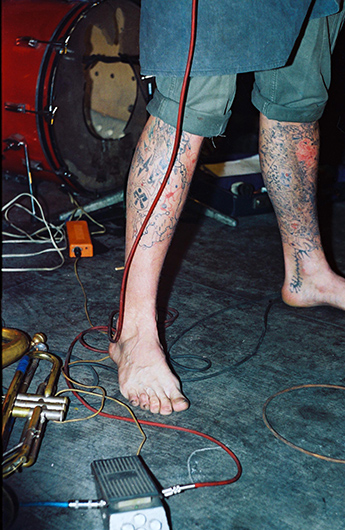
Он был весь забитый, зататуированный, левую руку сам себе забивал, а правую — кто-то из друзей. И как-то Гена у него спросил: «А что ты будешь делать лет в пятьдесят или в шестьдесят с этими татушками?» А он говорит: «Я не собираюсь до пятидесяти жить».
"Chimera". Последний концерт в клубе «Молоко». 16.02.1997
Alexey Nikonov
Они сп **дили с Бенихаевым в одном месте хэт, мини-пульт и дешевую гитару. И Рэтд написал записку: «Извините, пожалуйста. Это взяли мы. Мы поиграем и если станем звездами, то принесем назад».
А еще как-то раз пришел и говорит: «Бл ***, мои картины не взяли в библиотеку». А картина эта — ну, пластинка с дыркой, и на ней какая-то х **ня нарисована. Я говорю: «Рэтд, ну ты чего, дурак? Ты что, думал, что в районной выборгской библиотеке такую картину повесят?» — «Да!» Ну боже мой — человек старше меня на пять лет. Но эта-то открытость в нем и подкупала. Мы жили по суровым законам, а Рэтд умудрялся своей ироничностью эти суровые законы обходить. Его никогда не забирали менты. У него вся рожа была в татуировках, фотография в паспорте была приклеена на резинку жевательную. Мент берет этот паспорт и видит: «Житель планеты Луна». Бред полнейший, он сам написал. И он так на них действовал, что его просто отпускали. Никогда не задерживали. Я не знаю, как ему так удавалось.
Рэтд всегда был честен. То есть для меня он был таким настоящим воплощением героя рока. Только я тогда думал, что все такие, что их много. А в результате оказалось, что это был единственный человек, который соответствовал моим представлениям о том, какой должна быть андеграундная рок-звезда.