Translated material
Daddy letters
The stories of fathers and their children gang
In the Tomsk Memorial Museum of the History of Political Repressions, the exhibition "Daddy Letters" was opened. In the center of the exhibition is the correspondence of the prisoners of the Gulag with children and wives. Letters written most often on cheap paper, with small handwriting, so that more words fit - often the last memory of their authors: many have never seen their relatives again. Next to letters are old photos from family archives, home relics.

Some lines in the letters are lost. “This is camp censorship,” explains the director of the Tomsk Museum Vasily Khanevich . “The letters are very touched, amazing how people, finding themselves in the camps, continued to take care of their children and participate in their upbringing.”
Alexey Vangenheim - a famous scientist, professor of Moscow University, founder of the USSR Hydrometeorological Service - was arrested in 1934. He became a teacher for his four -year -old daughter at a distance. Several pages in each letter were addressed to her. He sent her riddles with drawings, which he called: "Elina riddles." He collected Solovkov’s herbaria for the daughter of herbaria, put dried leaves into envelopes, painted birds and animals living on the island, and added a detailed description. In fact, he compiled a very unusual textbook for a preschool child. Thoughts of his daughter, taking care of her helped him maintain the vigor of the spirit.

He wrote to his wife: “Wherever I looked, whatever I thought about, everything seems to me gloomy, anxious, in many ways hopeless, and only my house with my loved ones and expensive seems to me clear and joyful, that star that illuminates the path. And this gives me new strength, vigor, and I do not lose my spirit contrary to the murderous facts of gloomy reality.”
Alexey Wangenheim dreamed of freeing himself and returning to his family. But this dream was not destined to come true. The scientist was accused of engaged in wrecking, making false weather forecasts in order to disrupt agricultural campaigns, then in belonging to the All -Ukrainian Central Bloc invented by investigators, and then sentenced to death. In November 1937, the verdict was carried out. But for Eli - Eleanor Wangenheim - the father’s lessons were not in vain. She became a major scientist, a doctor of geological sciences, one of the leading domestic mammothologists.
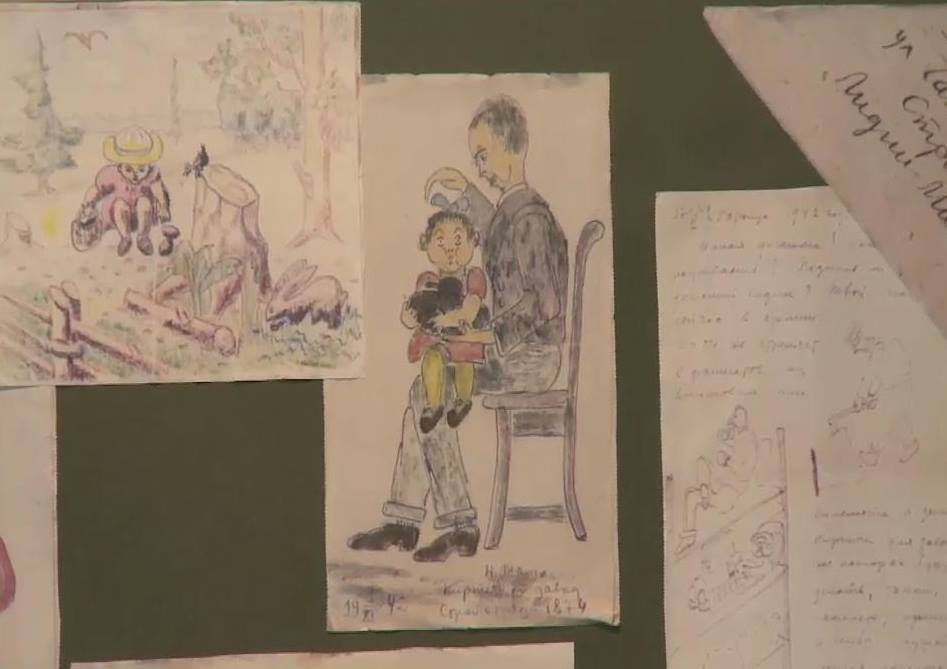
Only one letter came from Nikolai Klyavin, convicted of "anti -Soviet agitation". But then several cards that he painted for his daughter were preserved. They depict fairy -tale characters. The puffy three pigs at his house. Wolf and red cap. The drawings are colored and very beautiful. “It is amazing how a person painted such bright drawings, dying of hunger,” notes the director of the Tomsk Museum. (Nikolai Klyavin was arrested in 1938. In 1943, he died in conclusion).
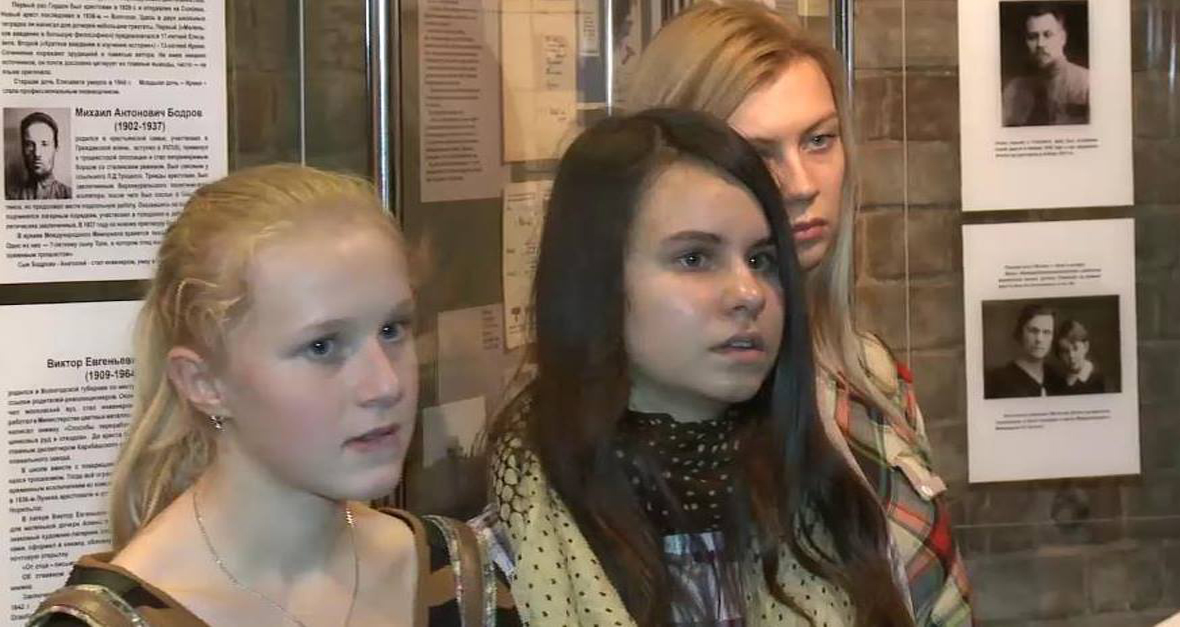
Among the ten human stories presented at the exhibition, there are Tomsk ones. One of them was told by Marta, the daughter of the repressed architect Boris Alekseev. Martha almost does not remember Pope. She was three years old when he was arrested. “Drawings, drawings, books, photographs and, most importantly, letters - this is my father,” says Marta. She goes along the narrow corridor of the museum, for the hundredth time examines photos of repressed people on the walls, sighs, smiles and notices that she feels at home here, despite the fact that the museum is located in the basement of the former investigative prison of the NKVD.
Everything is here, as it was in the 1930-50s. Cameras with prison beds - schools, iron tables and small windows with a grille under the ceiling. Heavy doors with eyes for overseers are now terribly creaking. A draft is walking along the corridors. “But still this place attracts me, because my memory lives here,” Martha Borisovna explains.
The memory of a father in her family was banned for a long time. They did not remember and did not even mention him. Marta was afraid to pronounce his name aloud. Only almost half a century later, she and her sister Greta recognized the details of his life. The information was collected bit by bit in the archives of the investigating authorities.
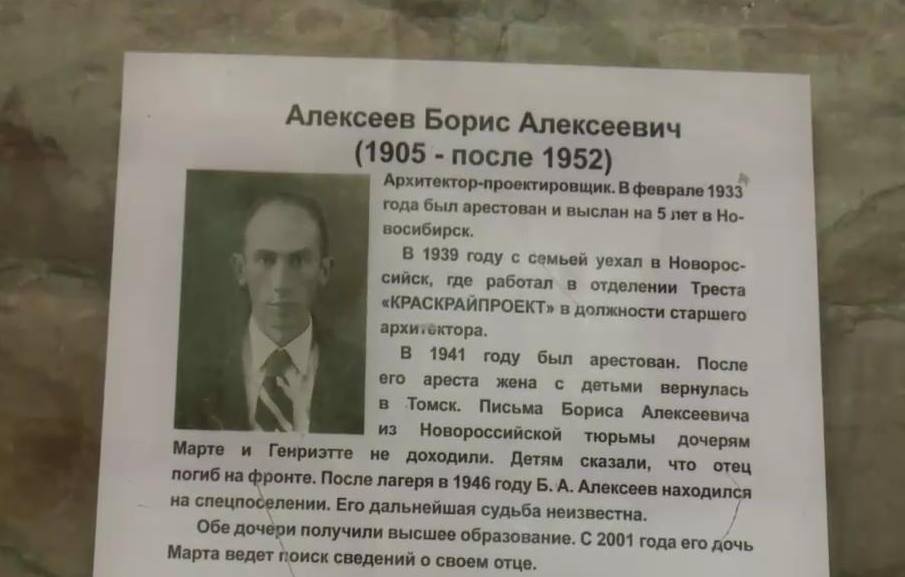
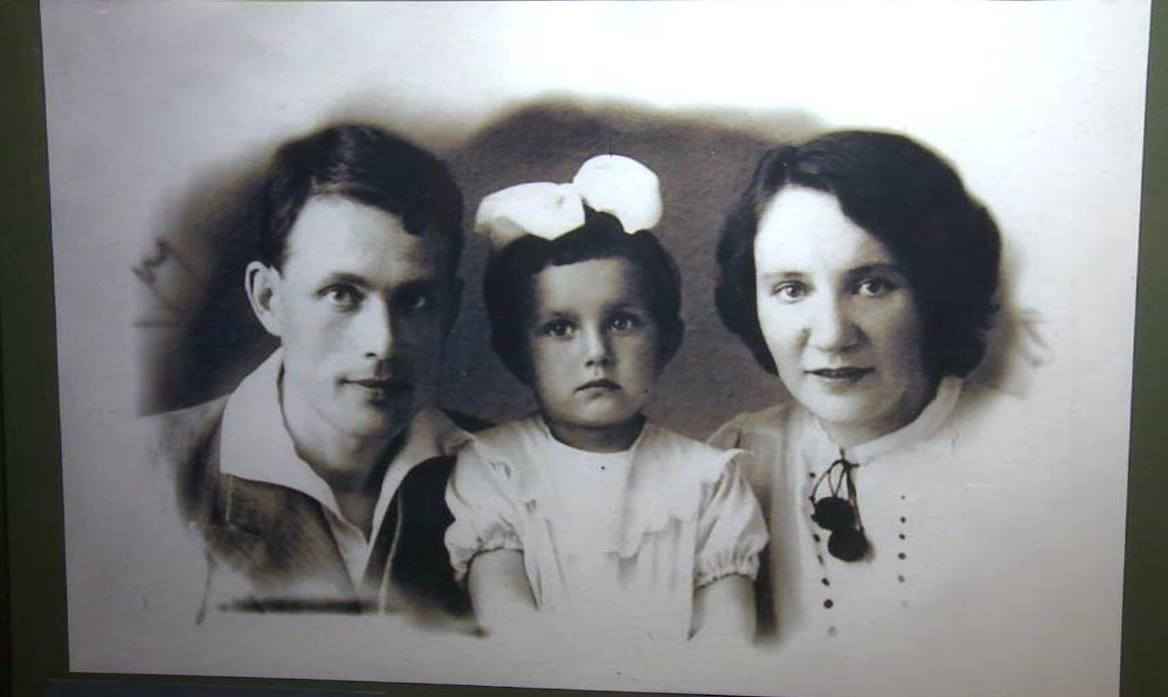
The first time their father was arrested in 1933, the second in 1940. After the first arrest, the convicted person under the 58th article for five years Boris Alekseev replaced the camp for expulsion to the West Siberian Territory. The architect received hopes, received work in Novosibirsk, in the Sibstroyput Trust. In 1937, Boris Alekseev married Galina Telegin. In the same year, they had a daughter of March. Two years later - Greta. At the end of the exile, the family moved to Novorossiysk. There, at the end of 1940, Alekseev was arrested again. The wife and children left for Tomsk. At first, the father constantly wrote. But he was transferred many times from place to place, and the response letters that his wife sent him often did not reach. Fatherless letters formed his image in the girls: “Dear Galinochka, I received a postcard from you yesterday, which was very upset. What is with Martha? What is sick, was the doctor and what does he say?
In every letter, Boris Alekseev asked about the children, gave instructions to his wife, asked to sell him "junk" so that only the children would not need. “Kiss Marta and say that her Boba only thinks about her,” he finishes a letter.
Boris Alekseev was released from the camp, but his wife had not survived until that time. For many years, their daughters have been trying to find out what happened to the father, but his traces are lost in 1952. Until this year, he was on a special settlement in Magadan without the right to correspondence. What happened to him after that is unknown. But Martha Borisovna today does not leave hope to find out.