
Translated material
"ZIL is a dragon agony"

We continue our shows in the Cinema Cycle Believe . On October 8, we will show Daria Khleskina's wonderful film “The Last Limous”. Here is what his producer Marina Razbuzhkina writes: “The film has a happy fate. “The Last Limousine” received the Lavr National Prize for the Best Cinema, won the Artdokfest, named the best at the Docudays festival, received a prize at the Mirror Film Festival, was shown on 24_DOC, AlJ (Great Britain), in Holland, Norway, Finland. ” You can get to the show here .
- How did you go out on this subject at all - why ZIL?
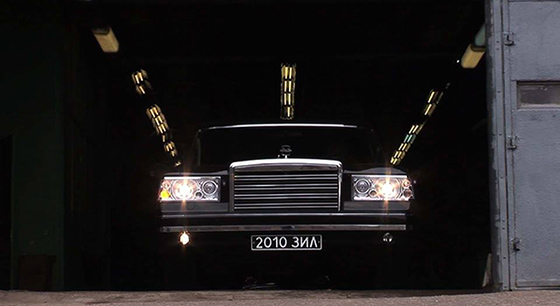
-Once upon a time, Marina Razbuzhkina invited her students to think about workers: they are in modern Russia, there are no them, what they are. By that time I was no longer her student, but I heard an offer, and this topic was very interested in me. My idea was to find a plant in Moscow - this city in the past is industrial, but now there is completely no, that is, the plant will be clearly dying, but with still preserved factory traditions. I found out that there are two such factories in Moscow - ZIL and Sickle and Hammer. And while I climbed the Internet, I came across the news: Zilu, who has been in slow agony for 20 years, ordered government cars for the 2010 Victory Parade. Then I realized that I had to urgently get there. ZIL, it seems to me, is the most symbolic plant for our country. This is the first Automobile Plant of the Soviet Union, a giant factory. And they made the very “representative” limousines, on which Brezhnev and other guys rode.
In my opinion, it is easier for us to get to the prison than to the plant, even if it already produces almost nothing. At first I managed to get into the territory without a cell - there are many tenants, and through my friends they made a pass. I went to the factory and met my future heroes. ZIL is Moscow in miniature, there are migrant workers, pensioners, and students who are at the plant, and managers, and tenants ... not without the help of the Zilovites themselves, who were imbued with the idea of the film, managed to achieve permission to shoot.
- And what did you see there?
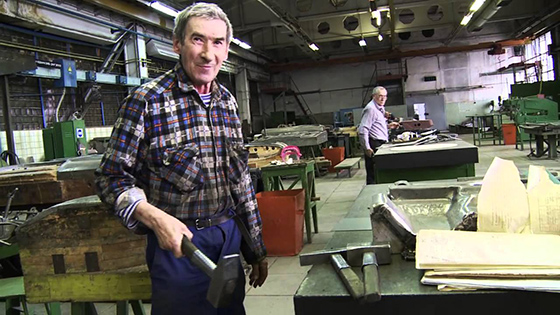
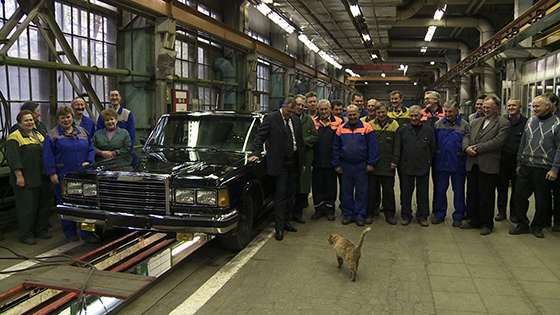
- I wanted to see how the traditional way of the plant exists in our new time. Therefore, basically I shot the Zilov old -timers who are sick for their job. And I fell in love with my heroes. For example, Mikhail Sattarov, director of a limousine workshop, is a sample of a good manager. He has difficult him - at the factory all the time of reduction, he has to defend his people so that no one is fired. He is such a patriot of the plant - very worried. But Nina Mikhailovna-my beloved heroine from the foundry workshop, who works on the loader-she is a mechanism. On such, probably, both the factory and the country are held. She is directly a prototype of a worker from Soviet cinema. He does not ask unnecessary questions either to himself or to others - he simply does what he should do. Until the last day - the plant has already been collapsed, closed, and it still gives the instructions. And here is Andrei Demyanov, director of the foundry workshop - for me he is a tragic character. In the film, he sits all the time and is silent in his office. He perfectly understands that they are already pouring there in the workshop, no one needs. And he, too, continues to do what he must: give instructions to swear on the phone ... Nadia, the storekeeper, is such a hearty woman, mommy. She seems to shout at the workers, but tries to dress them very much-but she has nothing, one second-hand, everything is wear. New specialists are no longer distinguished. At the end of the film, she even dwells overalls on a sewing machine. To create these exclusive limousines, the workshop called back five of his former employees who had already retired. This is a very subtle handmade, there are not enough specialists. In the limousine workshop, all high -class specialists, even just workers are such that you will not find. And they are clearly satisfied with their work, their skill. Although after the collapse of the USSR, they were forced to work as an atelier - they were engaged in the repair and content of existing ones. After perestroika, these piece machines began to be made to private customers - Nazarbayev made, for example. The volumes of the rest of the production at the plant fell catastrophically: in Soviet times, they told me that almost seven hundred cars a day went off the assembly line, and now these were funny numbers: sometimes 20 pieces a month, sometimes one ... At the same time, the plant is huge. That is, this is the agony of the dragon.
It’s easier for us to get to the prison than to the plant, even if it already produces almost nothing.
“But the dragon is pretty.”
- Very nice, this is the drama. Times have changed, and the people who used to be someone became anyone. In Soviet times, workers-this was also considered, the salary is more than that of the engineer ... And now these are losers. There, in Zile, by the way, there are a lot of Stalinists, someone can see a portrait of Stalin in the office.
- It turns out that these people are nostalgic for times when the state order ruled by the economy, at the time when they made chic cars for leaders, which plant in psychiatric psychics ... that is, they miss the Empire of Evil.
- Well, we from the Empire of Evil did not immediately go to paradise. Now, too, the times are not the coolest. Neither for us nor for them. It’s interesting that there is no black and white, definitely bad and good. And then, people do not reflect: empire, freedom of speech ... First of all, they think not about politics, but about their children, housing, about what they have. The workers lived well at that time. They were appreciated, their work was in demand. Of course, the question of whether the country really needed so many trucks and how effective the Soviet economy was, which ultimately collapsed. But the workers did not come up with a plan. The film is for me that the natural need of a person is to feel necessary. Employees of ZIL - and there are many such people in the country - were not needed. The problem is that the era of these people ended, but they themselves still live with us, and they are not 90 years old. The Soviet past is lively. Back in 2012, ZIL was an island of the Soviet country in the middle of modern Moscow. And life itself emphasizes the unnecessaryness of these people: the abolition of this important state order, when three pensioners collected elite cars manually, and then they were not needed.
- You did not foresee this plot turn that the order will be canceled. That is, the film was supposed to end with the fact that the workers were watching a parade on TV and shouting: “Our cars went!”?
- No, he still had to end in closing the plant. But, taking off the history of the limousines, we did not know, of course, that the order would be canceled - we were preparing to remove the cars at the parade. It so happened that life made the story of this breakdown even more obvious.
- And it is known why the order for limousines has been canceled?
- It is officially unknown, but I know that there was a competing organization - a private studio belonging to Deripaska. They filled the old Zilovsky bodies of a new, not authentic, filling, and it was these cars that went to the parade. Apparently, some kind of political line intervened, and that the order was canceled on Zil was recognized at the last moment. The plant then hoped for a long time that the Ministry of Defense would still take these cars for balance. A year passed, if not more, before the cars decided to still sell to private customers. One of three bought-this is quite funny-some Ukrainian brothers as a gift to Yanukovych. When in January, Yanukovych left Ukraine and everywhere a photo of his residence appeared, in the picture from the garage I recognized this car. And two other cars are at the factory covered with polyethylene.
The natural need of a person is to feel necessary.
- For you, the remnants of the USSR are what should die?
-Yes, this is natural-everything once comes to an end. I found the last three years of ZIL, and from the first days it was clear to me that the plant was dying: we can assume that it was bad, you could want to revive it, but it was too late. I have always been an absolute anti -Soviet, and I do not feel sorry for the plant itself, but I sympathize with these people. And our time will pass. But this transition period for those who find him is a big drama.
- It seems to be natural that the old gives way to a new one. And in the film it looks like a tragedy. The final scene where the old orders and documents are burning in the barrels to warm up is a complete post -apocalypse ...
- In fact, a film about the end of the era. And this last day of filming was a real gift. The previous time I shot at the factory six months ago, and then I called the heroine, and she said: everything was closed, the heating was already turned off, we burned in the workshop - we bask. We came. At first they burned firewood, and then dug somewhere packs of old papers and began to read them out loud-and burn them. I myself would think that this is a staging scene if I had not seen everything myself.
- What happened to your heroes after the plant closed?
- The limousine workshop is the only ones who still remained at the factory. At least it was in April. Just no one knows what to do with the expensive cars that are there-and someone should repair them. The head of the workshop Sattarov said that he was offered an interesting and monetary work, but he refused-said that the whole workshop was holding on it, and for some time the workshop would last. So he risks, remaining with his limousines, to remain without work later. Nina Mikhailovna simply retired, but she is active - she has skis in the winter, in the summer a garden ... Lyudmila, who issues coupons, married a Ukrainian and left. The storekeeper Nadezhda found the work of the cleaning lady - this is also a more difficult work, and in general, it is clearly a step down ... The head of the foundry workshop, it seems, has not been finalized until retirement age - he would have relied on a harmful pension. Now he got a job at the rocket plant in Balashikha, but, he says, and this plant will soon be closed.
I called them all to the premiere - it was very scary that they would throw them with tomatoes. But nothing, they survived somehow. The elite limousine workshop only in the film first saw a foundry workshop-for them it was some kind of horror. They were also worried that I spoke little about the heroic past of the plant - otherwise it seems that now there are only marriage and swear, the viewer will think that it was right that the plant was closed. And the women cried.
If the plant were closed 20 years ago, agony and tragedy would be less. These people would still be relatively young and find another job, would be used to a new reality. How do you prefer to die - immediately or first torment? Zil suffered for 20 years.