
Translated material
Russia is not Ukraine: modern accents of nationalism
In society
 Russia is not Ukraine: modern accents of nationalism
October 2, 2014 Svetlana Solodovnik
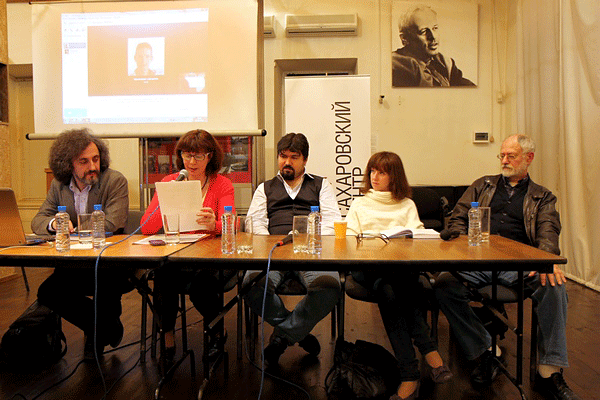
The presentation of the book with the title was held in the Sakharov Center at the end of last week. This is a collection of articles, released by the information and analytical center “Owl” and initiated primarily by the manifestations of ethno-religious xenophobia-from primitive street violence to more sophisticated sophisticated ethnicities that are rooted in the mainstream media-the dynamics of modern Russian nationalism. The previous book on the same topic, opening, opening the meeting, the compiler of the collection and director of the NOVA center, Alexander Verkhovsky, was published seven years ago, during this time significant changes occurred in the nationalist movement, in particular, the Ukrainian crisis had a serious impact on the situation in Russia. Therefore, the two articles about modern Ukrainian nationalism are included in the collection as a kind of help for awareness of the situation of sumores.
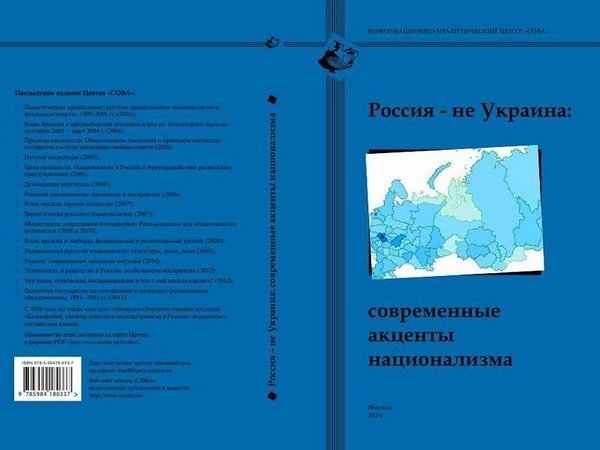
Since the whole range of problems relating to the nationalist movement is impossible to cover in one publication, the book is structured on the topics: “Nationalism and its activists”, “Nationalism and its agenda”, etc. Professor NIU-VSHE Emil Pain in an article that opens the collection analyzes modern Russian nationalism through the Runet mirror, trying to draw his “ideological portrait”. Runet gives the most complete picture of ideological demarcation, the researcher explains, because only here is the entire range of political forces of Russia-after all, many political movements, such as nationalists, “new left-wing”, religious fundamentalists, etc., there is no place in the mainstream mass media. The groups of the left (the second largest following the supporters of the current government) affected the most of all the changes: they are no longer interested in the omarzhuisu -working class, the left split, and between the ultraxenophobes from the Zyuganov party and the activists of Antifa, protecting all kinds of minorities, are very small in common.
The least changes are recorded in a group of liberals, the smallest and fragmented. Although certain innovations are observed here: from the emergence of such “liberal nationalists” as Navalny and Milov, to the failure of some previously quite ordinary nationalists from imperial orientation and even from the authoritarian management model. Emil Pain quotes the words of Konstantin Krylov about new knowledge among nationalists, partly approaching liberal-democratic values, in particular there, the idea is strengthened that "nationalism and democracy are almost the same thing."
 Alexander Verkhovsky in his entrance word, as well as in his article, focused on the dynamics of violence in Russian nationalism. Large nationalist associations, which practically practiced violence, almost disappeared in Russia after the 1993 crisis, and only over time were squeezed by the wave of the Natsi-Skin-Hyda movement, primarily just aimed at violence. Moreover, violence in this environment became more and more qualified: if in the early 2000s the main means of attack were fists and heavy boots, then by the end of the decade a knife and a traumatic gun were increasingly used. Racist and other ideologically motivated violence of ultra-right reached a peak in 2007-2008 (615 victims in 2008, of which 116 were killed) and then until 2012 it was declining (in 2012-M 210 victims, 19 of which were killed). This was partly because the law enforcement system, which has refused to consider what was happening as a specific problem for many years, gradually - perhaps under the pressure of political leadership, the researcher notes - changed its behavior, began to plant hatred for crimes. However, so far the risk of sitting for the so -called white revolution is perceived by participants in the movement as rather low.
2013 once again became a turning point - the number of attacks and even murders began to grow again. The “Manezhka”, events in Kondopoga, Pugachev and Biryulev, was convinced by the Verkhovsky, but not only that. In 2013, the authorities of a number of regions launched a wide anti -migrant campaign, which was also covered in detail, including federal media. In addition, the media quite regularly illuminated cases of impunity dosage of violence in relation to migrants, and this, according to the researcher, could not fail to accustom the public to acceptance of dosed violence. Soon, events in Kyiv began, which were perceived in the Russian nationalist environment in different ways. Some saw in them the offensive of nationalists on anti-nationalist power and went to the Maidan as to study, others participated in the mobilization of the pro-Russian movement in the southeast of Ukraine. “There is no question of any direct postponing of Ukrainian experience to Russia now,” Verkhovsky believes, “but there is no doubt that Ukrainian events have made violence not only more acceptable in Russia, but also more expected.”
There is another threat, the author of the article warns: Ukrainian politics forced the Russian authorities to deploy a propaganda campaign against "national traitors" within the country. It is possible that some practical measures will follow the campaign. One of them may be the use of violence, especially since physical pressure on certain people in the opposition camp was practiced earlier. “Fighting farmple are ready -made candidates for the implementation of such shares,” Verkhovsky emphasizes.
 The performance of the Institute of Ethnology and Anthropology of the Russian Academy of Sciences Viktor Schnirelman was devoted to double standards of Russian media. As in most countries of Western Europe, Schnirelman notes, xenophobia is represented in Russia mainly by “cultural racism”, that is, the conviction that immigrants are “not integrated” and, in the limit, create the danger of “ethnic crime” in the country. How do the media behave in this situation? “Ethnic crime” is served by them very peculiarly. If the offender is non -Russian, then its nationality is necessarily mentioned. If Russian, then other definitions are used. For example, in the summer of 2013 a message appeared that "the teenagers cut off their heads to the homeless because they did not like him." The fact that the teenagers were Russians - not a word. But another message - “Moldovans with a saber took away two million rubles from the Muscovite” - begins directly with the instructions of the nationality of the offenders, although in the future it turns out that among the raiders were not only visitors, but also a Muscovite.
Many politicians, trying to increase their rating among the electorate, are adopted by the slogan of Russian protection and call for the “national liberation struggle” against the “occupation yoke”. It is not surprising that more and more people amenable to this propaganda. Viktor Schnirelman gives eloquent data: if in 2011, according to the FOM survey, 49% of the population did not feel safe, but only 1% of respondents associated this with ethnoprecomance, then two years later, in 2013, 65% of the respondents reacted to migrants with cautiously, and 10% associated them with criminal danger.
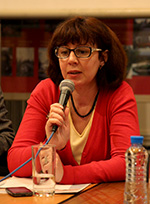 The historian Elena Strukov was interested in the problem of the correspondence of the statements of the leaders of the ultra-right public discourse, how they are rooted in history, those of them that are quite actively in political life, and not just a row in stylized caftans, as some brisk-giant.
The first of them, Alexander Dugin, who read the history of the Eurasian Youth Union (ES) in the Alexander Slobod, the Lecture of the Opiphysics of the Opiphonin in the Alexander Sloboda, actively, actively. In it, the author substantiated the need to create a “neo -instrument” to eradicate corruption in the country and strengthen the power vertical. It could be assumed that the Activists of the EU for this role have read the Dugin’s role, but they did not differ especially here. Although with the start of events in Ukraine, the members of the EU, after a rather long break, once again intensified and marked by pro -Russian shares, including in Ukraine.
The theme of the rechoad was picked up by the activists of the Rodina party, closely related to the name of Dmitry Rogozin, however, according to Elena Strukova, it is much more important for understanding the points of view of party members to the country's history of the Russian Memory site, the main goal of which is the search and publication of “crimes against Russia” by states, organizations and individual characters.
One of the most read far -right politicians remains Nikolai Starikov, Elena Strukova believes, although his books have nothing to do not only with historical science, but also with historical journalism is essentially an “entertaining” conspiracyology, and the “Great Fatherland” party (Air Defense) created by him is mainly concentrated on the searched and release of the intrigue of the world's backstage, but not in the historical past, not in the historical past, not in the historical past. And in the present.
However, the palm of the championship in the fight against agents of the world influence of Strukov gives not the air defense, but the national liberation movement created by Evgeny Fedorov in 2011, the main goal of which is the “Russian sovereignty”. Fedorov considers the history of Russia as a continuous national liberation struggle with the invaders, for example, a liberation war is being waged against American influence that dominates after the collapse of the USSR.
In general, all politicians of this spectrum are engaged in the search for the guilty in the current troubles of Russia, enemies of both external (interventions, English intelligence) and internal (Peteri, intelligentsia, revolutionaries), they are all loyal to the current government (otherwise active instruction in political life would simply be impossible) and gravitated towards imperial. The best way to correct the current state of affairs, according to the above politicians, is to create an organization of active supporters of the authorities, the same new oprichnina.
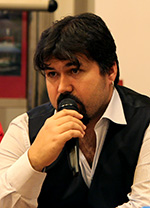 Head of the Laboratory of the Russian Research Institute of Cultural and Natural Heritage named after D.S. Likhacheva Ivan Grinko , like Emil Pain, turned to study the problems of nationalism to social networks. “The fact that we gently call today'yxenophobia '',” he said, “is actually nothing more than classical biological racism.” Social networks seemed to him the most convenient tool for measuring the "medium temperature" in the hospital. The topic of racism is still taboo in society, so direct polls are meaningless - respondents are unlikely to admit their views even on the terms of anonymity. The onputed observation method also does not give a complete picture, since it does not allow to evaluate the scale of the phenomenon. And social networks make it possible to see what was previously hidden - the attitude of people to racist concepts and, most importantly, to the social basis, on which these concepts are born and develop.
The object of the study was participants in groups related to racist themes, the main attention was focused on the VKontakte network. To date, there are about 20 communities with the number of participants more than 100 people focused on racial issues (racology, racial hygiene, etc.). The data obtained show that the traditional portrait of the racist ceases to be relevant (for example, 34% of participants in the largest group, racology, are the representatives of the weaker sex, there are surprises with age: 64% of group members were people from 23 to 28 years old, and not at all endless youth, as used to count), and the social base of modern racism is becoming wider.
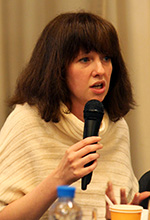 The expert of the SOVA Center , Vera Alperovich, focused on studying the positions of the leaders of the largest and active nationalist movements on the Ukrainian issue. The scatter of opinions was quite wide and very unexpected, the author of the article noted. Some previously allied associations even quarreled. So, for example, the National Democratic Party announced that it categorically does not support the “Maidan” (despite the sympathy for the idea of the people's uprising against illegitimate power), since the “Ukrainianization” was the idiological core of the Ukrainian revolution, which will lead to the infringement of the rights and freedoms of Russians in Ukraine. The unification of the "Russians", unlike the NDP, saw in the Maidan primarily the fight against the corrupt regime. The “Russians” found most of the statements of the Russian media about the Nazis and “Bandera” in Ukraine by a strong exaggeration necessary to create a negative image of nationalists as such, including to create a negative image of Russian nationalists in Russia. The discord between the “Russians” and the VDP led to the fact that the latter conducted a separate action dedicated to the “Russian spring”, accusing many years of allies of the “Bandera,”.
In general, however, nationalist organizations supporting the “Russian spring” are much more than not supporting. Many ordinary activists even went to Ukraine to replenish the ranks of the “Russian militia” and prove their beliefs. This question, however, needs a special study, emphasizes the author.
On Skype, another author of the collection, the head of the monitoring group of national minorities in Ukraine Vyacheslav Likhachev, took part in the presentation. Noting that the last 10-15 years, Ukrainian nationalists have been under the strong influence of Russian, he turned to differences. In democratic Ukraine, nationalists have always had an official niche, which cannot be said about Russia. On the one hand, this facilitates existence, on the other hand, creates problems. They begin when there is a separation between radical and moderate nationalists who are ready to integrate into the democratic process. In Ukraine, nationalists had the opportunity to participate in the democratic process, they were not replaced in marginalia. This led to a certain legitimation in public discourse and, as a result, to a misunderstanding of what can be said and what is impossible.
The peak of this legitimation fell on the events on the Maidan, which were not always accompanied by an adequate information campaign, and in these circumstances it is extremely important to understand what the role of national radicals in the protest movement of the Maidan and subsequent events is really. Likhachev believes that ordinary activists and citizens who flowed to the Maidan were incomparably more contributing to the victory during the first information about the upcoming onslaught of law enforcement agencies. For the correct understanding of the role of right -wing radicals in the protest movement, he emphasized, it is necessary to be aware of the proportion. millions of people. At the beginning of February, there were 12 thousand people in the structures of self -defense, of which 500 people were of right -wing radicals.
However, the National Radines managed to win, let’s say, a rhetorical victory, since they managed to impose their discourse to a significant part of the protest movement. The protest movement did not develop another symbolic language, in addition to the nationalist. The tribune of the Maidan could not offer the masses European integration slogans, which in popularity could compare with the standard "Glory to Ukraine! “Glory to the heroes!” And the masses used the symbolic language of nationalists, not an ideology, but a language that now adopts, including power. The role of militaristic rhetoric is pleased on the eve of the upcoming elections, Likhachev noted.
The insignificant support in the presidential election, which Tyagnibok and Yarosh received, should, as it seemed, would close the question of the electoral prospects of the right radicals. However, the chances of the leader of the Radical Party (RP) Oleg Lyashko in the parliamentary elections, according to Likhachev, are quite high: operating the image, on the one hand, a decisive fighter with separatism, really fighting in the east of the country, and on the other, a simple guy from the people (it was he who sang a song with abnormal cursing at Putin), he came unexpectedly for many) To the final of the election race with the third result, 8.32% of the vote. In the party list of the RP there are representatives of the social-national assembly, the unification of ideological neo-Nazis, and it is likely that the populist Lyashko will spend precisely these allies of his allies in the Radio. Today, radicalism is not embarrassed, Likhachev emphasized, the main thing is to participate in Russia's resistance. Thus, he summarizes, the aggressive creeps of Russia are today the factor that provides the prospects for the ultra -right movement in Ukraine.
Photos of Svetlana Solodovnik