
Translated material
Pictures from the exhibition
Virtual museums and concerts
Alexander Genis: Today our heading “Pictures from the exhibition” will go on a tour without looking up from the computer. The fact is that recently New York Times, the intermediate results of that virtual revolution, which has forever changed the museum affair. Today, each large, and any other museum has a virtual application, with the help of which every Internet subscriber can get acquainted with its collection without leaving home. The competition of curators - and their programmers - leads to the rapid progress of virtual museums. The best of them, perhaps, is the Favorite Museum of New York - the Metro. With it, we will begin our conversation about the limits and capabilities of virtual art.
(music)
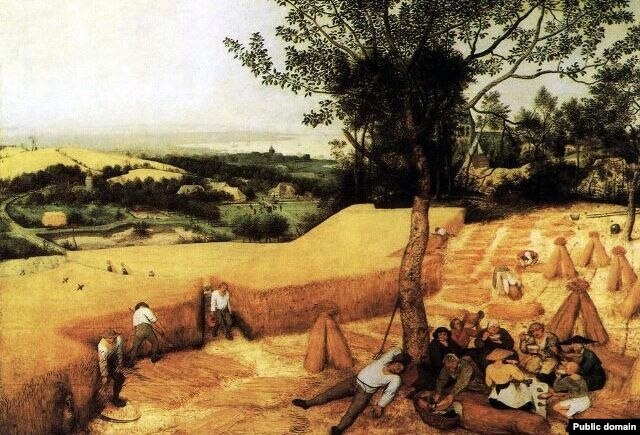
Alexander Genis: The first time I came to the metro the day after I moved to New York, the last time yesterday. Almost 40 years of American life fit in the interval, for which I have never parted with the museum longer than a month. And every time, no matter what exhibition gives me here, I will definitely visit the picture, which the museum considers the best, and I am to my beloved: “harvest” of Bruegel.
The connection with him began even when I saw “hunters in the snow”, of course, in Tarkovsky’s Solaris, because there were no Brueghel paintings in that country. But they were enough in Vienna, where emigrants on the way to America stopped briefly. I do not want to say that this circumstance has become the only motive, but it undoubtedly played a role in choosing a direction. Since then, I have been hunting for Brueghel’s canvases from San Diego to Prague, and in my free time I go to him in the subway.
“Such a picture cannot become familiar, but over a third of centuries I certainly happened to study it thoroughly,” I thought and was fiercely mistaken, which was found out after I examined the “harvest” on the retina of ai-pada with the help of Google and his sensational art project .
I was immediately struck by the field of still undressed bread. In the hall it seemed to be a continuous wall, but now, increasing the image on the screen, I found that the first line of the field was eared with their face, or rather - a profile. Carried away, I moved from the foreground to the back to find a square pond there, and there are seven women, two of which bathed naked, judging by the pink buttocks sticking out of the water. I had not seen anything of this before, but deciding that it was unlikely that Google had drawn to Bruegel's scarrow details, I went to the museum and again found nothing. I interfered with glass and electronic security, which began to whistle when I tried to bury in the picture. The “harvest”, however, became different. I had previously suspected, and now I knew for sure that it was hiding in it more than what we could see with the naked eye. Bruegel, like a god, looked from above, saw everything and wrote with a margin, hoping that everyone would see as much as he could.
The camera, however, knows, no less than him. The electronic reproduction of such a high resolution requires a 10-hour shooting and a billion pixel (one hundred times more than conventional digital photography). The first such appeal was 17 paintings selected by each of the famous museums. Botticelli, London - “ambassadors” of Holbein, the Hermitage - Canetto, the Tretyakovyk - “the appearance of Christ the people”, which demanded 12 megapixels, the New York Museum of Contemporary Art (Moma) - “star night” by Van Gogh. But in general, one way or another, Google today shows 32 thousand works from 151 museum 40 countries.
And this virtual storage is just one of thousands of other network galleries. Having reduced the path to any masterpiece to one click, they democraticized world art - and, according to snobs, depreciated it.
(Music)
Alexander Genis: When all this began, and the painting was still timidly penetrated on computer screens, museum directors nervously stated that the image quality could not be compared with the original.
“It is not clear,” Bill Gates said then, “they rejoice at this or are upset.”
Now, when the technical level has surpassed the capabilities of our optics, a different question has become relevant: what to do with what got - everyone and for nothing.
Virtual art, like agriculture, knows two ways: in breadth and deeper.
The extensive method allows you to make others from some museums - their own. You can collect paintings, or you can - their fragments, making private collections of arms, legs, carpets or birds. Having digitized the whole history of elegant arts, the computer - among other things, created its full dictionary, which is suitable for postmodern perestroika. Possessing such a material, the viewer easily replaces the artist, in any case, one that does not create, but mumbles.
The intensive path, as it should be, teaches not to be scattered. Going deep into the canvas, especially if it is Van Gogh, we can open in it what the author did not know and the pulse of painting. The smear, as a handwriting, opens the subconscious of the picture, the temperament of the artist and comments on the decisions that the brush made at every second and every millimeter. The intimacy of such a meticulous acquaintance (as if to read strangers, moreover, love letters) does not remain without consequences. Passing through the picture in the wake of the master, we pretend to be them and find out about the slightly less.
But no matter how we communicate with virtual painting, the main thing is to understand how it differs from the real one.
Each technical revolution involuntarily - and therefore brilliantly - redistributes the boundaries of art. So it was with a photograph that forever excluded a criterion of similarity from painting. So it was with a movie, which forever canceled realism in the theater. This is happening now, when the computer teaches us to separate virtual reality from living experience. And the more successes are the first, the more expensive to us the second. That is why the electronic museums did not replace ordinary, but only attracted the audience even more, simultaneously turning them from fans to pilgrims.
I myself recently experienced this in Padua, where I need to sign up in the queue to look at Giotto in the chapel del arena.
Actually, I even liked it, because, having received a ticket at the checkout, you can prepare all day in the evening. Drink and bite, without leaving the city market rich in sausages, to roam the wobble corridors of the Old University, get acquainted with the students falling out of it, there is ice cream in the cafe famous for their intellectuals and look at the clock in anticipation of the session, more and more reminiscent of spiritualistic. Finally, already in the dark, shaking off the light hops from the local white, forgetting from the excitement of fatigue, setting up at once the frivolous fun, which was inappropriate, you enter the baroqueer replacing the entrance and the door. What happens on the other side, in the canned air locked from outsiders, cannot be described in either words or letters. After all, they talk about content and form, but do not give a phenomenological report on the commotion, which the murals Giotto are made in the soul of the viewer.
“Art,” says the philosopher, disappointed in more radical measures, “shuts the same hole in the soul that falls on religion; They do not even argue and require the same: hunting for changes inside, and not outside.
Here you can’t cope with this computer. Having taken the information, he masterfully convey it to everyone and discovers the limits of his capabilities. Exit - direct contact. If earlier we entered the museum to get acquainted with its contents, now to be with it, gain a miracle and get infected with it.
Great paintings, like the relics of saints, change those who believe in them, while others should not leave beer. Moreover, now that the computer so easily satisfies the superficial curiosity that the real museums, it would seem, are needed only by fanatics. They, however, do not become less. And I guess why. The more we know about the picture, the more we want to learn about ourselves - about how we will feel in her presence. In the end, painting is a transformer of everyday life, and, dividing with this metaphysical device one space, we fall into a power field that transforms life into art.
Well, now, with the help of Solomon Volkov, we will move from virtual museums to virtual concerts.
Solomon, we talked about virtual museums. But besides the virtual museum, there is also a virtual gallery, because each of us can collect our own gallery. And following your stormy activity on Facebook, for example, I see that you are not alien to such a collection itch and collect on Facebook just such a virtual gallery. Tell us about your experience.
Solomon Volkov: I have the following experience. Generally speaking, I have such a raider policy. I met through Facebook with several remarkable teams who really are engaged in such art excavations. I am not technically capable of this, probably, I would not have enough patience. But suddenly I saw that one of the frands, her name is Elena Tanakova, regularly puts or hangs, as they say, paintings by artists of the realistic direction of the twentieth century.
I must say that for me the existence of such a huge layer of artists, which in the twentieth century, which we are used to characterizing as the age of avant -garde art to a large extent, that is, leading names that we are in hearing and in the eye, if you like, will be artists who were considered modernists. It is now that we are not surprised at the flying people of the Chagal, or the cubist guitars of Picasso and marriage, or exotic landscapes and lifes of Matis, and at one time it was a genuine revolution. It somehow seemed to me that it seemed to me that no realistic art according to my, probably naivety and non-education of artistic, it seemed to me that no significant realistic art exists. Now I will make some retreat. My other friend named Igor Vortman regularly sets pictures, texts, and photographs related to avant -garde art, mainly Russian. Tanakova may have an emphasis more on Western art, although recently paintings and Soviet realists of the twentieth century have appeared. Say, literally the other day, she hung a collection of paintings, sketches of theatrical in this case, artist Alexander Samokhvalov, whom I love very much. You know, this is such a wonderful way of contact. So she hung Samokhvalov on her website, and I immediately write to her in the commentary that even more Samokhvalov is possible? She sometimes even responds to such requests. And I, in turn, use her collection and put the paintings on my website.
Alexander Genis: That is, it is a gallery in a fold.
Solomon Volkov: Now I will return to what Igor Vortman is doing. The paradox is that the avant -garde art, as I said, I know, I know well, but the excavations of Vortman, of course, are amazing, because there are drawings of the whole constellation of Russian avant -garde, and texts, and painting too. I did not know much. But still, it was much more familiar to me than the realistic art of the twentieth century, which is digging Tanakova. I have one consideration in connection with this: the paradox is that the avant -garde art of an impact of realistic art of the twentieth century is less complex and less sophisticated.
Alexander Genis: That is, you turned the board.
Solomon Volkov: Realistic art that Tanakov exposes in Hemba, it is extremely painful, broken, with very deep subtexts. While the avant -garde art is brisk, bright, quite optimistic for the most part.
Alexander Genis: > Avanagrad - often the art of admission. We see what the school wanted to say, not the author. A good example is cubism.
Solomon Volkov: In addition, relatively speaking, this is a more healthy art, more cheerful, more optimistic, more offensive, as you like. Indeed, with the word “avant -garde”, if you remember in the Soviet sense of the word, remember, there was such a favorite word “decadence”.
Alexander Genis: This is simply the illiteracy of Soviet art. Decadent art is Proust, not Picasso.
Solomon Volkov : The avant -garde is real, he is so quite healthy - both sincerely and physically - guy.
Alexander Genis: Because the avant -garde was revolutionary in its definition, and the revolution is already utopianism.
Solomon Volkov: But realistic art is just filled with all sorts of such painful meanings and often makes you think about it.
Alexander Genis: Listening to you, I thought that in American art, for example, there are artists, the most famous artists are probably abstractionists, then Andy Warhl, pop art. But my favorite artists of America are realists. Not realists of the XIX century, and not Norman Rockwell, whom I love, how I loved the magazine "Funny Pictures", no, my loved ones are artists, I would say, gloomy-philosophical, such as Edward Hopper or Andrew Wayets.
For me, one thing is important in painting: if I leave the exhibition, and I see the world with different eyes, this means that it changed my optics. Mandelstam said that French artists cure us from “from the harmless plague of naive realism,” from what we are used to. Such artists as Wayetets, of course, change our optics, of course, we look at everything with different eyes and see the world from a different angle.
So, I understand your thesis, but I want to say something else: all these virtual galleries allow us to compare all the time. Now, when I read the book, I should get to the mention in the text of any picture, I will definitely look it on the Internet, so that it immediately means that the virtual world of painting that surrounds us now has become infinite - there has never been such an opportunity before. Of course, it leads to democratization of art. Ultimately. We know art better and love it stronger.
Solomon Volkov: The fact that the Internet is very expanding the horizons is undoubtedly. It always seemed to me that I was a well-fed and erudite person in matters of culture, but at the moment, due to the fact that I am immersed in a fake-on existence, I will learn something new for myself almost every day in one or another area. It can be music, it can be fine art. At Tanakova and Vortman, as I said, I constantly stumble upon completely unexpected surprises, and on new names - I sometimes heard, I heard about Gudiashvili, about Churilin. But what shows Vortman very much extends my ideas about such individuals. But Tanakova has everything for me one after another surprises. There are virtuosos and not just virtuosos of form, but very deep philosophical characters.
Alexander Genis: Yes, this is curious. Solomon, however, in addition to painting, the Internet gives the opportunity to get to know music better. There may be not only virtual galleries, but also virtual concerts, right?
Solomon Volkov: In music, I am probably more a specialist than in painting, there are fewer surprises. This is mainly the area of popular music, and a certain period. When I had already left the Soviet Union in 1976 and somewhere before the start of perestroika, I was turned off from the life of the mass art of Soviet. That is, this is actually ten years. I did not know the popular songs of this period, I did not know the popular art of this period, and here I have discoveries and sometimes quite pleasant surprises. The fact that for my freeds who continued to live in Russia, nostalgic memories, for me are small discoveries. Sometimes I wear all day with some new song. In turn, I can offer my Frendam some erudition accumulated over my 60 years of music. In this regard, I suggest that my frandes such virtual concerts that cannot take place in everyday life.
Alexander Genis: You know, there is such virtual football when the best players of all time and peoples are gathered in one team, this is virtual football, which was not and cannot be.
Solomon Volkov: That's exactly what I do. I will tell you about my last project of this kind. This, of course, needs to be done with popular works, where there are a large number of first-class interpretations, even for me, and I always considered myself a person rather savvy in this area, but still YouTube, where musical notes are exhibited, it turns out that there are many surprises and many finds. I recently decided that one of my favorite essays of musical is the overture of Beethoven Coriolan. At one time, for me, as for many of my snobbies, I would say that the configured peers Beethoven seemed to be a boring composer. Well, yes - Beethoven.
Alexander Genis: This is called: "Ostap did not like the mountains."
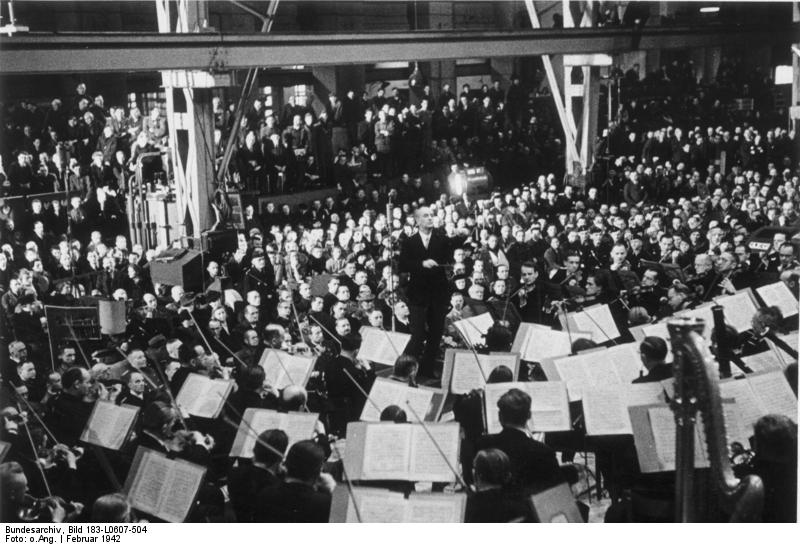
Solomon Volkov: I can find an explanation here and tell you what’s the matter, so you are getting out of my lack of respect for Beethoven. The fact is that Beethoven was performed by the Soviet conductors of that time in some antediluvian, I would conditionally call her a Stalinsky interpretation now. I must say honestly, I have not caused any special sympathy, and even more so. And suddenly I fell into my hands a new Soviet plate, on which the following was written, there was 5 symphony and overture “Coriolan”, performed, it was written there, V. Furtengler and the orchestra, but which was not said. Only later did I learn the story of this record. The fact is that when the Soviet troops took Berlin, then, of course, the premises of the Berlin radio were also captured, and there were completely invaluable records of both pre -war, and made during the war, the best German conductors with the best German music. This was all requisitioned, confiscated, and the entire archive was taken to the Soviet Union. There he lay himself like paintings by the Dresden Gallery, somewhere he was hidden until the time, until they decided that it was worth printing. Moreover, earn some money on this. In addition, Furtwengler enjoyed not a particularly good reputation in West Germany and America as a person who performed in the Hitler years with concerts and, as it were, was a fig leaf in the German culture of that period. That is, Hitler came to his concerts and sat in the front row, and Goebbels, and Goering, all this Shusher Nazi. At the same time, Furtwengler conducted the best German music, classic - Beethoven, Brahms, Wagner. And this plate struck me, I still remember that I don’t have it here with me, she remained in the Soviet Union, but I still remember her appearance how many times my friend and I listened to her. Because it was a different world, it was another composer, it was a composer whose abysses opened the spirit, the greatness of the spirit, all taken together. And these were the notes of the war years - 1943, but we did not even know anything about it, we did not even suspect. And what kind of orchestra it was, we only later found out, and the orchestra was the Berlin Philharmonic.
Alexander Genis: The same, the best orchestra in the world is Berlin.
Solomon Volkov: Now I do not want to go and I will not go into a very difficult issue of Furtwengler's situation in Nazi Germany - this is the subject of a special conversation. Maybe we will ever discuss this topic with you, there is a book about it and the film is very interesting. But for me, since then, Furtwengler has been a symbol of the conductor.
Alexander Genis: Since your virtual concert is being built?
Solomon Volkov: Seeing how many “Coriolans” we have on YouTube, I decided to arrange a competition for myself. After all, even when I share such things with the Frends, I use Facebook, my page in it, as a kind of diary of cultural impressions. The fact that this second I will hear, some kind of song, I like it, I put it with the appropriate comment.
Alexander Genis: That is, this is a public diary?
Соломон Волков: Да, и мне очень интересны бывают отклики, то, что собирает больше так называемых «лайков», что меньше — это тоже мне очень интересно, потому что сразу же заодно это и социологический опрос, я аудиторию свою лучше понимаю. Так вот я решил такого рода эксперимент проделать с «Кориоланом» и поставил подряд энное количество записей, объявив, что устраивается конкурс. Причем, должен сказать, один раз я такого рода конкурс провел и победителем объявил того деятеля культуры, тогда речь шла о стихах, кто собрал больше «лайков». Нет, все, я эту практику отменил.
Александр Генис: Демократии не будет?
Соломон Волков: Используя выражение, которое приписывают Константину Эрнсту, я его цитирую: «У нас демократия приветствуется, но не практикуется». Так вот, у меня на страничке именно такова ситуация. Я поставил, когда я уже выставлял одно за другим исполнение «Кориоланы» для своих френдов, предлагая им участвовать в этой игре, но я предупредил, что победителя определять на сей раз буду уже я, мне просто интересна была реакция. Уже к тому моменту, когда я начал выставлять, я знал, что победителем будет Фуртвенглер.
Александр Генис: Давайте сравним, чтобы понять.
Соломон Волков: Я хочу показать отрывки из вступления.
Александр Генис: Один и тот же отрывок?
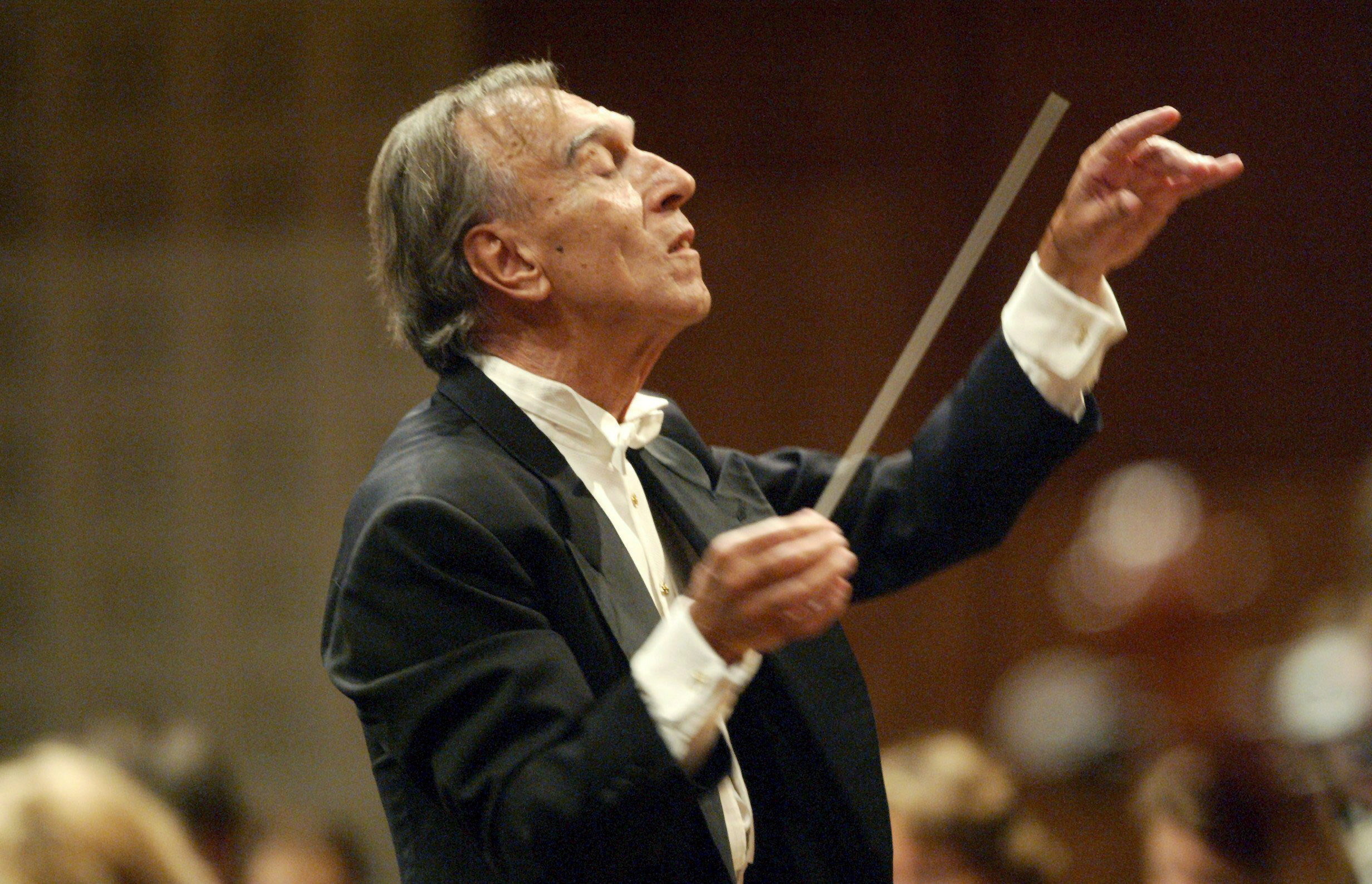
Соломон Волков: Один и тот же отрывок, начальный фрагмент, в исполнении трех дирижеров, которые составили для меня первую тройку в итоге. Это исполнение Герберта фон Караяна, исполнение Клаудио Аббадо и исполнение Фуртвенглера.
Эти фрагменты я сейчас предлагаю нашим слушателям, они прозвучат один за другим, чтобы они могли составить свое мнение, а мое суждение следующее: Кароян в лучшей немецкой традиции монументален, и его «Кориолан» - это монументальное сочинение. Аббадо, который, кстати, и это очень интересно вещь, пришел в Берлинский симфонический оркестр на смену Караяну, преобразил этот оркестр совершенно. При Караяне этот оркестр играл фундаментально - стояли этакие могучие колонны, а Аббадо как бы раскрепостил этот оркестр.
Александр Генис: И колонны из дорических превратились в ионические.
Соломон Волков: Все стало гораздо более свободным, естественным, живым, задышало, утратив при этом какую-то монументальность. У Караяна - монументальность, у Аббадо живая трепетность, тоже очень привлекательная, а у Фуртвенглера - все вместе: и монументальность, и живая трепетность, и невероятная философичность.
Александр Генис: Теперь я уже и умираю, как хочу услышать.
Соломон Волков: Это феноменально. Я в итоге после того, как объявил, что победителем является Фуртвенглер, я еще раз поставил запись «Кориолана» Фуртвенглера с комментарием, что ИМХО, по моему скромному разумению, это вообще может быть лучшая музыкальная запись всех времен и народов. Предлагаю сейчас присоединиться или отвергнуть мою точку зрения. Итак - «Кориоланы», начальные фрагменты в исполнении фон Караяна, Клаудио Аббадо и Вильгельма Фуртвенглера.
(Music)