
Translated material
Half a century indie
The term “indie-music”, designating musicians existing regardless of large labels (mains) and their units, arose and became widespread in the late seventies, but independent musicians and record-labels seemed to exist from the very beginning of the history of recording. Yegor Antoshchenko tried to figure out what was happening with independent music in the past half a century.
 1950-1960s
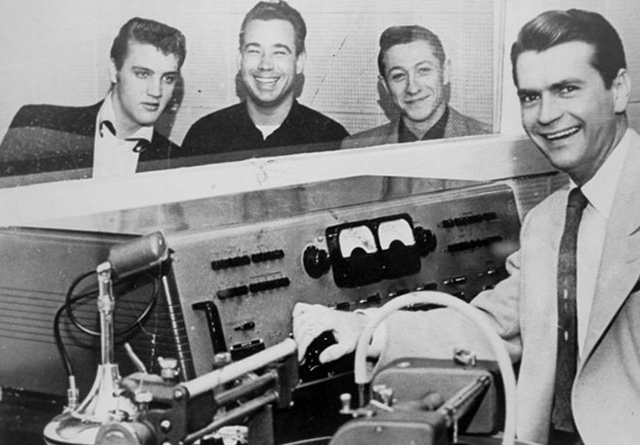
Independent labels began to appear in the forties, and by the end of the fifties they were able to significantly squeeze the Maigzhors. And this despite the fact that Columbia Records and RCA/Victor , from which at the beginning of the 20th century, the era of recording began, by that time had turned into real media imperials: the first, say, was a member of the CBS Corporation- a television and a radio company, which we owe the series Theory of Big Bang and Big Brother. That is, they had the best opportunities for promoting their artists. However, independent labels like the Memphis Sun Records , where almost all the first stars of rock and roll-Elvis Presley, Roy Orbison, Jerry Lee Lewis-turned out to be more successful. If from 1954 to 1958 the vast majority of hits in the Billboard chart accounted for the “big four” Maighors- Columbia , R Ca /Victor , Decca and Capitol , then by the last year, almost the entire hit parade occupied independent labels.
Thanks to rock and roll, which the respectable “white collars” from show business did not want to notice in any way: in the 1960s, the recording business began to grow like yeast, and in America there were 3000 independent record-records. Then the first label appeared with its characteristic consistency (like Ninja Tune in the nineties or Hyperdub in zero) - Motown Records . Founded in 1959 in Detown ( Motown - the reduction from Motor Town , “City of Motors”) The company not only opened several outstanding names like Stevie Wander, Marvin Gaia and The Supremes , but also determined the development vector for popular black music for many decades ahead.
In 1967, Apple Records decided to establish the main then pop stars The Beatles . The catalog turned out to be very powerful: among the artists - Ravi Shankar, Modern Jazz Quartet , Badfinger . Apple philosophy Records , formulated by John Lennon, by the way, was very close to the philosophy of the British Indie Libeans of the 1980s: “We want to create a system where a person who wants to make a film or make a record will not have to overtake the thresholds of someone’s offices.” They, albeit with less success, followed Rolling Stones , launched their own recording company in 1970.
If the term “indie” appeared in the late sixties, then his first thing would be glued to Velvet Underground : all the production of Andy Warhol was that he simply invested in the recording of the first album and let the musicians do everything that would pleasing to them.