
Translated material
Only the present and the future
At the St. Petersburg Media Forum, which started on October 1, the Kor-Kor program is dedicated to North Korea . In its first section, a movie about various aspects of the life of the DPRK, shot by Western film documentaryists, is demonstrated. On the shooting of the documentary "set higher goals in the work" of the Australian director Anna Brinovsky, the book of Kim Jong Ira "On Cinema" inspired. After reading it, Breinovsky went to Pyongyang, met the leading representatives of the DPRK movie, including her beloved actress Kim Jun Jong Su Gyun and the children of the American defector Joe Dressok. Having learned the basic principles of Chuchhe , Anna Breinovsky returned to Sydney and took a truly Chuchhei drama directed against the construction of a drill tower in a public park near her house. The film "set the goals in creativity" is dedicated to the happy North Koreans, the story, as the director herself said, "another North Korea, the one in which ordinary people lead ordinary life, and not the horrors that show us in CNN and Fox."
North Korean films will not leave the Russians indifferent. And not only because they resemble Soviet patriotic cinema, say, "Berlin's capture." The DPRK cinema, as the film critic, the curator of the Cor-Cor Vasily Koretsky section rightly noted, is the cinema of dreams, dreams are much more passionate and euphoric than Alexandrov’s musical comedies.
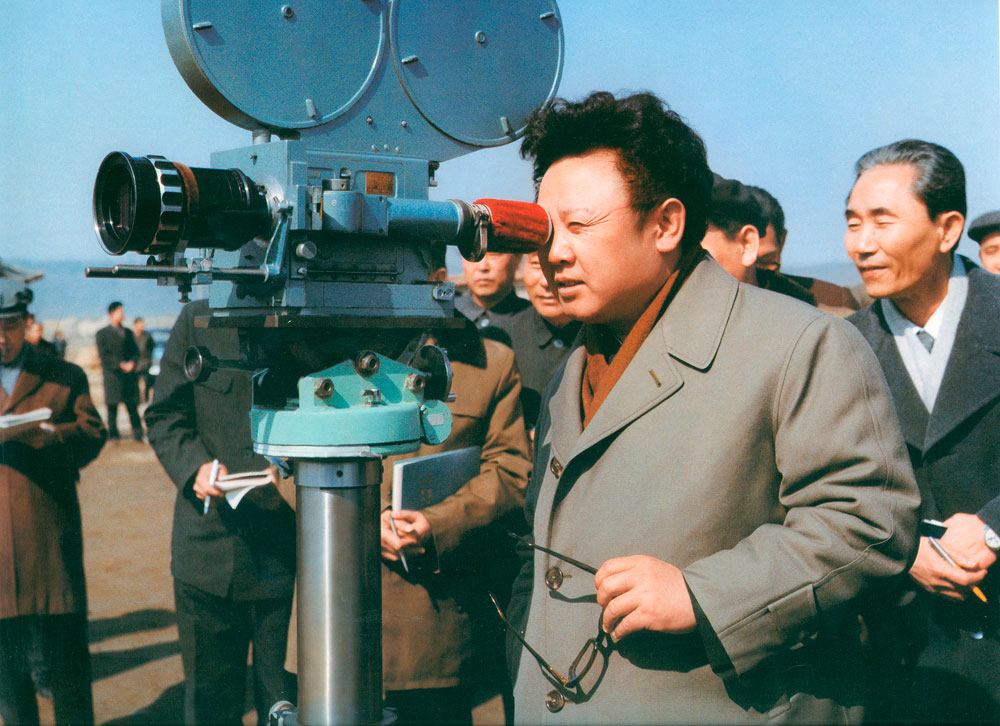
In his youth, Kim Jong Il personally led the entire North Korean cinema, "spending days and nights on the set." He produced two paintings recognized in the DPRK by the Immortal Classics - the "Sea of Blood" (1968) and "Flower girl" (1972). In 1973, he wrote a voluminous work " On Cinema ", which regulates all the processes of film production. Here is a list of chapters: “On high-speed fighting in a womb”, “On the correct folk image”, “On the plot”, “On socialist morality in the cinema”, “On common ideological mistakes in the finals of the films”, “On sound effects”, “On the requisite and costumeracs”, “On the w real of the musical in national cinema”. The section "On the decisive struggle against the arbitrariness of artists and designers" says: "The director must exclude the possibility of ensuring that the artist does not have the scenario and directorial vision. So, in the film, which came to the screens and depict the life of the saleswomen, the heroine without special need changed the outfits, and in another film about the domestic liberation war about the domestic liberation war The terrifying barracks of the aggressive troops of the United States and the puppet army of South Korea fell into the frame beyond the measure, it seems to be trifles, but they distort life, violate the truth of the work and negatively affect the education of people. ”
There is in the program of the Cor-Cornity Film of the English director Daniel Gordon "The state of the mind". In 2002, he visited Pyongyang and shot a documentary about seven participants in the DPRK national football team, legendarly beating Italy in 1966. The film liked the DPRK management so that the director was allowed to first shoot a documentary about the American Dress Dresser, and then about the grand gymnasium show, the Ariran festival, which is held every year at the first of May in Pyongyang.
Daniel Gordon, like Anna Breinovsky, is convinced that he showed the real life of the North Koreans "such as it is." In fact, it is not worth seducing: the documentaries were allowed to show only what is allowed by the leadership of the country. There are many forbidden topics. Journalist Andrei Lankov comments on the ideological filling of North Korean paintings: “Life of prisons and camps is one of the most closed pages in any totalitarian state. This is especially true for such a super -tetotitarian state, which is modern North Korea. During my stay in this country, I drew attention to the fact that Korean propaganda and official art (and other arts simply do not exist) almost never say it) About the trial, neither about prisons. The scene of the court, so popular in the Soviet cinema of Stalin's times, is a rarity, but nothing is said about prisons. ”
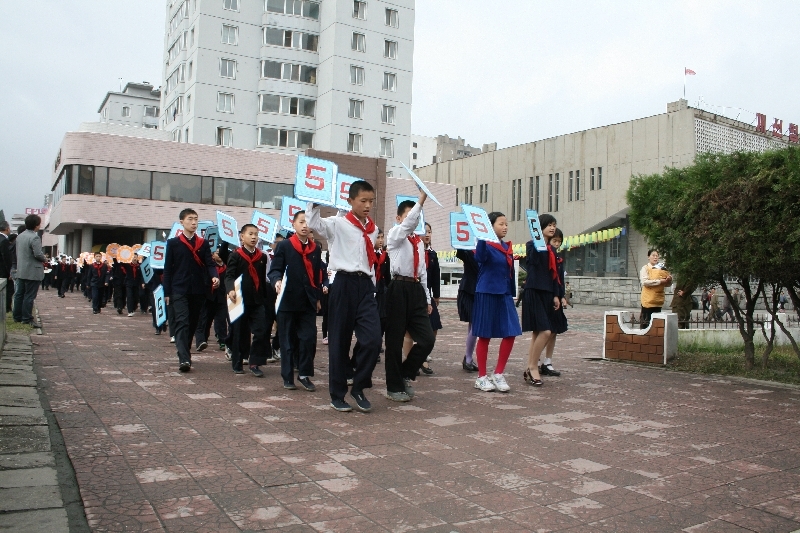
About two North Korean feature films that are shown on the Cor of Corgus, said the curator of the program Vasily Koretsky :
-The first retrospective of North Korean cinema in Russia was in the mid-90s at the Moscow Film Festival. Then eight paintings were brought. Since then, one North Korean picture falls on the Moscow Film Festival every year. But usually these are films that are already taking place in international film festivals, and, in addition, there are problems with carriers. The fact is that in the DPRK cinema is still shot on film. This is an important part of aesthetics, because it is propaganda, and propaganda should be made beautifully. You can not remove paradise to the number. Films, like much more, are very difficult to export from North Korea. The difficulties also leads to a restriction on the removal of work with hagiographic plots. That is, images of the "great leaders" are not sold, not exported. Some films related to military themes are prohibited from export from the country. For example, a film about a novel in a detachment of suicide suicide bombers. The logic of prohibitions is the most different. For example, if the film is shot at a real plant. For example, there is a romantic comedy, shot at a beer factory in Pyongyang, but we could not get it. Therefore, you have to work only with those films from the DPRK, which are bought for rental by Western distributors. We have two films on our core. The first is called the "bell". This is a 1986 film. He marked in North Korean cinema a return from flirting with a Hollywood uniform, which was introduced by either the invited Kim Jong Ir, or the stolen disgraced South Korean director Sin San OK. He brought North Korean film production for three years, relatively speaking, with Hollywood standards. Energetic installation, a more dramatic line, intrigue, etc. were made liberties: women with loose hair appeared on the screens. After that, by the way, this became fashionable, and activists began to cut the hair on the streets with particularly radical fashionistas. After the flight of Sin of the Oka in 1986, this cinematic flirting ended in Austria, the “big style” returned, and the first film that identified the return to this “big style” was the “bell”, director Che Gyon Gong. This is a large epic drama with a complex plot characteristic of North Korean cinema. The action takes place in several times. A young promising engineer in some post-revolutionary time, in the 50s, leaves his native village, going to Pyongyang for happiness. This in itself is impossible because a person living in a village cannot just get into Pyongyang. No one will let him go from the village. Nevertheless, he goes there, having betrayed the ideals of youth, and misses in Pyongyang in his native huts. Unable to return there himself, he sends a son to his native village, who completes what he did not. Filmed very bright and beautiful. The second North Korean film, which we represent, is called "Central striker", directors Pak Chan Song and Kim Gil In. He was bought by the Beijing company Koryo Turs, which is engaged in all tours in the DPRK. The co -founder of this company Nicholas Bonner is the co -producer of the films of Anna Broinovsky and Daniel Gordon, as well as the co -player of the first film production of Belgium, Great Britain and the DPRK - the romantic comedy “Comrade Kim goes into flight” (2012). This is a football drama, like the entire football theme, is connected in the DPRK with a match at the 1966 World Cup, when the North Korean team won the Italian team. It was the largest success of North Korean football players. The film talks about a young central striker who is successful with a selfless training. The film was shot in the supervision of real members of this team. The shooting was very heavy, because part of this "summer" film was shot in winter with thirty -degree frost, in the best traditions of Soviet cinema. And all training, with bags of bricks on their backs, were in reality. Interesting operator work. This film was shot at the direct direction of Kim Jong Ira.
- Is it observed now, when Russia is more and more imminent in an authoritarian quagmire, an increase in the interest of the audience in such films?
-There is one problem with such a movie, and Mr. Medinsky will inevitably collide with this problem, trying to create something similar. There are many parallels between North Korean and Soviet cinema. Extreme nationalism. The political system in the DPRK is based on pure national socialism. The "stranger" is the whole world around him. Familiar? Social realism, which is present in the DPRK, of course, differs from Soviet socialist realism. He has no experience with modernism. It cannot be called, in the terms of Boris Groys, postmodern. He did not survive the moment of renunciation of the old and the acceptance of the new. After all, in the DPRK, everything that was before Chuchha was negligible, they have nothing to be proud of. There is only the present and future. The past is corresponding all the time. The films show facts and events that, as they believe around the world, have never happened. For example, the myth of the beginning of the war of the North and South is widespread on the initiative of the South, although the North began the war. Or a story with a North Korean companion. And today all the residents of the DPRK are convinced that such a satellite was launched, although the rest of the world has a different opinion. Mr. Medinsky should watch North Korean cinema, go to the Pyongyansky film festival in order to understand which patriotic cinema should not be shot in Russia.