
Translated material
Inhuman factor
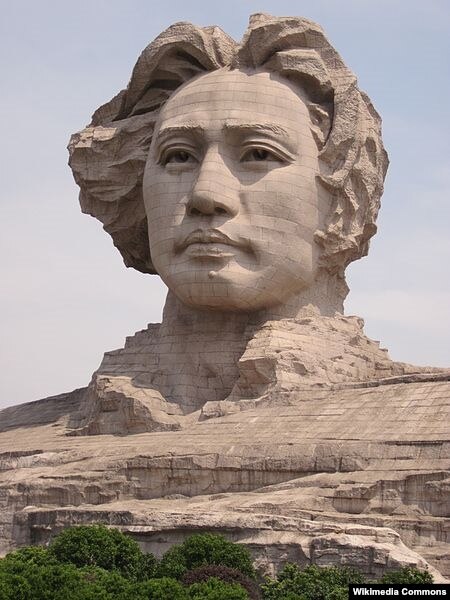
Intellectuals and great helmsman
The book of the Dutch historian, professor at the University of London Franca Dikotter, Big Hunger Mao (Mao's Great Famine, 1958–1962) aroused keen interest among the English public. This book became a bestseller in England.
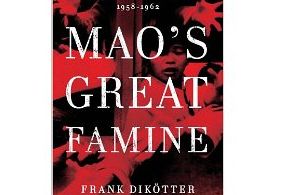
Initially, it came out in Gollandic in 2010. China in the United Kingdom is always in fashion. Well, the destruction of forty -five million Chinese who died in four years as a result of agricultural and other MAO experiments amazes even subjects of the former empire, accustomed to large -scale historical cataclysms.
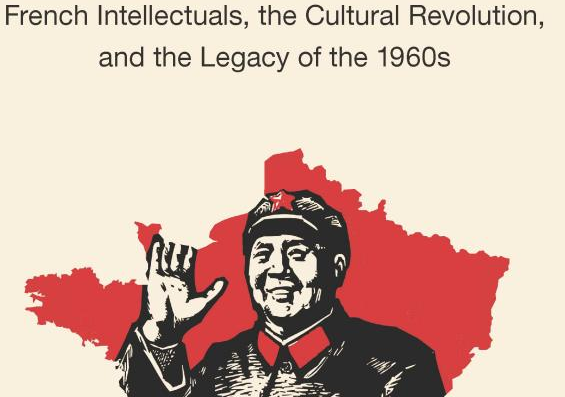
Unfortunately, another no less curious book that is directly related to the recent history of China has not received the same wide resonance. It is called The Wind from the East: French Intellectuals, The Cultural Revolution, and the Legacy of the 1960s ("Wind from the east: French intellectuals, cultural revolution and the heritage of the sixties"). Its author is an American historian Richard Walin. Not even on four hundred pages, he describes how French intellectuals supported the beating of their own kinds during the cultural revolution in China. These people - left intellectuals - are called "champagne socialists" in England, in Germany - "Tuscan socialists", in Italy - "cashmere communists", in America - Radical Chic ("radical chic"). Many of them are bad
They imagined what was happening in China, but this did not prevent them from worshiping the great feeding. Unlike the uninitiated, Simon de Bovoir visited China at the invitation of the prime minister of the State Council Zhou Enlai and in 1957 published a thick Devtor's “Great Campaign”, in which the writer and philosopher with a deep sympathy writes about the communist regime in the PRC (this belongs to the phrase no more dictatorial than the president’s power, the power of the president. Roosevelt ").
The enthusiast of Mao was the husband of Simona de Bovoir philosopher Jean-Pol Sartre. The French philosopher of Bulgarian descent Julia Kristeva also appreciated the ideas of Mao. Her husband, editor of the Levoradical magazine Tel-Kel, Philip Sollers dressed in the style of Mao and printed translations of his poems in his journal. The Chinese leader was supported by the prominent intellectuals of Altusser, Bart, Derrida, Rancier, Balro (many-year-old friend Zhou Enlan), director Godar (later a restless expert of Zionism), Badya (another restless anti-Sionist), Glingsman and Bernard-Henry Levy (the last three subsequently regretted it), etc. etc.
Almost all of these intellectuals taught at universities and influenced the worldview of several generations of students. Even the Datszybao of the Chinese leader even the Houses' intellectuals were read, although during the years of the reign of Mao homosexuals in China executed. (In brackets, I note that in England there were also his followers of Maoism. The former Minister of the Labor Government, Viscount Tony Benn, who was pretending to be a proletarian, called Mao the “greatest figure of the twentieth century.” The priest Huglit Johnson wrote: “When Mao says, he literally radiates warmth.” The commander of the avant-garde Cardi, author of the book of the book “Shtokhausen in the service of imperialism,” Mao also idolized, until the side of the Albanian leader Enver Khozh, in 1968, musician John Lennon in an interview said about Mao: “It seems that he was doing a good deed.
What moved these people? Love for the revolution? To the great breaking - to the cod of bones? But what is behind this love? Fear of death? While "there is work to assemble a scaffold", death stands on the sidelines and is waiting in the wings, and therefore, without fingering hands, you need to build a scaffold, but never complete its construction. What else? Historians, psychologists, anthropologists are looking for an answer in the unhappy childhood of Western Maoists, the desire for recognition and glory, weakness for fashion, a thirst for power, hatred of their bourgeois origin, hostility to their own country.
But I am inclined to look for an answer not in hatred or rejection, but in high. This is a high of people who have preserved tribal, collective-collecting memory. They love ritual dances, and this love is stronger, more powerful than rational thinking, morality, historical and personal experience. I am not the first to talk about it. But I'm looking for my words.