
Translated material
Victory over the sun
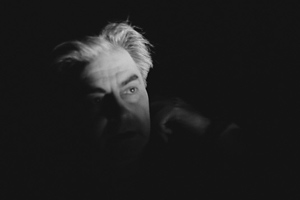
War, revolution, exile, return, split, unrest, riot and again (this time voluntary) exile: the text of the biography of Yuri Lyubimov is read by the semi -legendary epic of a Shakespearean scale and the intensity of passions. In his creative fate there was nothing personal, private-only general, universal: it is symbolic that the death of the Lyubimov Taganka in the summer of 2011 led an alarming dashed line under the whole story of the phenomenon of the Russian repertoire theater. They don’t live and do not create for so long: Lyubimov was the last of the protagonists of modern Russia, which belonged to the era of large narratives. It is difficult not to read the phenomenal vitality of the latter of the great directors of the twentieth century by the metaphor of the spread of total author’s will not only on the theater scene, but also beyond its borders - in that iron grip that, until the last years, distinguished all the performances of Lyubimov, and in the eagerness of life, which until the last day was noticeable in its complete usual energy, read categorical disagreement. With the fact that someone or something can limit the number of sunnorms and sunsets released by him.
The fate of Lyubimov generally looks like a victory of the will in the battle with the time and space, from which he every time managed to go out the winner. In the history of domestic (and world) culture, there are little examples of human and artistic courage, comparable to the history of the play “Living”, prohibited by censorship in 1968 and released twenty-one years later , in February 1989. Having created his own unique style and instantly identified aesthetics, Lyubimov, contrary to the circumstances until the last years of his life, was forced to prove that the idea of the theater on Taganka could be realized not only in the theater in an earthen shaft, but at any, in essence, point of the globe. The idea of the Taganka was imperious and in full growth through all sorts of stage, which Lyubimov entered: it was in Milan La Skala, where in 1975 the director made his debut in the opera genre, so it was in the Vakhtangov Theater, where in the spring of 2012 he released his first premiere after leaving the Taganka, so it was with the last director of the director-Prince Igor. In the Bolshoi Theater.
“Lyubimov died” is Oxymoron.
The understanding of the experience of Yuri Lyubimov is not an easy task: incomprehensible even by purely human standards, in the context of the evolution of the theatrical process of the twentieth century with its rapid rhythm of style shifts, it seems simply irrational. “Modern for me,” said Lyubimov once, “this is what was thirty and forty years ago.” For 97 years, he lived several lives at once: one-a graduate of the studio at the 2nd Moscow Art Theater, the soloist of the Song and Dance Ensemble, the successful actor of theater and cinema, the hero of the “Kuban Cossacks” and the laureate of the Stalinsky Prize of 1947, the other-the creator of the theater in Taganka, at the end of the thaw “The last one over the door, which immediately slammed” The third, completely unknown in Russia, is an outstanding opera director, who staged several dozen performances on the main musical scenes of the world, from Milan Teatro Alla Scala to the Parisian Opéra .
The complex and internally heterogeneous, creative path of Lyubimov was never equal to himself: the inability to reduce him to a common denominator makes any attempt to identify as much as possible. Perhaps the main question that has yet to find the answer is how the “Open Doors Theater” came to the red -headed totalitarianism of the late years, the theater that exploded the fourth wall and spoke in a voice from the scene about which it was customary to whisper only in the kitchens. It has yet to be comprehended, how the synonym for “culture two” became the theater that swore allegiance to “culture of one” - the theater of collective authorship, the theater, which became the venue for legalized demonstrations and replaced several generations of the inhabitants of the USSR, but managed to remain the territory of not the territory, first of all, not a political, but aesthetic statement.
You need to work hard to believe in the mournful reality of what happened: “Lyubimov died” - this is Oxymoron. And the point here, of course, is not only and not so much in the unprecedented creative longevity of the founding father of the theater on Taganka. The uniqueness of the figure of Lyubimov was determined by the simultaneousness of existence in two rarely when in contact with dimensions: he stood with one foot in the fantastic, fictional space of the great history and at the same time imperiously formed the sociocultural agenda of today's Russia. His death is not just the end of the era, but something incomparably greater - the departure of Yuri Lyubimov means the loss of physical connection of times: the integrity of the life and nature of the great director, which causes vomiting discreteness of the latest Russian history. Therefore, perhaps, we, homeless children of the postistoric time, are so painfully difficult to look for appropriate words for goodbye today.