
Translated material
Alive
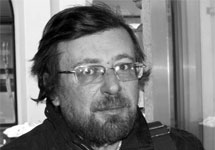
The artist in Russia needs to live for a long time, and everyone knows what is needed, but almost no one in Russia lives for a long time. The authorities do not allow - or the artists themselves do not want. Apparently, something is dissolved in the air, in state decrees and in human blood, some kind of incompatibility.
Yuri Petrovich Lyubimov lived in Russia for nearly 100 years. True, there was still a short -term departure to exile, but this was more like a rehearsal. The rehearsal of exile, according to well -known samples, and he staged this performance, as always, with brilliance, but the play, fortunately, did not last long on the stage. But the play "Return" was held with such success as the most high -profile premieres in the legendary theater infrequently used.
For everything was connected in it, in this last, unprecedented performance, stretching for a quarter century. The triumph of victory and betrayal of students who called the master himself as a traitor. The revival of the theater and the split of the theater. Shakespearean passions and a farewell Chatsky monologue. The final departure from the Taganka, the last productions are “demons” (at 94 in the theater named after Vakhtangov), “Prince Igor” (at 96 in Bolshoi), “School of Wives” (at 97, in the New Opera). Death.
The artist in Russia needs to live for a long time, but what kind of heart will it withstand such overloads? Yuri Petrovich maintained any. Hard, stupid censorship scissors, cutting along the "living", endless ruffles in empty halls, where only morons from the Ministry of Culture and Baba-Duras from the party committee, acting fusses were allowed ... "Say more than living!" - Vladimir Vysotsky sang to him to the 60th anniversary, and he could answer the great bard from a line from another, very similar song by the same author: "Who to say thank you, that alive? .."
In fact, to whom?
Lyubimov was not distinguished by heroic health. The character was explosive and in disputes with a variety of people, even with party bosses, even with artists was able to bring to white heat and interlocutors. In general, life lived hard, knowing the hardships from an early age, when he was left without parents arrested by the Cheka authorities. He received his theater quite late, at 47 years old. The scandalous glory of the Lyubimov Taganka all the years of its existence in the USSR was accompanied by denunciations, various newspapers, hatred of the authorities, the envy of colleagues.
But then the braid found on a stone. Suddenly it turned out that it was in this destructive climate for most artists that his amazing talent does not die, but blooms. After all, Lyubimov created not some, but the revolutionary theater, and the non-partisan German communist, Comrade Brecht, stood at the origins of this theater, and always alive Lenin was served in the same bottle with the style of the ruined Meyerhold, and if Lyubimov put Gorky, then he certainly “mother”. So try to forbid Gorky's “mother”, no matter what hints are scattered there in the text of the staging! And tightly memorized in schools, Pushkin and Mayakovsky gained a second life in the Lyubimov Theater, and the surrender of performances, in which the poet’s tragedy in a clash with power and society was said in full voice, also became a spectacle. Do you, comrades, have something against the sun of Russian poetry and the best, talented? .. And the comrades shook, and the plays went, and the excess ticket for Taganka was considered a shortage of the highest class, and the crowds of those who thirsty before the start of the performance filled the space from the metro and the entrance to the theater and stormed the cash register.
And here is a year, for example, 1968, April the month. Another meeting in Moscow on culture issues. The fate of Lyubimov seems to be decided: he will be fired from the theater. He asks for words - they do not give words. He demands a word - they will not hear him. He stands in the hall with an outstretched hand: "I have a remark from the resolution." Okay, only briefly. "I will not delay you, comrades." An eyewitness, artist Valery Zolotukhin writes this scene in his diary.
Lyubimov (pointing to the Talmud of speech in his hands): - Everything is here. Do not refuse me a glass of water. - He poured water. He slowly takes a few sips. The hall froze. Everyone feels that something unprecedented, clever and beautiful is happening, and delight fills our Tagan hearts. The chef begins to speak. He speaks a piece of paper, says quietly, beautifully, slowly. The performance, he has not played for a long time and now made his deadly tricks elegantly, and outwardly calmly: - Dear comrades !!! - And POP ... The hall died out. Not only the fly, its own breath seemed loud. Lenin and Gorky - only their statements argued by their thoughts. He cited quotes from reviews published at one time in the central organs of the party press: "Pravda", "Izvestia", "Leningrad Pravda", statements, impressions of the performances of the theater of the hands. com. parties in social. countries. Walter Ulbricht, Luigi Longo, Paul Shapiro, etc. Speech was thought out in detail, and the chef worked hard on it. This was a speech, a speech of a wise politician, a talented commander, whose army was just buzilo in the hall. "
For the fact that he was alive, he could say thanks only to himself.
Having grown up in the Stalin years, Lyubimov was not only a great director, but also a great actor in the play that he played for decades on the same stage with the party, the government and their Kholui. It seemed that he sometimes directly enjoyed this role of a fearless dissident under the mask of the most skillful demagogue. Yuri Petrovich learned her nazum and, unlike the dissidents of the genuine, who could not breathe this air and for minutes, he breathed in full chest. He bathed in these scandals and in this glory.
The revolutionary theater, yes, but overshadowed by the general genius of Napoleon, who trampled the revolution, and the diplomatic genius of Talleyrand, capable of powder the brains by anyone. With sailors and soldiers at the entrance, pricking tickets to the bayonet, but living in the country where the revolution was won by the empire, which rapidly rolled into insanity. However, with her, with the era, one could speak in the language available to her, hanging the quotes like toys on a Christmas tree for the Kremlin children, and for twenty years in a row he fooled his bosses, conquering the space of freedom in the country fenced with flags.
In it, this was strikingly combined: reckless talent and cold calculation, youthful intolerance and the ability to storage to storage slogans, desperate hooliganism and the wisdom of the old politician. He knew how to break through his performances like no one else, he was charged from himself, from embodied plans and victories, and from defeats, too, and from the insults that he turned into a genuine tragedy, and this eternal theater became the key to his rare longevity. The game was an end in itself and an anesthetic.
I was lucky to be on Taganka many times in the years of the 80s, and these hours filled with a sense of endless happiness are unforgettable. Infinite and gratitude, long for a lifetime that in Russia the artist must live for a long time in order to enjoy the centuries -old tradition of executions, suicides and sudden deaths. Yuri Petrovich Lyubimov succeeded, and the mournful news of his death responds not only to sadness. But pride in a man who, both his age and his deeds, touched immortality.