
Translated material
Seven minutes with Bill Viola
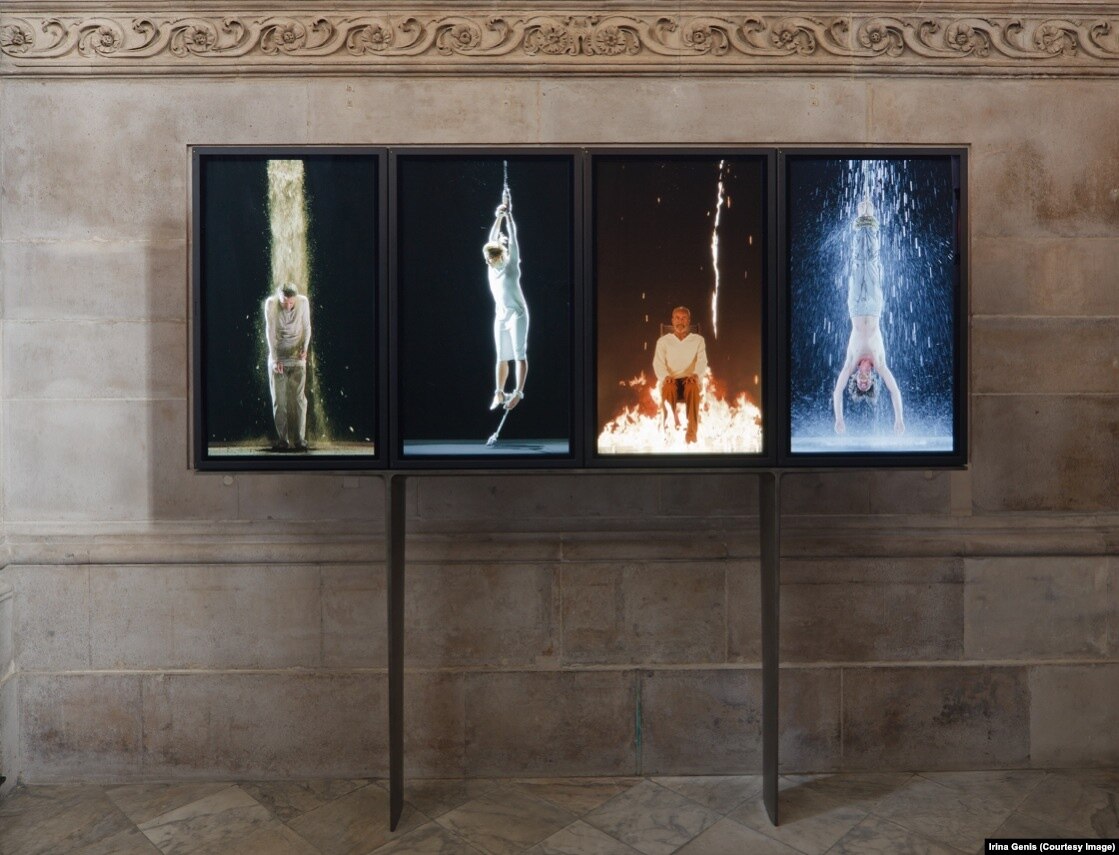
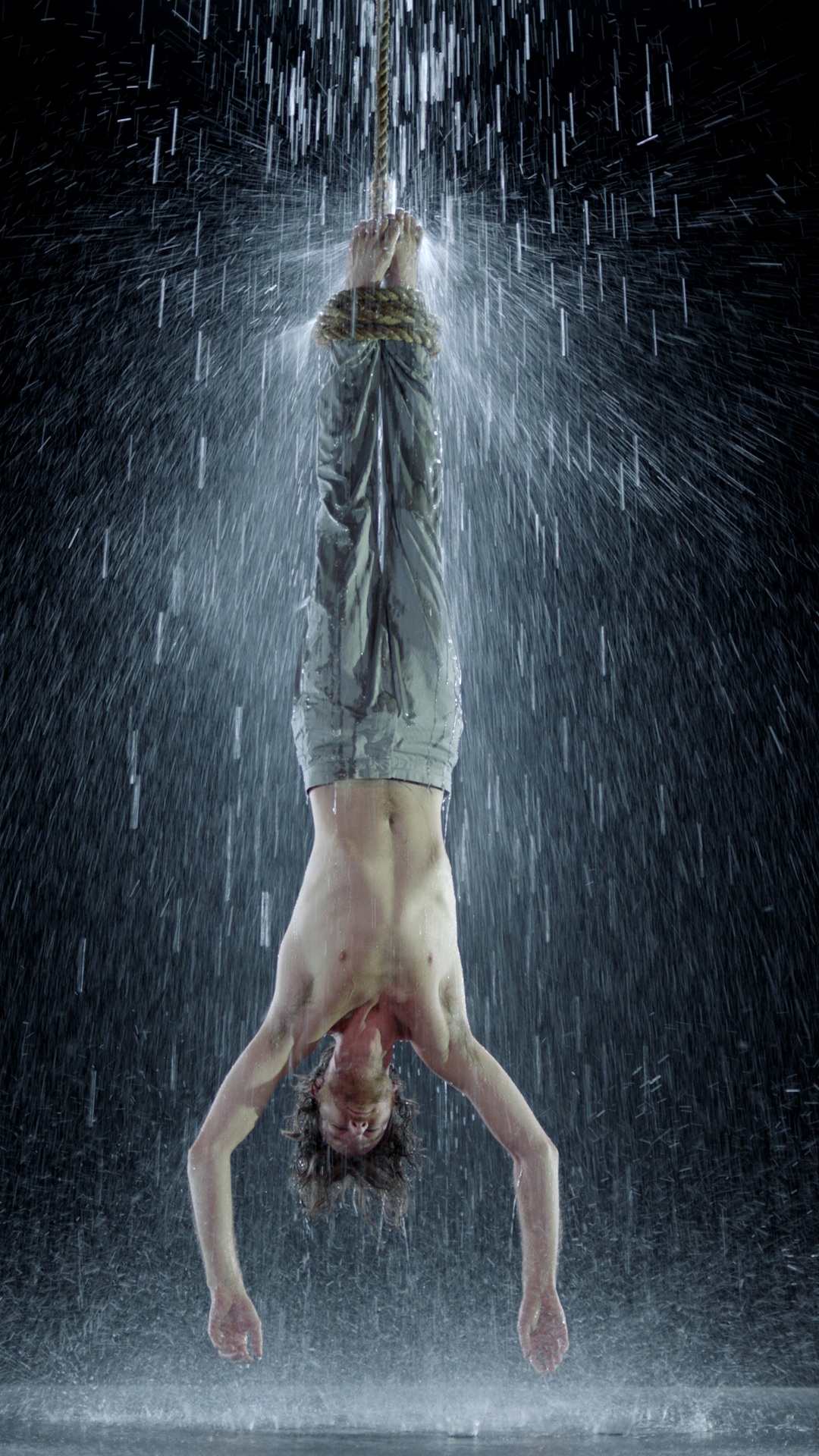
In the London Cathedral of St. Paul, a seven -minute video installation of the American master of this genre Bill Viola was installed. The "martyrs" consist of four screens, on each of which four elements - earth, air, fire and water - slowly torture their victim. This is an important experience in modern aesthetics. Moreover, the works of Bill Viola are asking for the church.
It is necessary to start with the fact that Viola uses a sophisticated technology not to simplify our life, but only to complicate it. The technique helps him to abolish the border between visible and invisible, abstract and concrete, universal and individual, clear and inexplicable.
Viola was born in New York, lives in California. Between the two American addresses - sugar, Java, the Himalayas, the Solomon Islands, the Buddhist monasteries of Japan. No less diverse than geographical adventures, travel of the spirit: from Whitman to Zen, from Christian mystics to Islamic Sufism, from computer guru to Tarkovsky’s movie, in whose honor Viola named his son Andrei.
He began to engage in video installations even when the TVs were black and white and considered the window into the world. Viola made his way slowly, bypassing the crowd. Although his art is intended for everyone, it is not very clear what to do with it: you can’t take it off, you won’t hang it on the wall.
Moreover, the art of Viola, as life, does not require training. It-again, like life-offers the viewer an indivisible and inexplicable existential experience. Before becoming exhibits, the works of Viola exist in projects and scenarios thought out up to a second and millimeter. However, these dry documents have the same attitude to the result as the equipment of the magician to the miracles he performed. The difference is that there is no crook. And what is there?
Let's say this: a copper crane, a drop on the edge. It is projected onto a huge screen in another corner of the hall. Having looked, you notice that in a drop is someone alive. Looking closely, you find that it is you. The drop is growing, and with it your reflection is inflated on the screen. And so on until a drop - always unexpectedly - breaks away from the tap, to fall on the substitute drum with a terrible roar. But before you could realize the size of the disaster, as a new drop ripped in the tap, filled with your small reflection, like an embryo.
What is this? The parable of the fleetingness of our lives? The fable about conceit? The eye of God, in which for a short moment, is our life from birth to death? Any of these answers would be too simple. Or - something the same is too complicated.
Viola's works do not allow you to contact with metaphors. As you know, the "metaphor" comes from the verb "transport". In Greece, this word is written on trucks. But Viola does not invent a metaphor, but leads to where she promises us to “transport” us: on the other side of everything that can be said by words, images, symbols.
Viola's fundamental radicalism is that he does not create, does not change, does not reflect, but deepens reality, revealing an additional - meditative - measurement in it. Having seized the viewer, the artist manages him in his own way: he breaks our watch. Viola can not be watched either quickly or slowly. Each work requires a precisely measured period of time. So the banal act of perception of the work of art turns into a ritual procession, into a ceremonial ballet, into a cult action.
The viewer is an object and subject of the art of Viola. Until I reflected in the same drop of water, the current crane was just a plumber mistake. Only having inhabited the installation of Viola, we give meaning to his work. Without us, it is not only not necessary, but also impossible. Uzurpiting the experience, tyrannically subordinating our feelings to the author’s intent, the Viola is helpless without the co -author - the viewer. The provocateur and the tempter, Viola poses important moral tasks for him. But does not say which. He asks deep philosophical questions that cannot be answered. His works are performed in deep value, but it is not known which. And all because the art of Viola is not a result, but an occasion to a metaphysical pause that cleanses internal vision. No wonder Viola is so suitable for churches. However, I would install them both in quiet squares and in noisy squares.