
Translated material
Modern Talking
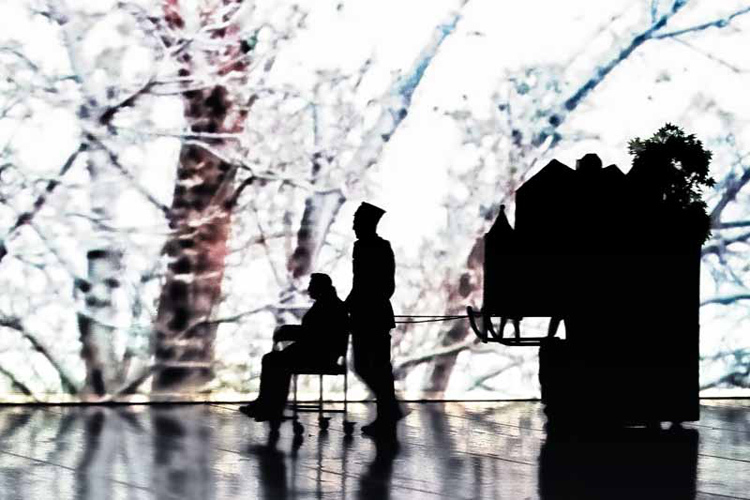
The new performance of the Avignon favorite of Pippo Delbono, who came on tour to Russia, should have been given to the review of that beautiful parrot from the Strugatsky novel, which was poured by comrade Korneev with the last words, then suddenly began to sing his praises. To press to the heart or send to hell - in this case it is strongly incomprehensible. In terms of radicalism, the forms of "orchids" will give a hundred points ahead to many competitors. There are neither clearly fixed roles, no dramatic canvas, nor even the mise -en -scenes in their traditional sense. The hot, verbose monologue of the director himself, running with a microphone in the darkness of the auditorium and occasionally jumping on stage, illustrates the screen image. Sometimes, against the background of this image, artists of the eccentric Delbon's troupe turn out to be: an old autistic Bobo, whom Pippo rescued from a psychiatric hospital, Daun Transvest Dzhanluka and others not so unusual, but also obviously not related to the number of soaked profiles.
Let's dance as we can, are still alive.
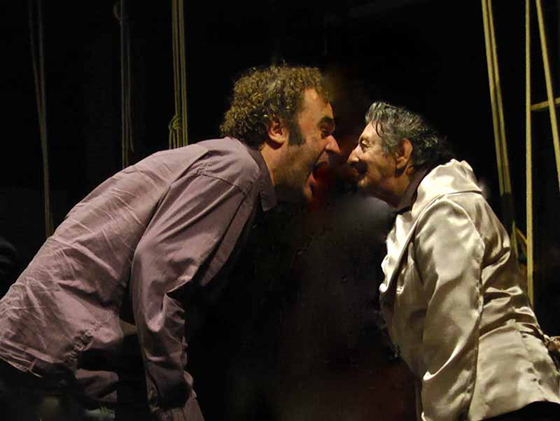
Or not performers. The main and unmistakable marker belonging to the Delbon to the modern theater is the tough primat of the message over performing art. Delbono danced at Pina Baush, which he often recalls - including in Orchids, and he knows well how this is done in decent houses. In the way he dances in the "orchids" (outrageously badly), is not to blame age or physical form. Delbono artists do nothing that would separate them from the viewer: anyone can easily take part in his performance - you, I, any person from the public. Only a psychological gesture worries him - therefore, a statue pose is quite enough in front of a video screen and face. Translating a certain emotion. Or not translating, but it seems to us that there is an emotion: praise to Kuleshov’s effect - we get it thanks to the text in a microphone and image. Back in the "Orchids", seals and touching hugs, heterosexual and same -sex, were adopted. We are all people, all are the same, among us there are no sick and healthy, full and inferior, talented and mediocre. Let's dance as we can, are still alive.
 © Francesco Pulle
It is difficult to say at what point to sincere delight from the courage and charm of the director are added boredom and irritation. Maybe when there becomes a lot of tragic hugs under the heartbreaking motives: sentimentality is a dubious virtue. Maybe at the moment when the number of common places in the Delbono microphone stories and its video reports are off. Here you are not defeated by the progress of homophobia (and it would seem), and a lies of glossy beauty (and it would seem), and longing for the Hippie era (and it would seem), and the woeful cries “people stopped believing in the revolution. We betrayed the revolution ”(even did not seem). Each of those is important, left, capacious, but when they are pressed by a briquet, and even in the play dedicated to the death of the director’s mother, you begin to suspect that the tribute to your loved one is abruptly mixed with tribute with a triumph.
 © Karine de Villers, Mario Brenta
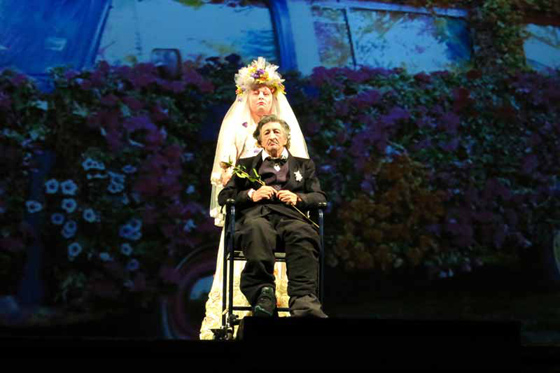
In the beautiful Delbono, it is terrible that he is too Italian and ancient ruins, Dante's promenade, unsuccessful premieres of Muscanya and the intimate secrets of Monteeca and Capuletti press on his shoulders. He is in a hurry to show the viewer his education, sprinkles with quotes from the Great, arranges either five -minute Chekhov or five -minute Shakespeare. When the image of a dying mother Pippo floats on the screen, the viewer shudders nervously: ethical, unethical? But he soon understands: it is quite ethical, since real. We will be all there. An interesting mother, a good face. When Delbono begins behind some feature over this important frame to read the Ophelia monologue, I want to get up and leave. If you tear the Convention and build the theater not according to the laws of art, but according to the laws of the human anthill, leave Ophelia alone. Tell me a little about yourself. You seem to have promised. And if not, uncle, it’s better to be silent. If you were at least three times of the eighties. We have nothing to tell about the decadents, we know everything about them without you.