
Translated material
Mother and uterus
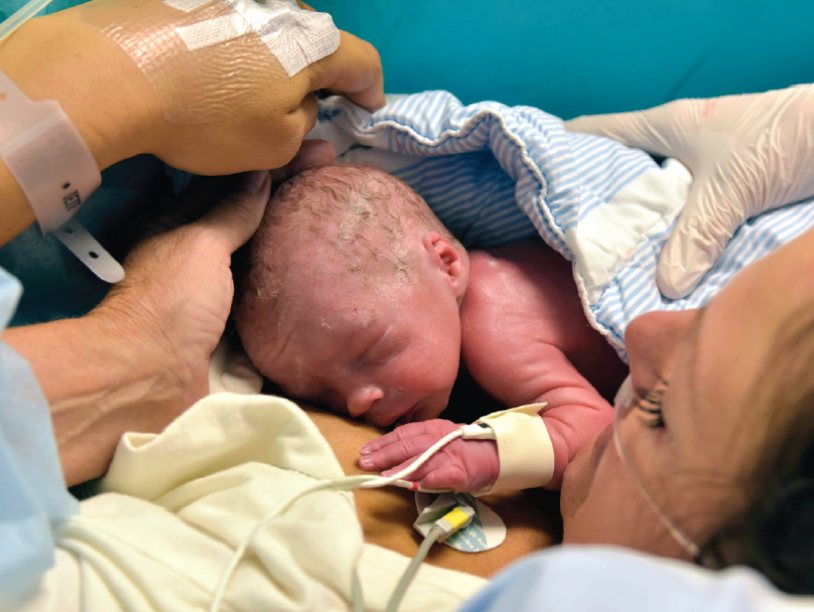
In early September, in the Swedish city of Gotharg, the first child was born, taken out by the mother after the transplantation of the donor uterus. The article about this was published online in the authoritative medical scientific journal Lancet on October 6. Until this moment, the absence of the uterus or its insufficient development remained the only fundamentally incurable options for female infertility.
The project was launched at the University of Gotyrg back in 1999 and, finally, brought the results. In total, the uterus was transplanted by nine women, and now the first of them had a child.
Why can women not have uterus? Firstly, it can be removed due to a malignant neoplasm. Secondly, there are congenital malformations. A woman who gave birth to a child after the uterine transplant had a genetic anomaly, known as Rokitansky syndrome .
Rokitansky syndrome is a congenital disease manifested by a complete or partial absence of the uterus and sometimes a violation of the development of other genital organs. All the laid hormones, however, are present and function, therefore, at the due time, girls develop secondary sexual characteristics, but menstruation does not begin. It is at this moment that the disease is usually detected. Since the ovaries work as usual, and ovulation occurs, such women could become mothers due to extracurporeal fertilization and surrogate motherhood. The disease occurs relatively often: 1 case for 4-5 thousand women with a XX genotype. It turned out that the bearer of the disease was the Queen of Greece Amalia Oldenburg . The inability to bring to the world of the heir supposedly was the reason for the overthrow in 1826 of her husband Otto I.
Events leading to the development of Rokitansky syndrome occur in the early stages of embryonic development. They occur in the so -called Mulleric duct . Around the sixth week of the embryonic development of mullets, the duct forms in the embryos of any gender. Then, in boys, under the influence of the so -called hormone antimullerov, it is largely reduced, and in girls almost all the genitals are formed from it. Therefore, the boys can not be particularly damaged by the boys of the development of the muller duct, and the girls are very much even.
The main mutation leading to the development of Rokitansky syndrome is identified is a mutation in the WNT4 gene. The WNT4 protein is included in the WNT family, which controls the development of many things.
The uterus is not a vital organ, so until recently, single attempts to transplant uterine transplantation were made. The uterine transplantation has two main problems. The first common for all transplanted organs is the search for a histoported donor. The second is that for the subsequent normal gestation, it is necessary that the blood supply to the transplanted organ does not differ much from the blood supply to the usual uterus. This can be of particular difficulty in patients with an absent uterus, because in the absence of the uterus the corresponding vessels could develop unpredictably.
From the point of view of histocompatibility, uterine transplantation is slightly simpler than other organs. A related donor, already emerging from childbearing age, can be highly likely. On the other hand, even in such a situation, an intake of immunosuppressive drugs may be needed that can lead to a complication of pregnancy.
In 2013, a 35-year-old patient was carried out by uterine transplantation. The role of the donor was a 61-year-old woman, a family friend, a mother of two children. Before transplantation, the expectant mother had eggs, extractoric fertilization was carried out and 11 embryos were mothballed. After 43 days, menstruation began at the recipient and continued until pregnancy. The only embryo was transplanted a year later, and from the first time pregnancy occurred. Pregnancy proceeded well, under the close control of doctors. It was regularly checked whether the blood supply to the fetus is enough.
During the past, from the moment of the uterine transplantation, three minor episodes of rejection of the donor organ occurred, one of them during pregnancy. All of them were quickly stopped by immunosuppressants.
At the 32nd week of pregnancy, the patient developed preeclampsia (her risk is considered increased in IVF)-a condition that is potentially dangerous for the mother and child, associated with a significant increase in blood pressure in the mother. The cause of preeclampsia could have the lack of one kidney in the patient, the kidney, as well as the uterus, was absent from her birth. Based on the results of cardiotocography, it was decided to make a cesarean section. As a result of the operation, a completely healthy boy weighing 1775 grams was born, this is a normal weight for such a gestational age. Everyone feels good.
Doctors believe that after two successful births, the uterus will be safer to remove. First of all, due to immunosuppressive drugs, which in the opposite case will have to be taken all your life.
Meanwhile, eight more project participants are waiting in line.